IT & AI History :: index
A Chronicle of AI and Information Technology
Up to the present, in which AI solves open problems in mathematics and unsettles work and law: decades during which computation rewove the world, read as a timeline.
- TIMELINES
- 24
- EVENTS
- 365
- PEOPLE
- 45
- ORGS
- 17
- PRODUCTS
- 01
- TERMS
- 71
- RANGE
- 1945–2026
24 timelines are bound here. A general chronicle gives the broad view of the century; each genre timeline traces a particular lineage—AI and what it does to society, programming languages, networks, the machine itself. Click any event to expand its card in place. Where a deeper article exists, a link follows.
▸ AI by theme
▸ Featured events

November 30, 2022
ChatGPT Launched

February 24, 2025
Claude Code — A Coding Agent That Lives in the Terminal

May 20, 2026
The Unit Distance Conjecture Disproved — An OpenAI Model Overturns an 80-Year-Old Erdős Conjecture

April 7, 2026
Claude Mythos Preview and Project Glasswing — The Model Held Back for Its Hacking Skill

January 20, 2025
The DeepSeek-R1 Shock — A Low-Cost Chinese Reasoning Model Rocks the Market
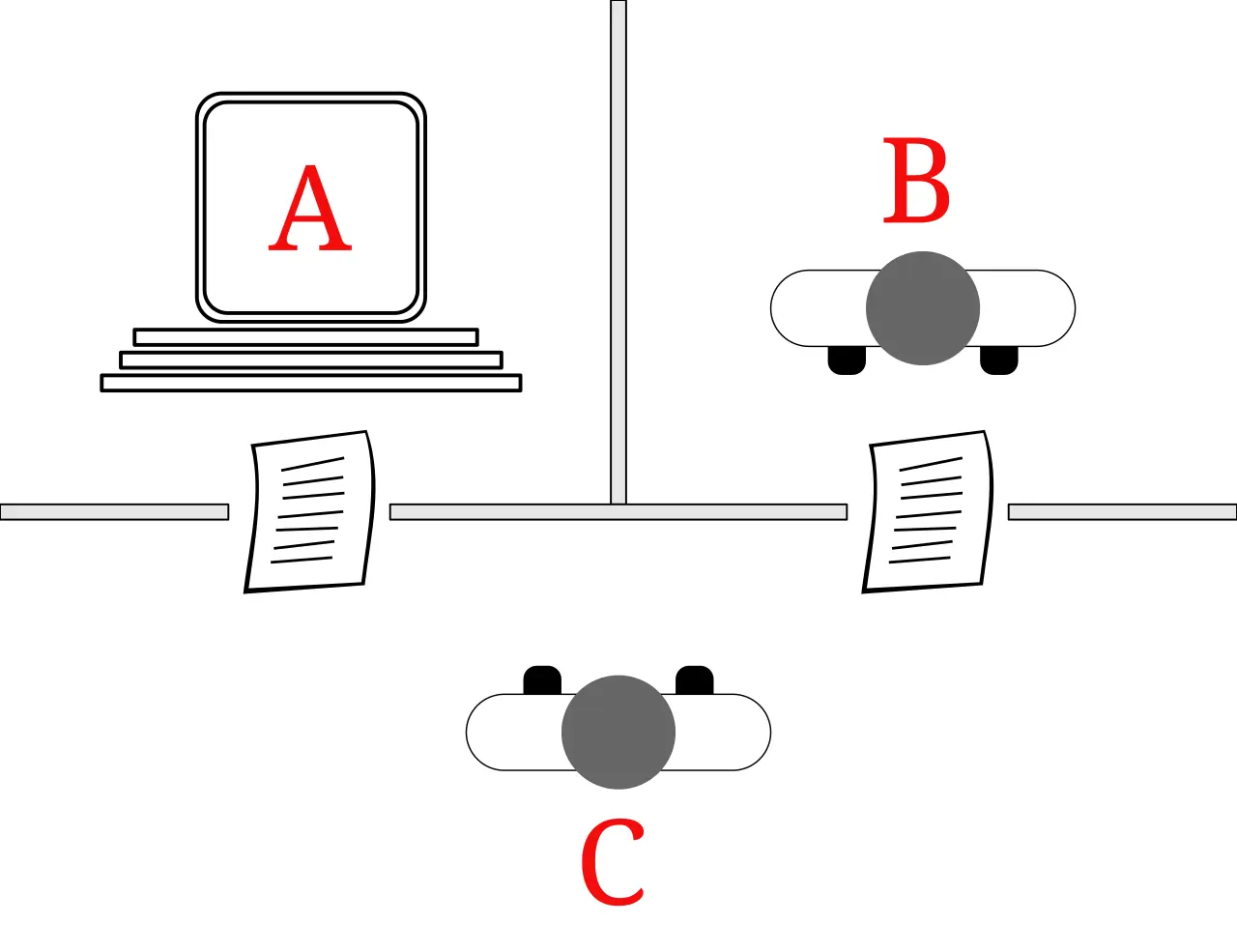
October 1950
The Turing Test — The Paper That Turned "Can Machines Think?" into a Game
▸ Recently updated
- February 25, 2022 (first orders in the US and elsewhere)What Is Steam Deck? Valve's Handheld Gaming PC
- November 12, 2020PlayStation 5 Released
- September 20, 2019Nintendo Switch Lite — The Switch That Never Plugs Into a TV
- May 24, 2019 UTC (first 60 satellites; May 23 US Eastern)Starlink — SpaceX's Internet From Thousands of Low-Orbit Satellites
- October 13, 2016PlayStation VR — Virtual Reality Plugged Into a PS4, and Its Successor PS VR2
- Announced October 4, 2016, with pre-orders the same dayGoogle Pixel — A Phone Made by Google, Inside and Out
▸ Browse by decade
▸ Index of timelines
A General History of Information Technology
Start here when you don't know where to start: seventy-two turning points, with the detail delegated to the other twenty-two timelines.
A History of Artificial Intelligence
More than half of the 122 entries are dated 2023 or later. Named in 1956, the field does most of its crowding now.
AI and Mathematics: A History
From a machine-checked four colour theorem to an AI disproving an eighty-year-old conjecture — and the second half of that half-century fits into three years.
AI and Society: A History
48 of the 63 entries are from 2022 on: not a record of the technology, but of societies trying to draw lines around it.
A History of AI Agents
Nine of the ten entries are from 2023 on: the 'autonomous' label set against what measurement showed the agents could actually do.
AI and Jobs: A History
47%, 49%, 300 million: every figure came with a method and assumptions, and the actual data arrived later.
AI in Medicine: A History
An FDA authorisation, Japan's first approval, a Nobel Prize — and beside them, a model that failed external validation and a business that was sold.
AI and Copyright: A History
May it train on others' work, and is what it makes protected? Japan, the US and the UK have yet to give the same answer.
A History of Self-Driving Cars
Nine of the thirteen entries are from 2020 on: from defining the levels to driverless taxis and suspended fleets.
A History of Humanoid and AI Robots
Four of the nine entries are from the 2020s: from a person in a robot suit to a stock-market debut, with company claims set beside reporting.
A History of Cybersecurity
Read it by who was doing the breaking: a graduate student, then criminals, then states, and finally an AI that finds flaws by the thousand, with governments reaching to control it.
A History of Programming Languages
FORTRAN opens it; a machine that writes code closes it. Twenty entries, with three languages arriving in 1995 alone.
A History of the Internet and the Web
Where does the plumbing stop and the platform start? Twenty-nine entries decline to draw the line, and hand search and social media to other timelines.
A History of Cloud Computing
Two of the twelve are not about software at all: a worldwide outage, and a nuclear reactor switched back on.
A History of Operating Systems
It does not end on a launch: the last entry is a support cut-off date, Windows 10, 2025. Operating systems have deaths too.
A History of Semiconductors and Hardware
The physics runs out around the middle. After that the story is capital, foundries, a CEO's exit, and a government taking a stake.
A History of Game Consoles and Game Technology
It opens on a tennis game drawn on an oscilloscope for a national laboratory's open day, and closes on the Switch 2.
A History of the iPhone
One company, one product line, one entry per generation. Read it for what each generation removed: the headphone jack, the home button, Lightning.
A History of Microsoft
The only timeline here organised around a company rather than a technology, which makes it readable as one long argument about strategy.
A History of Search Engines
Yahoo indexed the web by hand. What replaced that was machine, then model — and in the last stretch the engine answers instead of listing.
A History of Social Media
Launches for the first half; then a data scandal, a hostile takeover, and a joint venture forced by American law.
A History of Mobile Phones and Smartphones
The argument is in the early entries: what the pocket computer looked like while Nokia, RIM and NTT DoCoMo still set the terms.
A History of Open Source and Free Software
The licence text does more work than the code — BSD and the GPL at one end, open-weight AI models at the other.
A History of Databases
Fifteen entries across sixty-seven years, including the pre-relational systems most histories skip — because this field turns over in decades, not quarters.