Detailed · 29 events
A History of the Internet and the Web
1960s
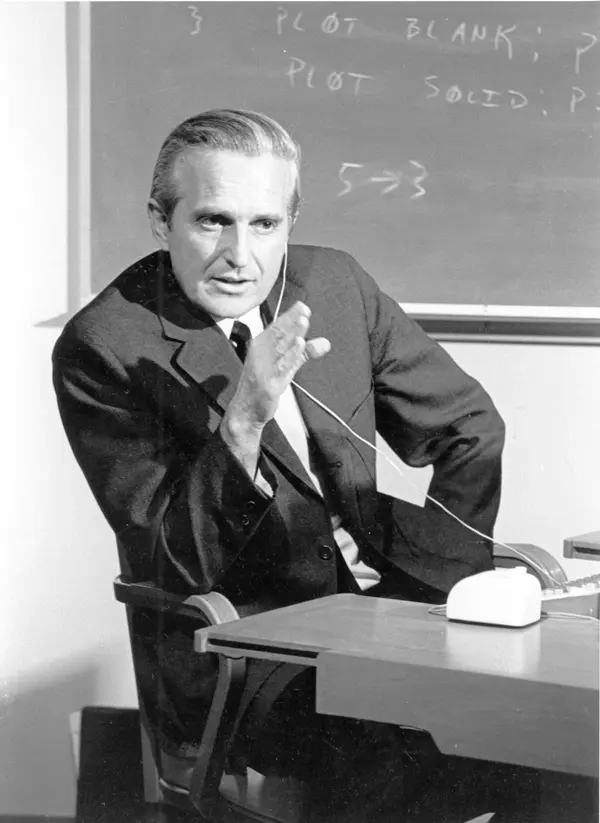
SRI International (Wikimedia Commons) · CC BY-SA 3.0 · Commons ↗ At the Fall Joint Computer Conference in San Francisco's Civic Auditorium, Douglas Engelbart of the Stanford Research Institute delivered his session — 'A Research Center for Augmenting Human Intellect' — as a live demonstration lasting about ninety minutes. He drove NLS on an SDS 940 some thirty miles away in Menlo Park through home-built 1200-baud modems over a leased telephone line, with the video returned to the hall over microwave links and thrown onto a large screen. What he showed: the mouse, multiple on-screen windows with view control, jumping between documents by link, structured document editing, and shared-screen collaboration with remote colleagues over live audio and video. The first mouse prototype had been built by Bill English to Engelbart's design. The name 'The Mother of All Demos' was applied long afterwards, not by anyone in the room.
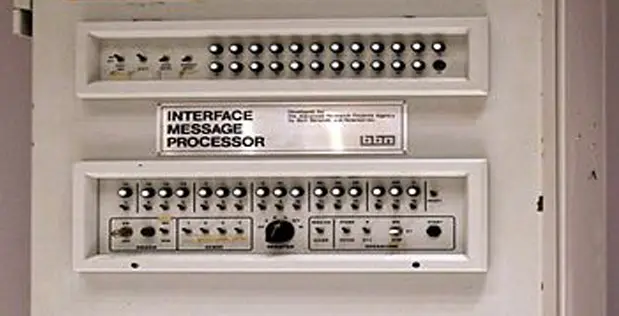
DARPA / U.S. Federal Government (Wikimedia Commons) · Public Domain · Commons ↗ At 22:30, UCLA's Charley Kline set out to type 'login' to an SDS 940 at SRI; the remote host went down on the third character, so only 'lo' arrived. It came back about an hour later and the full word went through. This was the first host-to-host communication over ARPANET, the packet-switched network funded by the US Department of Defense's ARPA (later DARPA), and the ancestor of the modern Internet. The initial network had four nodes—UCLA, SRI, UC Santa Barbara, and the University of Utah—complete on 5 December 1969.
1970s
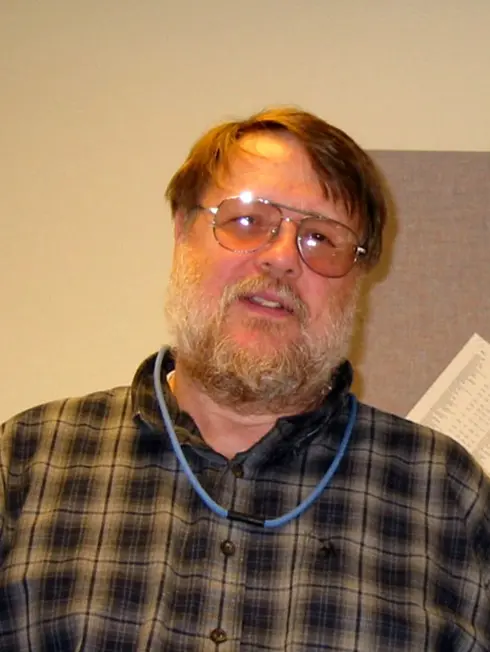
Andreu Veà, WiWiW.org · CC BY-SA 3.0 · Commons ↗ Ray Tomlinson at BBN folded code from CPYNET, an experimental file-transfer program, into SNDMSG, the local message program, so that it could append to a mailbox on another host across the ARPANET. Single-computer electronic mail had existed since the early 1960s; this was the first to cross a network. The first messages went in late 1971, between two PDP-10s running TENEX that sat side by side and were connected only through the ARPANET. For the separator between user name and host name he chose '@'. In English, he explained, the sign marked a unit price ('10 items @ $1.95'), and he used it to show that the user was 'at' some other host rather than local. The format survives as the email address.
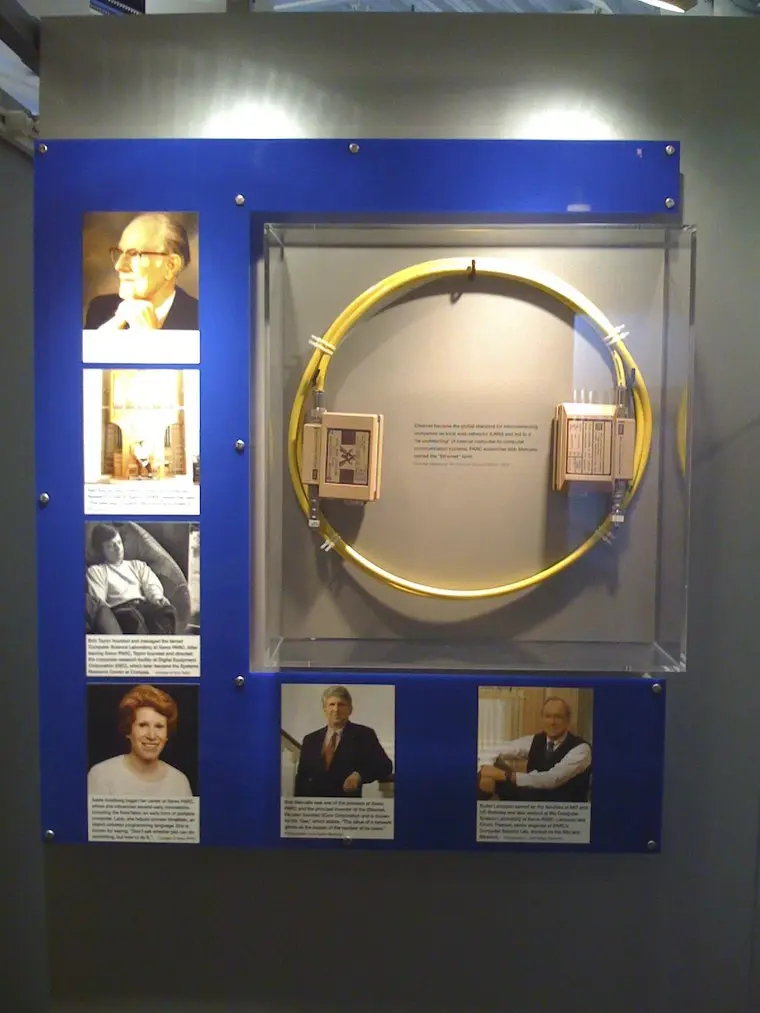
Sascha Pohflepp (Wikimedia Commons, via Flickr) · CC BY 2.0 · Commons ↗ Robert Metcalfe circulated an internal memo at Xerox PARC describing a broadcast network for connecting Altos. It took the collision-and-retransmit idea of the University of Hawaii's ALOHA system off the radio and onto coaxial cable, with no central controller: every station arbitrates for the channel itself. The name came from the luminiferous aether of nineteenth-century physics. What the memo produced was a proposal, not a standard. The Experimental Ethernet, the 1976 Metcalfe–Boggs paper, the 1980 DEC-Intel-Xerox specification at 10 Mbit/s, and IEEE 802.3 — approved in 1983 and published in 1985 — are four different things, and they are constantly conflated.
- EVT.005T1New Directions in Cryptography — Sharing a Secret Without Delivering a KeyA History of CybersecurityA General History of Information TechnologyRead more →
1980s
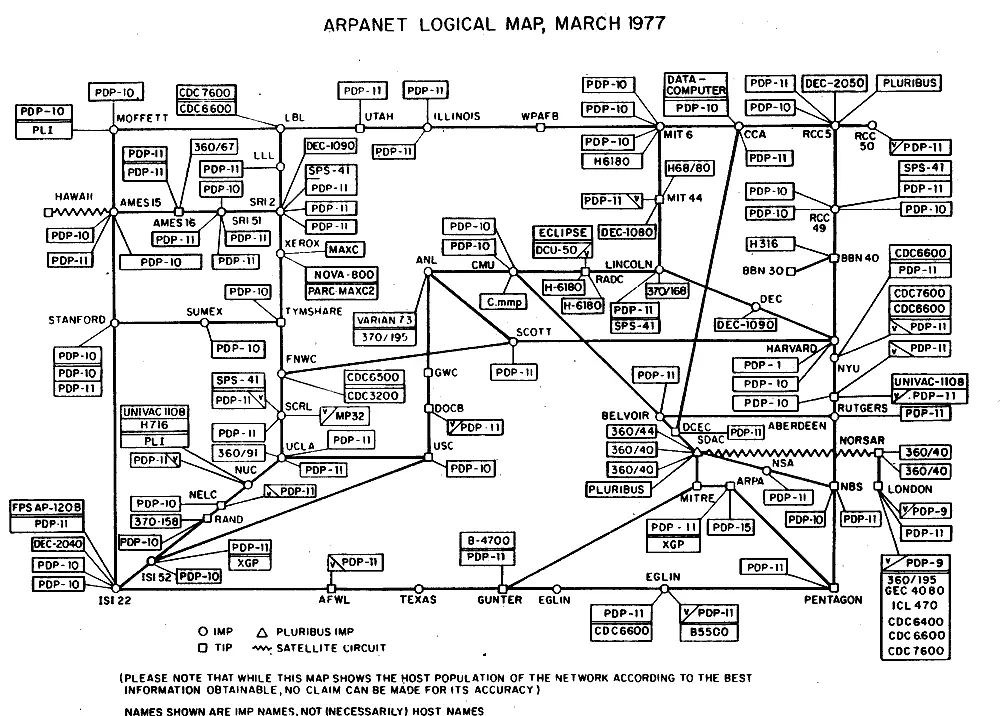
ARPANET / The Computer History Museum (Wikimedia Commons) · Public domain · Commons ↗ On 1 January 1983 ARPANET switched its hosts from NCP (Network Control Program) to TCP/IP all at once. The design began with the paper Vint Cerf and Bob Kahn published in IEEE Transactions on Communications in May 1974, which described a single Transmission Control Program rather than a two-part suite. The split into TCP for transport and IP for internetworking came in 1978, and the DoD standards RFC 791 (IP) and RFC 793 (TCP) appeared in September 1981. Jon Postel's RFC 801 (November 1981) set a complete switch by 1 January 1983 as the goal, and on that date NCP was removed from service.

Jordiipa (Wikimedia Commons) · CC BY-SA 3.0 · Commons ↗ The Domain Name System is a distributed database mapping host names to IP addresses and other data. Paul Mockapetris at USC's Information Sciences Institute (ISI) designed it and published it in November 1983 as RFC 882 (concepts) and RFC 883 (implementation). Until then the namespace lived in a single HOSTS.TXT kept by SRI's Network Information Center, run by Elizabeth Feinler's group; RFC 882 states that the size of that table and the frequency of updates to it 'are near the limit of manageability.' DNS replaced it with a delegable tree served by name servers and queried by resolvers. The top-level domains COM, EDU, GOV, MIL and ORG were set out a year later in RFC 920 (Postel and Reynolds, October 1984), and NET was introduced in January 1985. The specification was superseded in November 1987 by RFCs 1034 and 1035, on which today's DNS still rests.
1990s
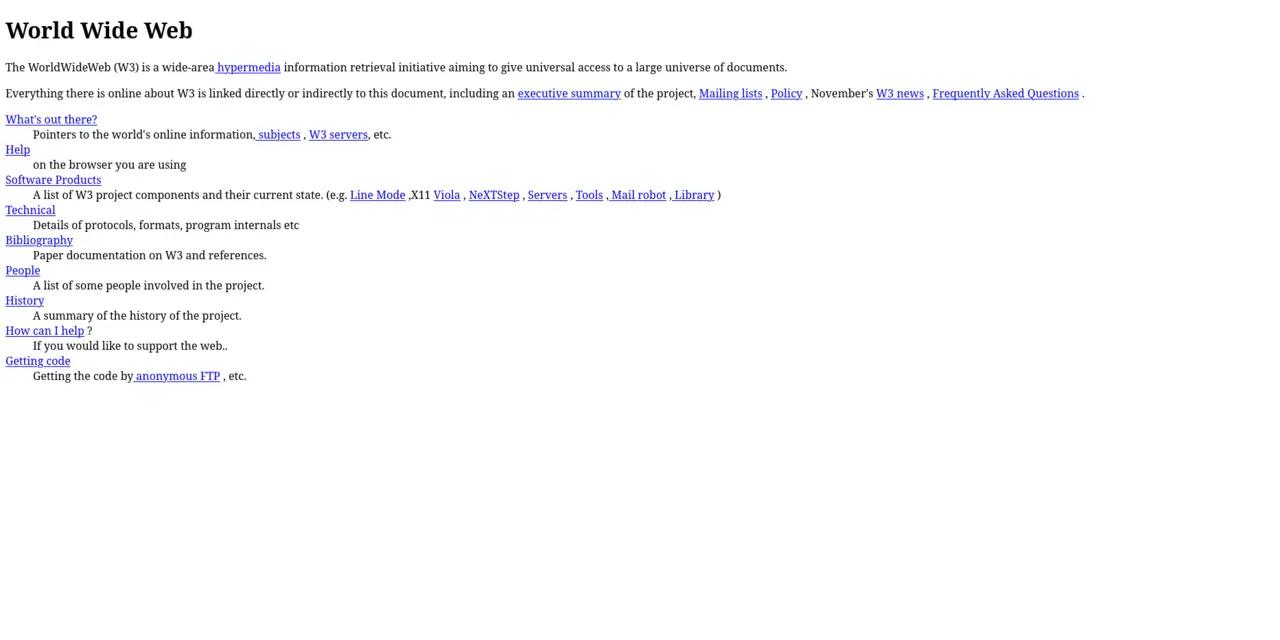
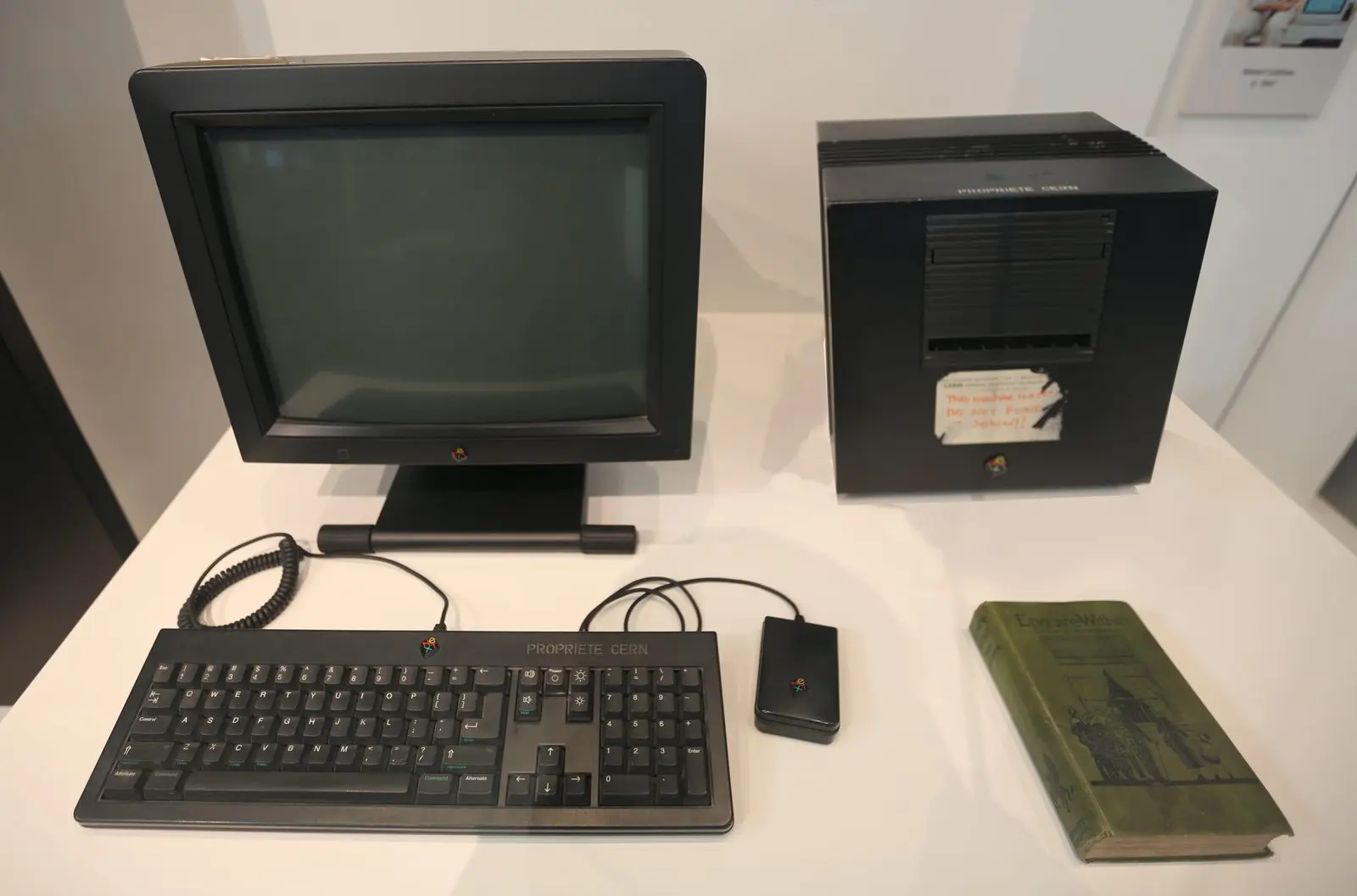
Tim Berners-Lee / CERN (Wikimedia Commons) · Public domain · Commons ↗ The world's first website, set up by Tim Berners-Lee at CERN. Its first page, http://info.cern.ch/hypertext/WWW/TheProject.html, described the World Wide Web project itself. The server was first named nxoc01.cern.ch and later info.cern.ch. According to CERN the first server and browser were running inside CERN by the end of 1990; WWW was generally released on CERN's central machines on 17 May 1991, and on 6 August Berners-Lee announced it to the outside world in the alt.hypertext newsgroup, with the software available by FTP. The site as it stood in 1990–91 does not survive; the restoration project CERN launched on 30 April 2013 brought the first address back using a 1992 copy archived by the W3C.

JD Lasica (Wikimedia Commons) · CC BY 2.0 · Commons ↗ The web browser built by Marc Andreessen and Eric Bina at NCSA, University of Illinois. Version 1.0 for the X Window System was posted to www-talk on 21 April 1993; the Windows and Macintosh ports followed later that year. It was not the first graphical browser — Erwise, ViolaWWW, and MidasWWW came first — but it was the first widely adopted one to render images inline with the text rather than in a separate window, and it pulled the Web out of research labs and in front of ordinary users. Non-commercial use was free of charge, though Mosaic was proprietary, not open source. Andreessen co-founded Netscape's predecessor the following year.
- EVT.013T1JavaScript Announced — Born of a Ten-Day PrototypeA History of Programming LanguagesRead more →
- EVT.016T1Emoji — From Japanese Mobile Phones to Unicode and the WorldA History of Mobile Phones and SmartphonesRead more →
2000s
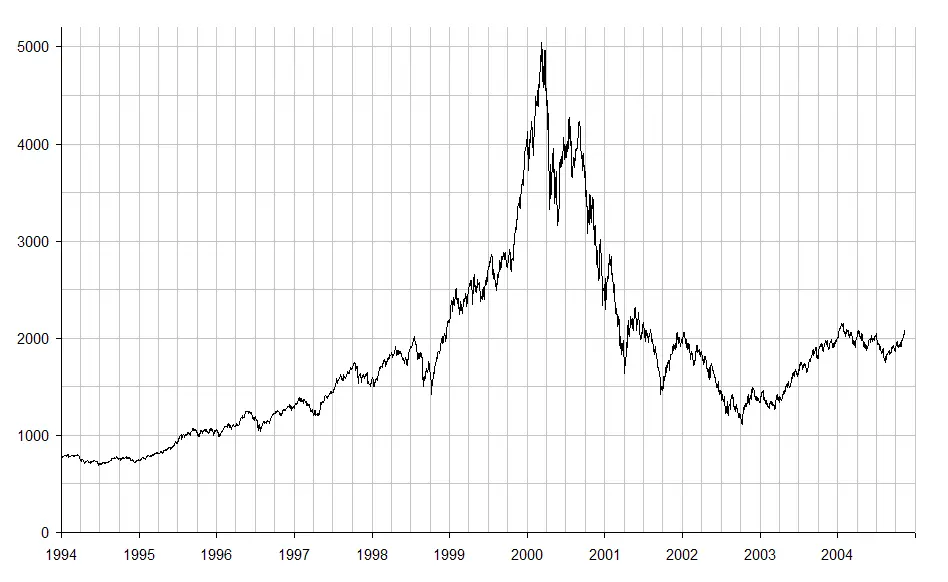
ed g2s (Wikimedia Commons); source data from nasdaq.com · Public domain · Commons ↗ The late-1990s surge in internet companies' share prices beyond what their businesses supported, and the collapse that began in spring 2000; in Japan it is also called the IT bubble. The NASDAQ Composite peaked at a close of 5,048.62 on 10 March 2000 and fell about 78% to 1,114.11 on 9 October 2002; it first closed above the peak again on 23 April 2015. In December 1996 the Federal Reserve chairman, Alan Greenspan, had already asked about 'irrational exuberance'. Pets.com, the bust's emblem, went public at $11 a share in February 2000 and announced its wind-down on 7 November 2000. The US recession ran from March to November 2001. Global Crossing and WorldCom failed in 2002, and European telecom shares fell 83% in two and a half years. Japan's information and communications white papers record deteriorating results at Japanese IT companies in 2000 and 2001.
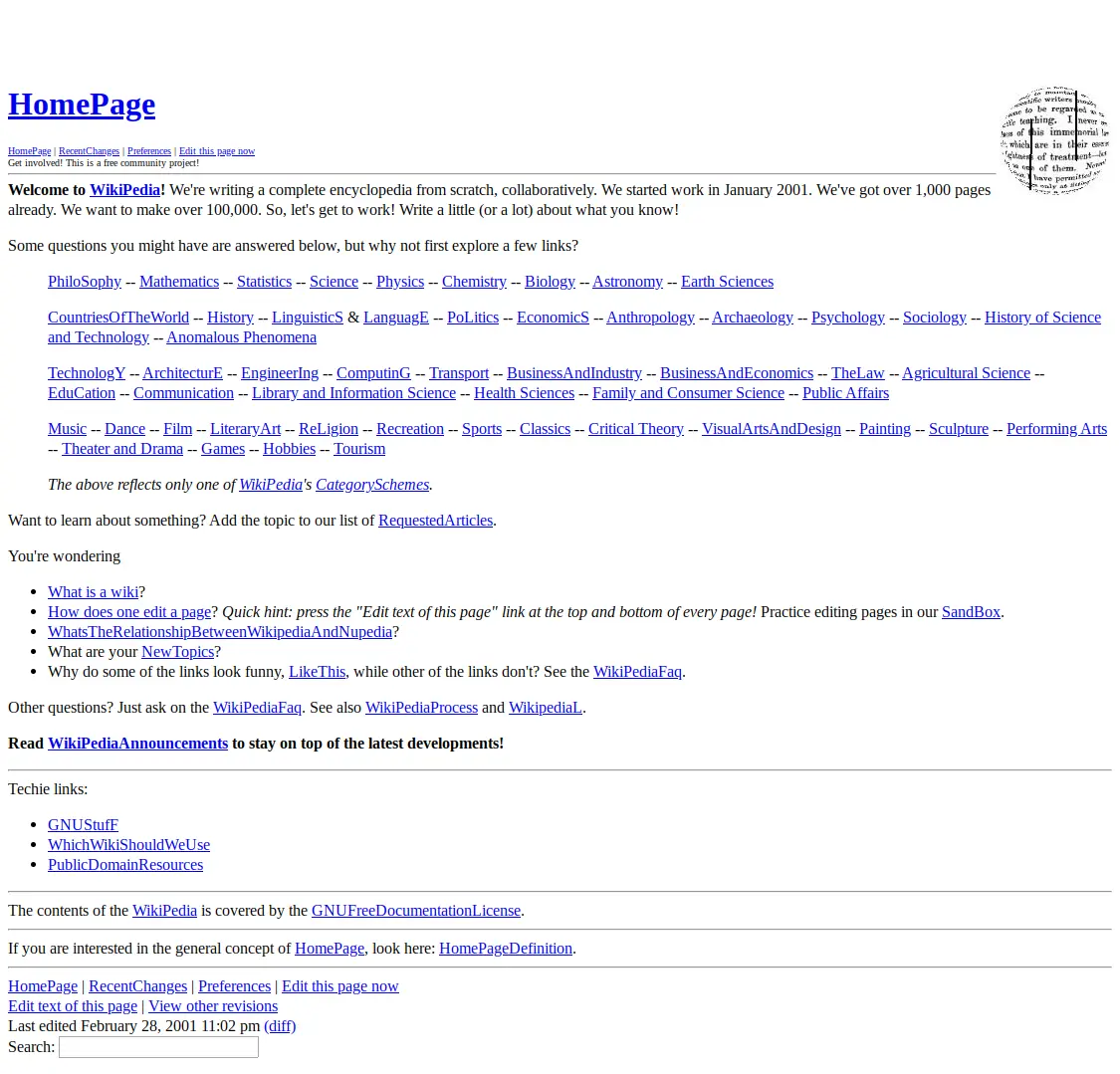
Wikipedia contributors; captured via the Wayback Machine · CC BY-SA 3.0 · Commons ↗ Jimmy Wales and Larry Sanger launched Wikipedia at wikipedia.com as a side project of Nupedia, their peer-reviewed encyclopedia. Sanger had posted 'Let's make a wiki' to the Nupedia-L list on 10 January and proposed the name on 11 January. Who founded it is unsettled between the two men: Sanger claims co-founder status and Wales disputes it. For a quarter of a century the wiki-based encyclopedia anyone can edit has kept demonstrating that open collaboration can produce a reference work at scale. As of October 2026 there are 348 active language editions holding roughly 68.4 million articles in total.
- EVT.024T1The App Store OpensA History of the iPhoneRead more →





2010s
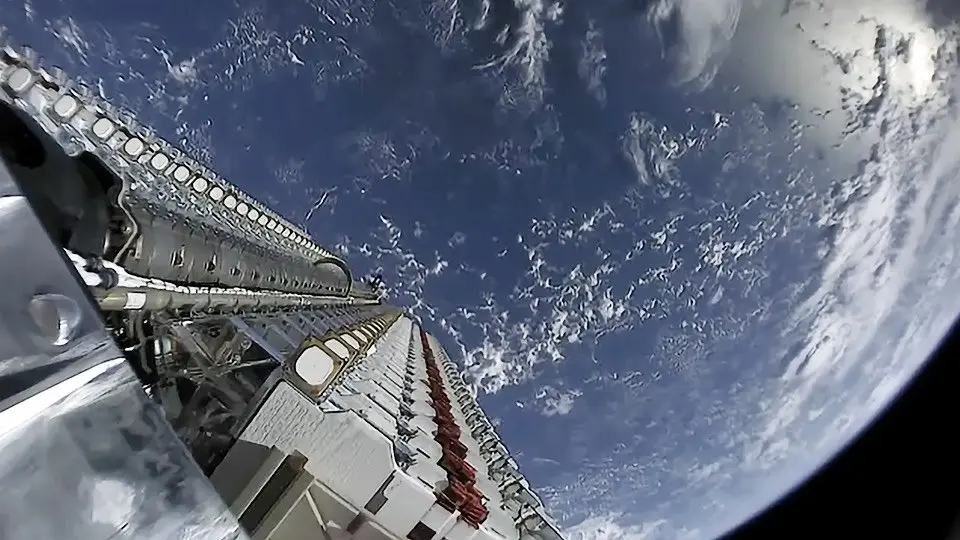
Official SpaceX Photos (Wikimedia Commons) · CC0 · Commons ↗ Starlink is SpaceX's satellite internet service. Its first 60 operational satellites were launched on a Falcon 9 on the night of 23 May 2019 US Eastern time (24 May UTC). In October 2020 a public beta, the Better Than Nothing Beta, opened in the United States at US$99 a month plus US$499 for the kit; on 11 October 2022 SpaceX announced service for individuals in Japan, where KDDI uses Starlink for base-station backhaul and business customers. In February 2022 Musk answered Ukraine's request after the Russian invasion, and Starlink became a wartime lifeline. The International Astronomical Union and Japan's national observatory warned that reflected light and radio emissions could impair astronomy. SpaceX reported 13.6 million consumer subscribers and about 11,100 satellites in orbit as of 30 September 2026; the company listed on Nasdaq on 12 June 2026.
2020s

Gage Skidmore (Wikimedia Commons) · CC BY-SA 4.0 · Commons ↗ Proposed in April, attempted to withdraw in July with litigation following, the deal finally closed on 27 October. Purchase price: US$44 billion. Within hours of closing, Musk dismissed the CEO, CFO, and head of legal; within a week he laid off roughly half the workforce (about 3,700 people), replaced the verified badge with a monthly subscription (Twitter Blue), and shrank content moderation. Citing free-speech grounds, he reinstated accounts permanently suspended including Donald Trump's. The platform was renamed X in July 2023. One of the largest social-media platforms became, unusually, the personal property of a billionaire.

Meta Platforms, Inc. (Wikimedia Commons) · Public domain (logo, below threshold of originality) · Commons ↗ Meta launched Threads, an Instagram-linked text-based social network, in over 100 countries. By Zuckerberg's own posts it took 10 million sign-ups in seven hours and 100 million in five days—sign-ups, not retained users, and the distinction mattered: Sensor Tower measured daily actives falling 82%, from a peak of about 44 million the day after launch to about 8 million on 31 July. The design was to carry Instagram's social graph across wholesale—Instagram had about two billion monthly actives at the time—into the space Twitter was vacating under Musk. The EU launch was held back five months over Digital Markets Act compliance and came on 14 December 2023. Growth since has been steady: on the Q2 2026 earnings call Meta reported Threads past 500 million monthly actives.