Detailed · 13 events
A History of Self-Driving Cars
1960s
2000s
2010s
In the 2010s self-driving took shape as both vocabulary and product. SAE's J3016 split driving automation into six steps and drew its boundary at whether a person or the system watches the road; the US Department of Transportation took up the scheme in 2016 and Japan in 2017, making it the shared language of rules. Meanwhile Tesla pushed a Model S software release that steered within the lane and changed lanes. It was Level 2, built on constant human supervision, yet a fatal 2016 crash in Florida exposed the danger of trusting automation too far. Whether such names matched the features was left for juries and regulators in the 2020s.
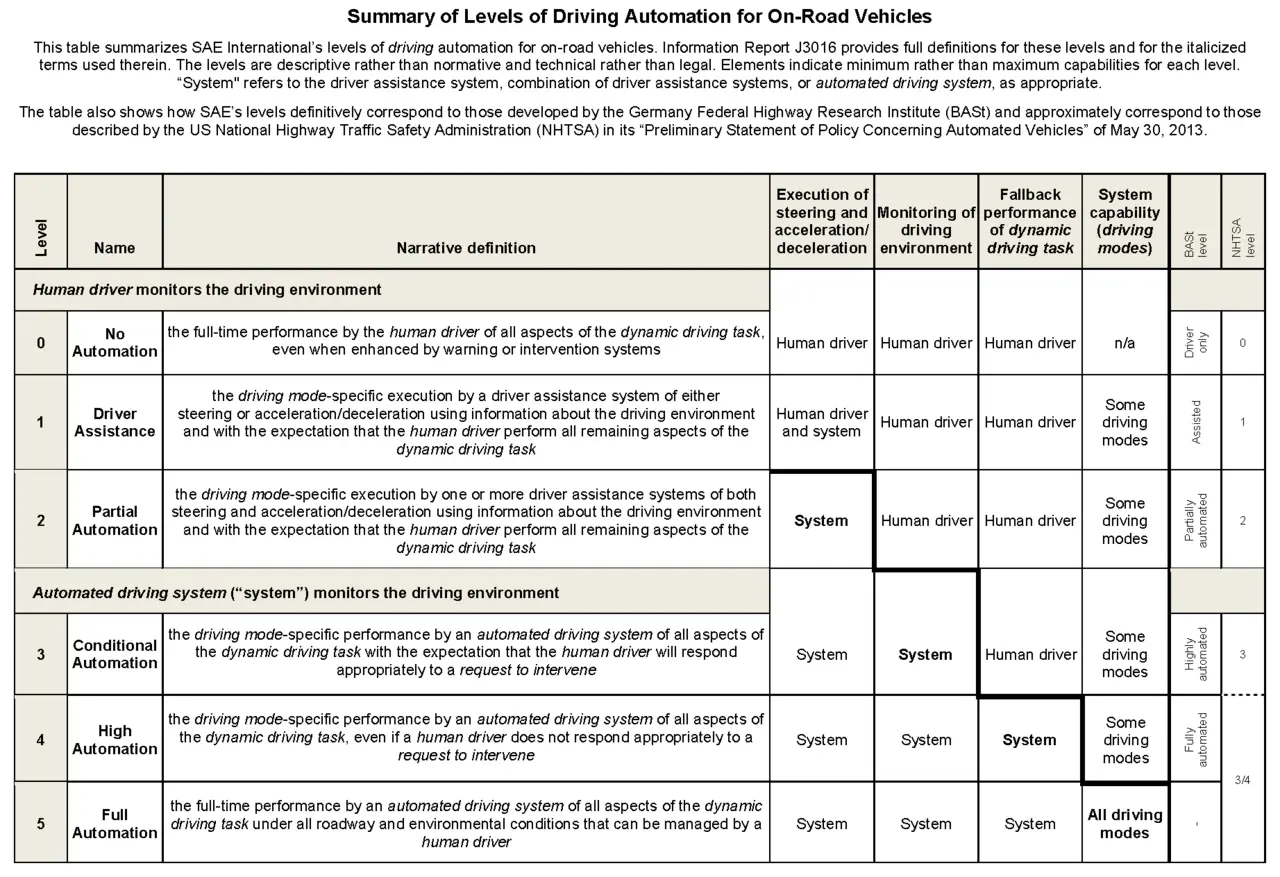
Bryant Walker Smith (Wikimedia Commons) · CC BY 3.0 · Commons ↗ SAE J3016, a recommended practice first issued by SAE International on 16 January 2014, divides driving automation into six levels, from Level 0 (no automation) to Level 5 (full automation). Up to Level 2 the driver monitors the road; from Level 3 the system performs the driving task within limited conditions. The first edition was a 12-page Information Report that defined only the top three levels in detail. It was revised in 2016 and 2018, and jointly with ISO in 2021. The US Department of Transportation adopted the definitions in September 2016, and Japan did so in its Public-Private ITS Roadmap 2017 in May 2017. A level is not a safety rating but a division of roles: who is driving. In 2018 a Japanese transport-ministry study group recommended keeping owners' operator liability during the transition up to Level 4. Mobileye has criticised the distinction between Levels 3 and 4 as unnecessary.
- EVT.004T1Tesla Autopilot — A Decade Between the Name and the RealityA History of Artificial IntelligenceAI and Society: A HistoryRead more →
2020s
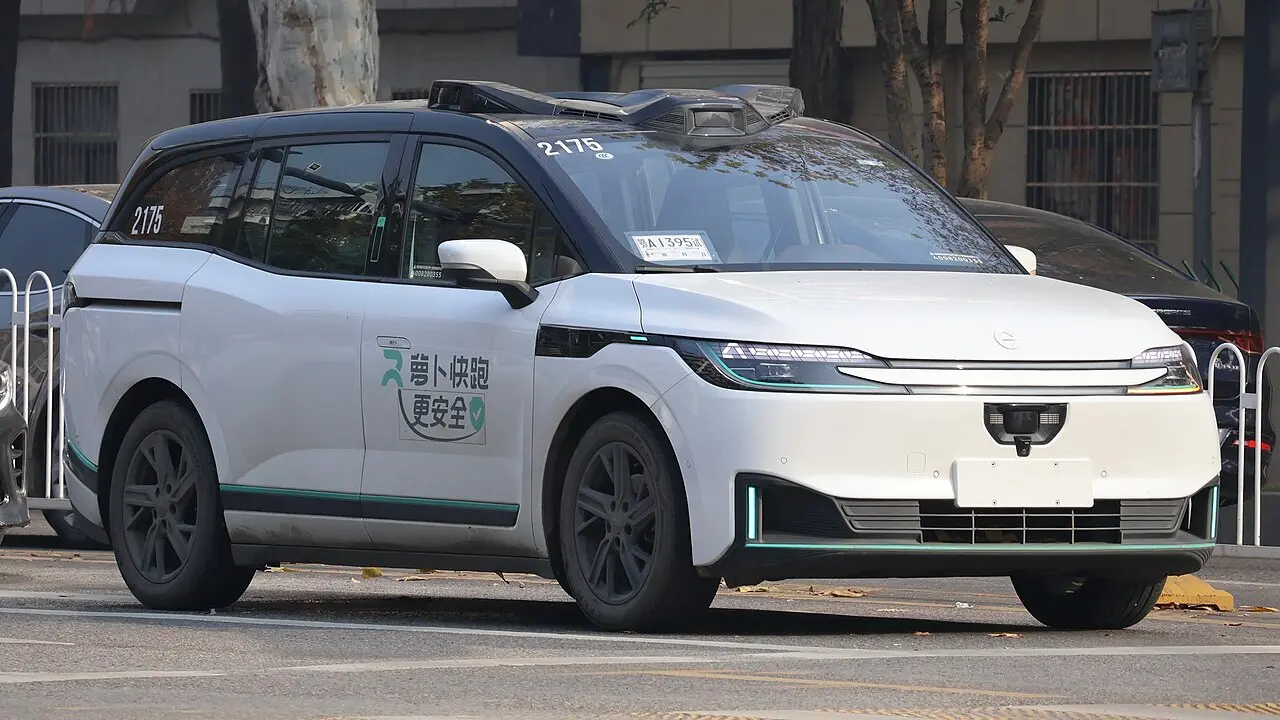
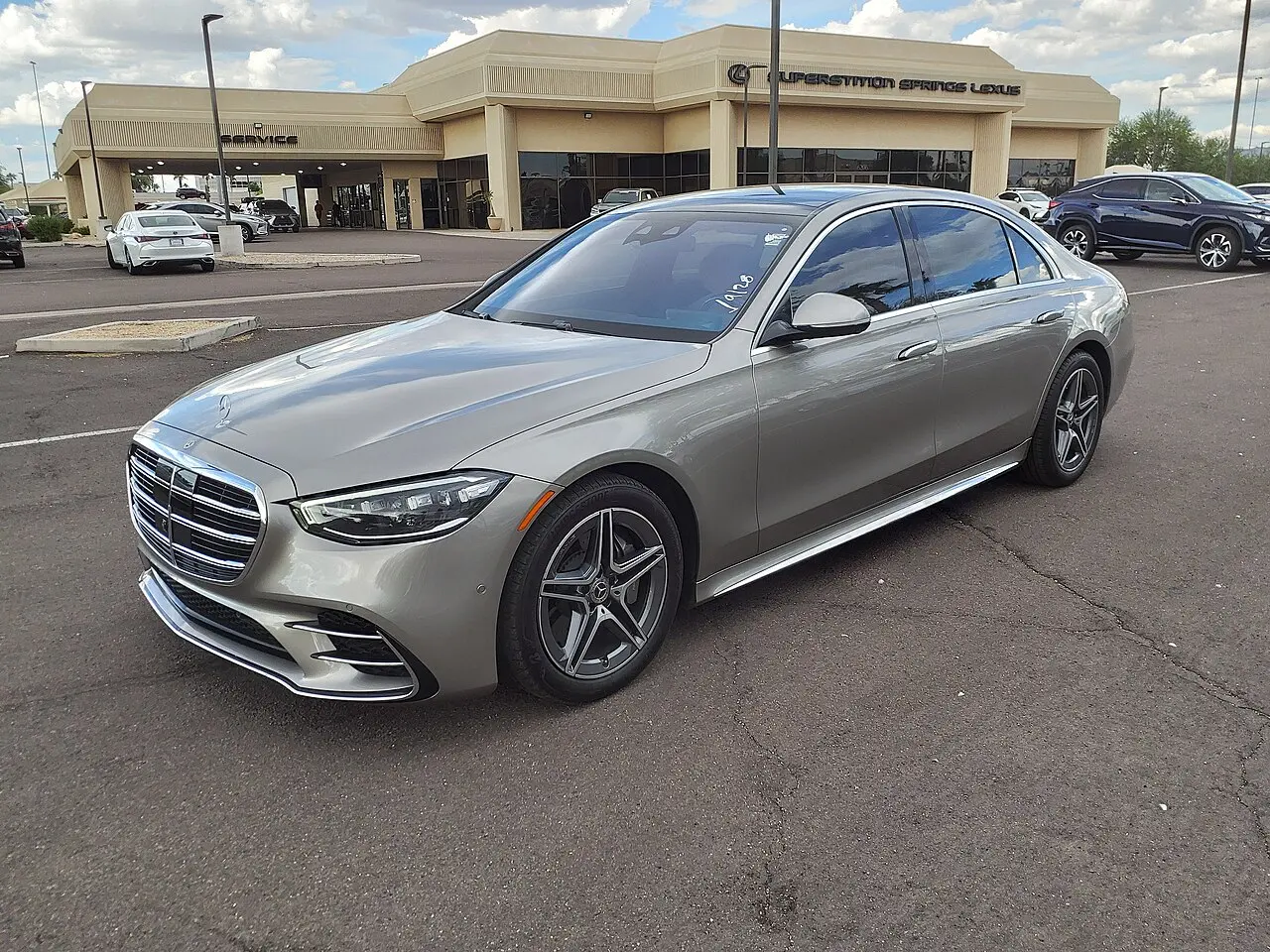
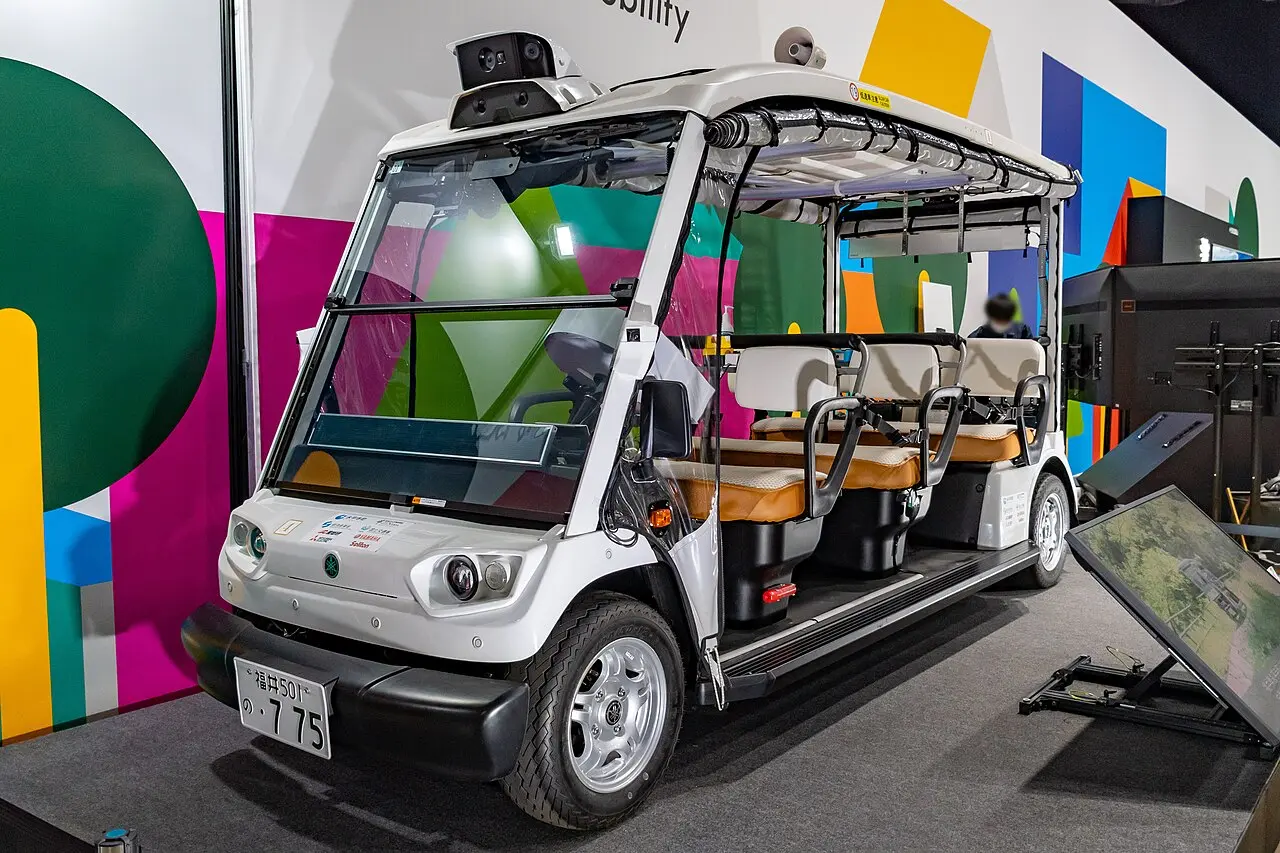
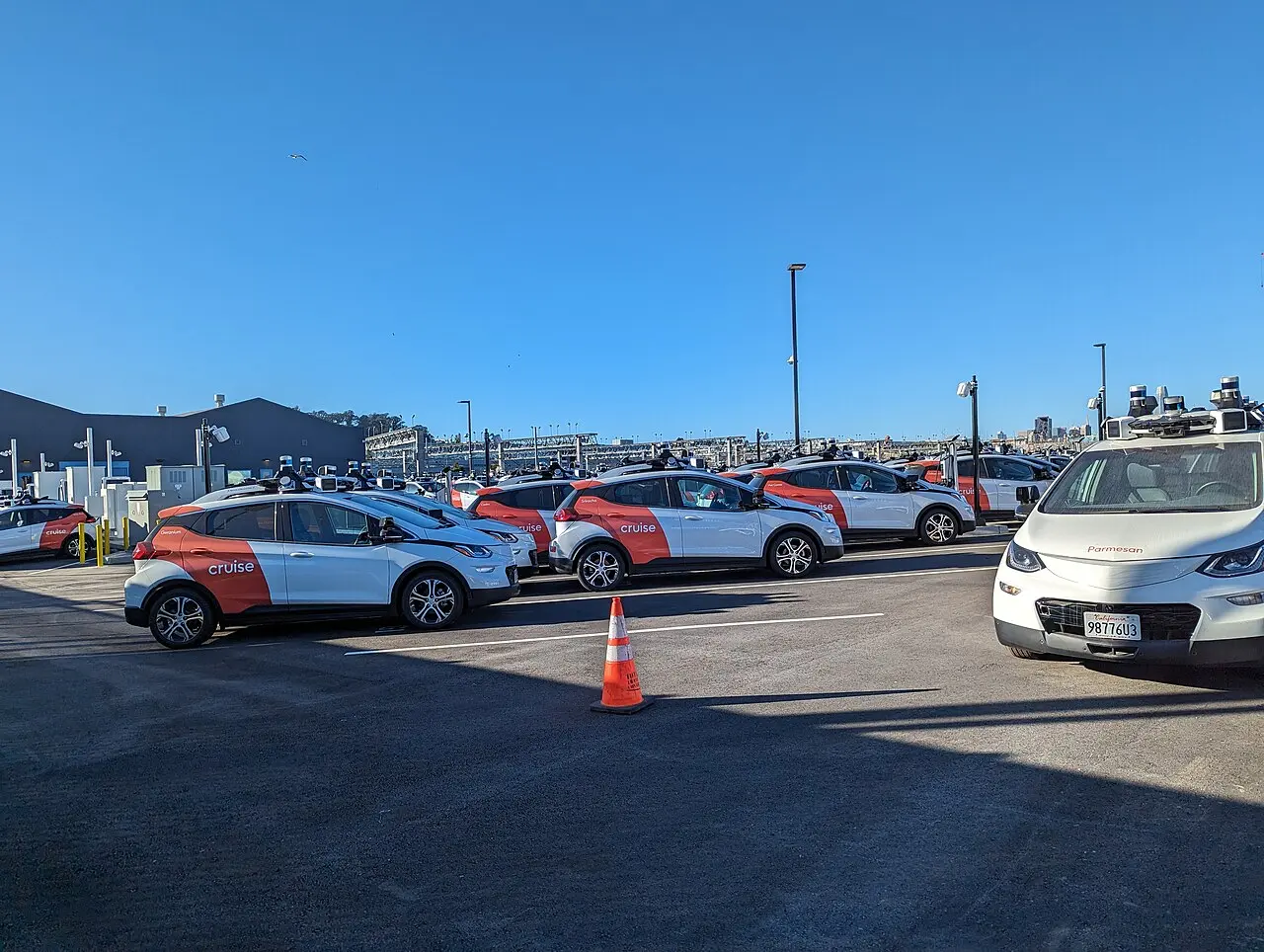
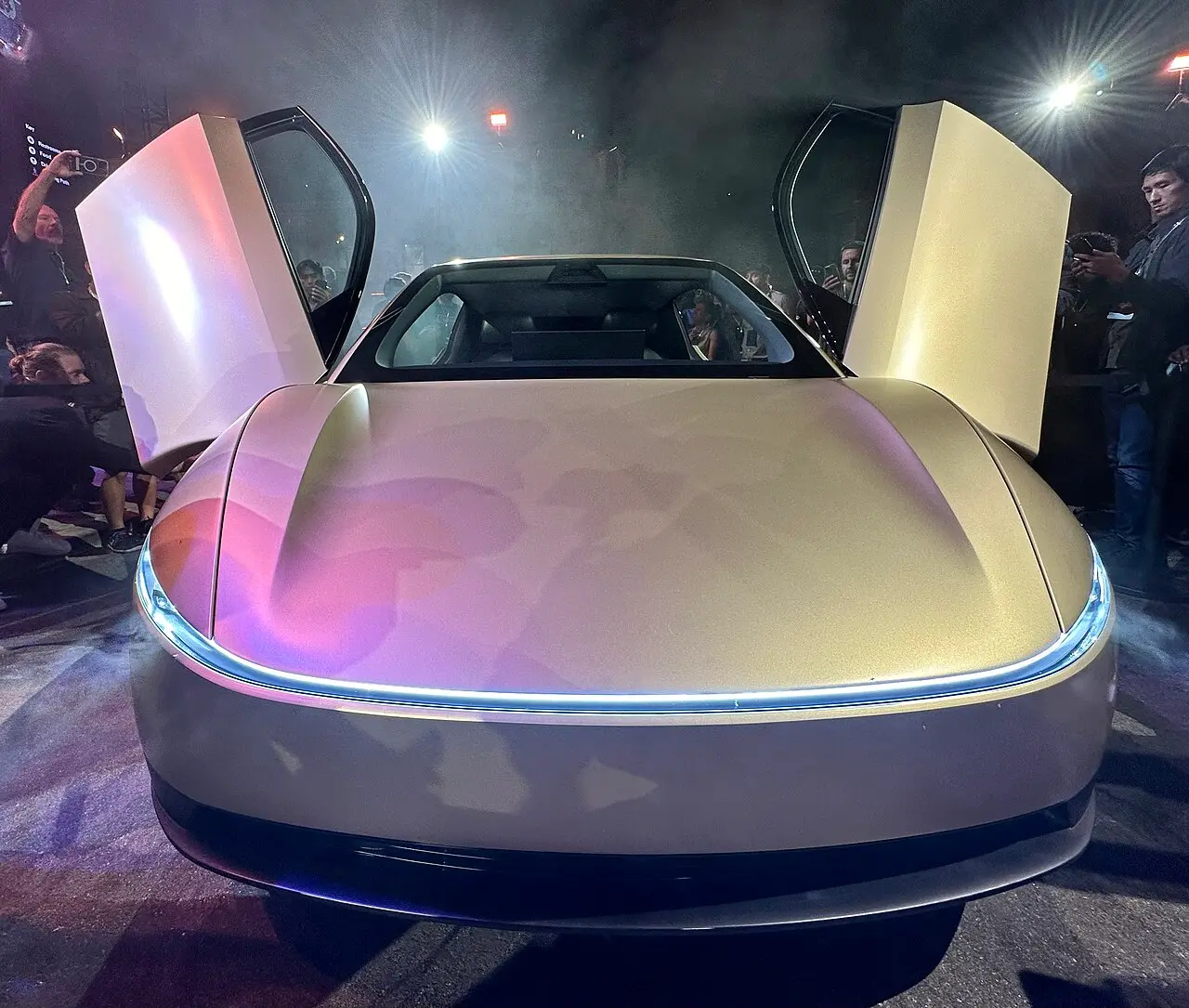
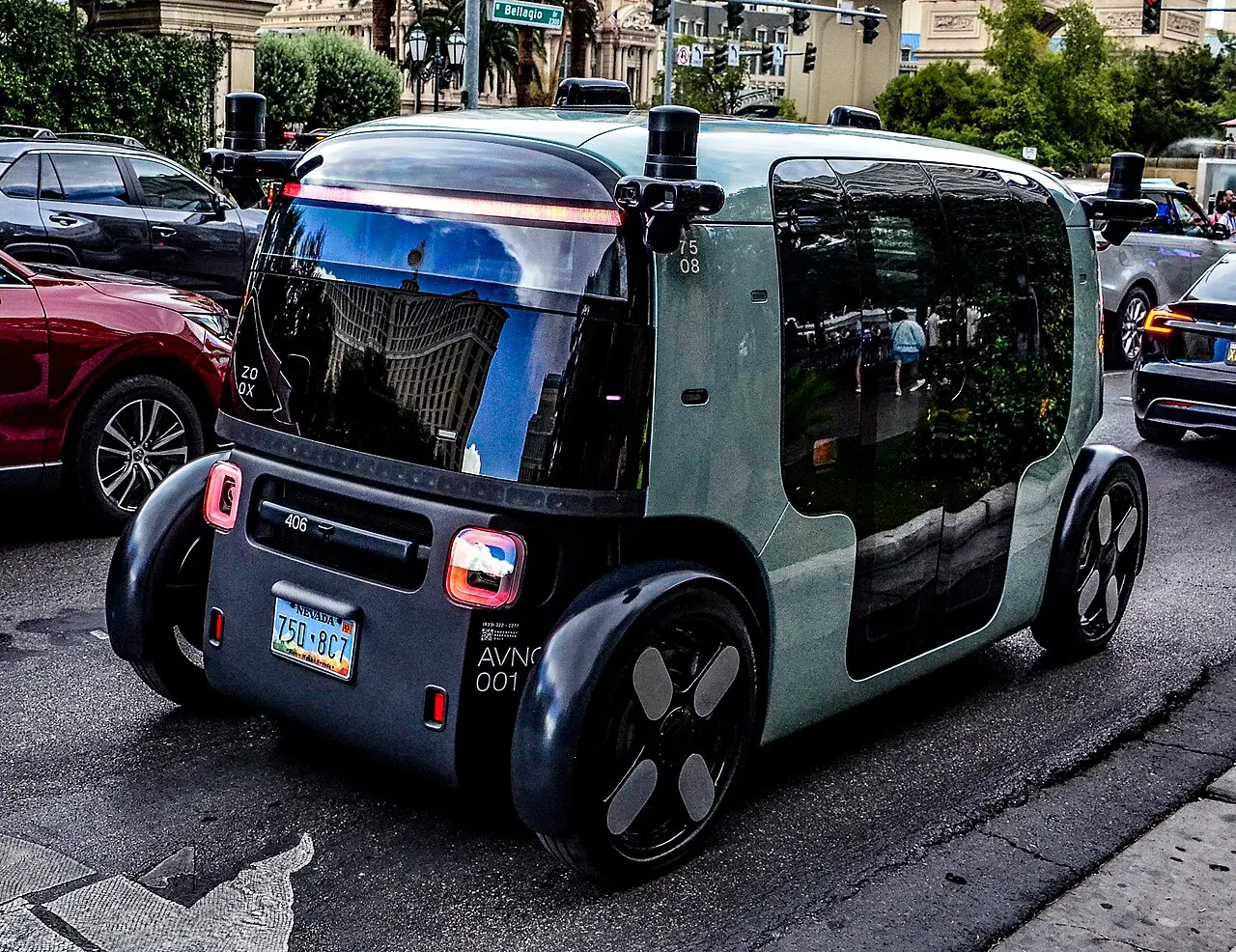
In the 2020s cars with nobody at the wheel carried passengers in cities. Waymo opened fully driverless rides to the public in metro Phoenix, Baidu won permits to charge robotaxi fares in Wuhan and Chongqing, and Zoox followed with a wheel-less vehicle, Tesla with monitored Model Ys. For private cars Level 3 entered the rules: Honda's Legend received Japanese type designation and was offered on lease, with 100 cars planned, and Mercedes won approval in Germany and the US. Japanese law began permitting Level 4 services. Cruise lost its permits over a crash and its account of it, and Tesla's FSD, a Level 2 aid, was faulted for its name.
- EVT.005T1Waymo Goes Fully Driverless — Ride-Hailing with No One at the WheelA History of Artificial IntelligenceAI and Society: A HistoryRead more →
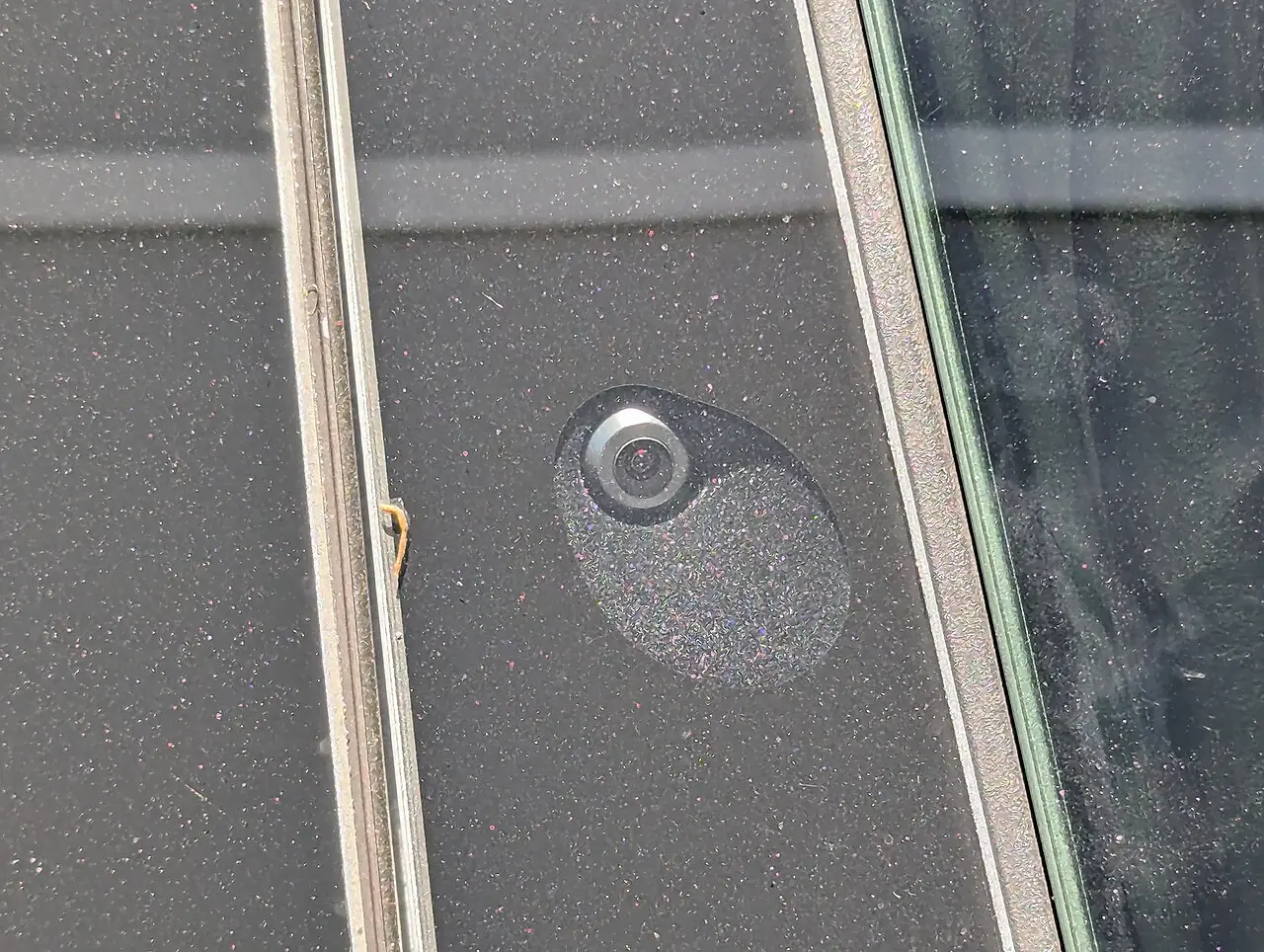
Mliu92 (Wikimedia Commons) · CC BY-SA 4.0 · Commons ↗ Driver-assistance software that Tesla sells as an option. In October 2016 Tesla announced full self-driving hardware in every car and began pre-selling a package promising eventual full autonomy. FSD Beta, which steers on city streets, reached Early Access members on the night of 20 October 2020, North American time, and by January 2023 about 400,000 people in the US and Canada had it. Tesla's own February 2023 recall report, covering 362,758 vehicles, describes FSD Beta as SAE Level 2 driver support that the driver must supervise at all times. It was renamed FSD (Supervised) at the end of March 2024, and in December 2025 the California DMV ruled the old marketing misleading. In April 2026 the Netherlands gave Europe's first approval, and at Germany's request it was renamed Tesla Assisted Driving in Europe. Test drives in Japan began in August 2025.
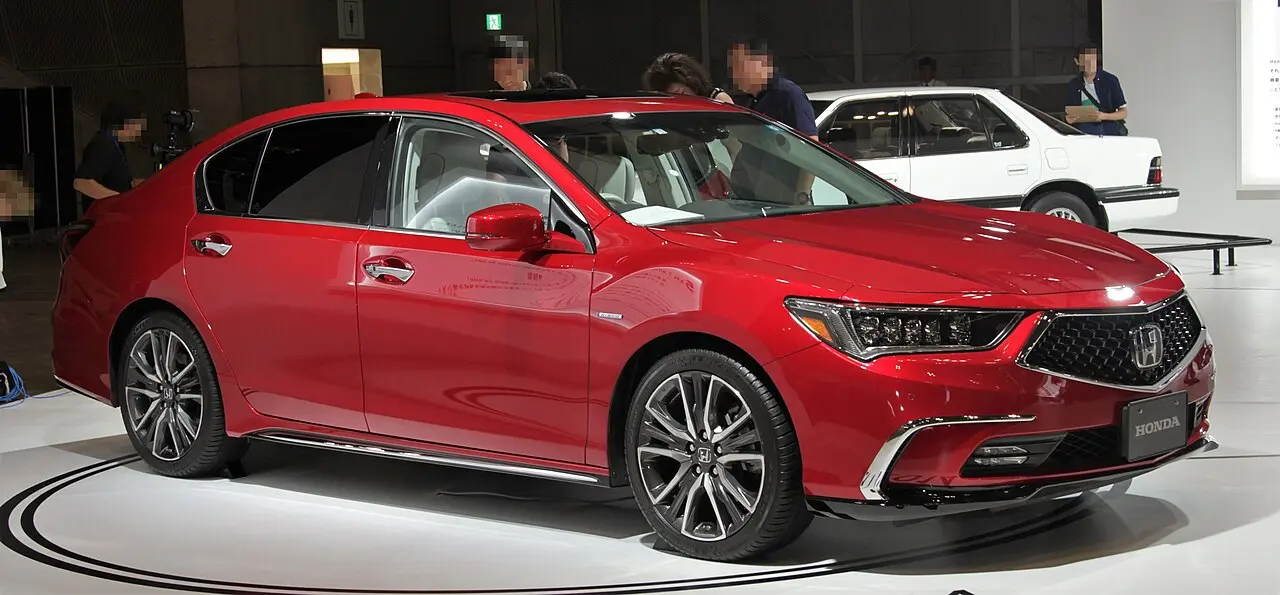
TTTNIS (Wikimedia Commons) · CC0 · Commons ↗ The Legend Hybrid EX・Honda SENSING Elite, which Honda put on sale in Japan on 5 March 2021, carried Traffic Jam Pilot, a congestion function at automated-driving Level 3 (conditional automation). On 11 November 2020 Japan's transport ministry had granted it what it called the world's first type designation for a vehicle with an automated operation device. On congested expressways, and within conditions such as below about 30 km/h before activation and about 50 km/h or less after, the system drives and the driver may watch TV on the navigation screen; the driver takes over when the conditions end. It rested on amendments to the Road Transport Vehicle Act and the Road Traffic Act passed in May 2019 and in force from April 2020. It was lease-only, with 100 cars planned, at ¥11 million. Production ended in 2021 with the closure of the Sayama plant. In 2023 Honda announced a Tokyo driverless-taxi plan with GM and Cruise, but in December 2024 GM stopped funding Cruise's robotaxi business.