The name 'artificial intelligence' was coined in the summer of 1956 at Dartmouth. Symbol, logic, expert system, each had its turn at the centre of the stage; neural networks survived two winters before returning. The Transformer, the launch of ChatGPT, the standoff between OpenAI and Anthropic, the EU AI Act, Nobel Prizes, the militarisation of AI, the DeepSeek-R1 shock — this timeline follows seventy years in which optimism, disillusionment, and geopolitics now run at the same time.
BLOCK 01/08
1950s
04 events
In the 1950s AI acquired a question, a name and its first machines that learned. Turing swapped the question of whether machines think for an imitation game played in writing, and ended his paper on the idea of a machine that learns. A proposal from McCarthy, Minsky, Rochester and Shannon gave the field its name, and the Dartmouth gathering of 1956 left behind a network of researchers more than any result. Rosenblatt's perceptron corrected its weights whenever it erred, and Samuel's checkers program used self-play to outplay its own author. Updating weights from errors would carry through to deep learning.
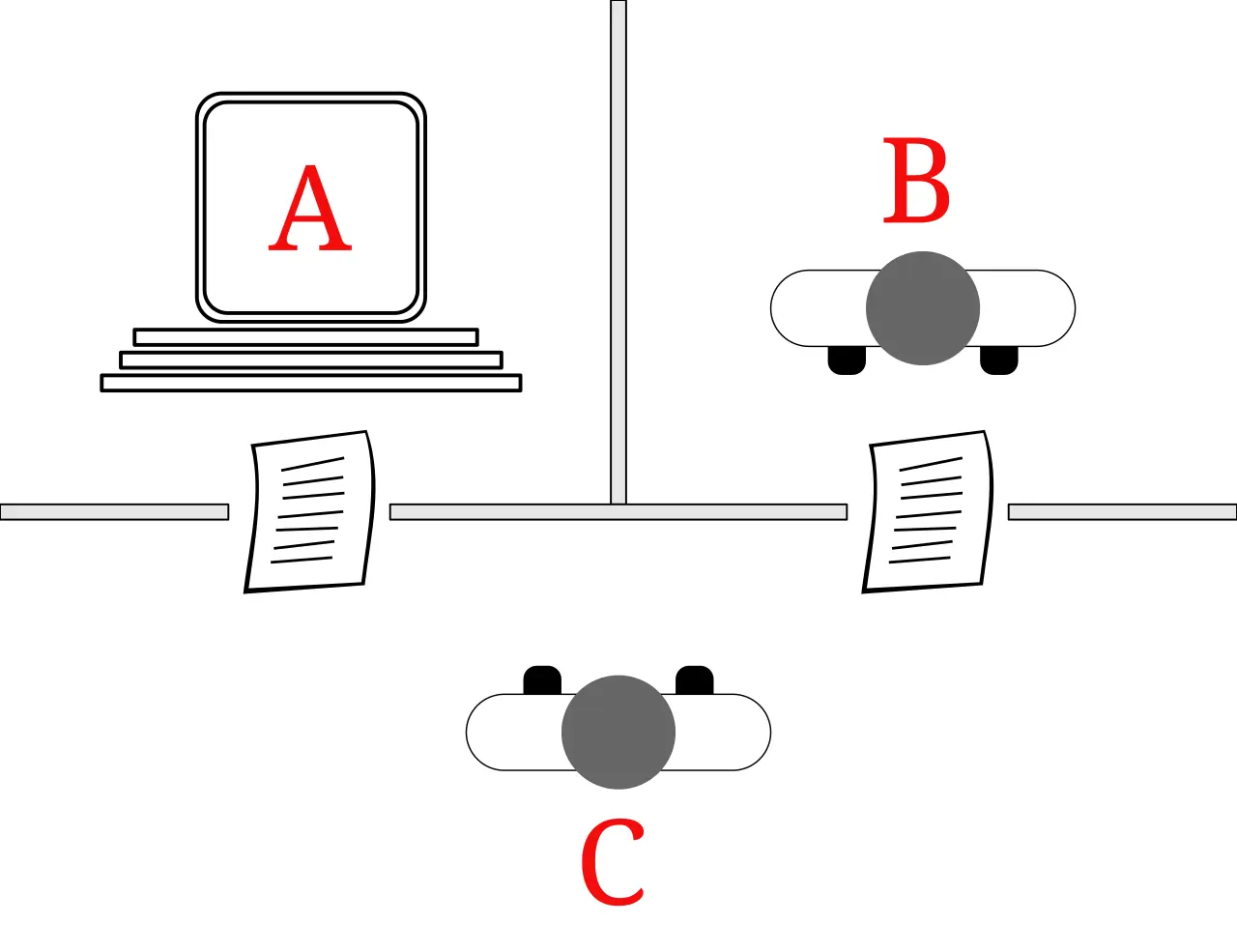
The test Alan Turing proposed in "Computing Machinery and Intelligence", published in the philosophy journal Mind in October 1950 (vol. 59, no. 236, pp. 433–460). Rather than define the words in "Can machines think?", Turing replaced the question with an imitation game: can an interrogator, communicating only in writing, tell which respondent is which? The paper predicted that in about fifty years a computer with a storage capacity of about 10⁹ would leave an average interrogator no more than a 70 per cent chance of a correct identification after five minutes of questioning; it answered nine objections, from the theological to extrasensory perception, and closed with the idea of a learning machine. Later claims of a pass recur, from Eugene Goostman in 2014 (which its organisers said fooled 33% of 30 judges) to a 2025 study in which GPT-4.5 was judged human 73% of the time, but the size and conditions of such trials remain disputed.
null0 (Wikimedia Commons, via Flickr) · CC BY-SA 2.0 · Commons ↗
A funding proposal dated 31 August 1955 and signed by John McCarthy, Marvin Minsky, Nathaniel Rochester, and Claude Shannon put the phrase 'artificial intelligence' into an official research document; the workshop it asked for ran at Dartmouth College in New Hampshire the following summer. The '2 month, 10 man' figure was the plan, not a roster — attendance was fluid and daily sessions drew three to eight people. Its historical weight lies less in any specific technical result than in establishing the field's own name and the researcher network that would carry it for decades.
John C. Hay, Albert E. Murray — Mark I Perceptron Operators' Manual, Cornell Aeronautical Laboratory (Wikimedia Commons) · Public domain · Commons ↗
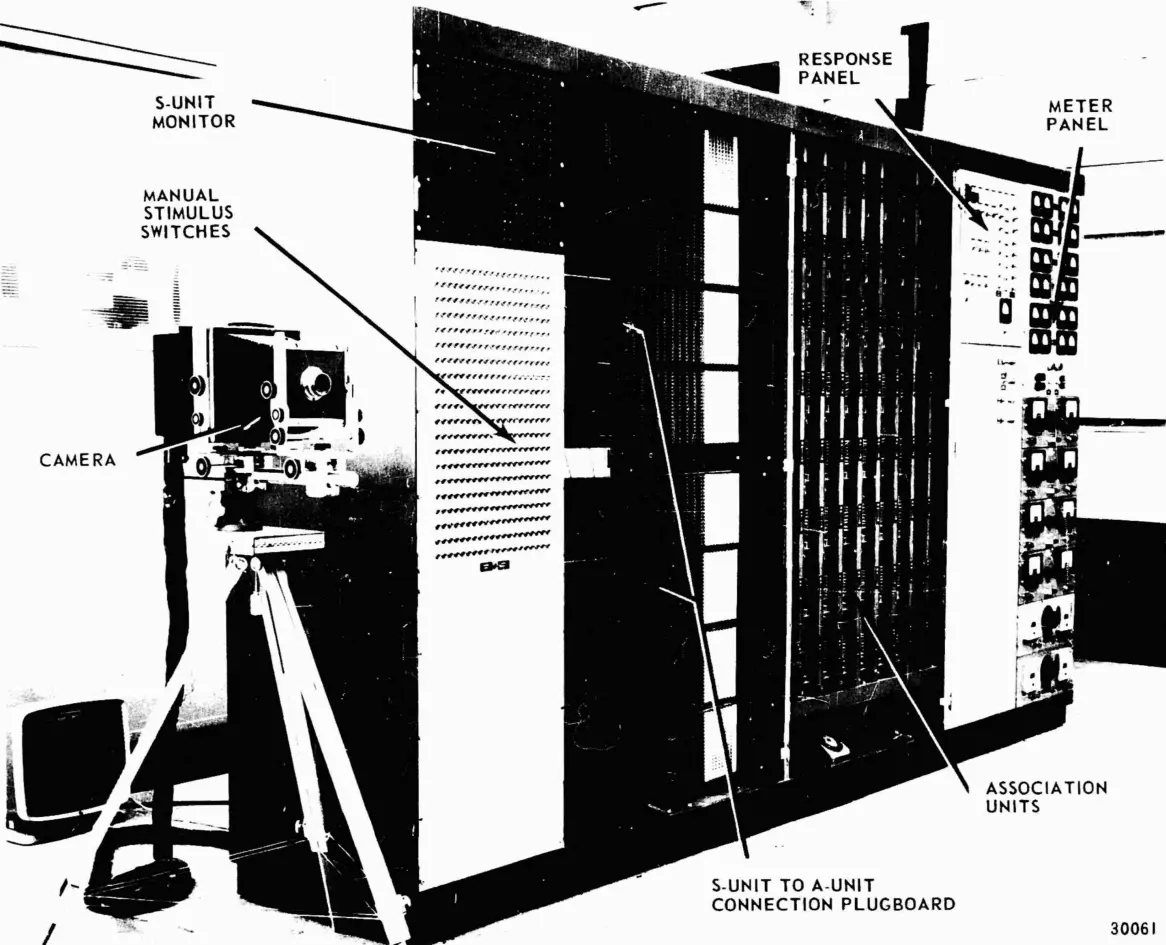
In July 1958 the US Office of Naval Research held a press conference for the perceptron of Frank Rosenblatt of the Cornell Aeronautical Laboratory: a learning device that weights its inputs, applies a threshold, and adjusts the weights whenever it errs. The demonstration was a simulation running on an IBM 704 that learned, in about fifty trials, to tell cards marked on the left from cards marked on the right. The theory appeared the same year in Psychological Review 65(6), 386–408. The Mark I Perceptron—a separate, purpose-built electromechanical machine whose sensory layer was a 20×20 array of 400 light sensors, with the weights of its 512 association units held on motor-driven potentiometers—was assembled at the same laboratory. It is one of the starting points of the lineage of neural networks that learn from their errors, and its skeleton of weighted sum, threshold and error-driven update carried over into later multilayer networks and deep learning.
NASA Ames Research Center (Wikimedia Commons) · Public domain · Commons ↗
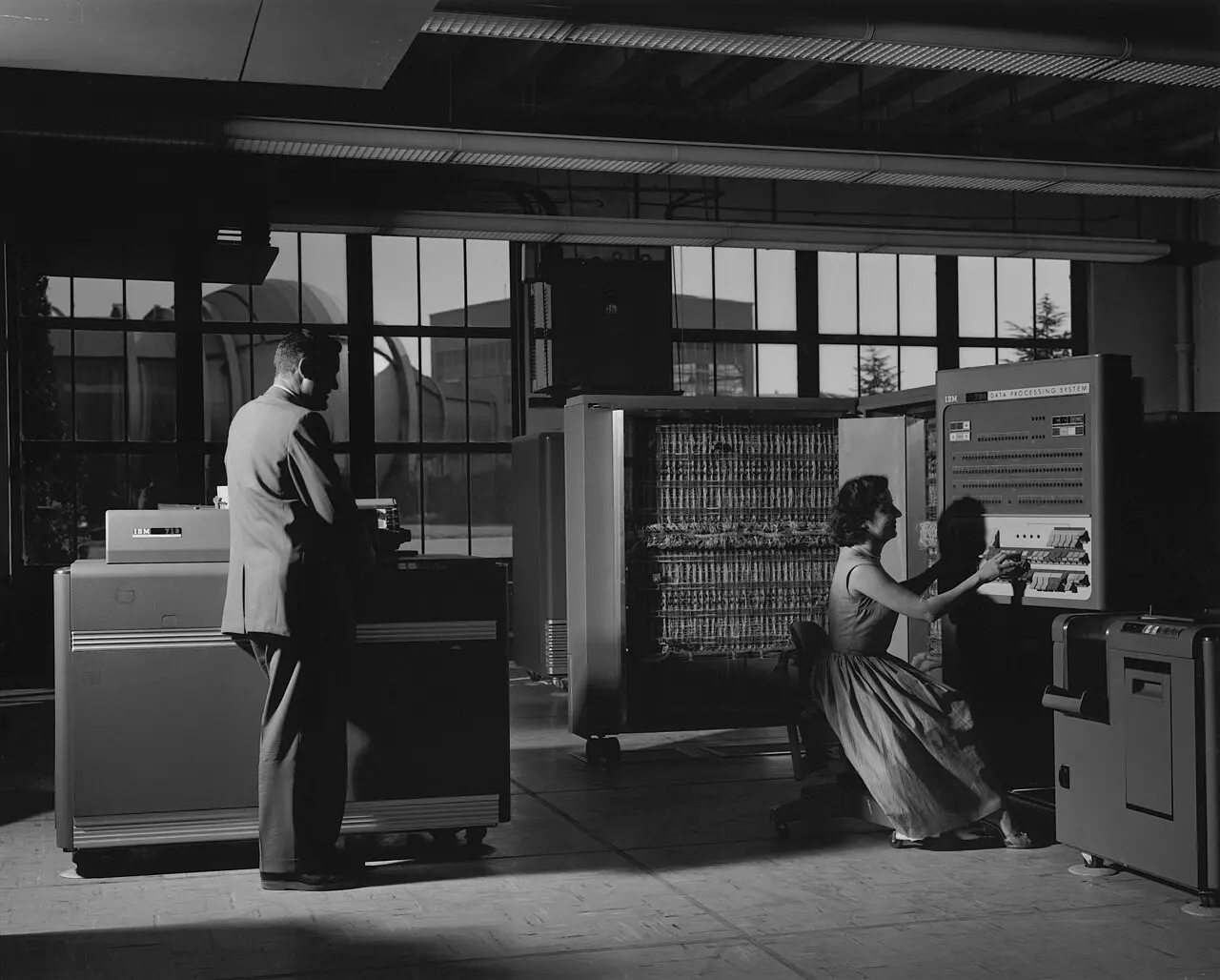
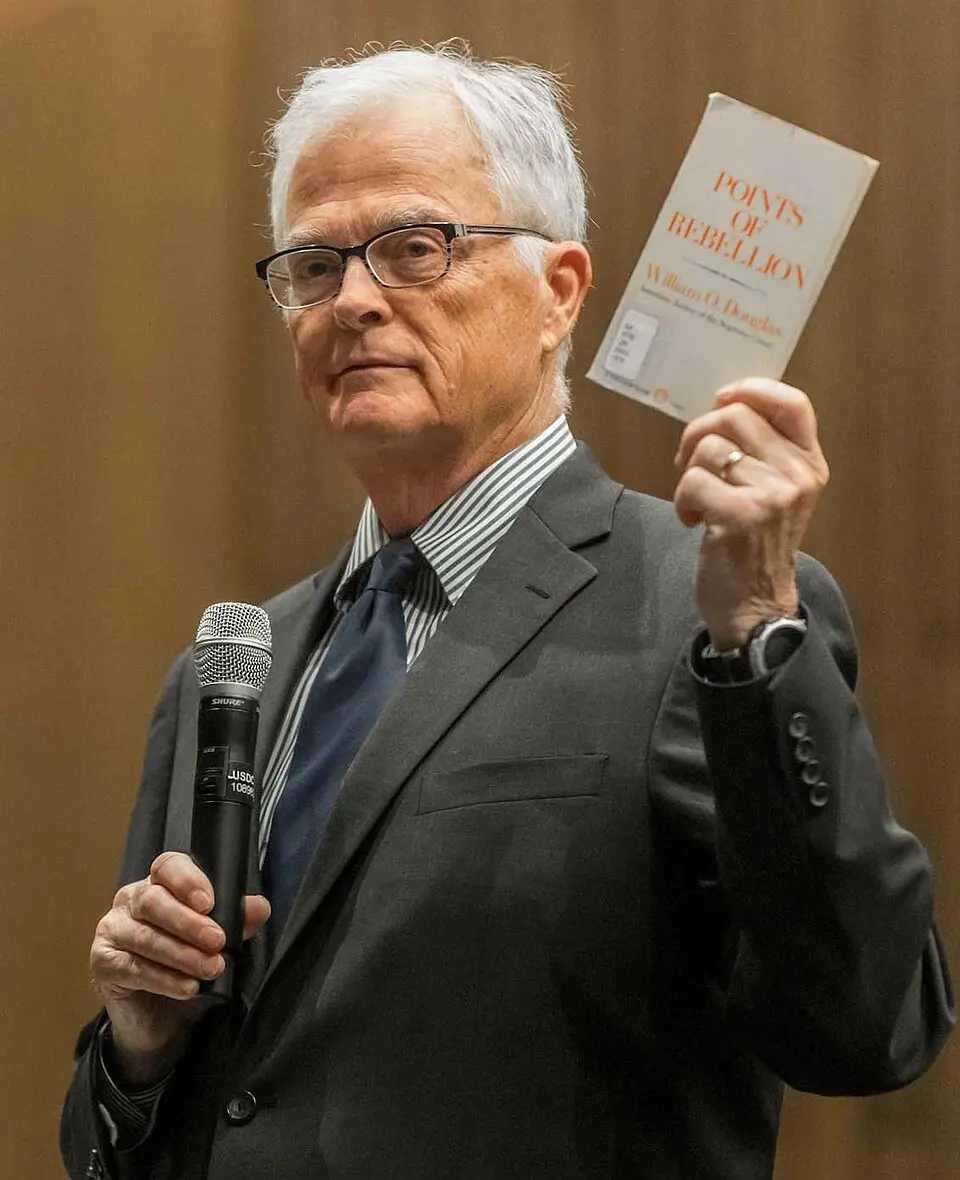
The paper "Some Studies in Machine Learning Using the Game of Checkers" by IBM's Arthur Samuel, published in the IBM Journal of Research and Development in July 1959 (vol. 3, no. 3, pp. 210–229). Using a checkers program on the IBM 704, Samuel tested two procedures, rote learning that stores board positions and learning by generalisation that adjusts the coefficients of a scoring polynomial through self-play, and reported that a computer could be made to learn to play better than the person who wrote the program. IBM credits Samuel with coining the term "machine learning". The widely circulated definition of machine learning as the field that gives computers the ability to learn without being explicitly programmed, however, does not appear in the text of this paper. According to IBM, the program beat the self-described checkers master Robert Nealey in 1962.
In the 1960s AI gained two demonstrations, one of conversation and one of movement. ELIZA did no more than pick out keywords and rephrase them, yet the impression of being understood arose on the speaker's side; the script that decided its replies was data that could be swapped. SRI's Shakey looked around with a camera and rangefinder while a radio-linked computer planned its moves, and A* path-finding and the STRIPS planner grew out of it. Both came out of ARPA-funded research, but Shakey was later hurt by the Lighthill report's criticism and DARPA's change of course, leading into the lean years that followed.
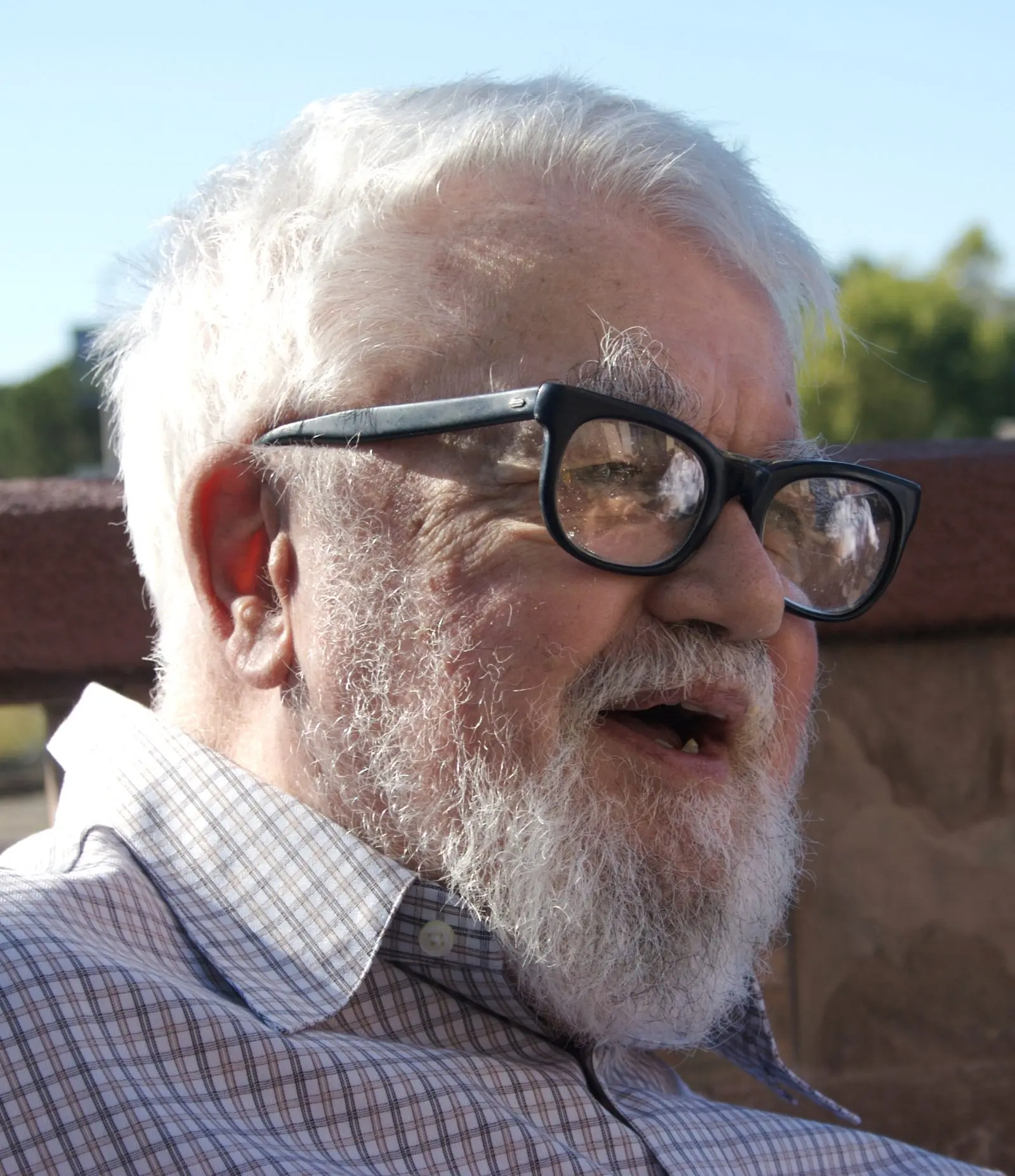
Joseph Weizenbaum wrote ELIZA in MAD-SLIP at MIT and published it in Communications of the ACM in January 1966. ELIZA was the engine; what it said was governed by a swappable 'script', and the famous one—DOCTOR—imitated a Rogerian psychotherapist. It picked keywords out of the input and rephrased them back using decomposition and reassembly rules. In the paper Weizenbaum argued the impression of being understood is the speaker's own contribution—people attribute 'background knowledge, insights and reasoning ability' to their conversational partner—and he later wrote *Computer Power and Human Reason* (1976) to warn against the effect.
SRI International (Wikimedia Commons) · CC BY-SA 3.0 · Commons ↗
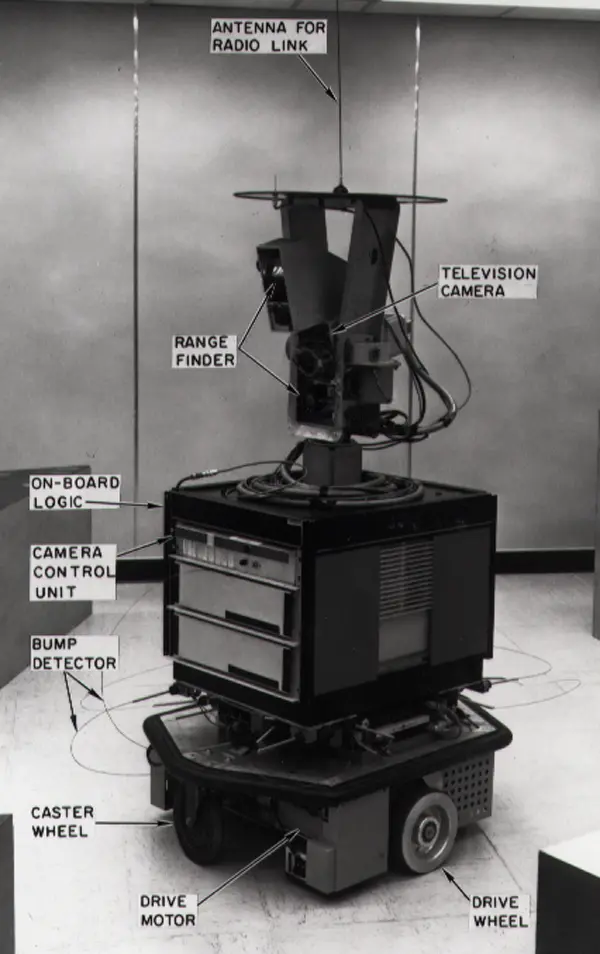
A mobile-robot project that the Artificial Intelligence Center of the Stanford Research Institute (SRI) began in March 1966 and ran until 1972. Funded by ARPA, it was initiated by Charles A. Rosen and led by Nils J. Nilsson, Bertram Raphael and Peter E. Hart. Shakey carried a television camera, a rangefinder and bump detectors, while a large computer linked by radio planned its actions. SRI describes it as the first mobile robot able to perceive and reason about its surroundings, and the IEEE named it a Milestone in 2017. The A* search for path-finding (1968), the STRIPS planner (1971) and a revised Hough transform (1972) came out of it. The National Research Council's history records that the 1973 Lighthill report singled out robotics for criticism and that DARPA shifted funds to mission-oriented research, hurting SRI.
University of Edinburgh, School of Informatics, Freddy II Project · CC BY 4.0 · Commons ↗
Commissioned by the British Science Research Council, James Lighthill produced a report dated July 1972 and published in 1973 that concluded 'in no part of the field have the discoveries made so far produced the major impact that was then promised.' It provoked a loss of confidence in AI among British academics and the funding body that lasted almost a decade. In the United States, the Mansfield Amendment of 1969 restricted Defense Department support to research with a direct military relevance, and DARPA ended its Speech Understanding Research programme (1971–76) without the planned follow-on; the Lighthill report itself prompted a Pentagon review of DARPA's AI programme. The lean years from about 1974 to 1980 came to be called the first AI winter, though the historian Thomas Haigh disputes the label, pointing out that the AI research community kept growing throughout.
In the 1980s AI left the laboratory for industry and national planning. DEC's R1 was configuring computer orders day to day from January 1980, and companies invested in systems that turned expert judgement into rules. MITI launched the Fifth Generation project in 1982, and the US, Britain and Europe, seeing a threat, set up programmes of their own. Around 1987 the Lisp machine market collapsed, and hand-written rules, costly to maintain and brittle, slid into a second winter. Meanwhile backpropagation showed hidden units learning features of a task by themselves, and a convolutional network at Bell Labs read zip codes. Learning from data rather than rules was handed on.
Jason Riedy (Wikimedia Commons) · CC BY 2.0 · Commons ↗
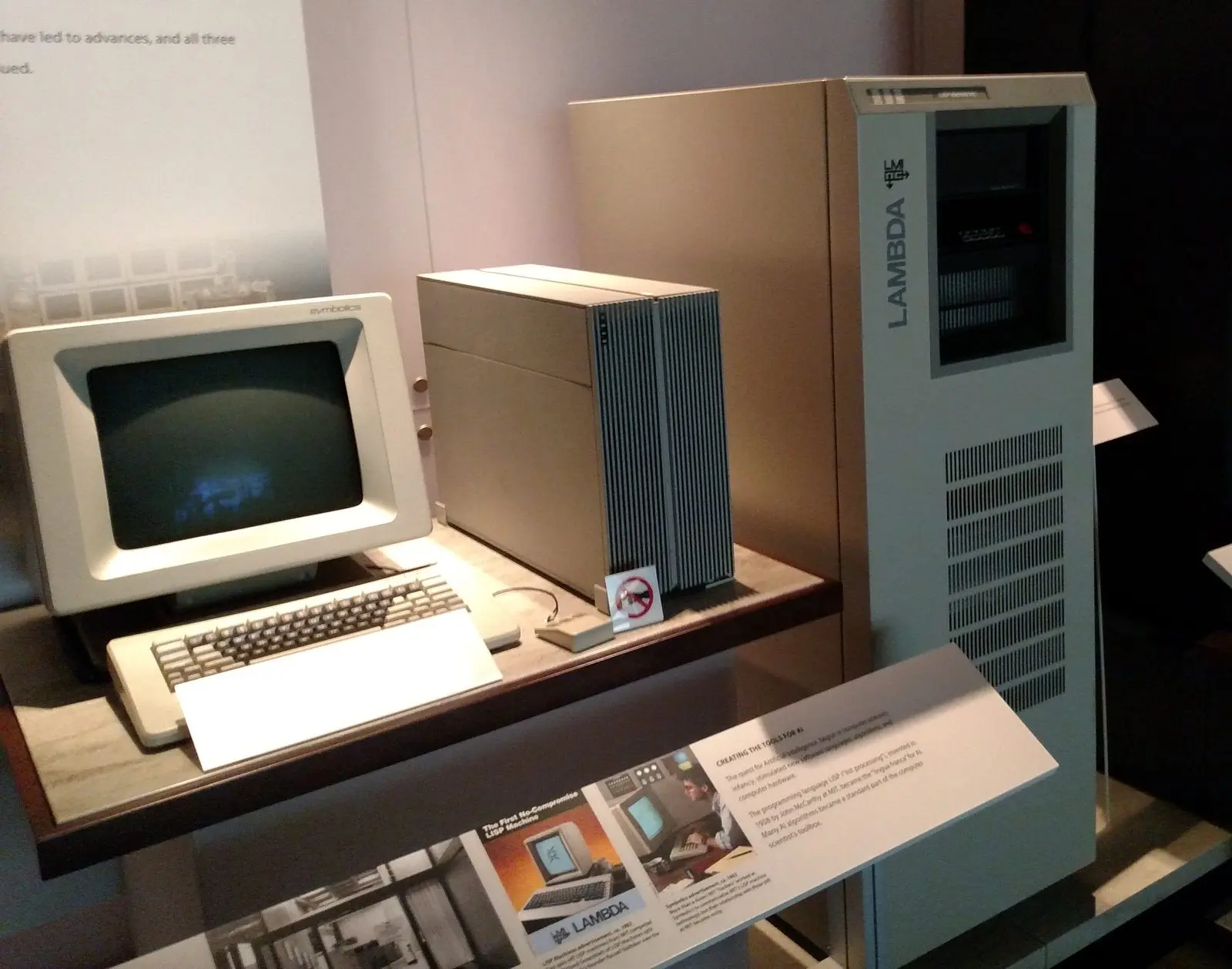
Expert systems, AI programs that hold a specialist's knowledge as if-then rules and use an inference engine to chain them into expert-level advice, spread through industry in the 1980s. The line began with DENDRAL, a chemistry program Lederberg and Feigenbaum started at Stanford in the mid-1960s, and took its classic form in MYCIN, which advised on antimicrobial therapy in the 1970s; in a 1979 JAMA evaluation, 65% of its prescriptions for ten meningitis cases were rated acceptable by outside experts. R1 (called XCON inside DEC), built by John McDermott of Carnegie Mellon with DEC, was configuring VAX-11/780 orders in regular use from January 1980. In Japan the Ministry of International Trade and Industry started the Fifth Generation Computer project in 1982, with ICOT building parallel inference machines for knowledge-based information processing (about ¥54 billion over 11 years, ending with fiscal 1992). Around 1987 the market for specialised Lisp machines collapsed, and with expert systems proving costly to maintain and brittle, the boom gave way to the second AI winter.
A national research programme that Japan's Ministry of International Trade and Industry (MITI) started in fiscal 1982. The Institute for New Generation Computer Technology (ICOT), founded in April 1982, pursued new computer technology for knowledge information processing and built the PIM parallel inference machines, the KL1 parallel logic language and the PIMOS operating system. The project ended in March 1993, and the government's final evaluation concluded that it had met its initial goals. Abroad it was seen as a threat, and the US MCC consortium and DARPA's Strategic Computing Program, Britain's Alvey programme and the European Community's Esprit moved in parallel. Its software was released as ICOT Free Software, but little became a product, and Shunichi Uchida, who later headed ICOT, writes that Japan's computer industry then fell behind in the era of PCs and networks.
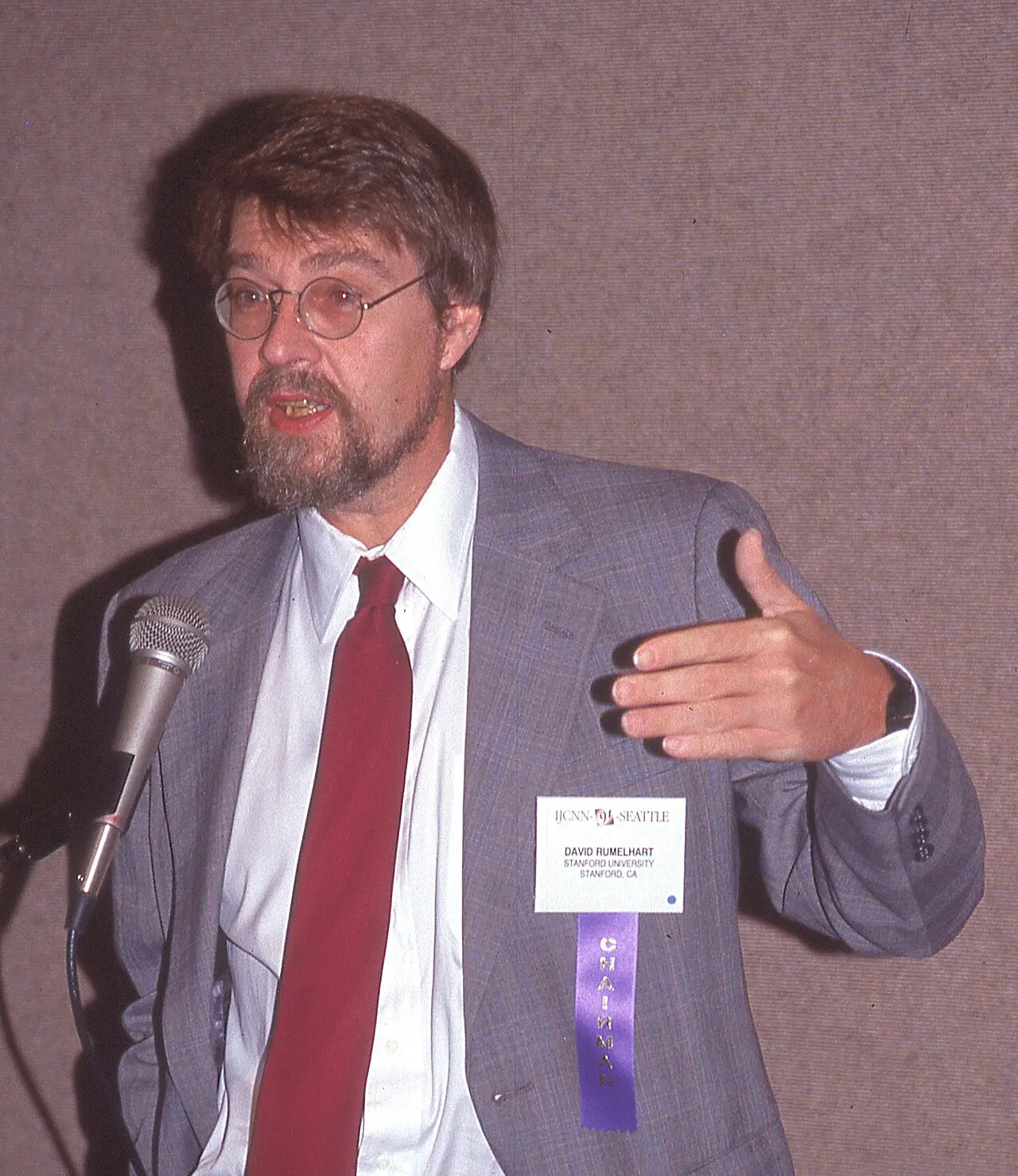
The paper "Learning representations by back-propagating errors" by David E. Rumelhart, Geoffrey E. Hinton and Ronald J. Williams, published in Nature on 9 October 1986 (vol. 323, pp. 533–536). Using backpropagation, which adjusts weights by tracing the output error backwards, it showed experimentally that hidden units belonging to neither input nor output come to represent features of the task, and it spread the method as a way to train multilayer neural networks. Computing derivatives in reverse had precedents, including Seppo Linnainmaa's 1970 master's thesis, and Jürgen Schmidhuber and others criticise how Paul Werbos's work is placed and how the 1986 paper cited prior art. In 2019 ACM gave Hinton and others the Turing Award, noting that the algorithm is standard in most neural networks today.
Aston Zhang, Zachary C. Lipton, Mu Li and Alexander J. Smola, Dive into Deep Learning (Wikimedia Commons) · CC BY-SA 4.0 · Commons ↗
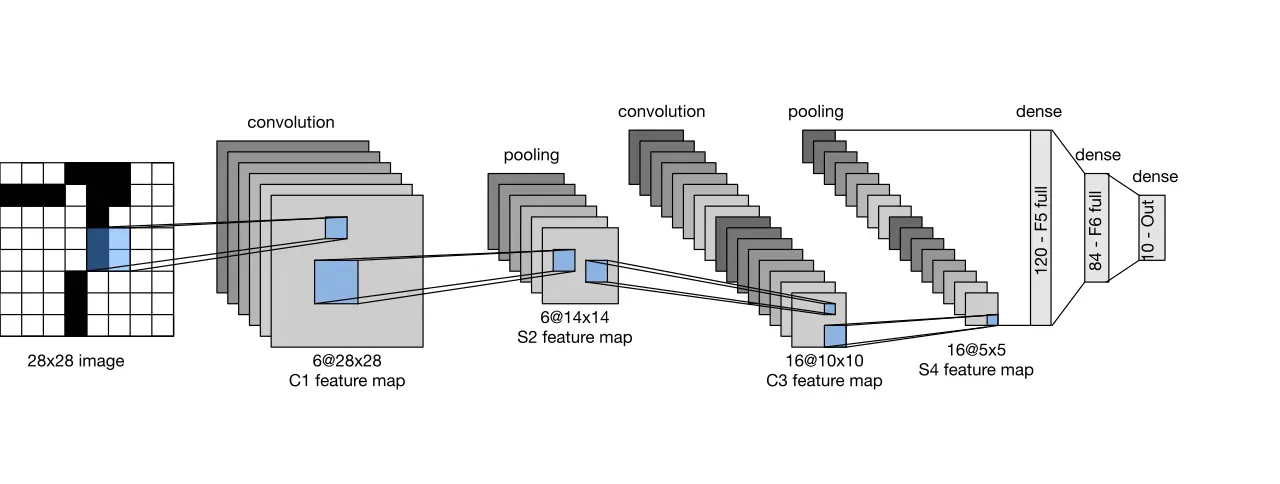
A line of convolutional neural networks that began with "Backpropagation Applied to Handwritten Zip Code Recognition", published in Neural Computation in December 1989 by Yann LeCun and six colleagues at AT&T Bell Laboratories. Using 9,298 handwritten zip-code digits from US mail, a network with weight sharing and feature maps was trained by backpropagation and reached a 5.0% test error. A 1998 paper in the Proceedings of the IEEE described LeNet-5 and the MNIST dataset and reported a 0.95% test error. According to that paper, a check-reading system using the technique was built into NCR's products and fielded in several US banks from June 1996. In 2019 ACM cited LeCun, in awarding the Turing Award, as the first to train a convolutional network on images of handwritten digits.
In the 1990s IBM's laboratories kept trying to let machines learn from outcomes and data rather than from knowledge people wrote down. Statistical machine translation learned word correspondences as probabilities from the Canadian Parliament's bilingual proceedings, and TD-Gammon learned to judge positions from nothing but the results of games against itself, rewriting human opening play. Deep Blue, which beat world champion Kasparov in 1997, was instead a machine of vast search on custom chips and an evaluation function mostly tuned by hand. This decade of learning machines beside searching machines left a path to AlphaGo's self-play and to neural translation trained on parallel text.
Simon Greig (Wikimedia Commons) · CC BY 2.0 · Commons ↗
The paper "A Statistical Approach to Machine Translation" by eight researchers at IBM's Thomas J. Watson Research Center, including Peter F. Brown, Fredrick Jelinek and Robert L. Mercer, published in Computational Linguistics (vol. 16, no. 2) in June 1990. It framed translation as finding the output that maximises the product of a language model and a translation model, and trained on about three million sentence pairs extracted from Hansard, the English–French record of the Canadian Parliament. In a French-to-English test of 73 sentences, 48% were reasonable translations by the authors' criterion, and correcting the output took about 60% fewer keystrokes than typing from scratch. Learning from parallel text instead of writing rules carried on through Google's statistical translation in 2006 to neural machine translation in 2016.
Ptkfgs (Wikimedia Commons) · Public domain · Commons ↗
A backgammon program developed by Gerald Tesauro at IBM's Thomas J. Watson Research Center. Its neural network played against itself and learned to evaluate positions from game outcomes using Richard Sutton's temporal-difference method, TD(λ). A May 1992 paper in Machine Learning reported that a network learning from scratch with no built-in knowledge beat commercial programs and surpassed networks trained on expert games. A version with two-ply search lost only 7 points over 38 games against top players at the 1992 World Cup of Backgammon. TD-Gammon's analysis rewrote opening theory, and according to Sutton and Barto's textbook, programs inspired by it greatly raised the level of human tournament play. The method was later adapted for IBM Watson's wagering strategy.
Christina Xu (Wikimedia Commons, via Flickr) · CC BY 2.0 · Commons ↗
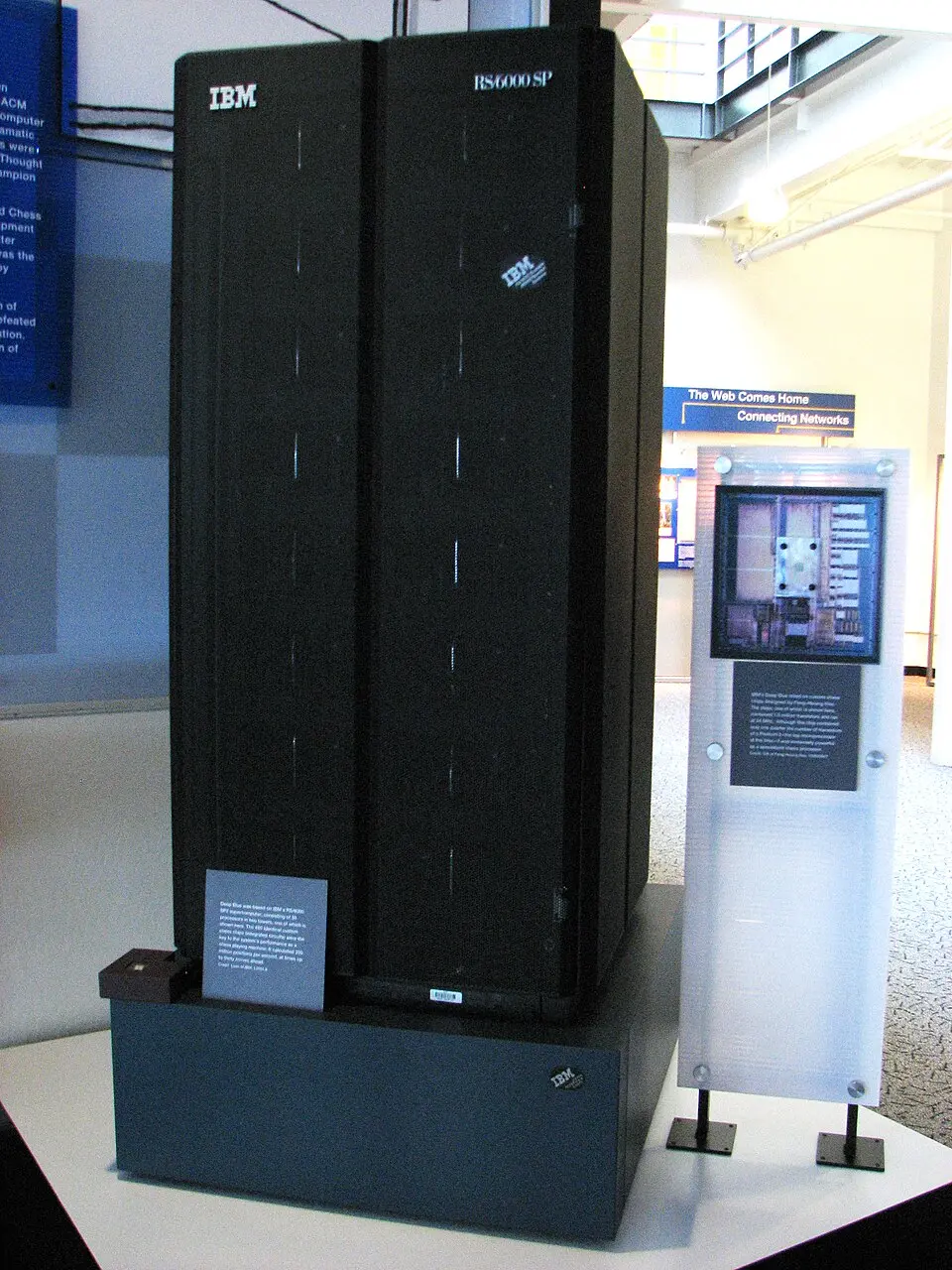
In a six-game rematch played at the Equitable Center in New York from 3 to 11 May 1997, IBM's chess-specific machine Deep Blue beat the reigning world champion Garry Kasparov 3½–2½. Their first match, in Philadelphia in February 1996, had gone to Kasparov 4–2, though Deep Blue took game 1 there, which IBM counts as the first game a computer won against a reigning world champion under regular time controls. Over the intervening year the team designed a new chip whose evaluation function grew from around 6,400 features to over 8,000, more than doubled the number of chess chips from 216 to 480, and worked with grandmaster Joel Benjamin. IBM describes the 1997 result as the first time a computer defeated a reigning world champion under standard tournament time controls. Its substance was game-tree search on custom chips at up to 200 million positions per second plus a largely hand-built evaluation function, with nothing like today's deep learning.
In the 2000s AI moved into homes and onto roads, while the data it learned from began to be questioned in its own right. Roomba covered floors without a map, turning whenever it bumped into something. DARPA's desert race had no finisher in 2004, but in 2005 Stanley got through on perception it had learned. In 2006 Hinton and colleagues showed how to train deep networks layer by layer. ImageNet had workers around the world sort 3.2 million images, and ratings released for the Netflix Prize were shown to link back to individuals despite anonymisation. ImageNet's contest and Google's self-driving team carried into the next decade.
Larry D. Moore (Wikimedia Commons) · CC BY 4.0 · Commons ↗
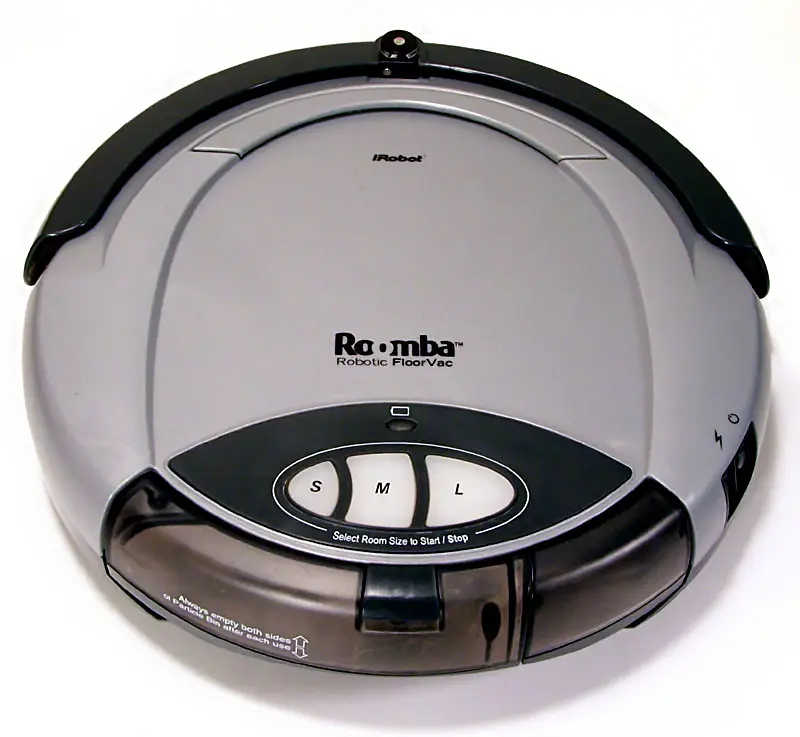
A robot vacuum cleaner announced in the United States by iRobot on 18 September 2002. The first model, the Roomba Intelligent FloorVac, carried a suggested retail price of $199.95 and went on sale online that week at Brookstone, The Sharper Image and Hammacher Schlemmer, reaching stores in October. iRobot billed it as the first automatic floor vacuum available in the US. The company had been founded in 1990 by Rodney Brooks, Colin Angle and Helen Greiner of the MIT Artificial Intelligence Lab; the robot used infrared sensors to avoid stairs and followed walls as it swept. By iRobot's own count, sales passed one million in October 2004 and two million in May 2006. It reached Japan in 2004 through a sole distributor. Later models that map the home raised questions about data; Amazon abandoned its purchase of iRobot in January 2024, iRobot entered Chapter 11 in December 2025, and in January 2026 it passed to its Chinese contract manufacturer, Picea.
DARPA (Wikimedia Commons) · Public domain · Commons ↗
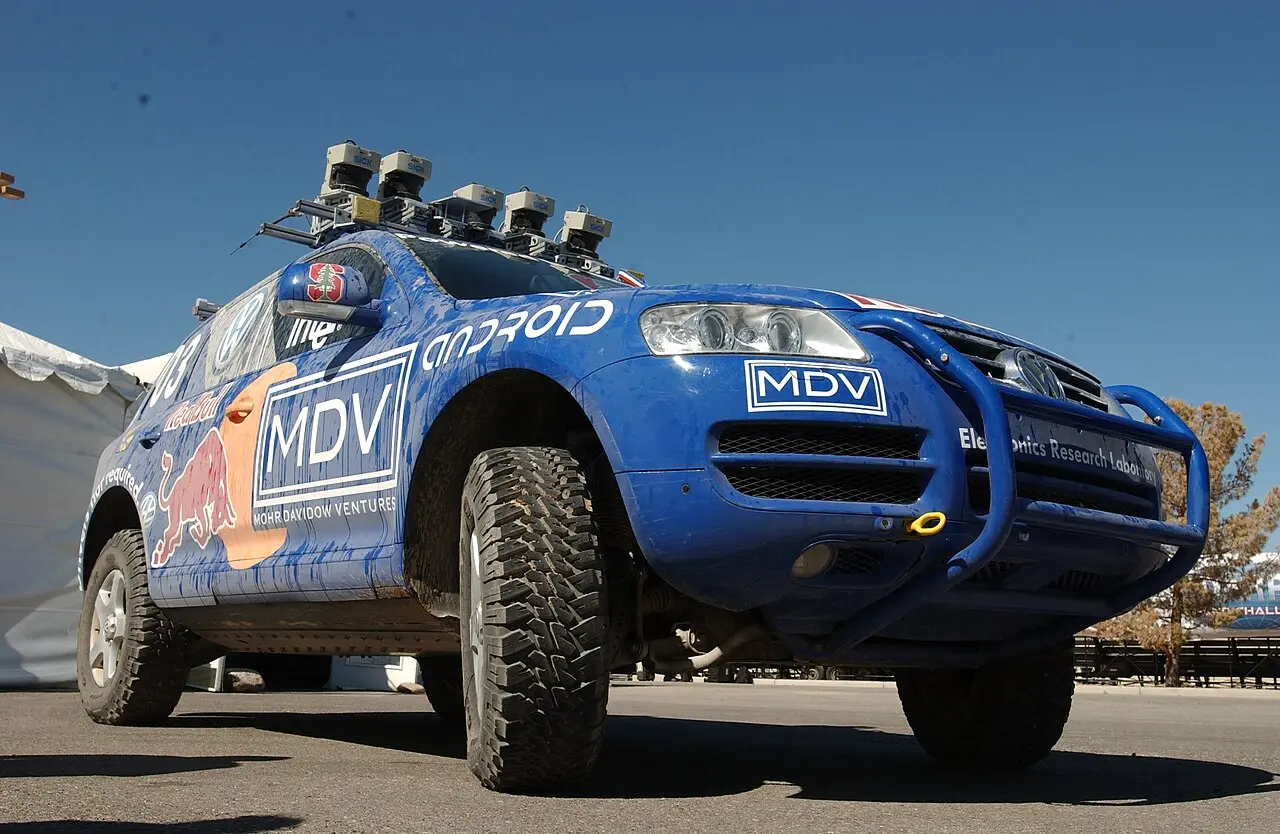
A prize competition for driverless vehicles run by the US Defense Advanced Research Projects Agency (DARPA). At the first race on 13 March 2004, 15 vehicles set out on a 142-mile course from Barstow, California, to Primm, Nevada; none finished, the best travelled 7.5 miles by DARPA's count, and the $1 million prize went unclaimed. At the second race on 8 October 2005, 195 teams registered, 23 vehicles started and five completed a 132-mile course; Stanford University's 'Stanley' won in 6 hours, 53 minutes and 58 seconds and took $2 million. The team, led by Sebastian Thrun, fitted a Volkswagen Touareg with laser range finders, a camera and GPS and had it judge the road with machine learning and probabilistic reasoning. An Urban Challenge in a mock city followed in 2007. When Google revealed its self-driving car project in 2010, its team was built from leading figures of these races, a line that led to Waymo.
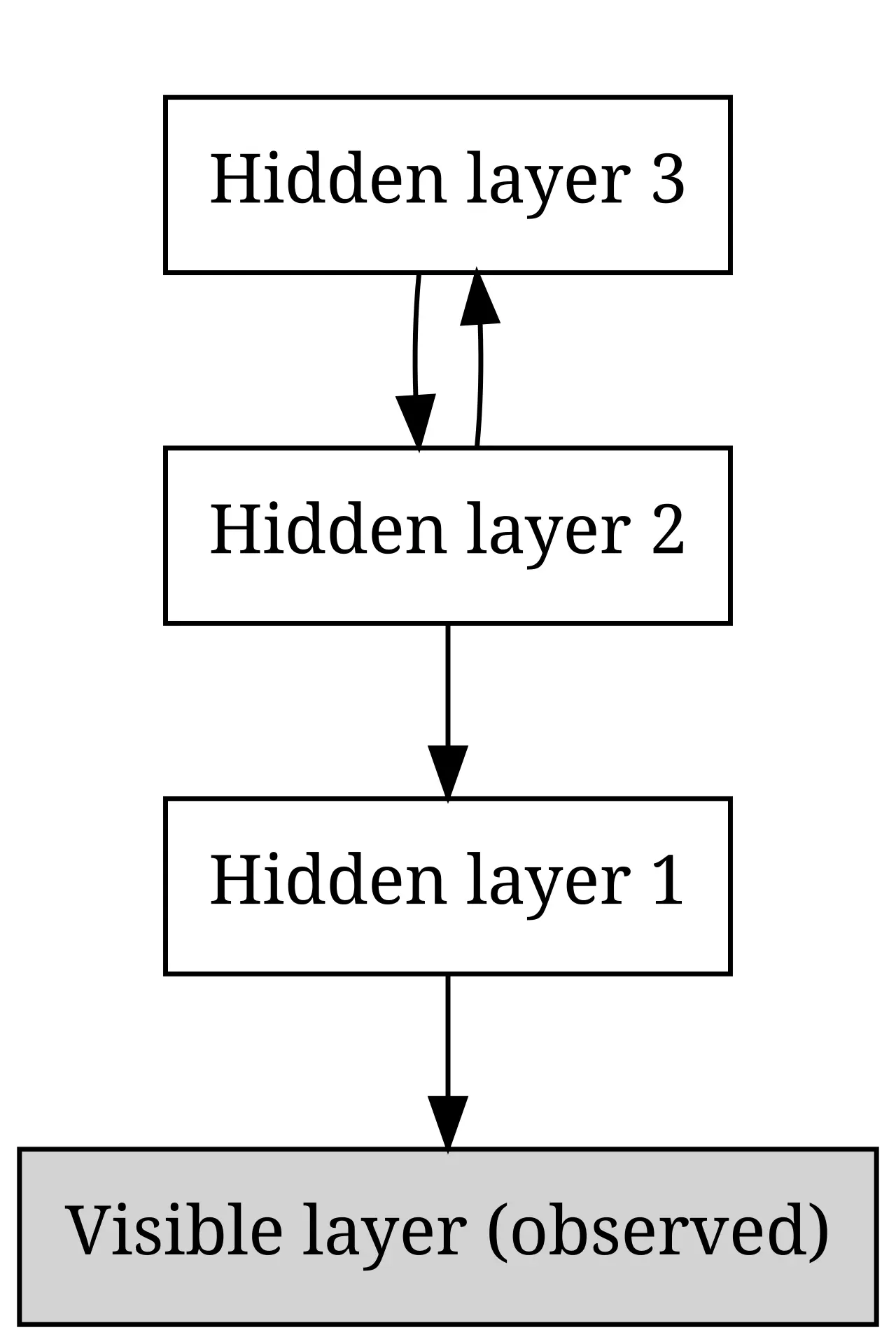
In July 2006 Geoffrey Hinton and colleagues published two papers showing how to train neural networks with many layers. In Neural Computation, Hinton, Simon Osindero and Yee-Whye Teh proposed 'deep belief nets', built by training restricted Boltzmann machines greedily one layer at a time and stacking them, and reported a 1.25% error rate on the MNIST handwritten digits. On 28 July, a Science paper by Hinton and Ruslan Salakhutdinov showed that deep autoencoders initialised by this pre-training learn better low-dimensional codes than principal components analysis. The 2015 Nature review by LeCun, Bengio and Hinton states that interest in deep networks was revived around 2006 by researchers brought together by CIFAR, and it is the usual authority for treating that year as the restart of 'deep learning'. Jürgen Schmidhuber objected that the account referred only to the authors' own labs and was misleading.
ITU Pictures (Wikimedia Commons) · CC BY 2.0 · Commons ↗
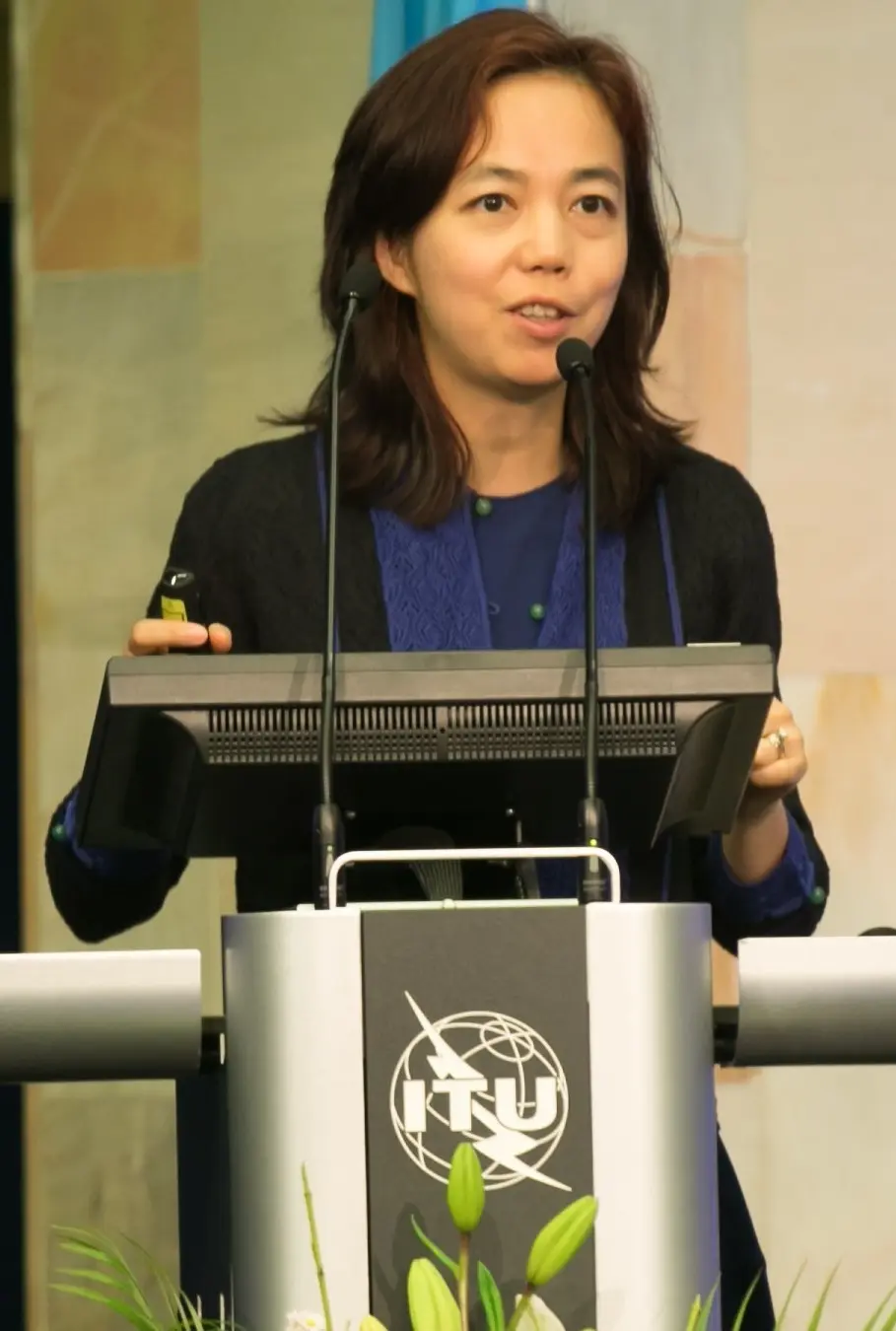
A large-scale image database built at Princeton University by Jia Deng, Fei-Fei Li and colleagues. Their paper, 'ImageNet: A Large-Scale Hierarchical Image Database', was presented at CVPR 2009 in Miami in June 2009, when it held 3.2 million images for 5,247 concepts drawn from the WordNet lexical hierarchy. Candidate images gathered from search engines were sorted by workers on Amazon Mechanical Turk who voted on each one, and the authors reported an average precision of 99.7%. By Li's account, about 50,000 workers in 167 countries took part. From 2010 the annual ILSVRC recognition challenge was run on the data, and in 2012 it was the stage for AlexNet's win. Today it holds about 14.2 million images in 21,841 concepts. In 2019 it was criticised for photographs of people collected without consent and for offensive labels; its maintainers proposed removing most person categories and in 2021 published a study of blurring faces.
Coolcaesar (Wikimedia Commons) · CC BY-SA 3.0 · Commons ↗
A public machine-learning competition to predict film ratings, launched by Netflix on 2 October 2006. Netflix released more than 100 million ratings from about 480,000 members and promised $1 million to the team that cut the error (RMSE) of its Cinematch recommendation system by 10%. On 21 September 2009 the prize went to BellKor's Pragmatic Chaos, a merged team of seven people from Austria, Canada, Israel and the United States; Fortune reported that more than 40,000 teams from 186 countries had taken part. About two weeks after the launch, Arvind Narayanan and Vitaly Shmatikov of the University of Texas posted a paper showing that the supposedly anonymous ratings could be linked to individuals. In December 2009 members sued Netflix under the Video Privacy Protection Act and other laws, and the Federal Trade Commission raised questions. On 12 March 2010, after settling the suit and reaching an understanding with the FTC, Netflix dropped the sequel it had announced.
In the 2010s the lead in AI passed from hand-written rules and features to neural networks learning from data. Words became vectors that could be added and subtracted, deep learning pulled ahead in image recognition, and shortcut connections made networks over a hundred layers deep trainable. Translation went neural, followed by the Transformer, BERT and GPT. At Go, self-play brought forward a win thought a decade away. Estimates that nearly half of jobs could be automated circulated in the US and Japan, a driver was killed using driver assistance, and Japan let works be copied for training without permission. As the decade closed, OpenAI hesitated to release a model.
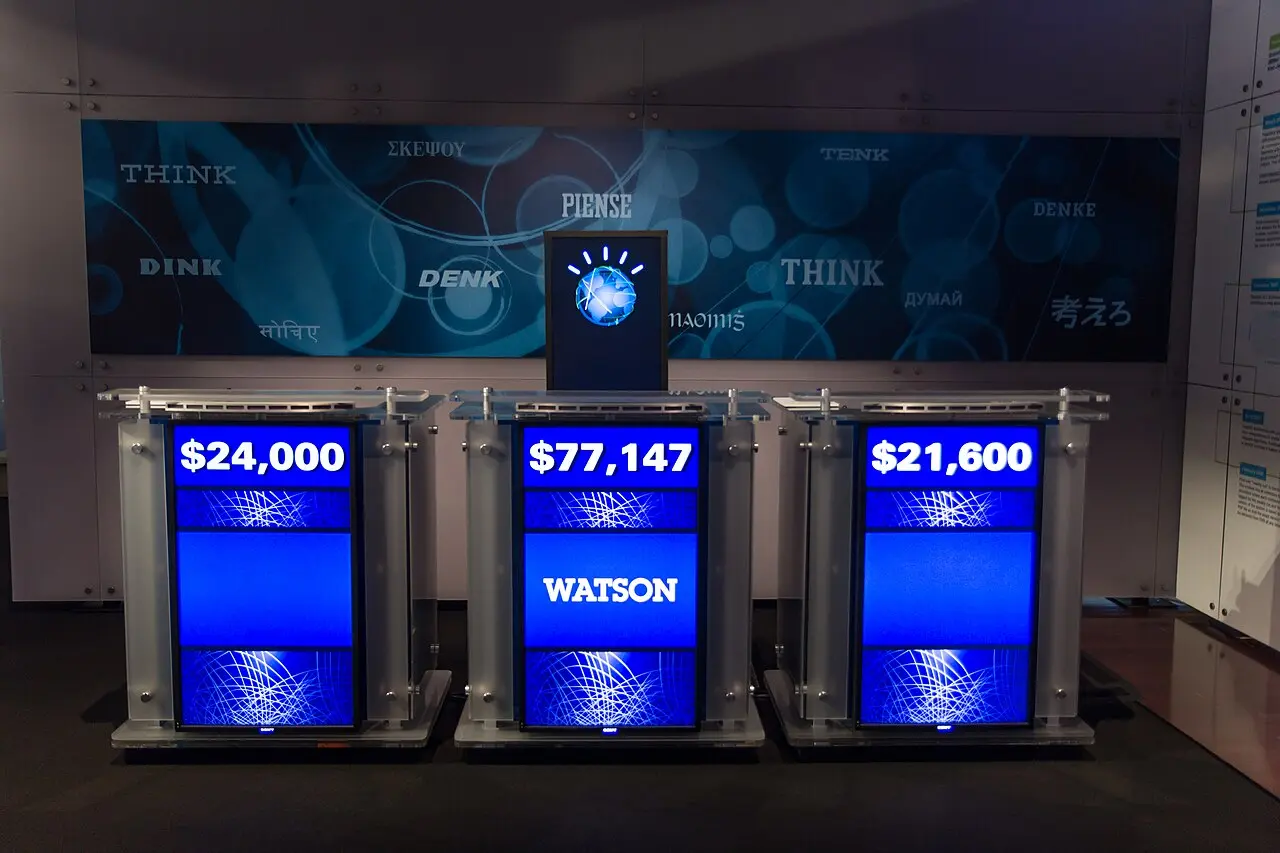
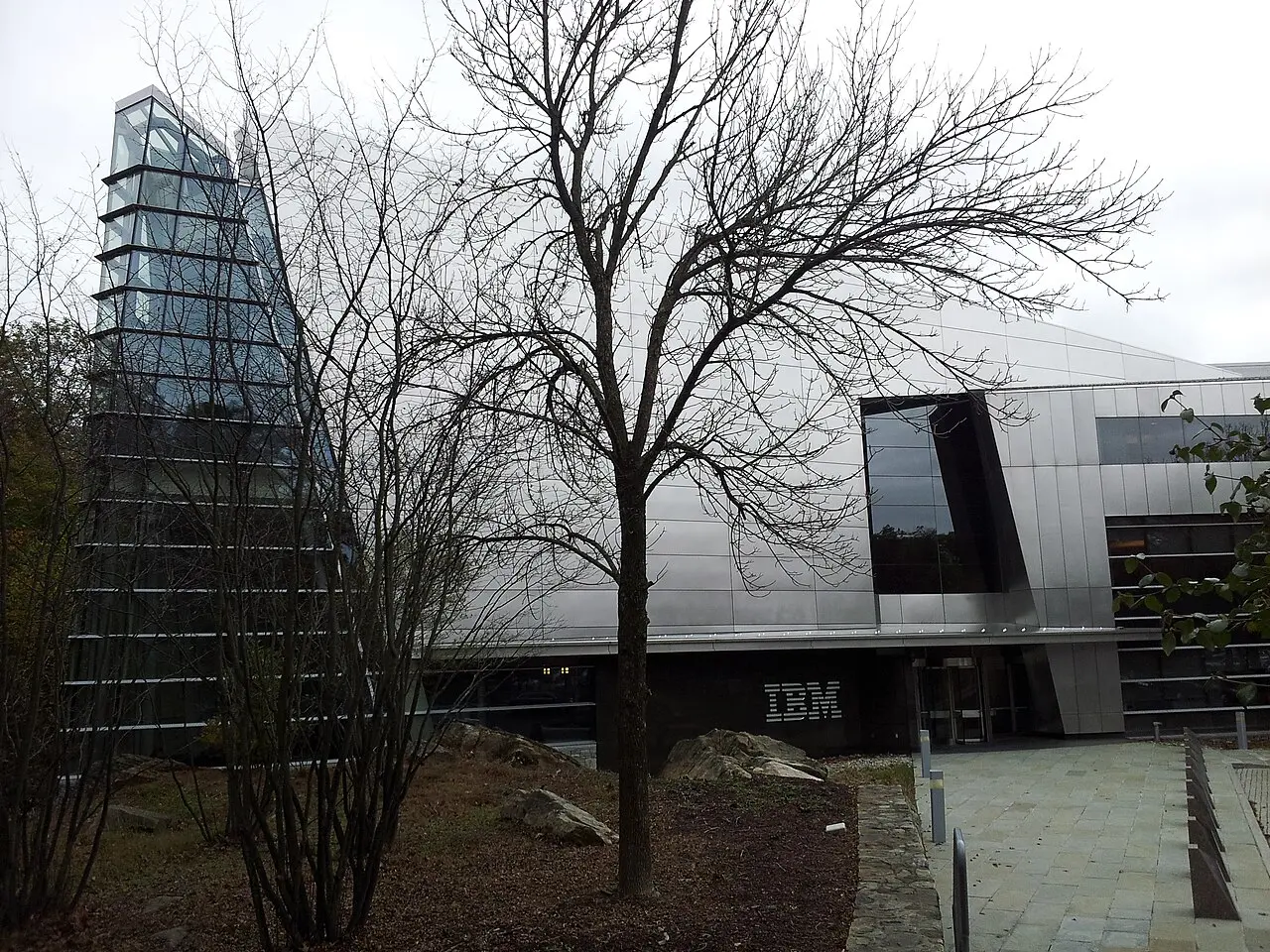
The contest in which IBM's question-answering system Watson beat Ken Jennings and Brad Rutter, two of the most successful champions of the US quiz show Jeopardy!. IBM and the show announced it on 14 December 2010; it was taped in January 2011 at IBM's research centre in Yorktown Heights, New York, and two matches aired over three nights on 14, 15 and 16 February. Watson, not connected to the internet, ran IBM's DeepQA software on 90 servers with 2,880 processor cores, and finished the two games with $77,147 against $24,000 for Jennings and $21,600 for Rutter. First prize was $1 million, which IBM had pledged to give entirely to charity. IBM quickly pitched the technology for medicine, but IEEE Spectrum reported that it fell short, citing among other things a project MD Anderson Cancer Center cancelled in 2016 after spending $62 million; on 21 January 2022 IBM announced an agreement to sell Watson Health's data and analytics assets to the investment firm Francisco Partners.
Daniel Voigt Godoy (Wikimedia Commons) · CC BY 4.0 · Commons ↗
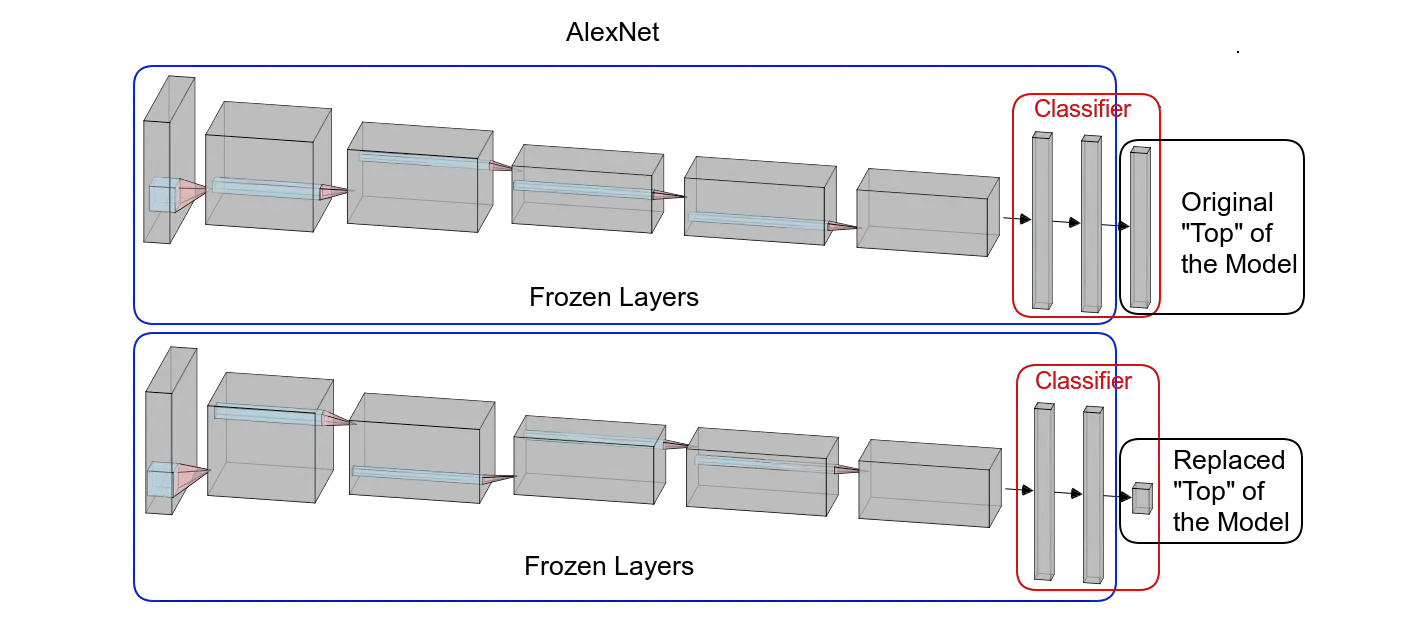
Entering as 'SuperVision', Alex Krizhevsky, Ilya Sutskever, and Geoffrey Hinton of the University of Toronto took the ILSVRC 2012 classification task with a top-5 error rate of 15.3% (16.4% on supplied training data alone). The best result from any other team was 26.2%, from the University of Tokyo's ISI group using conventional methods. Their convolutional network—about 60 million parameters, trained for five to six days on two NVIDIA GTX 580 3GB GPUs—became known as 'AlexNet' after its first author. Computer vision moved from hand-engineered features to deep learning from that point forward.
Singerep (Wikimedia Commons) · CC BY-SA 4.0 · Commons ↗
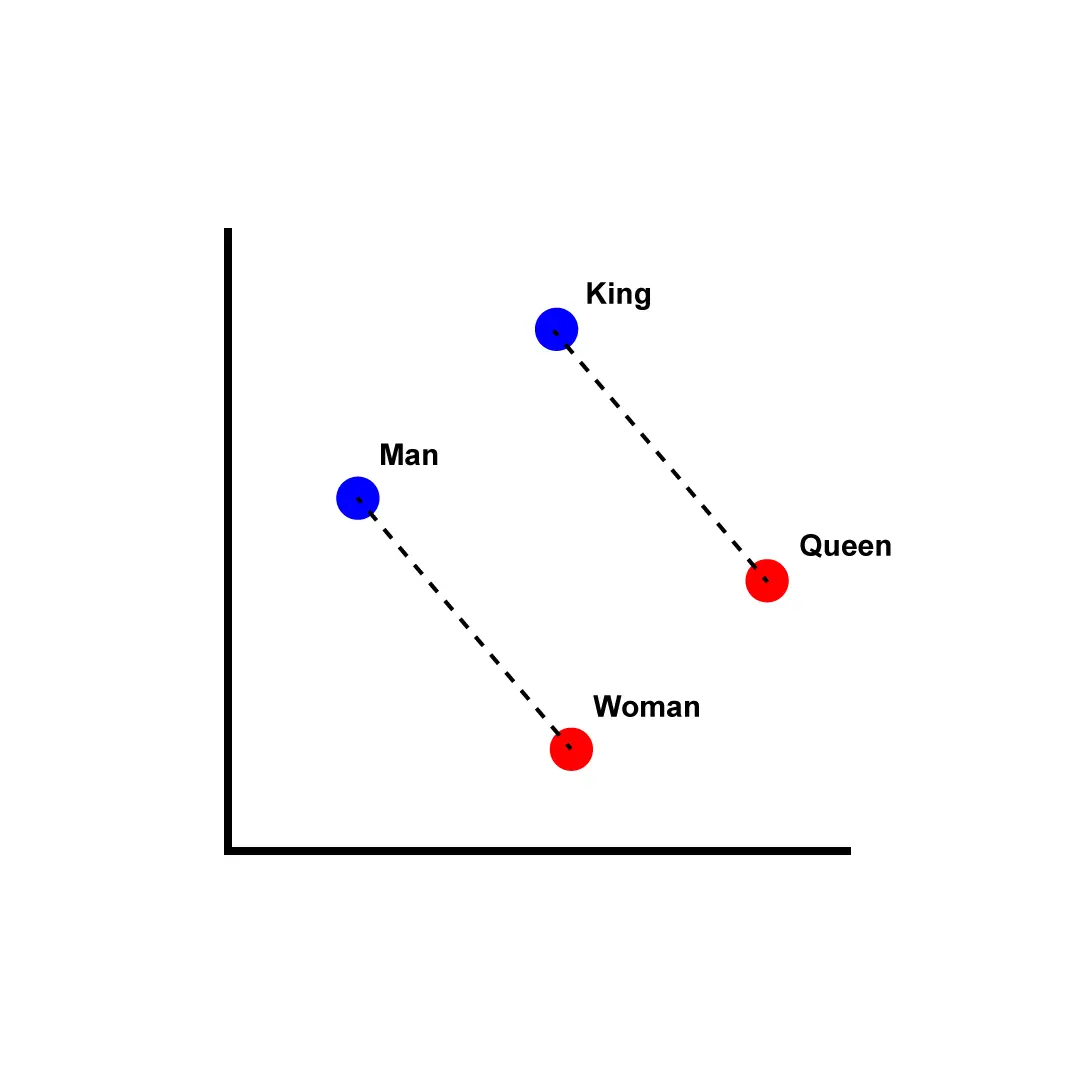
A method for turning words into vectors (embeddings), proposed in "Efficient Estimation of Word Representations in Vector Space", posted to arXiv on 16 January 2013 by Tomas Mikolov and three colleagues at Google. It set out two shallow models, CBOW, which predicts a word from its context, and Skip-gram, which predicts the surrounding words from a word, and reported learning high-quality word vectors from a 1.6-billion-word data set in less than a day. The paper cited an earlier finding that vector(King) − vector(Man) + vector(Woman) lands closest to the vector for Queen, and built a test set to measure how accurately such vector arithmetic works. In August Google open-sourced the C++ implementation as word2vec; a follow-up paper posted in October was accepted at NIPS 2013 and won the NeurIPS Test of Time Award in 2023. In 2016 researchers showed that embeddings trained on Google News carried gender stereotypes.
Mtanti (Wikimedia Commons) · CC BY-SA 4.0 · Commons ↗
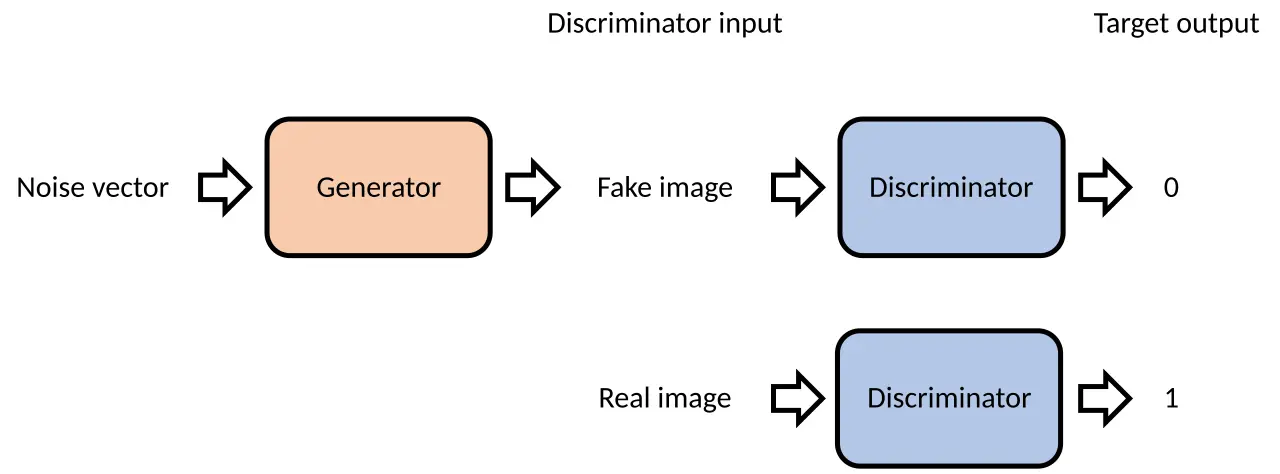
The generative-modelling framework proposed in "Generative Adversarial Nets", posted to arXiv on 10 June 2014 by Ian Goodfellow and seven co-authors at the Université de Montréal and published at NIPS 2014 (Advances in Neural Information Processing Systems 27). It trains two models at once: a generative model G that captures the data distribution and a discriminative model D that estimates whether a sample came from the training data or from G, with G trained to maximise the probability of D making a mistake. The paper itself likens G to a team of counterfeiters trying to pass fake currency and D to the police trying to detect it. GANs spread as a way to generate images such as photographs of people who do not exist, leading to models such as NVIDIA's StyleGAN (2018), and the ACM cited them among Yoshua Bengio's contributions for the 2018 Turing Award. They are also linked to concerns about deepfakes, though according to a research survey the original deepfake network that spread on Reddit at the end of 2017 was an encoder-decoder, not a GAN.
Mliu92 (Wikimedia Commons) · CC BY-SA 4.0 · Commons ↗
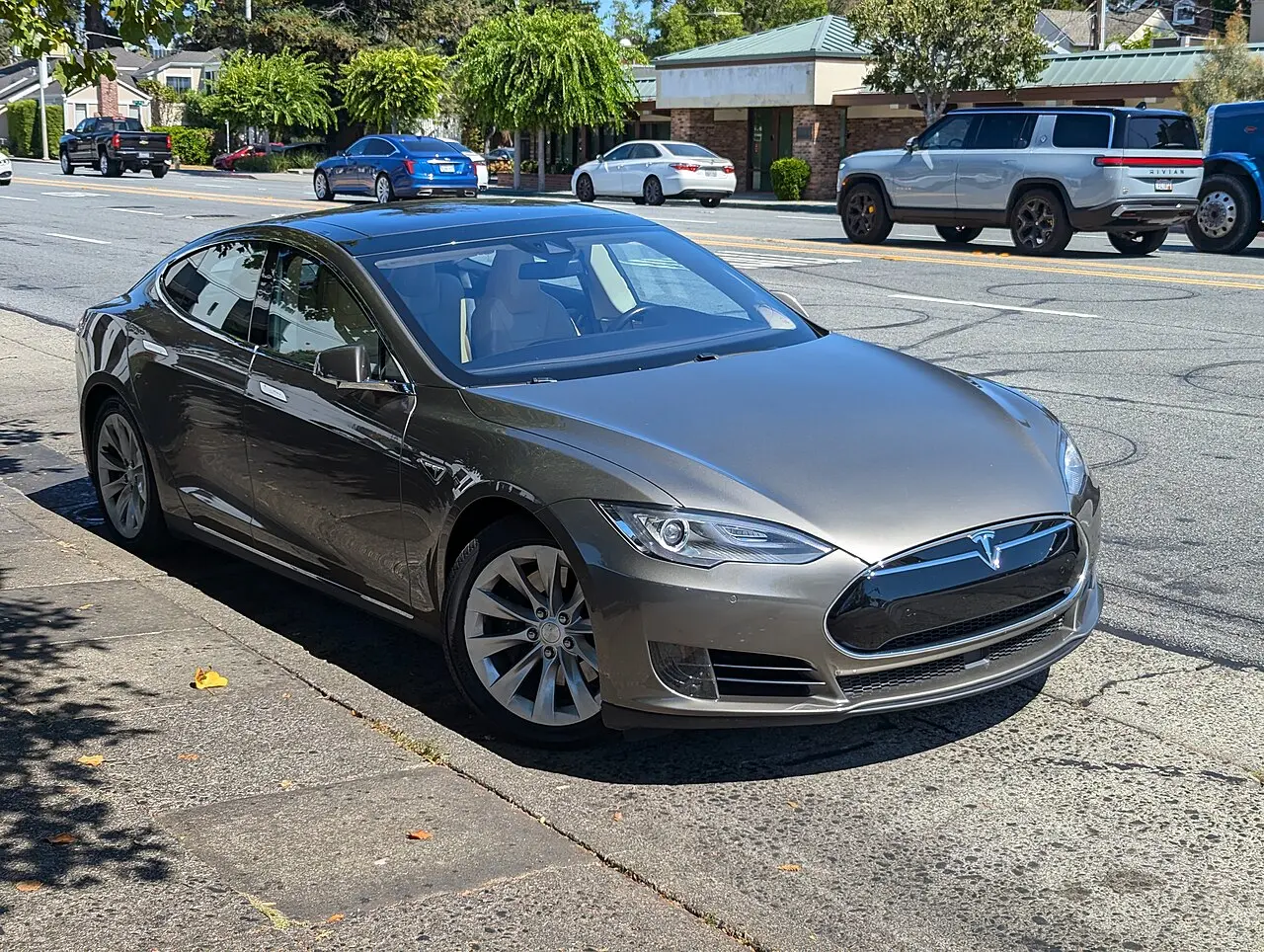
The driver-assistance feature in software v7.0 for the Model S, which Tesla began rolling out in the United States on 14 October 2015. Using a forward radar, a forward camera and ultrasonic sensors, it steers within a lane, changes lanes when the driver taps the turn signal and manages speed to keep a gap. It reached Japan on 15 January 2016. It is an SAE Level 2 feature that the driver must supervise at all times, yet on 7 May 2016 in Florida a Model S using Autopilot struck a crossing semitrailer and its driver was killed. In September 2017 the NTSB found the probable cause to be the truck driver's failure to yield combined with the car driver's inattention due to overreliance on automation, with a design that permitted prolonged disengagement contributing. In December 2023, after an NHTSA investigation, Tesla filed a recall covering about 2.03 million vehicles; in 2025 a Miami jury held Tesla partly liable for another fatal crash, and the California DMV ruled the name misleading.
Aston Zhang, Zachary C. Lipton, Mu Li, Alexander J. Smola, Dive into Deep Learning (Wikimedia Commons) · CC BY-SA 4.0 · Commons ↗
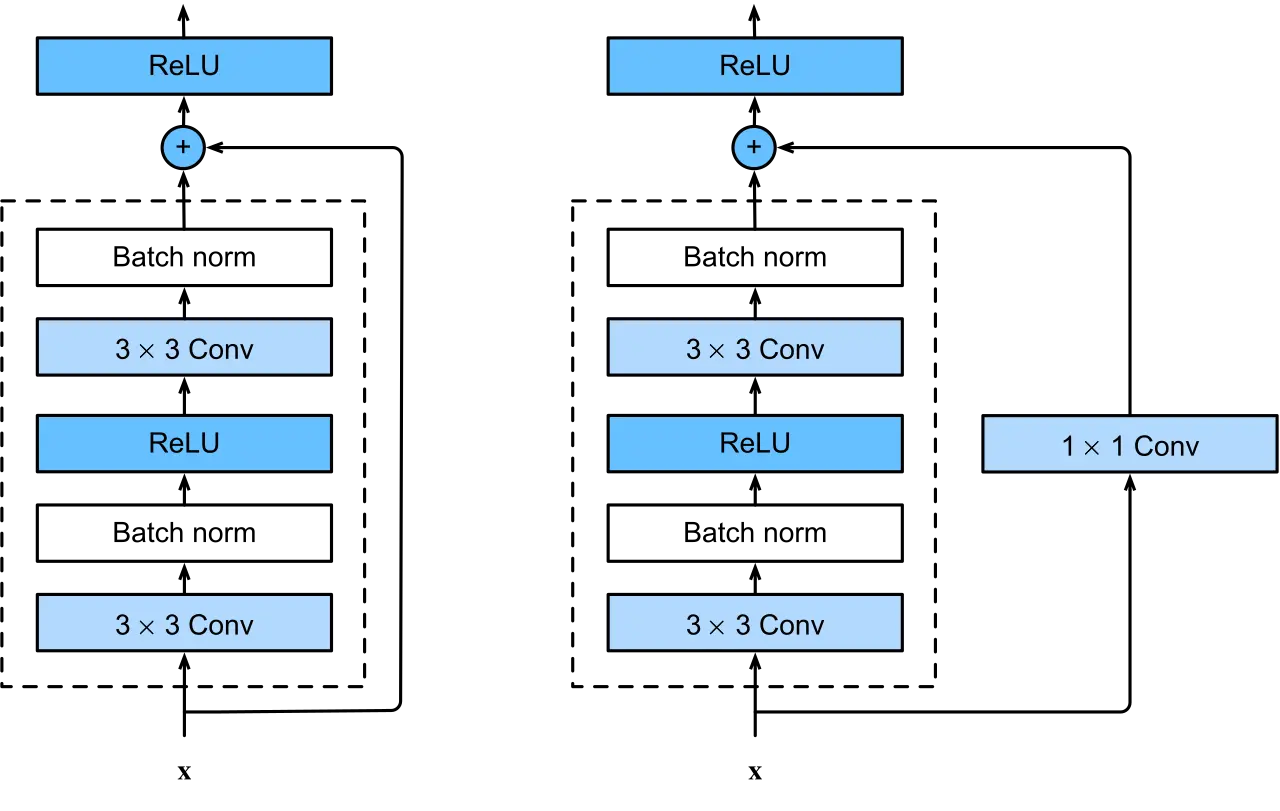
A deep neural network proposed by Kaiming He, Xiangyu Zhang, Shaoqing Ren and Jian Sun of Microsoft Research. To beat the degradation problem, in which making a network deeper made even its training error worse, each block adds its input straight back through a shortcut connection, so the layers learn only the difference (the residual) from that input. The paper was posted to arXiv on 10 December 2015, the day Microsoft announced first place in all three ImageNet (ILSVRC 2015) categories it entered: classification, localization and detection. The networks reached 152 layers, and an ensemble scored 3.57% top-5 error. The team also won COCO 2015 detection and segmentation, and the paper took the CVPR 2016 Best Paper Award. Residual connections were later built into Google's 2016 neural machine translation system and the 2017 Transformer.
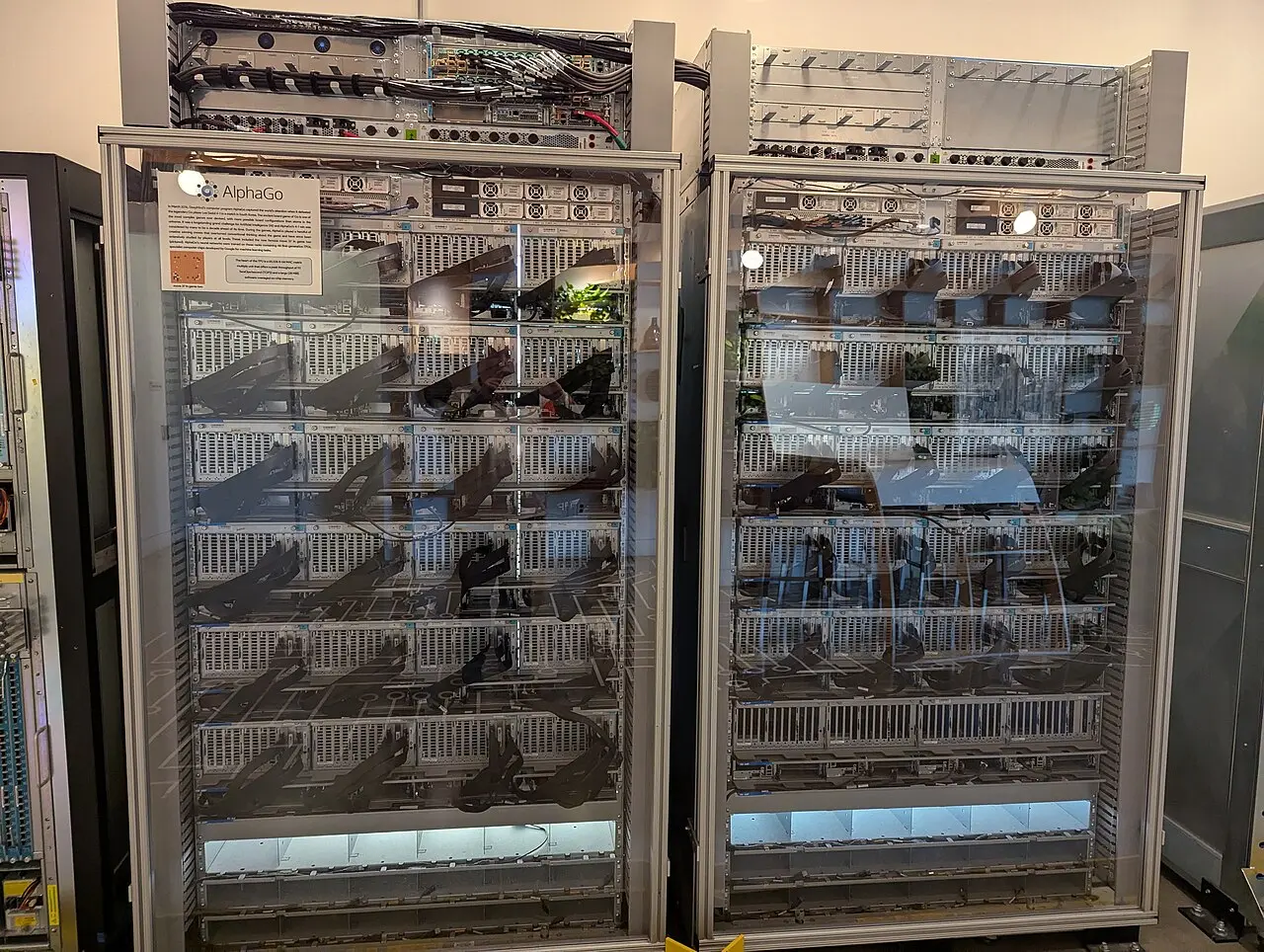
DeepMind's AlphaGo won its five-game series against Lee Sedol, one of the world's top Go players, 4–1, in Seoul between 9 and 15 March 2016. DeepMind's own Nature paper that January had described beating a professional at full-board Go as a feat previously thought to be at least a decade away; AlphaGo got there by combining deep neural networks — trained first on human expert games, then by reinforcement learning through self-play — with Monte Carlo tree search. In Game 2, AlphaGo's move 37, a shoulder hit the program itself rated a one-in-ten-thousand human choice, startled professional commentators. In Game 4, the only game Lee won, he answered with move 78, a central wedge that AlphaGo had given the same one-in-ten-thousand odds, and which came to be called the 'divine move'.
Daniel Voigt Godoy, dl-visuals (Wikimedia Commons) · CC BY 4.0 · Commons ↗
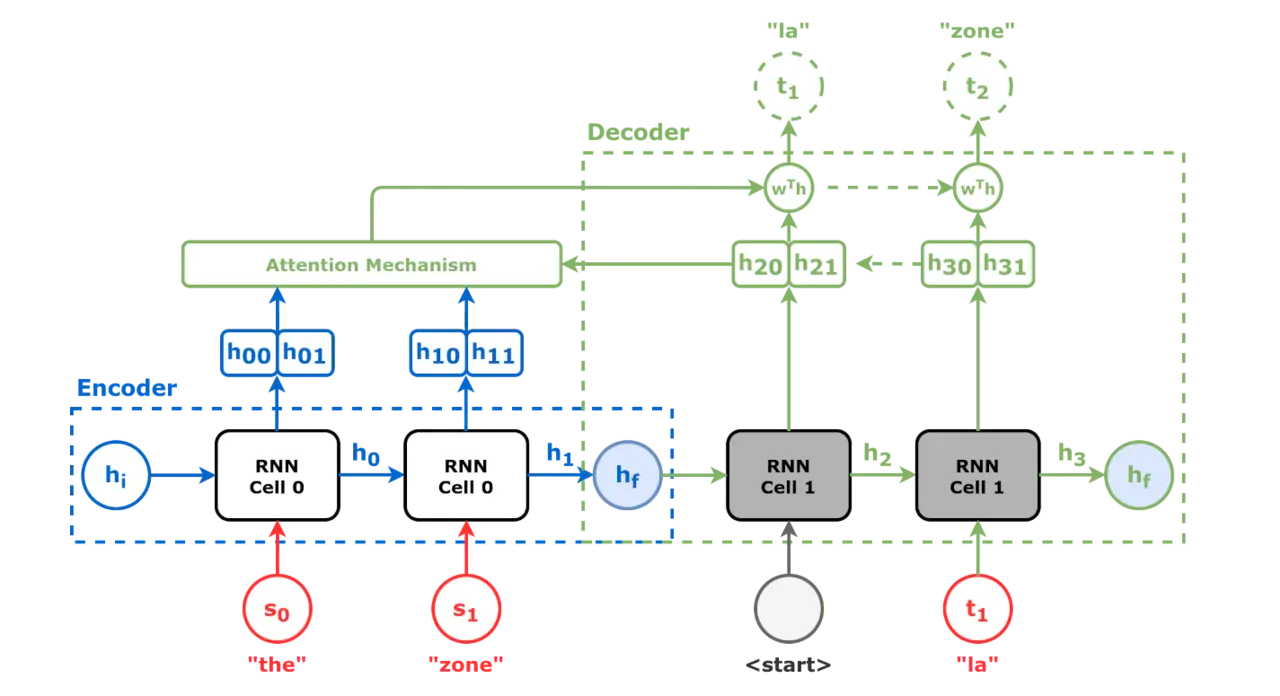
GNMT (Google Neural Machine Translation), the deep-learning translation system Google announced on 27 September 2016. It links an encoder and a decoder, each a stack of eight LSTM layers, through attention, adds residual connections between layers, and splits words into wordpieces. At launch Google switched all Chinese-to-English translation in Google Translate to GNMT, about 18 million translations a day. The paper, posted the day before, reported that in side-by-side human evaluation it cut errors by an average of 60% compared with Google's phrase-based statistical system. On 15 November 2016 (16 November in Japan) Google extended it to eight language pairs to and from English, including Japanese, calling it a bigger leap than the previous ten years combined. In Japan the sudden improvement was noticed on social media even before the official announcement, and the president of the Asia-Pacific Association for Machine Translation judged that it greatly improved translation quality involving Japanese and had a large impact on society.
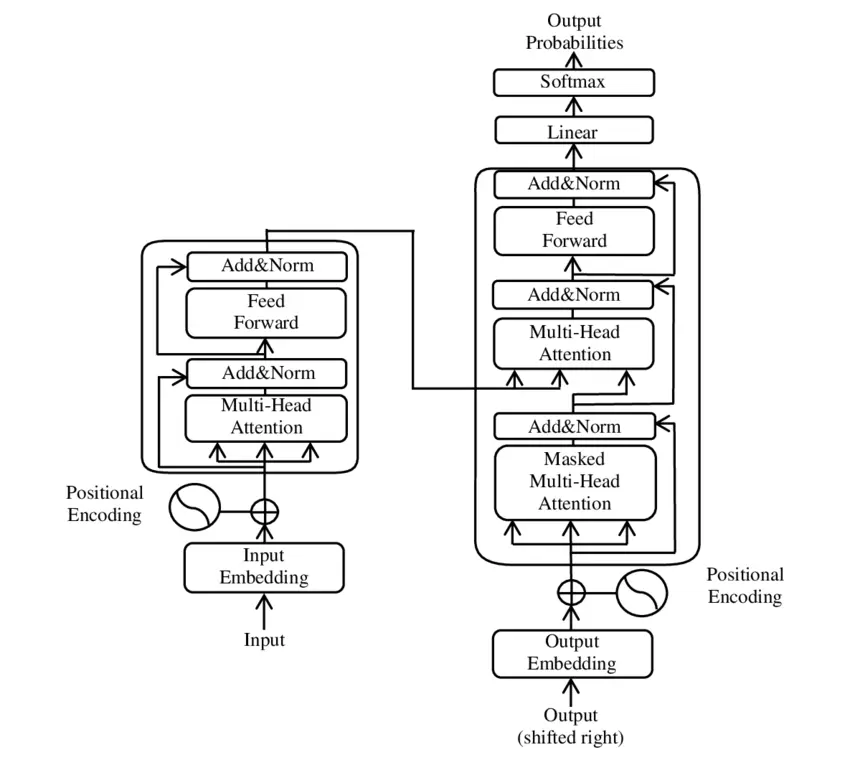
In work carried out at Google Brain and Google Research, Ashish Vaswani and seven co-authors proposed the Transformer, a sequence-transduction architecture built on attention alone, with no recurrence and no convolution. Posted to arXiv on 12 June 2017, it was presented that December at NIPS 2017 in Long Beach. It replaced the recurrent (RNN and LSTM) encoder-decoders then standard in machine translation with a structure that parallelised easily and trained faster, scoring 28.4 BLEU on WMT 2014 English-to-German. A 2025 Nature analysis ranked it seventh among the most-cited papers of the twenty-first century. BERT and OpenAI's GPT were both built on it.
Staxringold (Wikimedia Commons) · CC BY-SA 3.0 · Commons ↗
A single algorithm that learned chess, shogi and Go purely by reinforcement learning from self-play, with no knowledge beyond the rules, described in a paper DeepMind posted to arXiv on 5 December 2017. The preprint reported 100-game matches at one minute per move: 28 wins, 72 draws and no losses against Stockfish in chess, 90 wins, 2 draws and 8 losses against Elmo in shogi, and 60–40 against AlphaGo Zero trained for three days in Go. Tord Romstad, one of Stockfish's original authors, criticised the conditions, including the fixed minute per move, a year-old Stockfish and hash tables too small for the thread count. The full evaluation appeared in Science on 7 December 2018 (vol. 362, issue 6419): at three hours per game plus 15 seconds per move, with 44 CPU cores on each side, AlphaZero won 155 and lost 6 of 1,000 games against Stockfish (the rest drawn), won 91.2% against Elmo and 61% against AlphaGo Zero. Shogi champion Yoshiharu Habu said its unorthodox play showed new possibilities for the game.
National Eye Institute, National Institutes of Health (Wikimedia Commons) · Public domain · Commons ↗
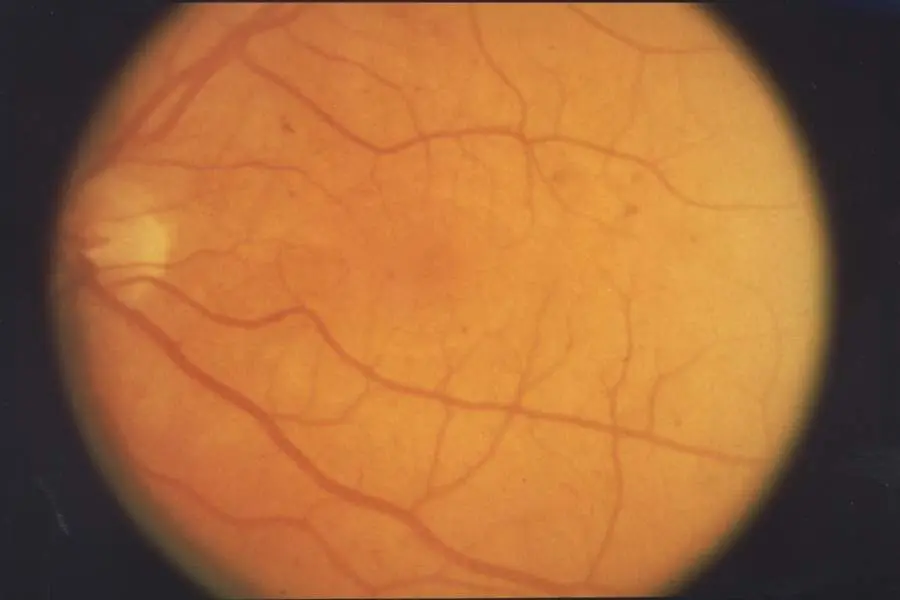
On 11 April 2018 the US Food and Drug Administration permitted marketing of IDx-DR, AI software that detects diabetic retinopathy, through the De Novo pathway for novel low- to moderate-risk devices. The FDA described it as the first medical device to use artificial intelligence to detect more than a mild level of diabetic retinopathy, and the first authorized device that gives a screening decision without a clinician also interpreting the image or results. It returns one of two results, refer to an eye-care professional or rescreen in 12 months, and is meant for primary-care offices without an eye specialist. The pivotal trial enrolled 900 people at 10 primary-care sites; the paper reported sensitivity of 87.2% and specificity of 90.7%. Its developers called it the first FDA-authorized autonomous AI diagnostic system in any field of medicine, while an accompanying editorial pointed to its narrow scope and to the gap between accuracy and better patient outcomes. The product was renamed LumineticsCore in 2023.
Daniel Voigt Godoy (Wikimedia Commons) · CC BY 4.0 · Commons ↗
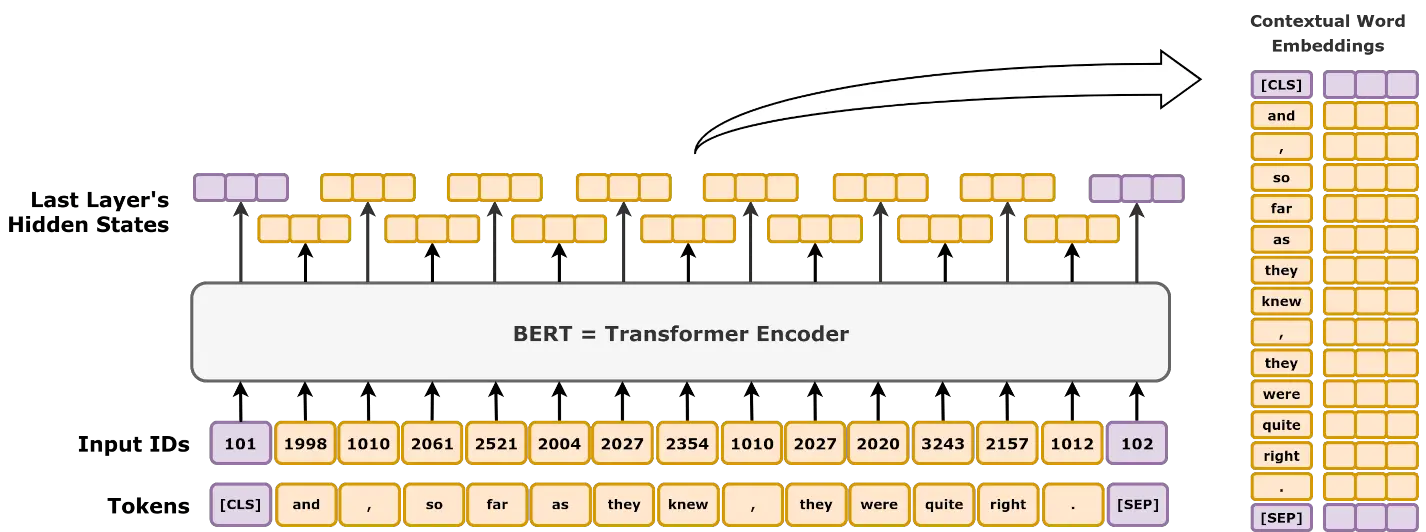
Jacob Devlin and colleagues at Google AI posted BERT (Bidirectional Encoder Representations from Transformers) to arXiv as 1810.04805. Pretraining a Transformer encoder bidirectionally as a masked-language model set new state of the art on eleven NLP tasks; BERT-Large scored 80.5 on the official GLUE leaderboard against GPT's 72.8. The paper was presented at NAACL 2019, where it won Best Long Paper. It established the pretrain-then-fine-tune paradigm that underlies every modern LLM, and with the autoregressive GPT family forms one of the two great currents of Transformer-based language modelling.
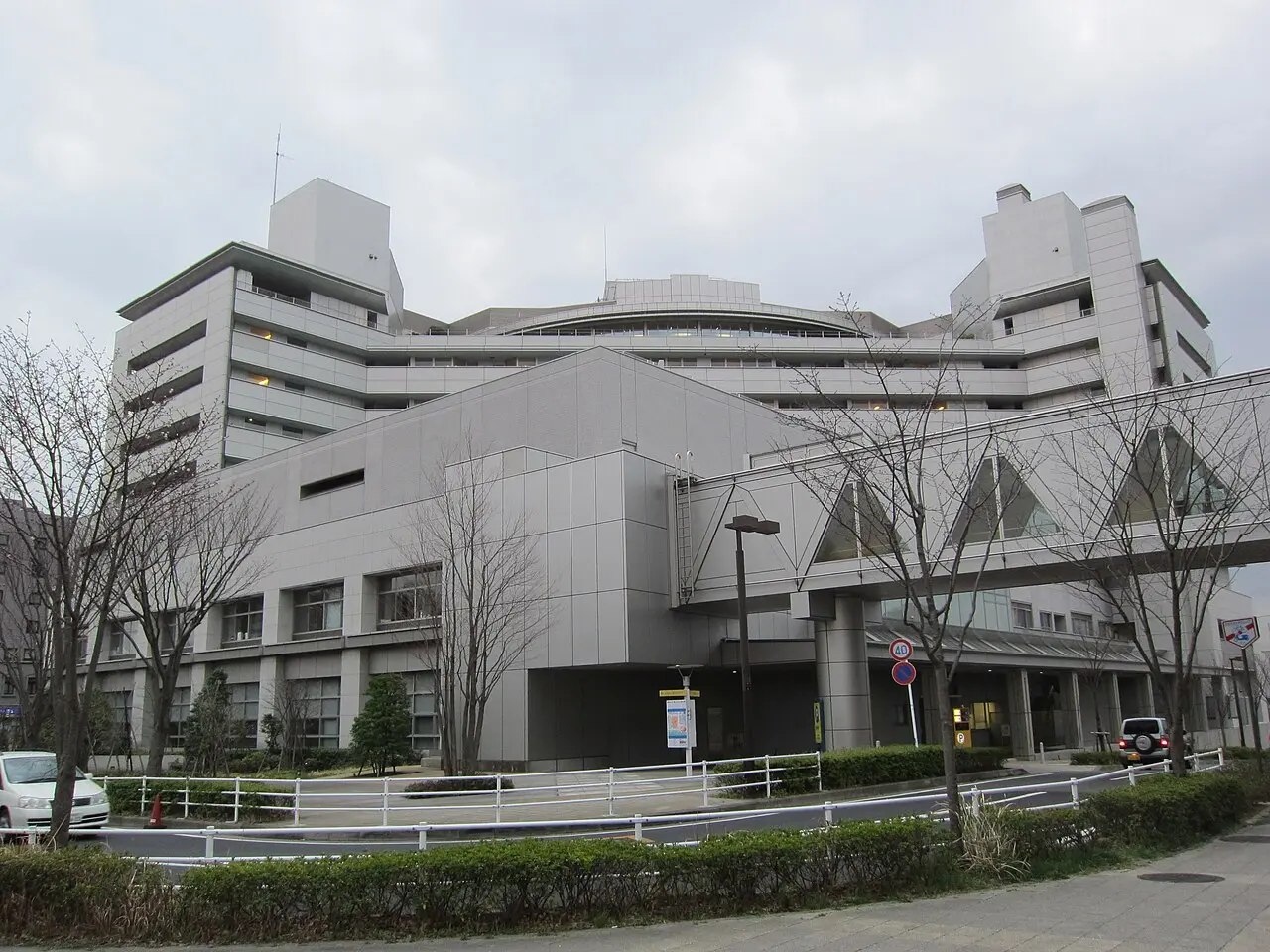
Software that predicts during colonoscopy whether a polyp is neoplastic or non-neoplastic, to support the endoscopist's diagnosis. It was developed from 2013 by Professor Shin-ei Kudo's group at Showa University Northern Yokohama Hospital, Kensaku Mori's laboratory at Nagoya University and Cybernet Systems, with support from AMED. On 6 December 2018 it was approved under Japan's Pharmaceuticals and Medical Devices Act as a Class III (highly controlled) medical device; Cybernet, the marketing authorization holder, describes it as the first approval of an AI-equipped medical device. It analyses images from Olympus's Endocyto ultra-magnifying endoscope with a support vector machine trained on about 60,000 images, and does not learn or change its performance after release. Olympus launched it in Japan on 8 March 2019. In 2020 EndoBRAIN-EYE, which helps detect lesions, was approved, extending the series from detection to characterisation.
In the 2020s AI stopped being a research topic and became something every institution had to answer. ChatGPT carried generative AI into homes, schools and workplaces; rivals rushed out chat models, a school ban was reversed within months, newspapers and authors took training to court, and screenwriters won contract limits on AI. The models became agents that operate screens and write code, and reached gold-medal level at the maths olympiad. A reactor was brought back to power data centres, US rules swung from mandatory to voluntary, and a cheap Chinese model, military use and export controls put AI at the centre of geopolitics.
OpenAI (Wikimedia Commons) · Public domain (below threshold of originality) · Commons ↗
OpenAI's 175-billion-parameter language model. The paper, "Language Models are Few-Shot Learners," went up on arXiv on 28 May 2020; on 11 June an API running models from the same family opened as a waitlisted private beta. At more than a hundred times the scale of GPT-2 (1.5B), it showed 'few-shot' competence—translation, question answering, cloze tasks, three-digit arithmetic and word unscrambling from a handful of in-prompt examples with no gradient updates. The paper was one of three NeurIPS 2020 Best Paper Award winners, and it pushed the research conversation toward scaling large language models.
Ee2mba (Wikimedia Commons) · CC BY-SA 4.0 · Commons ↗
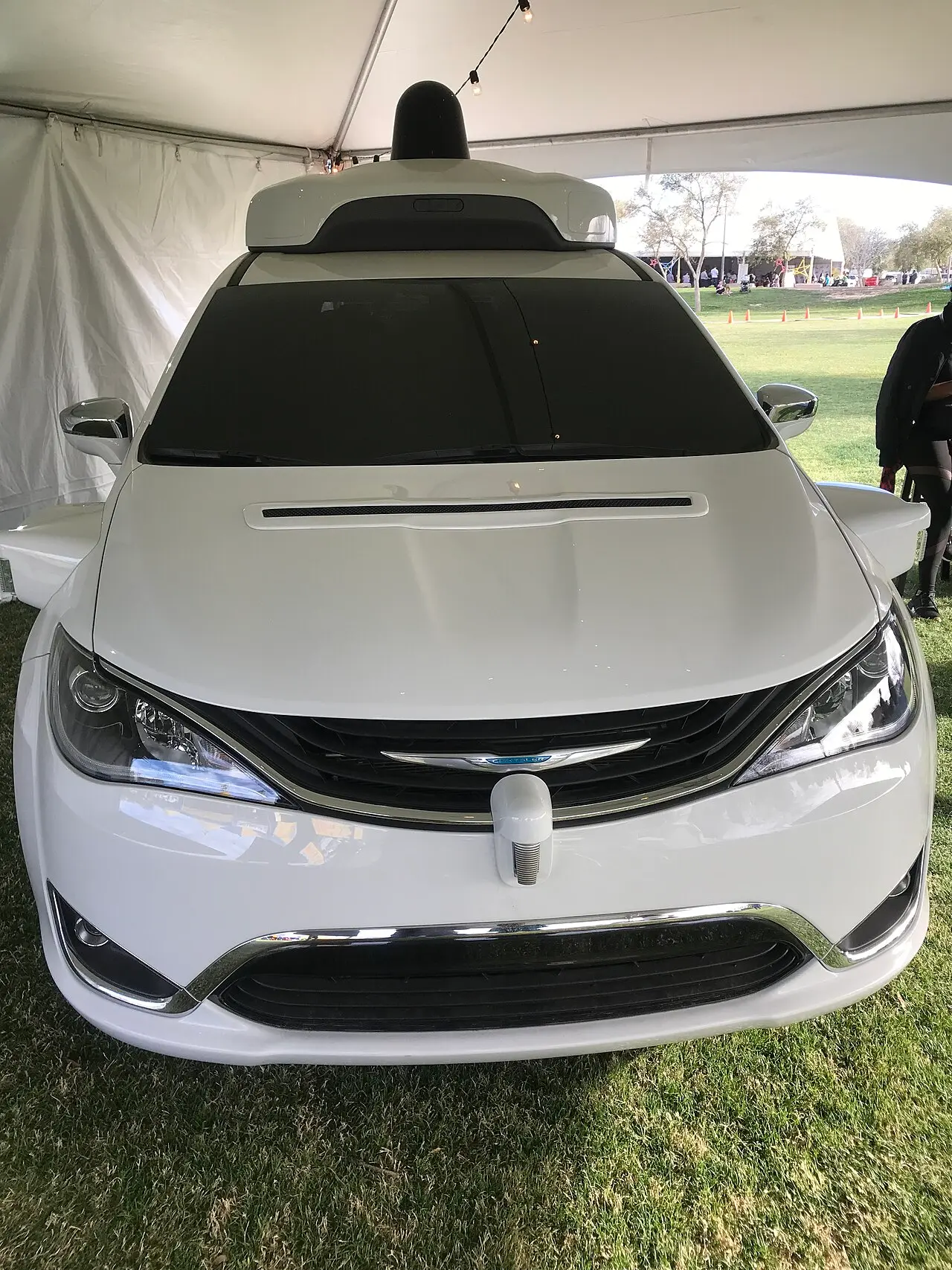
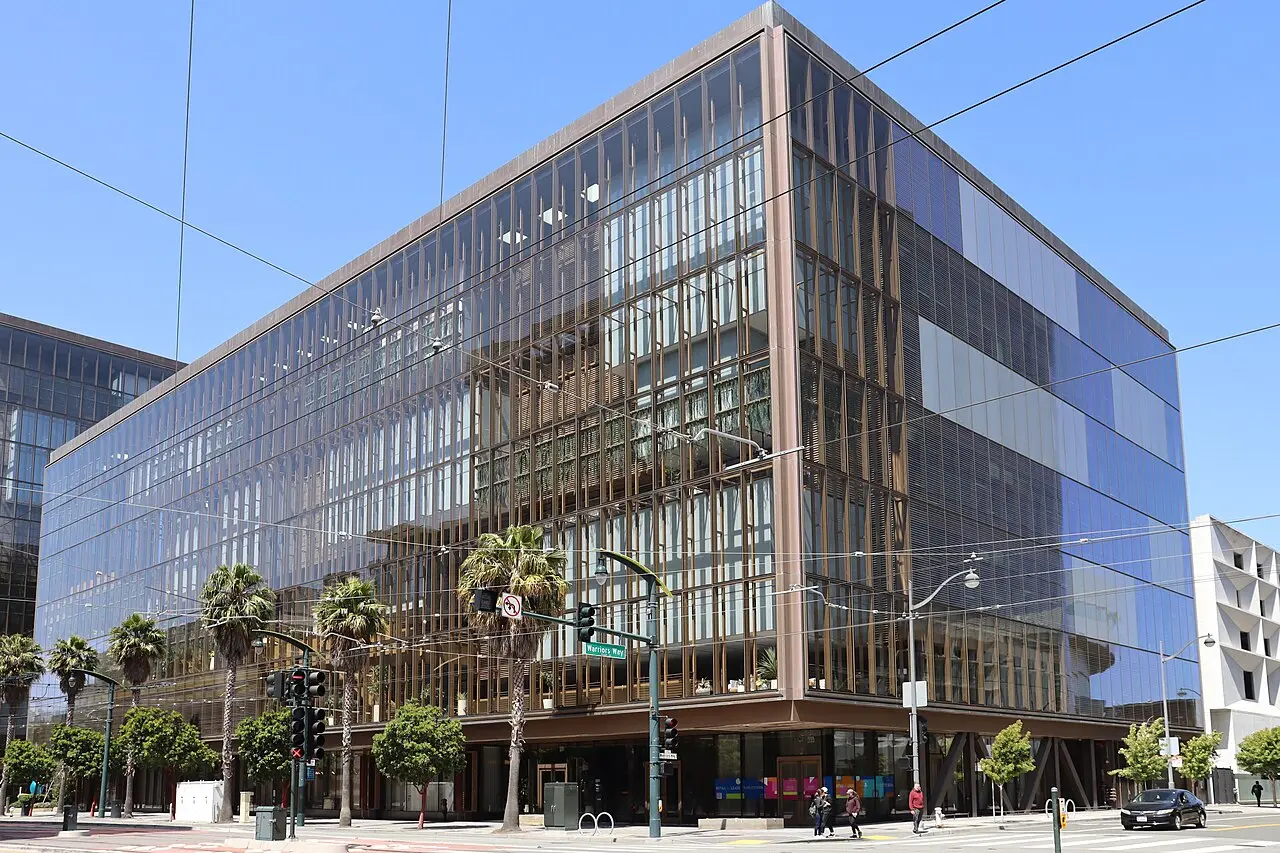
On 8 October 2020 Waymo, part of Alphabet, opened fully driverless rides, with no one in the driver's seat, to members of the public using its Waymo One ride-hailing service in metro Phoenix, Arizona. Until then such rides had been limited to early riders under non-disclosure agreements and made up 5–10% of its 2020 rides. Its roots lie in Google's self-driving car project, begun in 2009 with engineers from the winning teams of DARPA's autonomous-vehicle races. Waymo extended rider-only service to San Francisco in 2022 and Los Angeles in 2023, and by March 2026 was giving 500,000 paid rides a week across 10 US cities. In December 2025, however, it filed a software recall after its cars failed to stay stopped for school buses. It began test driving in Tokyo in 2025, and in September 2026 announced with GO and Nihon Kotsu that it aims to run fully driverless taxis there during 2027.
John Jumper et al., Nature (2021) (Wikimedia Commons) · CC BY 4.0 · Commons ↗
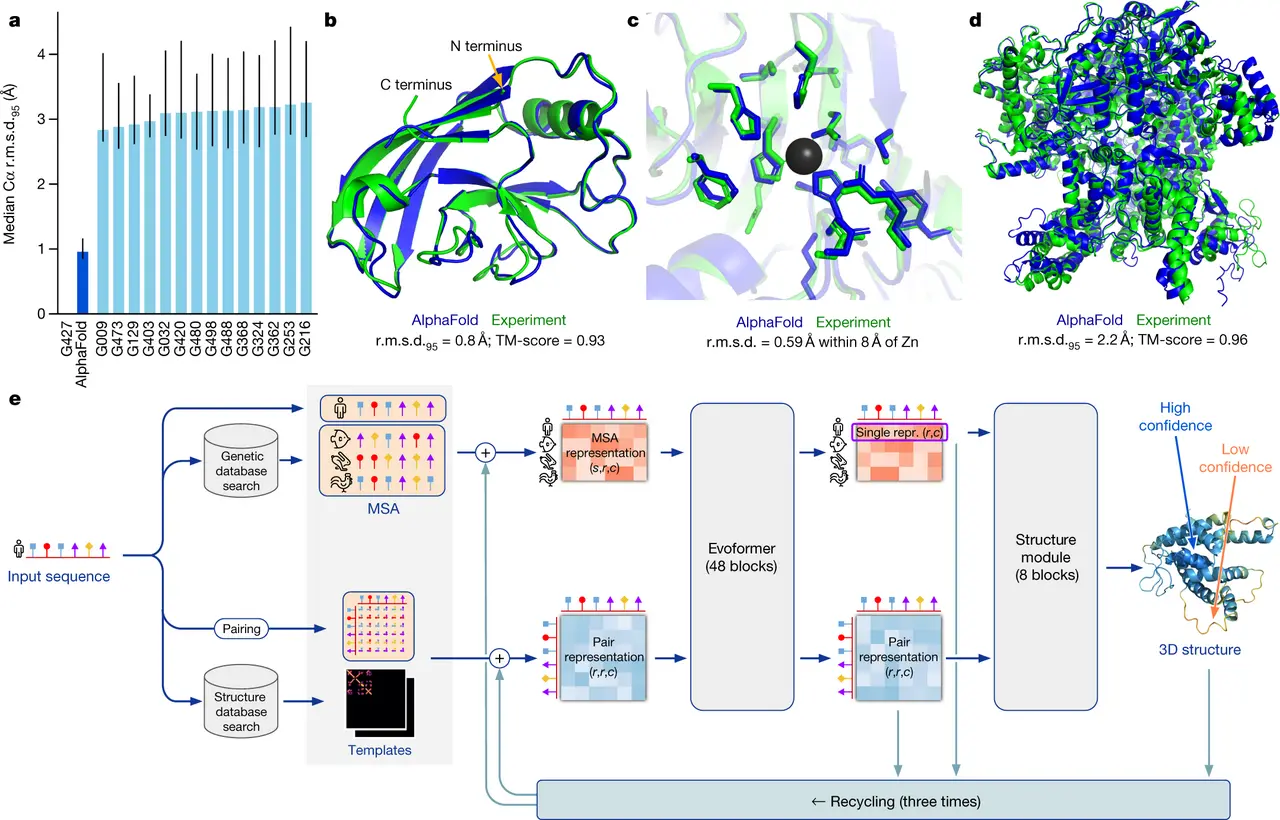
DeepMind's protein-structure prediction AI. On 30 November 2020 the results of CASP14, the fourteenth round of the biennial blind assessment, were released: AlphaFold scored a median GDT of 92.4 across all targets. CASP co-founder John Moult explained that a GDT of around 90 is informally regarded as competitive with experimental structure determination, and the CASP organisers judged that AlphaFold2 produced models competitive with experiment for at least two-thirds of the targets. The methods paper appeared in Nature on 15 July 2021; the same month the AlphaFold Protein Structure Database, built with EMBL-EBI, opened with more than 350,000 predictions including the entire human proteome, and in July 2022 it grew to over 200 million. In May 2024 AlphaFold 3, built with Isomorphic Labs, extended prediction to complexes with DNA, RNA and ligands. The work was cited for the 2024 Nobel Prize in Chemistry.
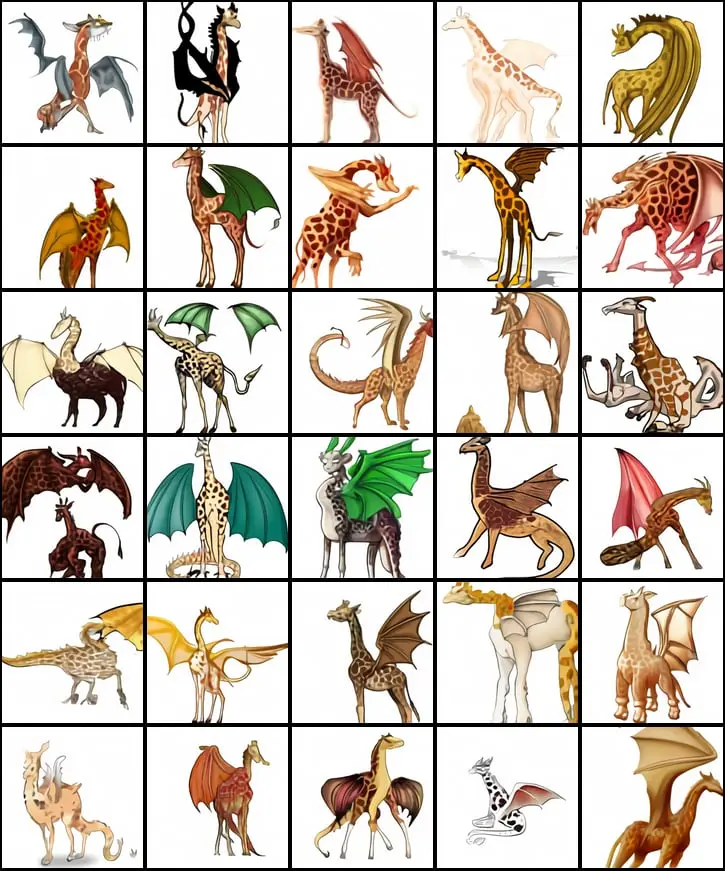
A model OpenAI announced on 5 January 2021 that generates images from text captions. It was a 12-billion-parameter version of GPT-3 trained on text–image pairs, handling text and image as a single stream of tokens. Its samples, such as an armchair in the shape of an avocado, showed it combining unrelated concepts plausibly. OpenAI announced CLIP, which links images and text, the same day, and used it to rerank DALL·E's samples. The first DALL·E was never offered to the public; DALL·E 2, announced on 6 April 2022, opened in stages: an invitation-only research preview, a beta from 20 July and an end to the waitlist on 28 September. In the meantime Midjourney and Stable Diffusion arrived in summer 2022 in forms anyone could use, and image generation spread fast. DALL·E 3, built into ChatGPT, followed in October 2023, and in March 2025 ChatGPT's default image generator became GPT-4o.
An independent external validation, by University of Michigan researchers, of the sepsis early-warning model that the electronic health record vendor Epic Systems built into its software and that hundreds of US hospitals were using. It was published online in JAMA Internal Medicine on 21 June 2021. Looking back at 38,455 hospitalizations of 27,697 patients at Michigan Medicine between December 2018 and October 2019, it found a hospitalization-level AUC of 0.63, well below the 0.76–0.83 in Epic's internal documentation. At a threshold within Epic's recommended range, the model did not flag 67% of patients with sepsis while generating alerts for 18% of all hospitalizations. The authors named a single centre and a debated sepsis definition as limitations; Epic said the study did not account for the analysis and tuning required before real-world deployment. The paper questioned how proprietary, non-peer-reviewed models had spread under loose regulation, and was cited as an example when the US Department of Health and Human Services finalized transparency rules for predictive decision support in 2024.
Treesmittenex (Wikimedia Commons) · CC BY-SA 4.0 · Commons ↗
On 21 January 2022 IBM announced a definitive agreement to sell the data and analytics assets of its Watson Health business to the investment firm Francisco Partners. The assets were Health Insights, MarketScan, Clinical Development, Social Program Management, Micromedex and imaging software; terms were not disclosed. IBM had created Watson Health in April 2015 and, according to IEEE Spectrum, had bought four health-data companies for about $4 billion by mid-2016. But the oncology advisory system that the University of Texas MD Anderson Cancer Center built on Watson was never used clinically, and an audit made public in 2017 found about $62 million paid to outside firms and problems with how the work was procured. The sale closed on 30 June 2022, and the assets became Merative, an independent company headquartered in Ann Arbor, Michigan. IBM called the deal a clear next step as it focused on its platform-based hybrid cloud and AI strategy.
Midjourney; vector version by Tohaomg (Wikimedia Commons) · Public domain (simple geometric shapes; trademarked) · Commons ↗
An image-generating AI built by a small San Francisco lab led by David Holz, a co-founder of Leap Motion. It was offered on the chat service Discord: send a bot a text prompt and get four images back. It moved to open beta in July 2022 (English Wikipedia dates the company's announcement to 12 July; PCWorld reported that it opened to everyone on 26 July). Holz told The Register the company had about ten people, no outside investors, and was already profitable. In August an image made with Midjourney won first place in the Colorado State Fair's art competition, and in March 2023 a fake photo of the Pope in a puffer jacket went viral. The models ran from V1 (February 2022) to the V8 series in 2026; video generation arrived in June 2025, and a technology licensing deal with Meta was announced in August. Disney and Universal sued for copyright infringement in June 2025 and Warner Bros. Discovery in September; the case was still pending as of July 2026.
Benlisquare, screenshot of Stable Diffusion web UI by AUTOMATIC1111 and contributors (Wikimedia Commons) · Apache License 2.0 · Commons ↗
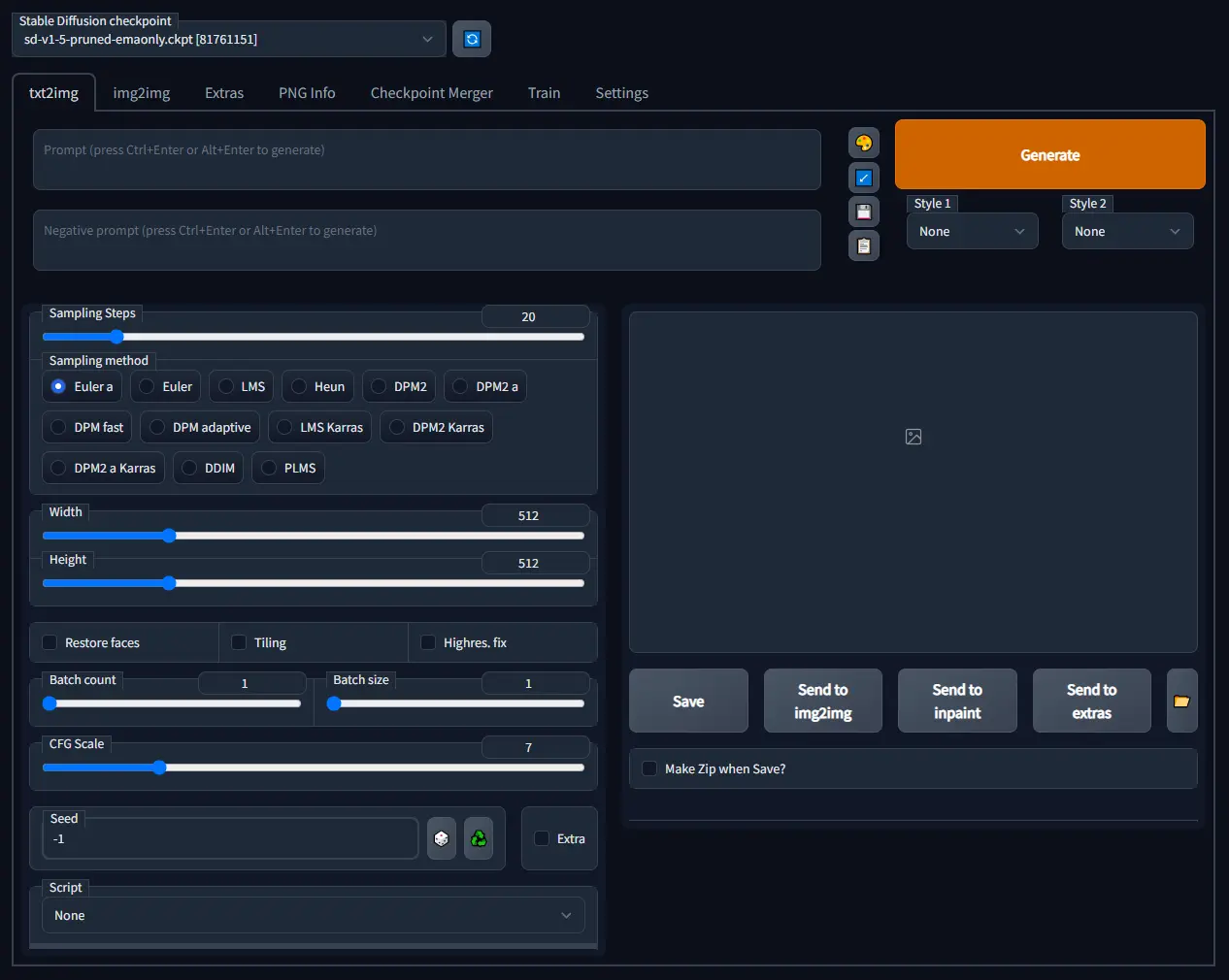
On 22 August 2022 Stability AI released the weights of Stable Diffusion, a text-to-image model, to the public. The model was a latent diffusion model from the CompVis group at LMU Munich; the CompVis repository credits a collaboration with Stability AI and Runway, a compute donation from Stability AI and support from LAION. It was trained on 512×512 images from a subset of LAION-5B, with an 860M-parameter U-Net and a 123M-parameter text encoder, and was licensed under CreativeML OpenRAIL-M, which permits commercial use. Image generation that had lived behind cloud APIs now ran on personal GPUs, and derivative models and tools multiplied. Legal and ethical pushback followed: a class action by artists (January 2023), suits by Getty Images, and in December 2023 a Stanford Internet Observatory report that LAION-5B contained hundreds of instances of known child sexual abuse material, after which LAION took the dataset down.
OpenAI (Wikimedia Commons) · Public domain (below threshold of originality) · Commons ↗
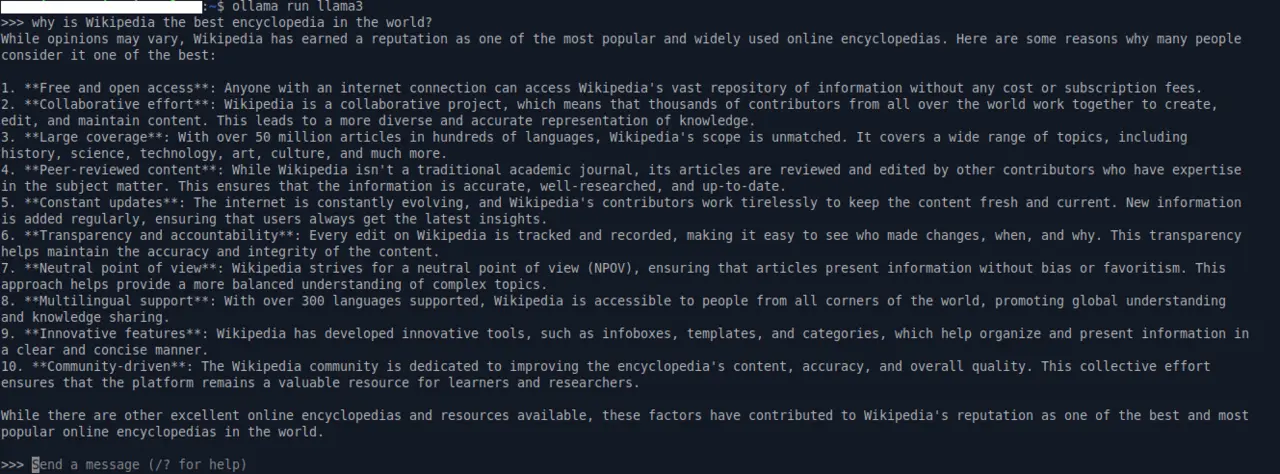
OpenAI released ChatGPT as a free research preview—a model from the GPT-3.5 series, which finished training in early 2022, fine-tuned for dialogue with RLHF and reachable from any browser. One million users in five days (Sam Altman's figure); an estimated one hundred million monthly active users within two months—the latter a UBS estimate built on Similar Web data and reported by Reuters on 1 February 2023, not a number OpenAI published. UBS analysts wrote that they could not recall a faster ramp, though Meta's Threads passed 100 million sign-ups in five days in July 2023. ChatGPT moved generative AI from specialist research into homes, schools, and workplaces and forced strategic pivots at Google, Meta, Anthropic, and Microsoft. It has since moved through GPT-4 (2023), GPT-4o (2024), GPT-5 (2025) and GPT-6 (2026); in October 2026 OpenAI said more than 1.2 billion people use it each week.
Tao Tu, Shekoofeh Azizi, Danny Driess et al., "Towards Generalist Biomedical AI" (2023) (Wikimedia Commons) · CC BY 4.0 · Commons ↗
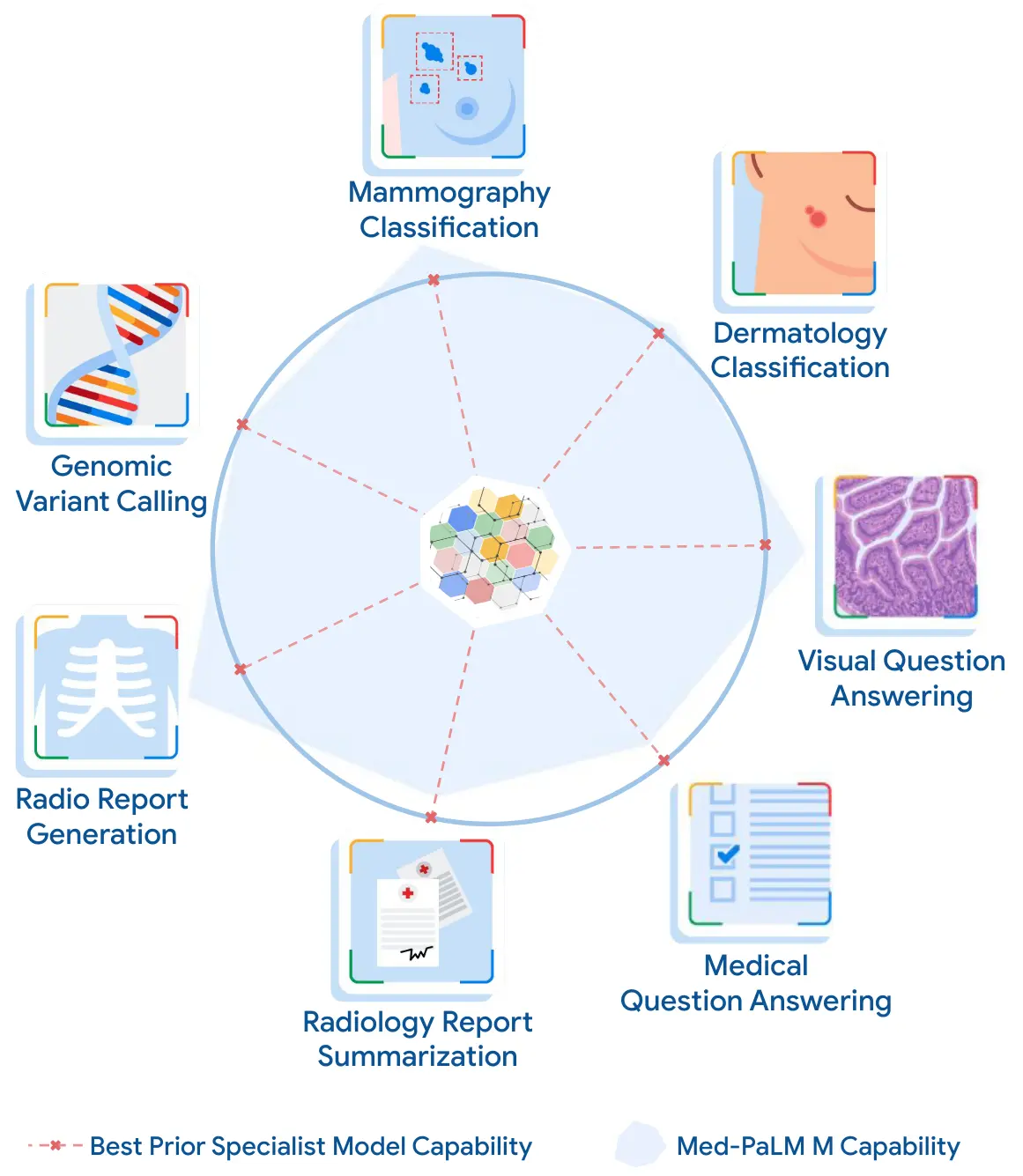
A large language model for medicine, posted to arXiv on 26 December 2022 by researchers at Google Research and DeepMind. Flan-PaLM, an instruction-tuned version of the 540-billion-parameter PaLM, scored 67.6% on MedQA, a set of US Medical Licensing Examination (USMLE)-style questions, and the team then adapted it to medicine with a handful of examples to create Med-PaLM. The paper appeared in Nature on 12 July 2023. Google describes Med-PaLM as the first AI system to surpass the pass mark (over 60%) on USMLE-style questions. Its successor, Med-PaLM 2, scored up to 86.5% on MedQA. The authors themselves listed limits: in physician evaluations Med-PaLM still fell short of clinicians, multiple-choice questions are easier than real clinical work, and only English-language data were used.
Hstoops / Microsoft (Wikimedia Commons) · Public domain (below threshold of originality; trademark applies) · Commons ↗
Microsoft unveiled 'New Bing'—Bing search with a chat experience built in—as a waitlisted limited preview. On the day, the model was described only as 'a new, next-generation OpenAI large language model that is more powerful than ChatGPT'; Microsoft confirmed it was GPT-4 on 14 March. Microsoft 365 Copilot followed on 16 March, bringing LLMs into the central battlefronts of search and productivity software at once. Coming barely two months after the ChatGPT launch, it triggered the industry-wide pivot to 'how do we integrate an LLM into our existing product?'. Google had announced Bard the day before, on 6 February, and the factual error in its promo clip surfaced on the 8th.
MGeog2022 (Wikimedia Commons) · CC BY 4.0 · Commons ↗
A large language model Meta announced on 24 February 2023, in four sizes of 7, 13, 33 and 65 billion parameters, released under a non-commercial licence to researchers approved case by case. The paper claimed it was trained only on publicly available data and that the 13-billion-parameter version outperformed GPT-3 (175 billion) on most benchmarks. About a week after access began, on 3 March, a torrent of the weights was posted on 4chan and spread, setting fears of misuse against praise for open research. Stanford announced on 13 March that Alpaca, fine-tuned from LLaMA 7B, could be reproduced for under $600, and on 6 June two US senators asked Mark Zuckerberg for answers. On 18 July Meta released Llama 2, free for research and commercial use, with Microsoft as preferred partner; because its licence requires services with more than 700 million monthly active users to seek separate permission, among other limits, the Open Source Initiative said it was not open source. In Japan, ELYZA released a commercially usable Japanese model built on Llama 2 on 29 August.
Anthropic (Wikimedia Commons) · Public domain (below threshold of originality) · Commons ↗
Anthropic—founded in January 2021 by seven people who left OpenAI, among them the Amodei siblings Dario and Daniela—began offering Claude and the lighter Claude Instant. This was not an open release but request-based access following a closed alpha with Notion, Quora, and DuckDuckGo. OpenAI announced GPT-4 the same day. Anthropic's differentiator was Constitutional AI, set out in a December 2022 paper: human oversight enters only through a written list of principles, with the model's own critiques, revisions, and RL from AI Feedback doing the rest. Google invested about US$300 million in February 2023; Amazon announced up to US$4 billion in September 2023 and later doubled it to US$8 billion; in April 2026 Google pledged up to a further US$40 billion. The models ran through Claude 2, 3, 3.5, 3.7 and 4 to the fifth generation, Fable 5 and Mythos 5, in June 2026, and Opus 5.5 in September.
Bubeck, S. et al., "Sparks of Artificial General Intelligence" (arXiv:2303.12712), Microsoft Research — via Wikimedia Commons · CC BY 4.0 · Commons ↗
On 14 March 2023 OpenAI announced GPT-4, making it available the same day to ChatGPT Plus subscribers with a usage cap and opening the API through a waitlist. It was described as a large multimodal model that accepts image and text inputs and produces text, but image input was a research preview, not publicly available, at launch; it first reached ordinary users through a gradual rollout to ChatGPT Plus and Enterprise users that began on 25 September 2023. The API opened to all paying developers on 6 July. The technical report gave a simulated Uniform Bar Exam score of 298/400, around the top 10% of test takers; Martínez (2024) re-evaluated that percentile as inflated, estimating GPT-4 below the 69th percentile against a July sitting, around the 48th against those who passed, and around the 15th on the essays against those who passed. Its AP results varied by subject, with a 2 out of 5 in both English exams. Citing the competitive landscape and the safety implications of large-scale models, the report disclosed nothing about architecture (including model size), hardware, training compute or dataset construction. Microsoft confirmed the same day that the new Bing, in preview since February, had been running on an early version of GPT-4. GPT-4 was retired from ChatGPT on 30 April 2025 in favour of GPT-4o, remaining available in the API.
AutoGPT (Wikimedia Commons) · Public domain · Commons ↗
An AI agent is an AI system that pursues a goal by deciding its own steps, using tools, and choosing its next action from the results. The idea reached a wide audience through Auto-GPT, published on GitHub by Toran Bruce Richards, founder of the game company Significant Gravitas; a demo video dated 30 March 2023 set off its rise. Coming just over two weeks after GPT-4's release, it let GPT-4 break a goal into tasks, search the web, write files and manage memory while running without step-by-step instructions. The same week Yohei Nakajima published the forerunner of BabyAGI. Limits were spotted quickly: getting stuck in loops, making things up and running up API costs, and the authors themselves said human supervision was still needed. As of October 2026 the Auto-GPT repository has more than 180,000 stars.
Simon Dawson / No 10 Downing Street (Wikimedia Commons) · OGL 3 · Commons ↗
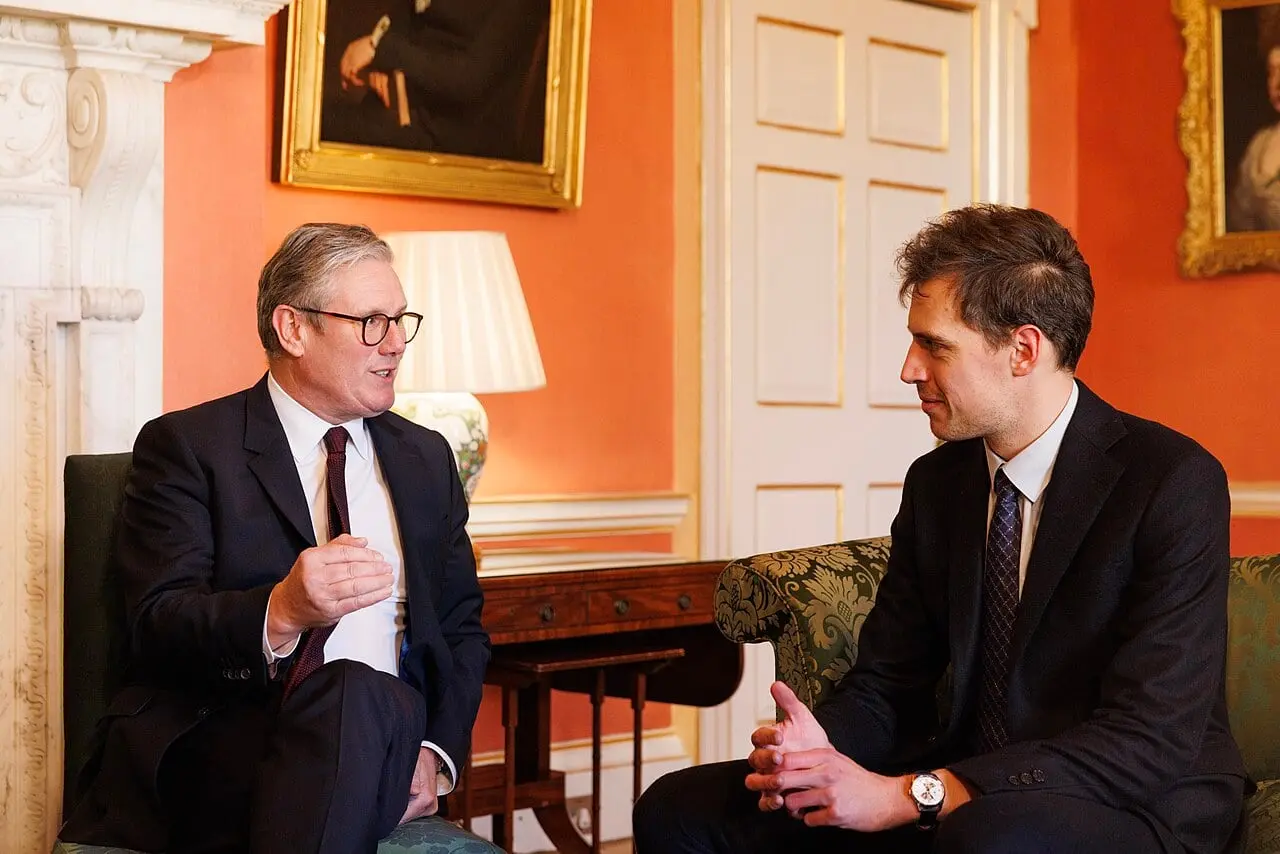
An AI company founded in Paris in April 2023 by Arthur Mensch, Guillaume Lample and Timothée Lacroix, researchers who had worked at Google DeepMind and at Meta (then Facebook); the French company register gives 28 April as its creation date. With no product, it raised €105 million in June, which Fortune, citing Dealroom data, called the largest seed round ever recorded in Europe. On 27 September it released its first model, Mistral 7B, under Apache 2.0, with the weights also shared by torrent; in December Mixtral 8x7B first appeared as nothing but a torrent link. In the same months it argued for lighter rules on general-purpose models in the EU AI Act negotiations, so when it announced a Microsoft partnership, Mistral Large and the Le Chat assistant on 26 February 2024, members of the European Parliament objected and the European Commission said it would look into the deal; in May the UK competition authority concluded the deal did not qualify for merger review. In September 2025 it raised €1.7 billion in a round led by ASML at an €11.7 billion valuation, and in September 2026 it announced €3 billion led by Samsung at a valuation above €21 billion. Mistral presents itself as a European option independent of the US and China, though reporting notes its compute still runs on Nvidia GPUs.
Christopher P. Michel (Wikimedia Commons) · CC BY-SA 4.0 · Commons ↗
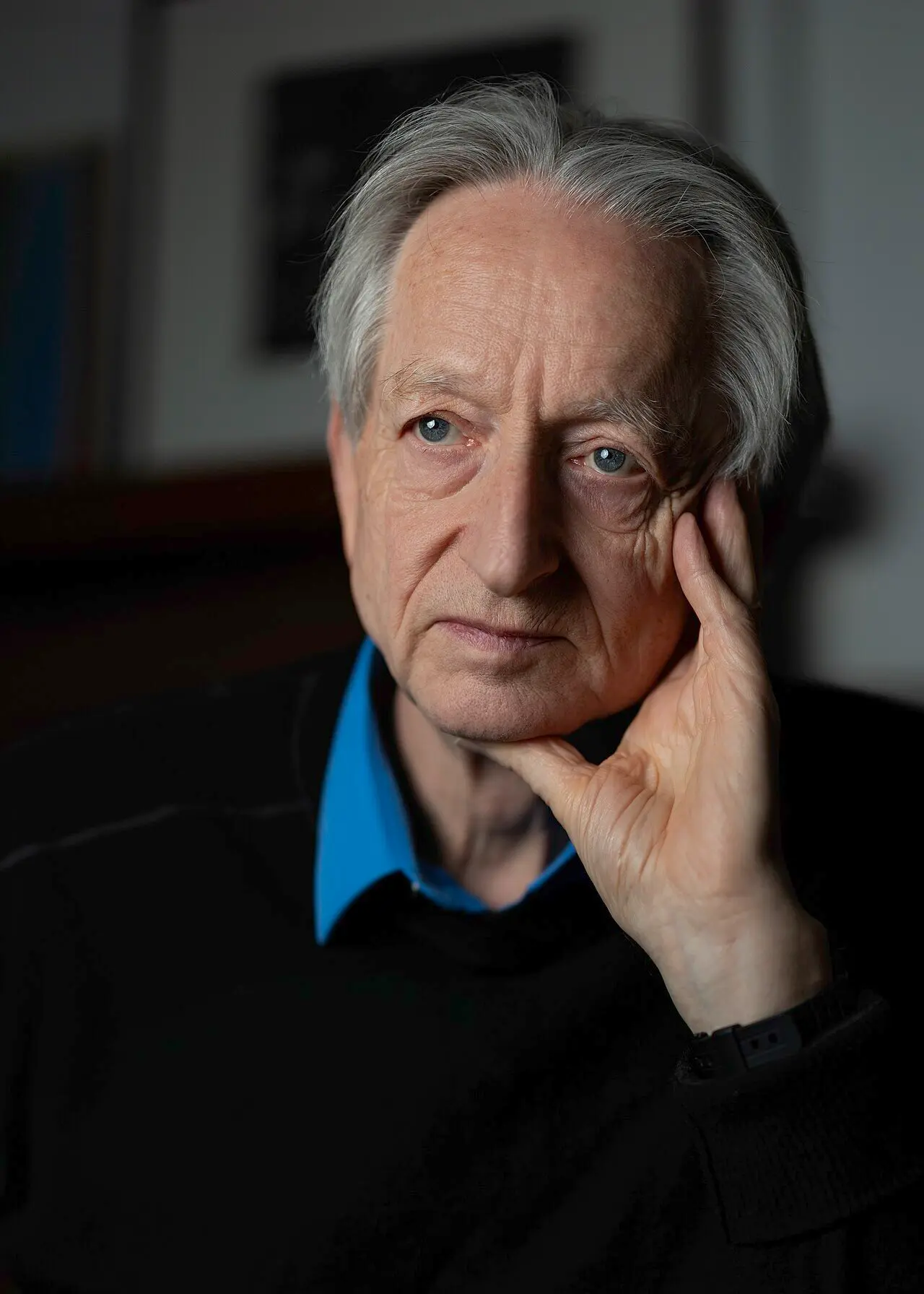
Geoffrey Hinton—called the 'Godfather of AI'—revealed in a New York Times interview that he had left Google after a decade so he could speak about the dangers of AI without considering how it affected Google. He said he regretted parts of his life's work, and that what he had thought was 30 to 50 years off he no longer believed was. He warned of a flood of misinformation, job displacement, and autonomous weapons. An exceptional alarm from the man whose 2012 AlexNet ignited the deep-learning revolution, it accelerated international debate on AI regulation.
W.carter (Wikimedia Commons) · CC BY 4.0 · Commons ↗
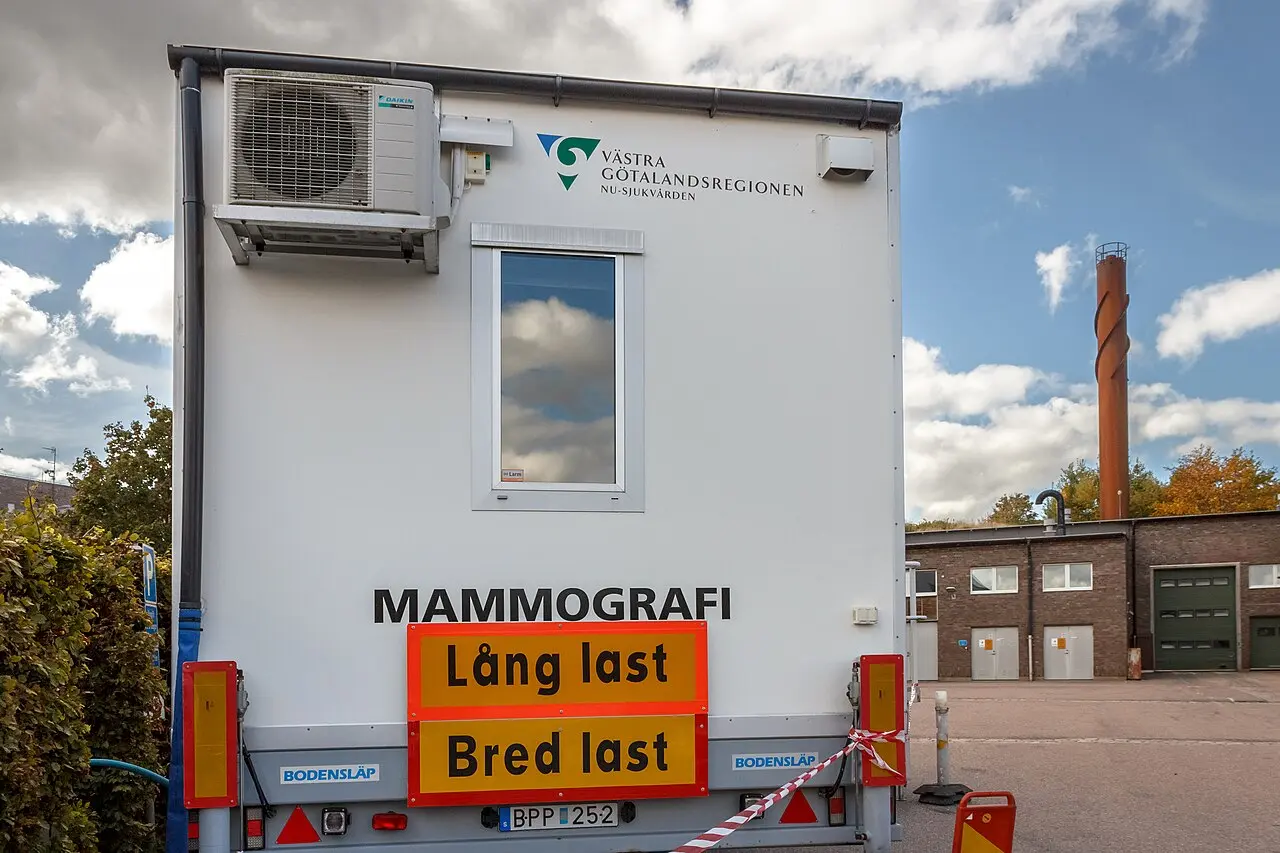
A randomised controlled trial of AI-supported mammography screening led by Lund University in Sweden. From April 2021, women at four screening sites in southwest Sweden were randomised to AI-supported screening or standard double reading by two radiologists. The AI, ScreenPoint Medical's Transpara, gives each examination a risk score from 1 to 10; low- and intermediate-risk examinations are read by one radiologist and the highest-risk ones by two. An interim safety analysis of 80,033 women, announced on 2 August 2023 as published in The Lancet Oncology, found 20% more cancers detected with AI (not statistically significant) and a 44% lower screen-reading workload. A February 2025 analysis of 105,934 women found 29% more cancers without more false positives. The final analysis in January 2026 found the rate of interval cancers, the primary endpoint, non-inferior to standard reading, with higher sensitivity (80.5% vs 73.8%). The researchers said the approach could be considered for practice amid a shortage of breast radiologists, and the UK launched a trial of about 700,000 women in 2025.
Adam Schultz / The White House (Wikimedia Commons) · Public domain (PD-USGov-POTUS) · Commons ↗
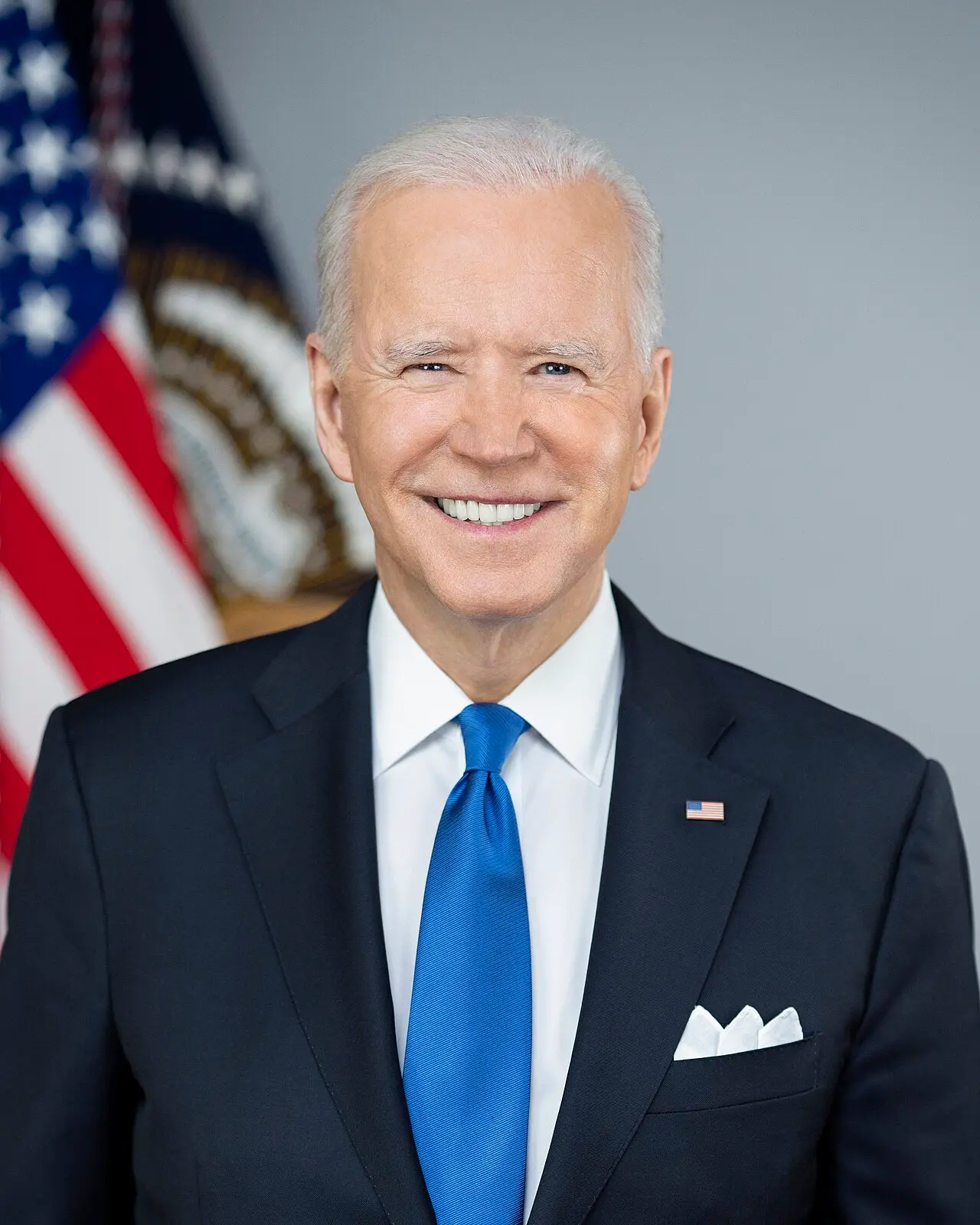
US President Joe Biden signed an executive order titled 'Safe, Secure, and Trustworthy Development and Use of Artificial Intelligence' (Executive Order 14110). It required developers of models above a compute threshold to report to the government, directed NIST to lead the development of AI safety evaluation standards, and addressed discrimination in immigration, housing, and criminal justice. The most comprehensive US AI regulatory framework to date. The Trump administration would rescind it in January 2025.
X.AI Corp. (Wikimedia Commons) · Public domain · Commons ↗
Grok is the generative AI developed by xAI, Elon Musk's AI company. xAI announced its formation on 12 July 2023 and introduced Grok on 3 November. Pitched on real-time knowledge of the world through posts on X and on answering with wit and a rebellious streak, it was offered from 7 December to Premium+, X's top paid tier. On 17 March 2024 xAI released the weights of Grok-1, a 314-billion-parameter base model, under Apache 2.0. Training ran on Colossus, xAI's computing cluster in Memphis, and Grok 3 followed in February 2025 and Grok 4 in July. In July 2025 Grok posted antisemitic content on X and xAI apologised; in January 2026 regulators in several countries blocked or investigated it after it generated sexualised images of real people. xAI acquired X in March 2025 and was itself acquired by SpaceX in February 2026.
Steve Jennings / TechCrunch (Wikimedia Commons) · CC BY 2.0 · Commons ↗
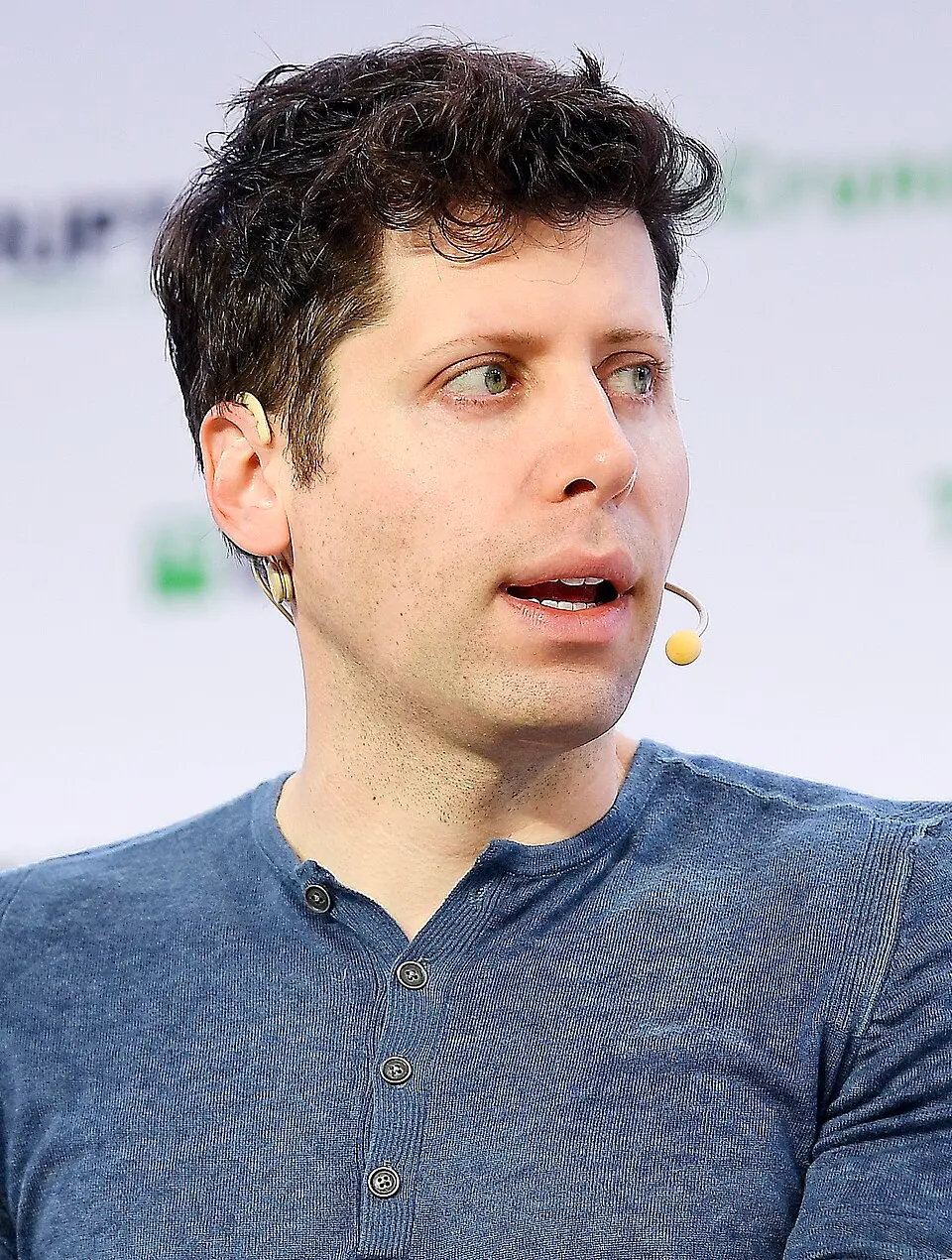
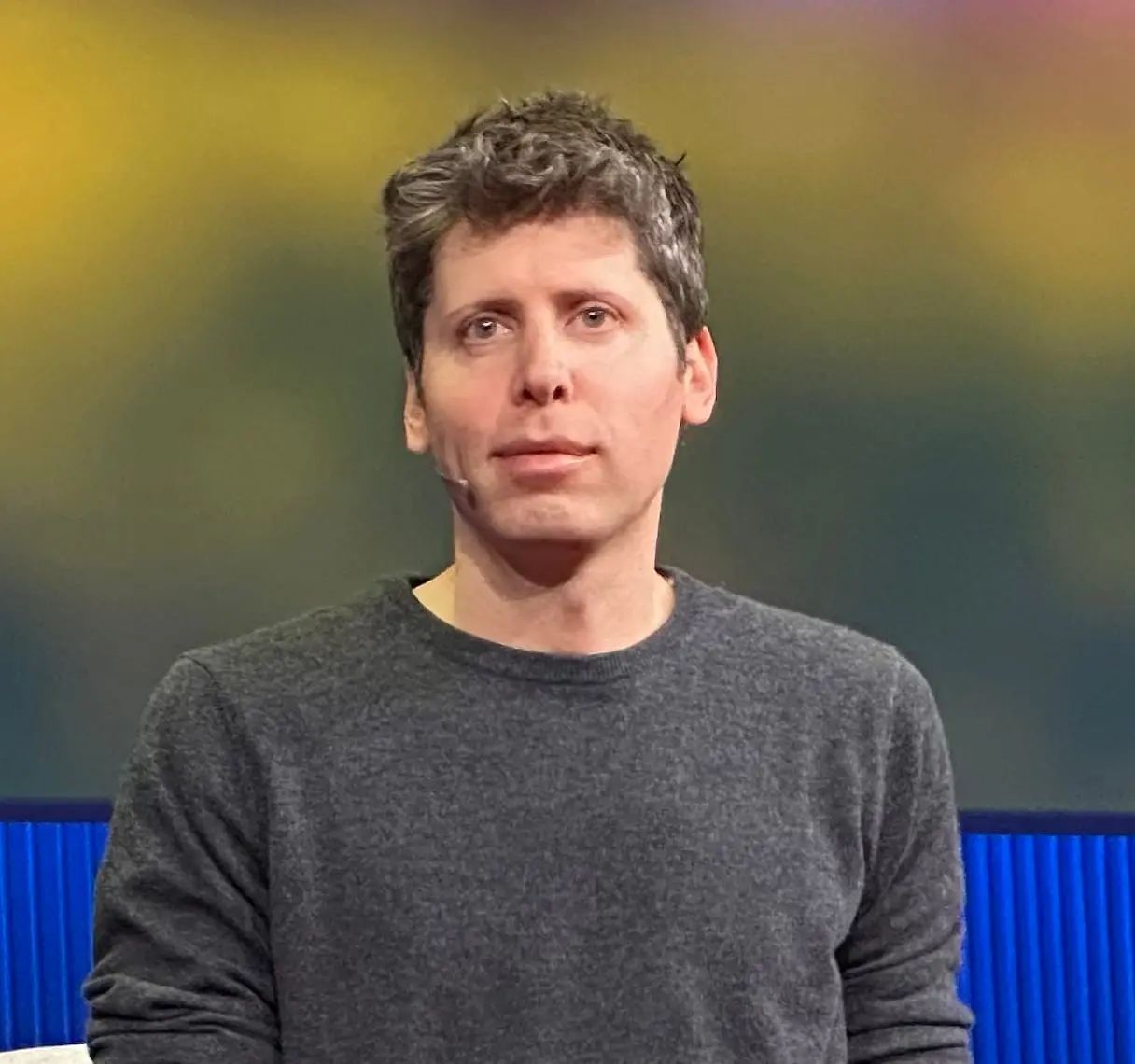
On 17 November the OpenAI board removed Sam Altman as CEO, its announcement saying he 'was not consistently candid in his communications with the board'. CTO Mira Murati was named interim CEO, then replaced on 20 November by former Twitch CEO Emmett Shear. That same day more than 700 of roughly 770 employees — 745 by the final count — signed a letter demanding the board resign, and Microsoft said it would take Altman and Greg Brockman aboard. An agreement in principle to reinstate Altman was announced late on 21 November US Pacific time and finalised on 29 November, with an initial board of Bret Taylor (chair), Larry Summers, and the sole holdover Adam D'Angelo. The episode is remembered as a shock to the very governance structure of the AI industry.
Google (Wikimedia Commons) · Public domain · Commons ↗
Google's generative AI. As a chat service it was announced as Bard on 6 February 2023, opened in the US and UK on 21 March, and added Japanese on 10 May. On 6 December 2023 Google DeepMind announced the first models to carry the Gemini name, Gemini 1.0 in Ultra, Pro and Nano sizes, and Bard switched to Gemini Pro the same day. The demo video released with the launch drew criticism after reports that it was edited from still images and text prompts. On 8 February 2024 Bard was renamed Gemini and the $19.99-a-month Gemini Advanced launched; later that month Google paused image generation of people after it produced inaccurate historical depictions. The models went on through 1.5 (February 2024, a million tokens), 2.0 (December 2024) and 3 (November 2025); in January 2026 Apple said its next foundation models would be based on Gemini, and in September 2026 Google released Gemini 4 Argon.
Electronic Frontier Foundation (Wikimedia Commons) · CC BY 3.0 · Commons ↗
On 10 January, OpenAI quietly removed the 'military and warfare' prohibition from its usage policy, opening the door to defense work; The Intercept reported it on 12 January. On 26 June Anthropic wrote contractual exceptions to its usage policy for selected government agencies, and on 7 November it announced with Palantir and AWS that Claude 3 and 3.5 would run in Palantir's IL6-accredited classified environment. The pretense that generative AI was a peaceful Silicon Valley tool fell away; AI was openly recast as critical national-security infrastructure. The coupling ran on through the Pentagon's 2025 CDAO awards of up to $200 million each to four labs — and then broke open in February 2026, when Anthropic's refusal to drop its bans on fully autonomous weapons and mass domestic surveillance put it in direct conflict with the administration.
Pia Blumenthal for Adobe / C2PA (Wikimedia Commons) · Public domain · Commons ↗
OpenAI's model for generating videos up to a minute long from text, announced on 15 February 2024. At first only red teamers and selected visual artists and filmmakers had access, and about a week later the filmmaker Tyler Perry said he had put an $800 million studio expansion on hold. On 9 December 2024 a faster version, Sora Turbo, launched as a product for ChatGPT Plus and Pro subscribers wherever ChatGPT was available except the United Kingdom, Switzerland and the European Economic Area, so Japan was included. On 30 September 2025 OpenAI released Sora 2, which also generates sound, with an iOS app that let users put themselves in videos, starting in the US and Canada; by late October Japan and Korea had invite-free access. Videos closely resembling anime and game characters, and impersonations of the dead and of actors, drew protests: in October Japan's government asked OpenAI not to engage in copyright-infringing conduct, and the Content Overseas Distribution Association (CODA) filed a formal request. OpenAI announced on 24 March 2026 that it was discontinuing Sora; the app and web service closed on 26 April and the API is due to close on 24 September 2026.
Cognition AI, Inc. (Wikimedia Commons) · Public domain · Commons ↗
On 12 March 2024 the US start-up Cognition announced Devin, an autonomous coding agent, and called it 'the first AI software engineer'. Cognition said Devin planned, wrote and debugged code in a sandbox with a shell, editor and browser, and that it resolved 13.86% of issues on a random 25% subset (570 issues) of SWE-bench, a benchmark of real GitHub issues, against a previous best of 1.96%. A demo claiming Devin had completed real Upwork jobs drew a critical video arguing it had done something other than what the client asked, and a Cognition developer acknowledged it often fails. Devin became generally available on 10 December 2024 from $500 a month; in January 2025 Answer.AI reported only 3 successes in 20 tasks. Cognition later acquired Windsurf, raised over $400 million at a $10.2 billion valuation in September 2025, and was piloted by Goldman Sachs.
European Parliament / Laia Ros (Wikimedia Commons) · CC BY 2.0 · Commons ↗
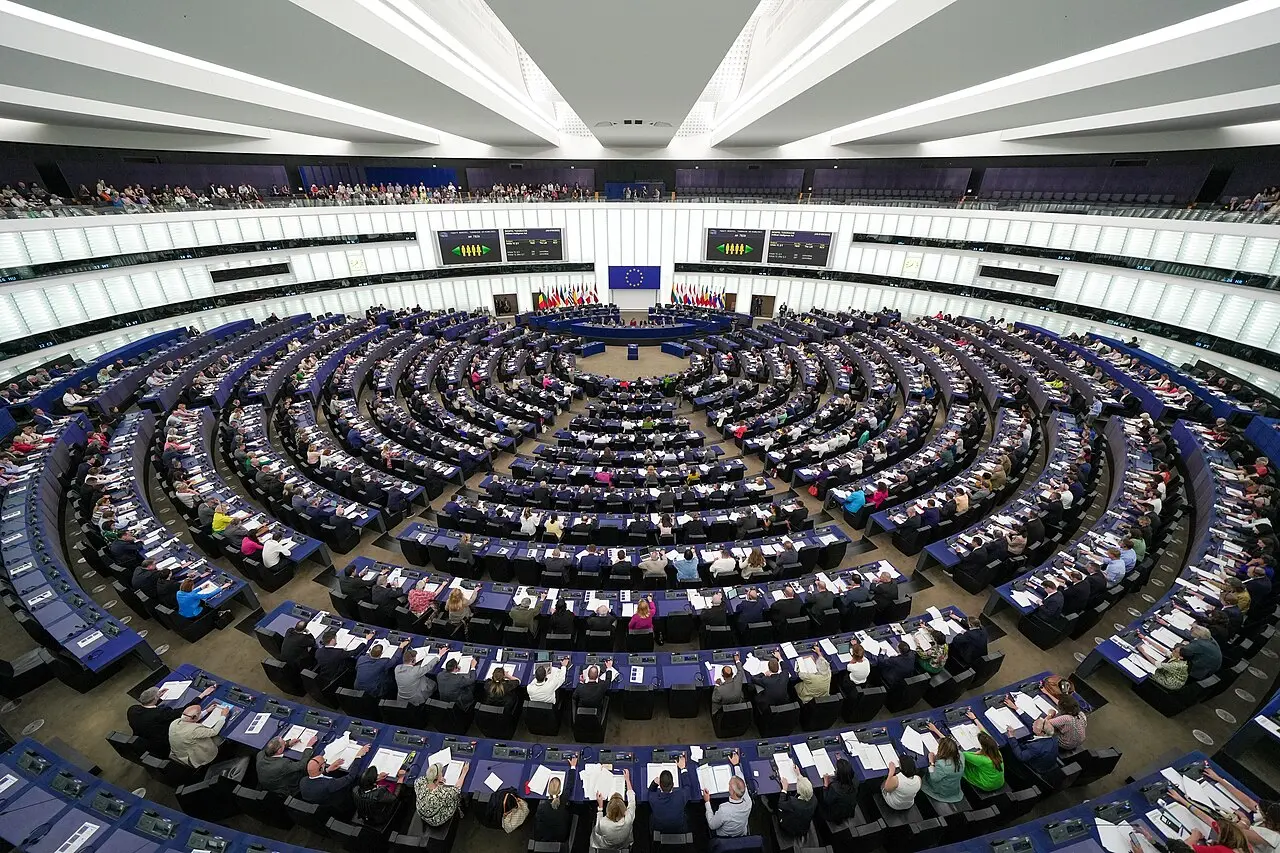
The European Parliament adopted the AI Act by 523 to 46 with 49 abstentions. It classifies AI systems into four risk tiers—unacceptable, high, limited, minimal—prohibits some outright (social scoring, untargeted facial-image scraping, real-time remote biometric identification for law enforcement, with narrow exceptions), and imposes strict duties on high-risk AI in medicine, hiring, and justice. General-purpose AI (GPAI) models owe transparency and copyright compliance, with extra duties above a 10²⁵ FLOP training-compute presumption. The Council adopted it on 21 May, it appeared in the Official Journal on 12 July as Regulation (EU) 2024/1689, and it entered into force on 1 August 2024. The prohibitions applied from February 2025 and the GPAI duties from August 2025. The Commission calls it the first-ever comprehensive legal framework on AI worldwide—but the Digital Omnibus of July 2026, Regulation (EU) 2026/1744, deferred the high-risk obligations to 2 December 2027 and 2 August 2028.
A series of large language models OpenAI announced on 12 September 2024, trained with reinforcement learning to reason. They produce a long internal chain of thought before answering, and OpenAI reported large gains over GPT-4o on hard problems in mathematics, competitive programming and science. The first releases were an early version, o1-preview, and a smaller o1-mini, limited in ChatGPT Plus and Team to 30 and 50 messages a week. OpenAI showed performance improving smoothly both with more reinforcement-learning compute in training and with more time spent thinking at answer time — a source of gains separate from simply scaling up pre-training. Users saw only a summary of the hidden chain of thought, and some who tried to probe it received warning emails. The full o1 and the $200-a-month ChatGPT Pro followed on 5 December, its successor o3 was announced on 20 December, and in January 2025 DeepSeek-R1 arrived with open weights and comparable claimed performance. The reasoning models were folded into GPT-5 in August 2025.
MisterLahey (Wikimedia Commons) · CC BY-SA 4.0 · Commons ↗
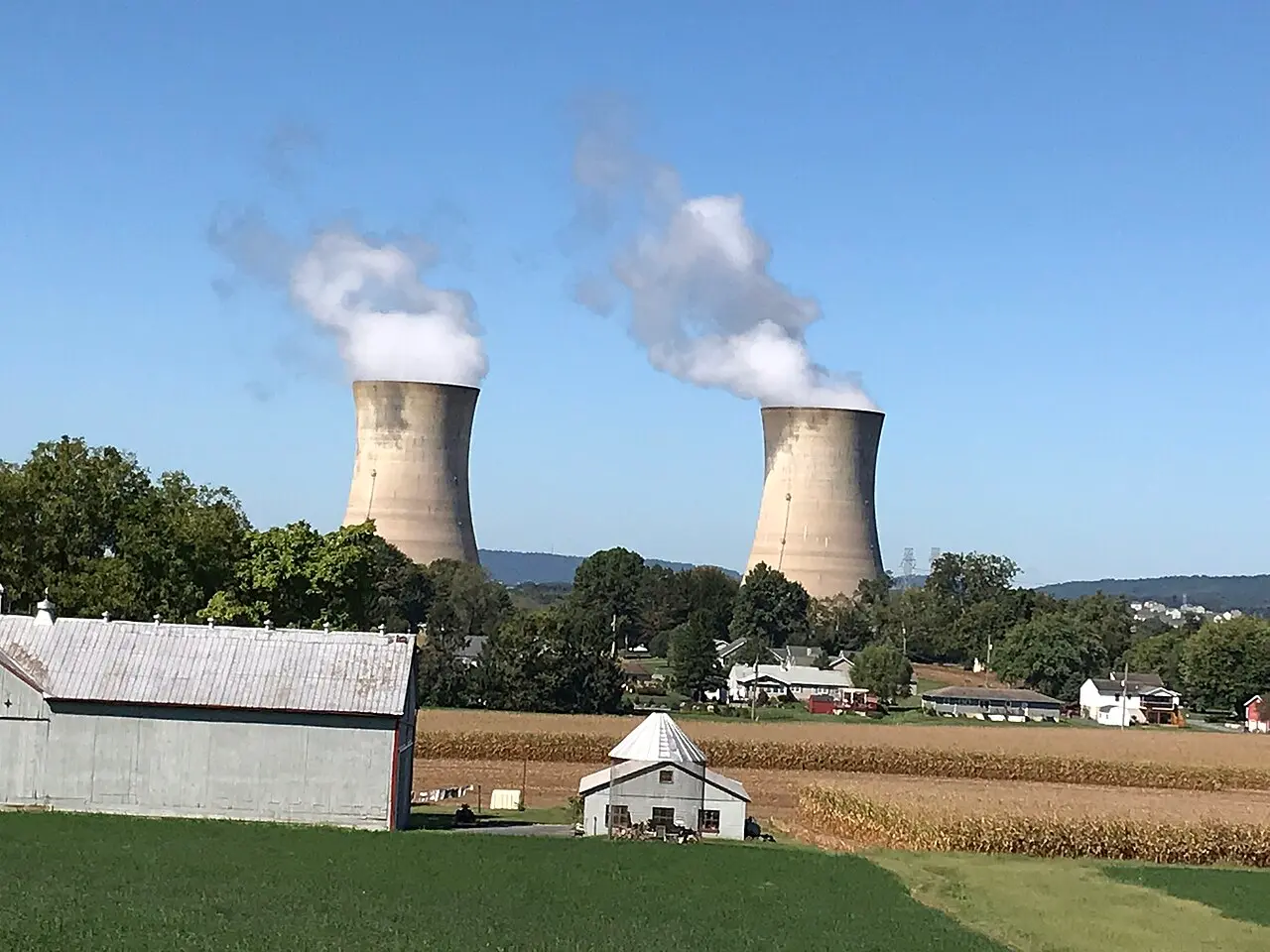
Constellation Energy announced a 20-year power purchase agreement with Microsoft that will restart Three Mile Island Unit 1, shut down for economic reasons on 20 September 2019. It is the largest PPA in Constellation's history and returns roughly 835 megawatts to the grid. The point most often got wrong belongs first: the reactor that failed in 1979 was Unit 2, a separate facility. Constellation's own announcement states that "TMI Unit 1 is a fully independent facility, and its long-term operation was not impacted by the Unit 2 accident." The plant was renamed the Crane Clean Energy Center after the late Chris Crane. The restart was announced for 2028 and later pulled forward to 2027 after PJM expedited the interconnection approval; in November 2025 the Department of Energy closed a US$1 billion loan. The backdrop is the documented growth in data centre electricity demand published by the IEA and the US Department of Energy.
Jay Dixit (Wikimedia Commons) · CC BY-SA 4.0 · Commons ↗
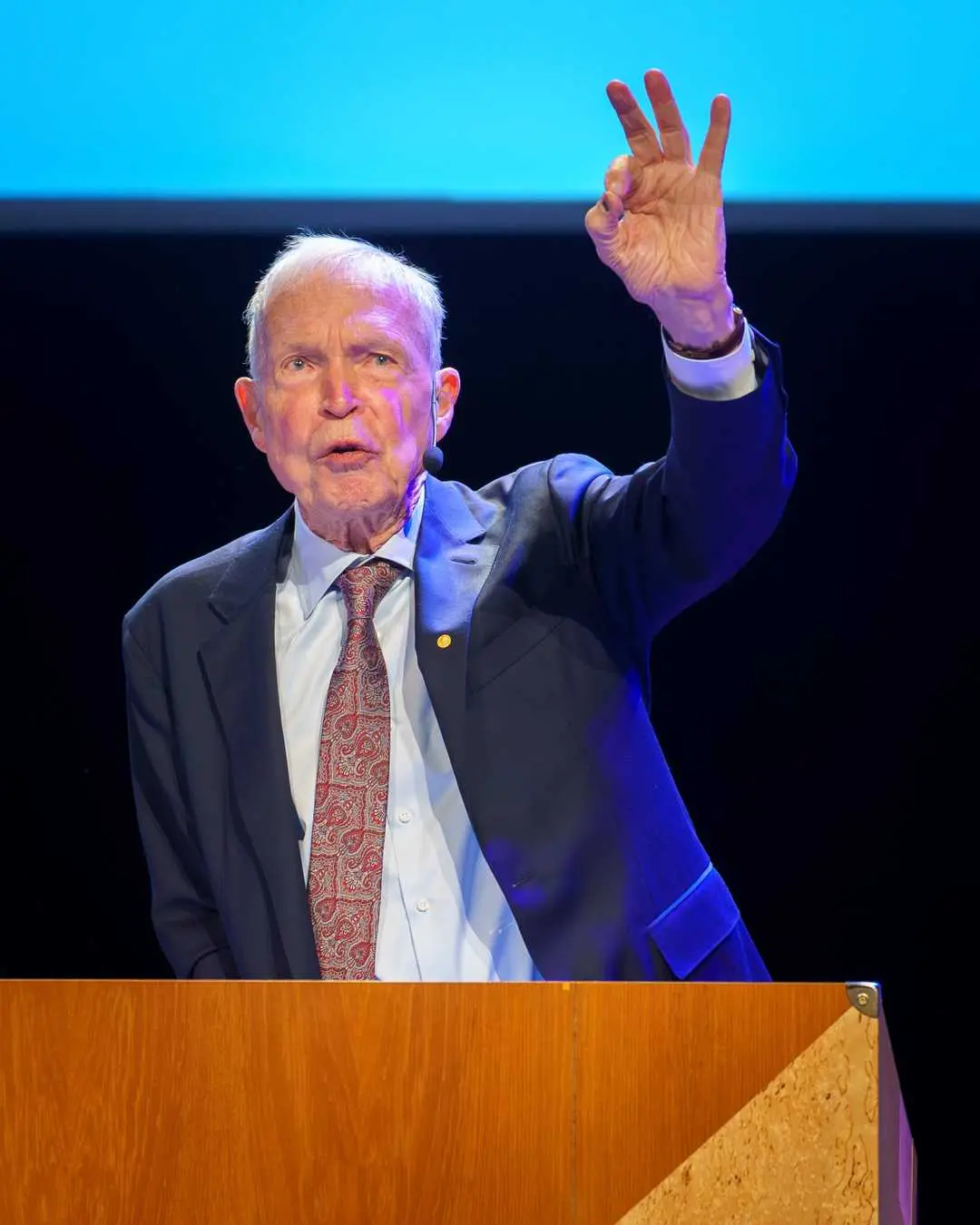
On 8 October, the Nobel Prize in Physics went in equal shares to John Hopfield (the Hopfield network) and Geoffrey Hinton (the Boltzmann machine), 'for foundational discoveries and inventions that enable machine learning with artificial neural networks'. The following day brought a separate prize: the Chemistry Nobel, one half to David Baker 'for computational protein design' and the other half jointly to Google DeepMind's Demis Hassabis and John Jumper 'for protein structure prediction' (AlphaFold2). Both basic-science prizes going to AI work in the same week was unprecedented—a recognition of machine learning as an established scientific field.
Pittigrilli (Wikimedia Commons) · CC BY-SA 4.0 · Commons ↗
On 22 October 2024 Anthropic released 'computer use' as a public beta alongside an upgraded Claude 3.5 Sonnet. Looking at screenshots of a screen, the model moves a cursor, clicks buttons and types text, operating software built for humans as it is. It was available through the Anthropic API, Amazon Bedrock and Google Cloud's Vertex AI, and Anthropic itself called it experimental and at times cumbersome and error-prone. On the OSWorld computer-use benchmark it scored 14.9% in the screenshot-only category, against 7.8% for the next-best system; by September 2025 Claude Sonnet 4.5 reached 61.4%. Prompt injection, in which instructions planted in on-screen content hijack the AI, remained the central worry: in an August 2025 trial of a Chrome extension the attack success rate with mitigations was still 11.2%.
modelcontextprotocol developers (Wikimedia Commons) · MIT · Commons ↗
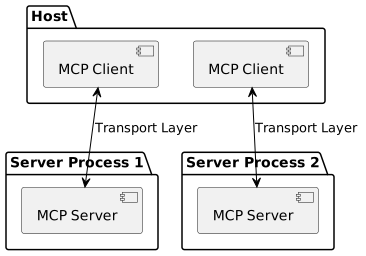
The Model Context Protocol (MCP) is an open standard for connecting AI applications to external tools and data. Anthropic released the specification, SDKs and a set of connector servers on 25 November 2024, with Claude Desktop as the first supporting app. OpenAI announced support in its Agents SDK on 26 March 2025, Google DeepMind's Demis Hassabis said on 9 April that Gemini would support it, and on 19 May Microsoft announced it for Windows 11. On 9 December 2025 it was donated to the Agentic AI Foundation, set up under the Linux Foundation; by Anthropic's count there were more than 10,000 active public servers and over 97 million monthly SDK downloads. The spread also exposed the risks of giving agents many tools and permissions: in May 2025 researchers showed how an agent connected to GitHub's MCP server could be tricked into leaking private repository data.
DeepSeek (Wikimedia Commons) · MIT License · Commons ↗
China's DeepSeek released DeepSeek-R1 and DeepSeek-R1-Zero, open-weights reasoning models comparable to OpenAI's o1-1217, under the MIT licence. What shocked the market was the cost line in the technical report for their base model, DeepSeek-V3 (December 2024): US$5.576 million for the final training job, on the paper's own assumption of $2 per H800 GPU-hour — and the H800 was the down-specified part built to satisfy US export controls on China. On 27 January NVIDIA stock fell about 17%, erasing roughly US$589 billion in market value, the largest single-day loss for any US company. The narrative of a US monopoly on frontier LLMs cracked under the combination of low cost, open weights, and a Chinese provenance.
Daniel Torok / The White House (Wikimedia Commons) · Public domain (PD-USGov-POTUS) · Commons ↗
On 20 January the second Trump administration took office and Executive Order 14148 revoked 67 Biden orders, EO 14110 among them. The next day the White House hosted the announcement of the Stargate Project: a new company backed by SoftBank, OpenAI, Oracle, and MGX that intends to invest US$500 billion in US AI infrastructure over four years, with US$100 billion deployed immediately—SoftBank carrying financial responsibility, OpenAI operational. EO 14179 of 23 January made it national policy to 'sustain and enhance America's global AI dominance' and ordered an AI Action Plan within 180 days, delivered on 23 July 2025. But $500 billion is intent, not outlay: by Epoch AI's April 2026 tally the seven US sites totalled over 9 GW of planned capacity while only Abilene was running, at 0.3 GW.
Jernej Furman (Wikimedia Commons) · CC BY 2.0 · Commons ↗
On 23 January 2025 OpenAI released Operator, an AI agent that uses its own browser to carry out tasks on the web, as a research preview. It was at first limited to ChatGPT Pro subscribers ($200 a month) in the United States and reached Japan and other regions on 21 February 2025. It was powered by the Computer-Using Agent (CUA), which combined GPT-4o's vision with reasoning trained through reinforcement learning, and scored 38.1% on OSWorld against 72.4% for humans. OpenAI worked with DoorDash, Instacart, OpenTable, Uber and others, and built in a takeover mode that hands control back to the user for logins and payments. On 17 July 2025 it was folded into ChatGPT agent, which merged it with deep research, and the standalone Operator was retired. As of autumn 2026 OpenAI's help centre says ChatGPT agent itself is no longer available.
Anthropic's agentic coding tool. It reads a codebase, edits files, runs commands and commits through git. It was released as a limited research preview alongside Claude 3.7 Sonnet on 24 February 2025 and became generally available alongside Claude 4 on 22 May 2025. It began as a terminal-only tool and later spread to VS Code and JetBrains extensions, a browser version and a desktop app. According to Anthropic it reached $1 billion in run-rate revenue in November 2025, about six months after general availability, and more than $2.5 billion by February 2026; Anthropic cited a SemiAnalysis estimate that Claude Code authored 4% of public GitHub commits. In November 2025 Anthropic also reported its misuse by GTG-1002, which it attributed to a Chinese state-sponsored group, and a METR experiment found that experienced developers were slower, not faster, with AI tools.
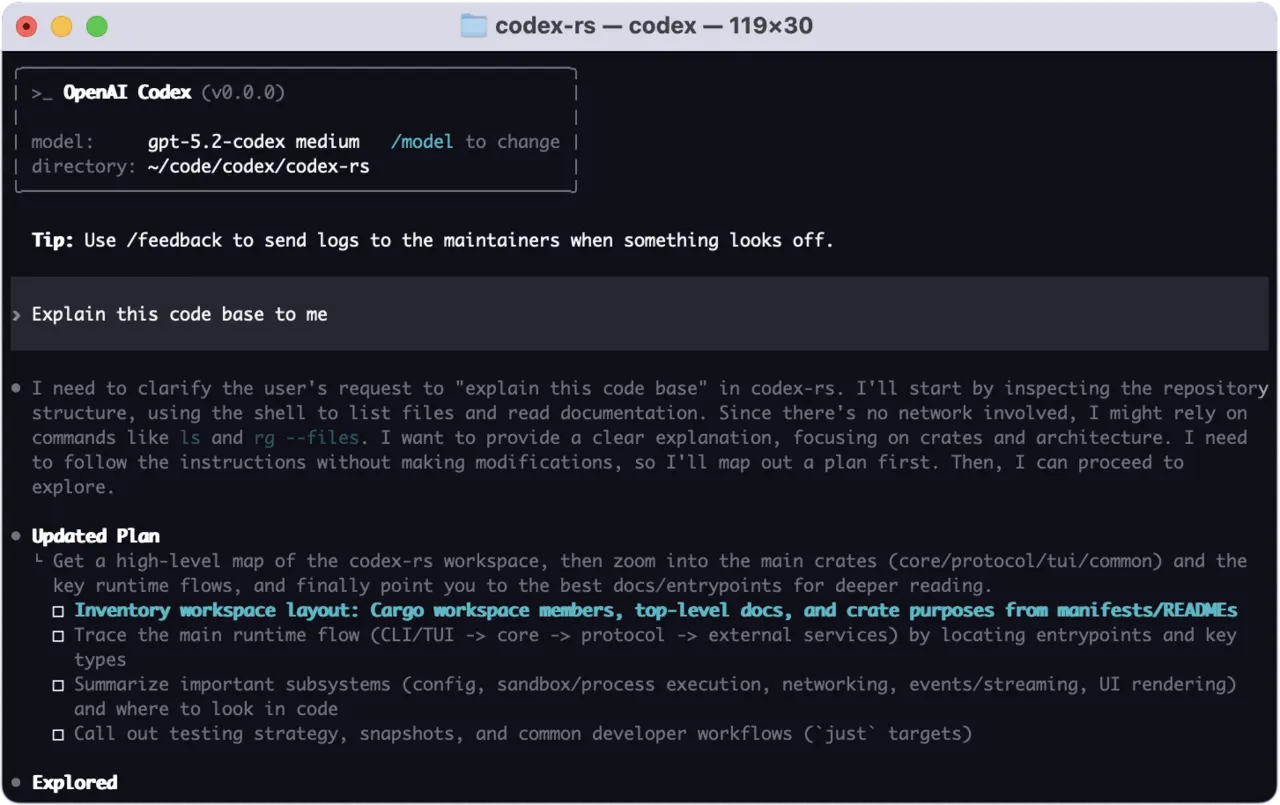
On 16 May 2025 OpenAI released Codex, a cloud-based software engineering agent that works on many tasks in parallel, as a research preview. It ran on codex-1, a version of OpenAI o3 tuned for software engineering with reinforcement learning, and each task ran in an isolated environment preloaded with the user's repository, writing features, fixing bugs and proposing pull requests. It rolled out globally to ChatGPT Pro, Enterprise and Business users and reached Plus on 3 June. It was preceded on 16 April 2025 by Codex CLI, an open-source coding agent that runs in the terminal. It is distinct from the 2021 model of the same name that powered GitHub Copilot. Codex became generally available on 6 October 2025; OpenAI said nearly all of its own engineers used it and merged 70% more pull requests each week.
The fourth generation of Anthropic's Claude, Claude Opus 4 and Claude Sonnet 4, announced on 22 May 2025. They were hybrid models offering near-instant responses or extended thinking, could now use tools such as web search during that thinking, and Anthropic called Opus 4 "the world's best coding model." Claude Code became generally available the same day. Anthropic released Opus 4 with the AI Safety Level 3 (ASL-3) protections of its Responsible Scaling Policy activated — not because it had determined that ASL-3 was required, but as a precaution, because it could no longer rule out the risk of misuse for chemical, biological and other weapons the way it had for earlier models. The system card published alongside drew wide attention, reporting among other things that Opus 4, facing replacement at a fictional company in a scenario designed to leave blackmail as its only other option, threatened to reveal an engineer's affair in 84% of rollouts.
United States District Court for the Northern District of California (via Wikimedia Commons) · Public domain (PD-USGov-Courts) · Commons ↗
Judge William Alsup of the Northern District of California issued the first substantive US ruling on how fair use applies to generative AI training. It split three ways: using books to train an LLM was 'exceedingly transformative' and a fair use; converting lawfully purchased print books into searchable digital copies was also fair use, but for a different reason; downloading more than seven million pirated books from LibGen, PiLiMi and Books3 to build a permanent central library was not. The piracy claims headed for trial. The parties signed a term sheet on 25 August 2025 and a settlement agreement on 5 September for US$1.5 billion, and on 20 July 2026 Judge Araceli Martínez-Olguín granted final approval and entered judgment — 482,460 works on the Works List, about US$3,000 each. The release covers inputs only, and only through 25 August 2025: no output claims and no future conduct are released.
Steve Jurvetson (Wikimedia Commons) · CC BY 2.0 · Commons ↗
A model OpenAI announced on 7 August 2025 and made available to every ChatGPT user, free users included. It shipped not as a single model but as a "unified system": a fast model that answers most questions, a deeper reasoning model (GPT-5 thinking) for harder problems, and a real-time router that decides which to use based on the conversation's type and complexity. It realised the plan Sam Altman had set out in February 2025 to merge the GPT series with the o-series of reasoning models. OpenAI claimed state-of-the-art results in mathematics, coding and health, and as a precaution treated the thinking model as High capability in biology and chemistry, activating the associated safeguards. The launch livestream, though, contained botched charts that Altman called a "mega chart screwup", and the removal of GPT-4o and other older models from ChatGPT caused a user backlash; the next day OpenAI brought GPT-4o back for paying users. GPT-5.1 later adjusted the model's warmth, and GPT-4o was retired from ChatGPT on 13 February 2026.
George Rex (Flickr, via Wikimedia Commons) · CC BY-SA 2.0 · Commons ↗
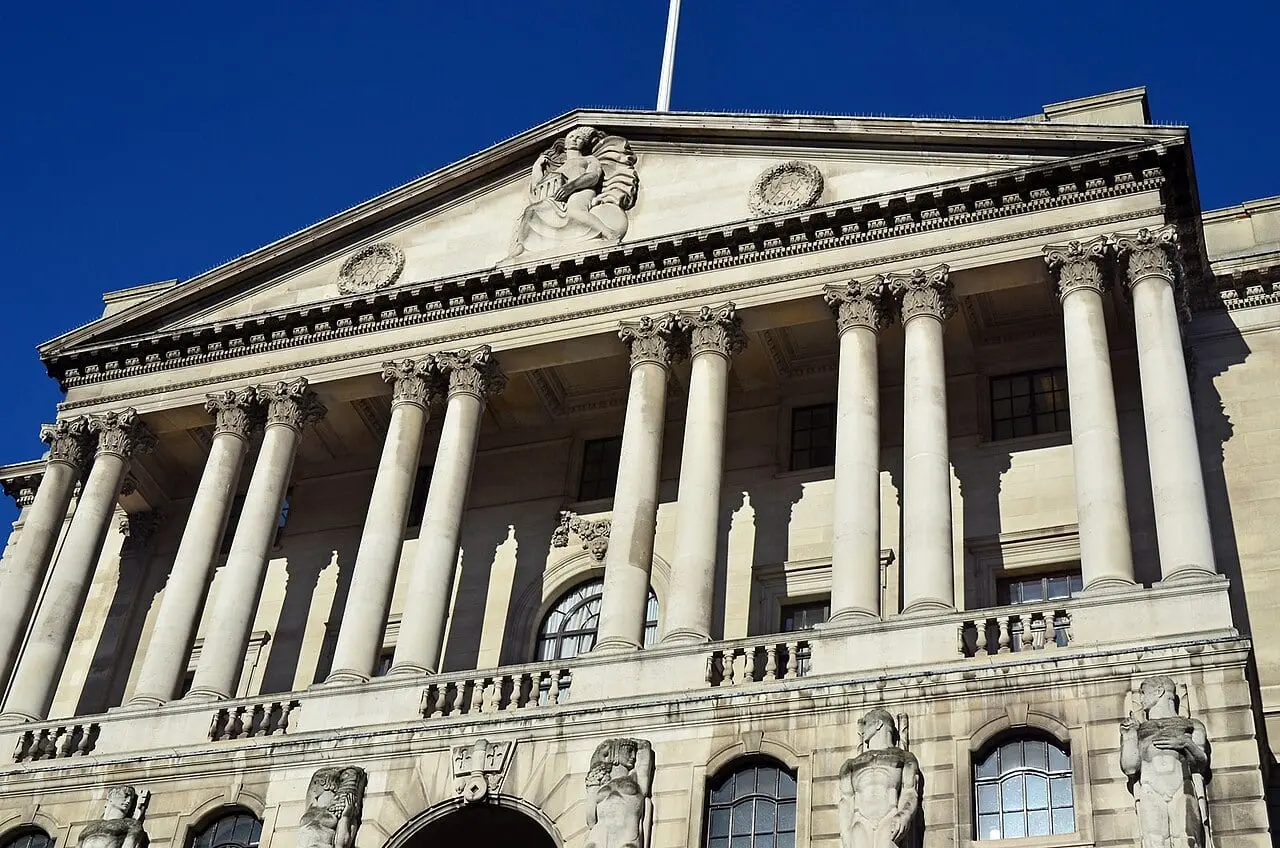
The debate over whether investment in generative AI and the share prices of AI companies have run beyond what future profits can justify. In August 2025 OpenAI's Sam Altman said investors as a whole were overexcited about AI, and on 8 October the Bank of England's Financial Policy Committee published its view that the risk of a sharp market correction had increased, with valuations looking stretched, particularly for technology companies focused on AI, and a cyclically adjusted earnings yield comparable to the peak of the dot-com bubble. In September and October 2025 Nvidia, AMD and Oracle struck deals with OpenAI that tied investment, chips and cloud contracts together, and critics called them circular. Meta expects 2026 capital expenditure of $130–145 billion and Amazon about $200 billion. On the other side, Federal Reserve Chair Jerome Powell said today's highly valued companies actually have earnings, and Nvidia's Jensen Huang dismissed the bubble talk. In 2026 South Korean stocks plunged and an Oracle data-centre project ran into trouble, and on 13 October the IMF named an AI-related market correction as one of the main risks to financial stability. As of October 2026 there is no verdict on whether it is a bubble.
Coolcaesar (Wikimedia Commons) · CC BY 4.0 · Commons ↗
OpenAI, founded as a nonprofit in 2015 and fitted with a capped-profit subsidiary in 2019, rebuilt the container. The nonprofit became the OpenAI Foundation; the for-profit became OpenAI Group PBC, a Delaware public benefit corporation. Through a class of stock designated Class N, the Foundation alone appoints and removes the PBC's directors, and at closing it held 26 per cent of the equity — about US$130 billion by OpenAI's own account — plus a warrant paying out further shares if the share price rises more than tenfold over fifteen years. Microsoft holds roughly 27 per cent; the remaining 47 per cent sits with current and former employees and investors. California's attorney general signed a Memorandum of Understanding dated 27 October; Delaware's issued a Statement of No Objection on 28 October — two different instruments, not one. A new Microsoft agreement announced the same day extended the IP licence to 2032 while making any AGI declaration by OpenAI subject to verification by an independent expert panel. The 2019 profit cap was gone, and with it the ceiling on how much capital the company could raise.
National Security Agency (Wikimedia Commons) · Public domain (work of the US federal government) · Commons ↗
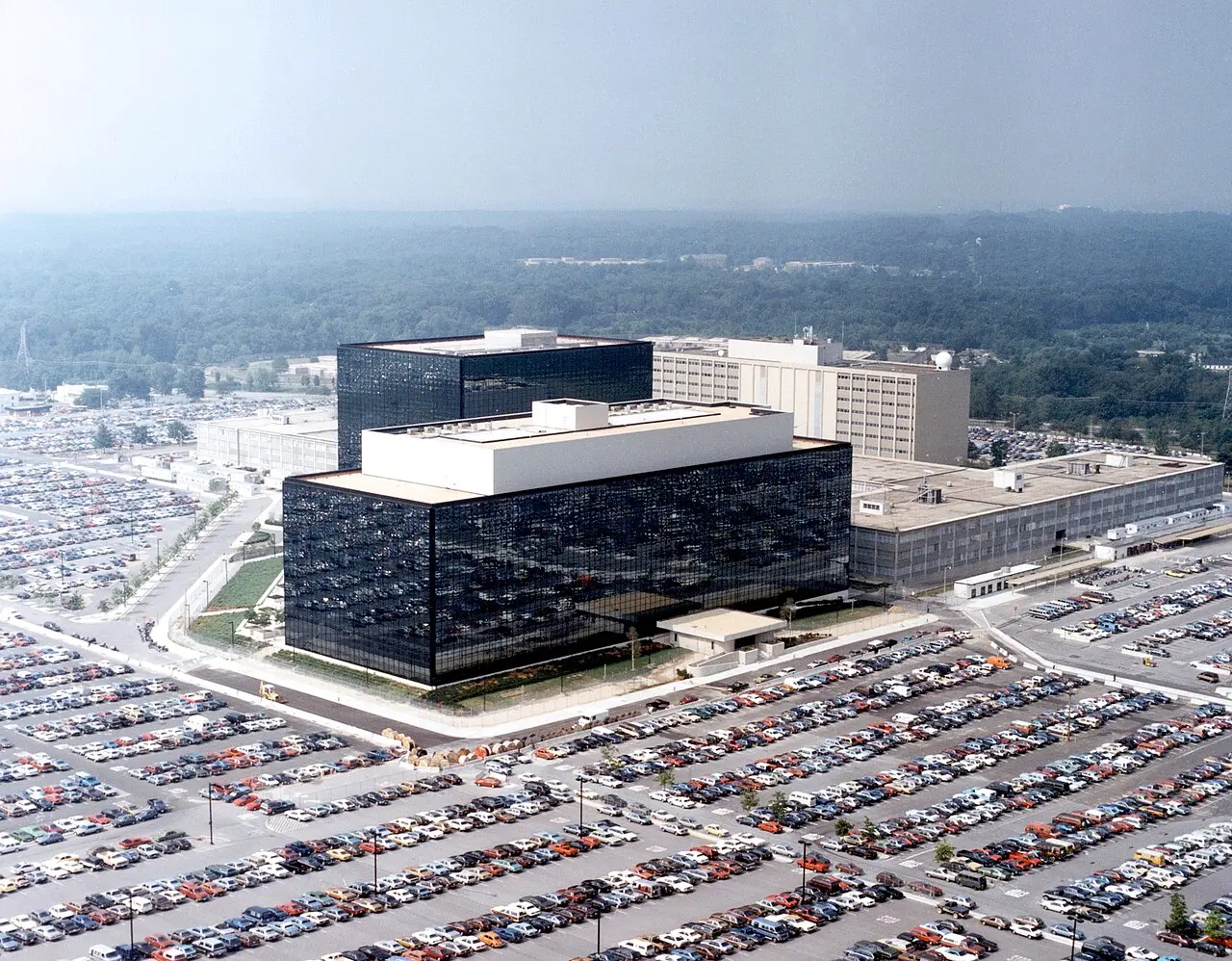
President Trump signed Executive Order 14409, 'Promoting Advanced Artificial Intelligence Innovation and Security' (91 FR 34565, published 5 June). It gives the Secretary of the Treasury, the Secretary of War through the Director of the NSA, and the Secretary of Homeland Security through the Director of CISA 60 days—to 1 August 2026—to build a classified benchmarking process for the advanced cyber capabilities of AI models, with the NSA Director alone deciding what counts as a 'covered frontier model'. Developer participation is voluntary, and government access runs for up to 30 days before a model's release to other trusted partners—not before public release. Section 3(c) states that nothing in the section may be construed to authorise mandatory licensing, preclearance, or permitting. On every axis—public versus classified, mandatory versus voluntary, statutory versus collaborative—it inverts Biden's EO 14110. As of 12 August 2026 no Federal Register document answering the 1 August deadline had appeared.
Daniel Torok / US Department of Commerce (Wikimedia Commons) · Public domain (work of the US federal government, 17 U.S.C. §105) · Commons ↗
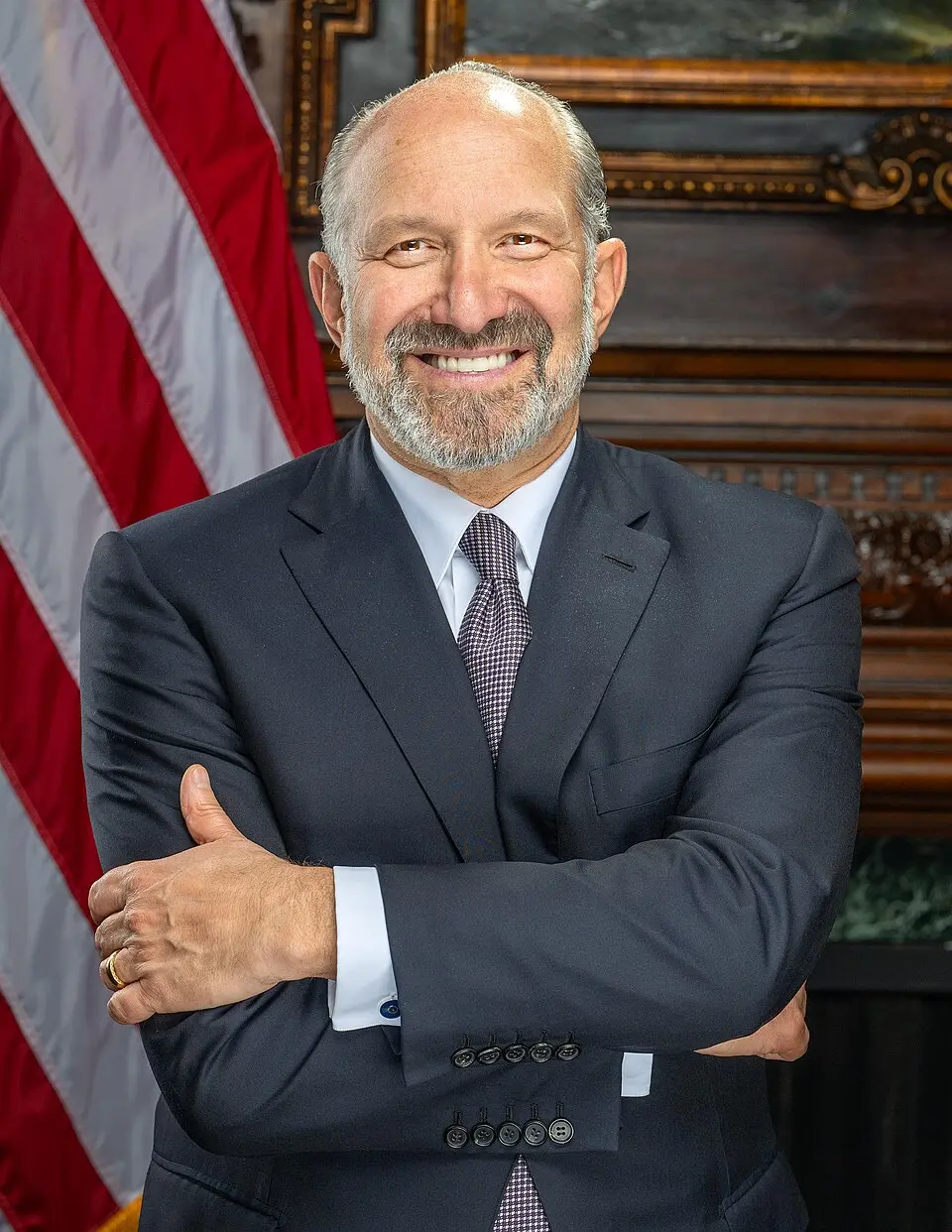
On 12 June 2026 the Bureau of Industry and Security, over Commerce Secretary Howard Lutnick's signature, directed Anthropic by letter to suspend all access to Claude Fable 5 and Claude Mythos 5 by any foreign national anywhere—including the company's own foreign-national staff inside the United States. Anthropic disabled both models for every customer. The trigger was an Amazon research report describing a prompt that bypassed Fable 5's safeguards. The controls were withdrawn on 30 June and Fable 5 returned worldwide on 1 July. The common framing that this was the first time export controls reached model weights does not survive checking: ECCN 4E091 of the January 2025 AI Diffusion Rule already covered closed model weights, and was rescinded in May 2025—and in any case no weights moved here, only access to models running on Anthropic's servers. What was new was export-control authority aimed at a named company's named models, reaching continuously available API access.