T1#consumer
PlayStation 5 Released
Metadata
- Date
- Decade
- 2020s
- Tier
- T1
- Timelines
- A General History of Information Technology · A History of Game Consoles and Game Technology
- Sources
- 06
- Connections
- 04
- Tags
- #consumer
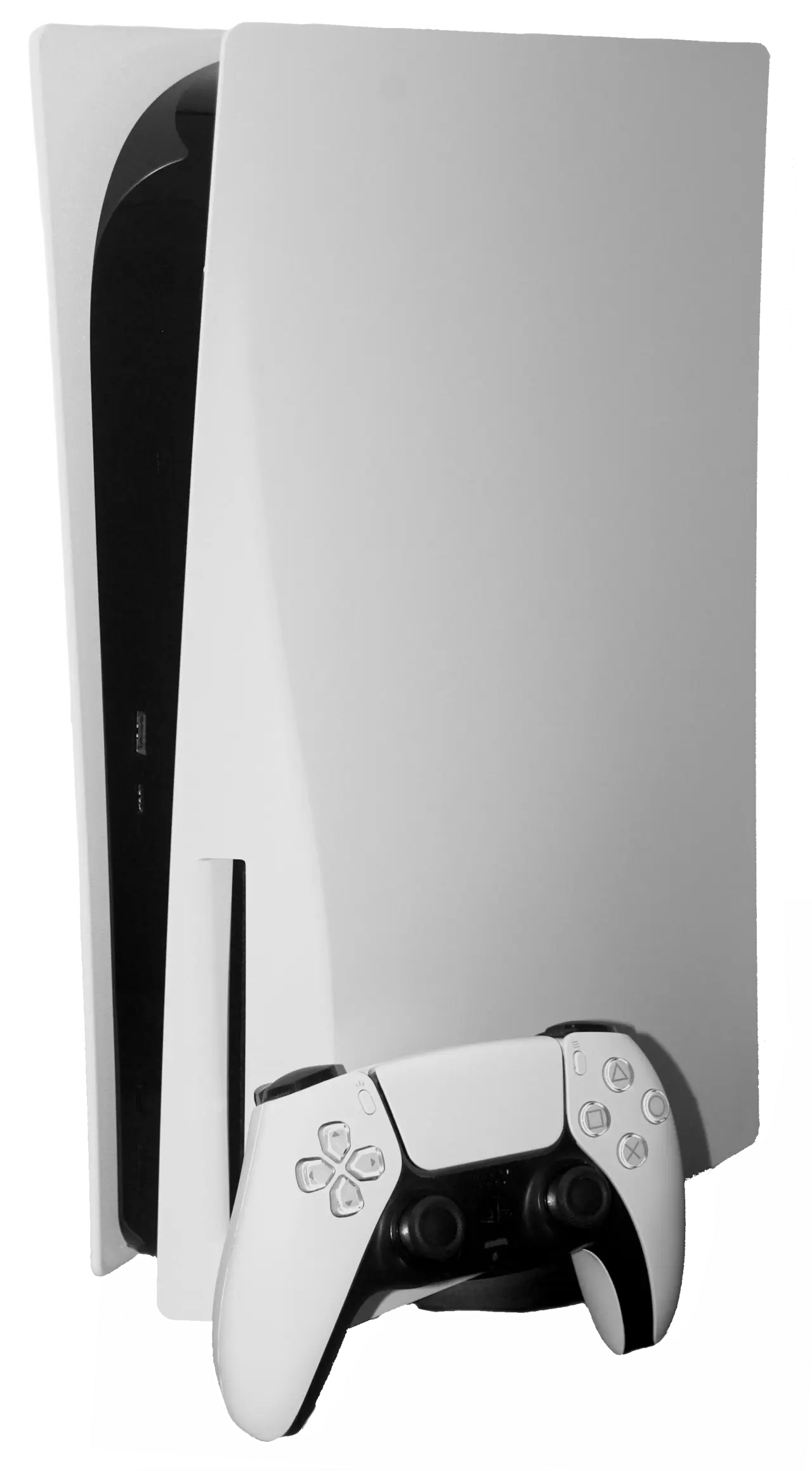
On 12 November 2020, Sony launched the PlayStation 5 in North America, Japan, Australia, South Korea, Mexico, and New Zealand. Europe, the Middle East, South America, and Africa followed a week later on 19 November. US$499 for the standard model with disc drive; US$399 for the Digital Edition without one.
The console then vanished from shelves for nearly two years. COVID-19 supply-chain collapse, semiconductor shortages, and industrialised scalping made the PS5 the defining console of the ninth generation—and also the defining symbol of "you cannot buy this".
The Hardware Leap
PS5 was designed as a deliberate break from PS4. An AMD Zen 2-based 8-core CPU, an RDNA 2 GPU (10.28 TFLOPS), and the heart of the machine: a custom NVMe SSD running at 5.5 GB/s. The thirty-second loading screen, normalised throughout the PS4 era, compressed to a few seconds.
The DualSense controller was its own break. HD haptics translate terrain, materials, and weather into the fingertips; adaptive triggers reproduce bow tension, weapon jams, and brake resistance as physical force. The pre-installed Astro's Playroom functioned as a tech-demo for both systems.
The Two-Year Shortage
PS5 hit a deep shortage from day one. The causes layered on top of each other—COVID factory closures across Asia, congested shipping containers, global pressure on the TSMC 7 nm process PS5 depends on, and organised bot-driven reselling.
Units traded on eBay and Mercari at two to three times retail. Lotteries and overnight queues became the norm. "Trying to buy a PS5" was itself an internet-culture event of 2021 and early 2022. The market only normalised in late 2022, roughly two years after launch.
Slim and Pro — A Mid-Generation Strategy
PS5 Slim (November 2023). Volume reduced by more than 30%, internal SSD upgraded to 1 TB, and the disc drive turned into a detachable module that buyers can purchase later. A flexibility no previous PlayStation had offered.
PS5 Pro (7 November 2024, US$699). A roughly 45% faster GPU, machine-learning upscaling branded PSSR (PlayStation Spectral Super Resolution), and double the ray-tracing throughput. The industry's response, though, was less about technical praise than about anger at the price. The disc drive cost an extra US$80; the stand another US$30. A complete kit cleared US$800. The mid-generation refresh became "too expensive to call mid-gen", and the social-media backlash was severe—street prices in Europe approached €800 and £900. Sony announced a further price hike in March 2026, cementing the PS5 line's status as the console family that keeps getting more expensive.
A Shift in First-Party Strategy
Sony was once the company that sold PlayStation by walling first-party titles inside it. From 2024 onward, that wall quietly came down.
Helldivers 2 (February 2024, simultaneous PS5/PC release) was the decisive case. It shipped more than 10 million copies, a substantial share through PC—overturning Sony's long-running internal dogma that putting first-party games on PC cannibalises console sales. Horizon Forbidden West, The Last of Us Part II, and God of War Ragnarök followed it onto PC. PSVR2 itself added PC connectivity support in 2025, partly relinquishing its status as a dedicated PlayStation peripheral.
PSVR2 struggled commercially. Released February 2023 at an aggressive US$550, with no clear killer title, it had its US list price cut to US$399.99 in March 2025. What followed, including the PC adapter, is covered under PlayStation VR.
Cumulative and Current State
As of December 2025, PS5 cumulative shipments stand at roughly 92.2 million (VGChartz estimate); Sony's May 2026 disclosure pushed the figure to 93.7 million. The platform is approaching PS4's final 117 million and qualifies as a hardware success in absolute terms.
But the annual sales pace has roughly halved year-on-year—demand is clearly slowing in 2026. Rising prices, first-party leakage onto PC, and the arrival of Switch 2 each subtract a reason to own only a PS5.
PS5 records both a hardware leap and the start of a deeper shift in the home-console business model. The exclusivity moat is eroding; the centre of gravity is moving toward service and multi-platform release. This console sits in the middle of that transition.
Sources
TertiaryPlayStation 5 — Wikipedia
Last updated: