T1#labor#regulation#market
Baidu Apollo Go — Fully Driverless Paid Rides Come to China
Metadata
- Date
- Decade
- 2020s
- Tier
- T1
- Timelines
- A History of Artificial Intelligence · AI and Society: A History · A History of Self-Driving Cars
- Sources
- 08
- Connections
- 00
- Tags
- #labor#regulation#market
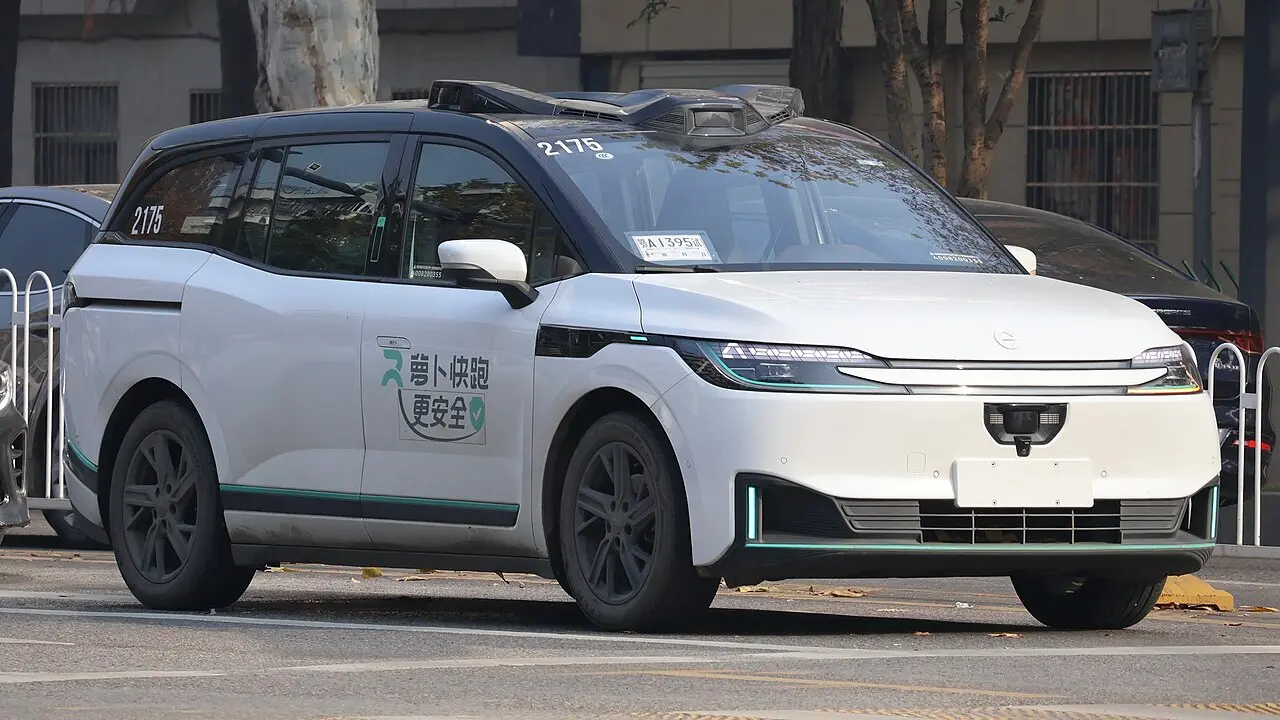
Apollo Go (Luobo Kuaipao in Chinese) is the autonomous ride-hailing service run by China's Baidu. On 8 August 2022 Baidu announced that it had received permits in Wuhan, Hubei province, and the Yongchuan district of Chongqing to charge fares for rides in fully driverless robotaxis, with no driver or staff member in the car. Baidu called them the first such permits in China. Apollo Go then grew to hundreds of vehicles in Wuhan, and in the summer of 2024 drivers' fears for their jobs became a major talking point on Chinese social media. In 2026 it began fully driverless commercial service in Abu Dhabi and Dubai, and by August that year Baidu said it operated in 28 cities worldwide.
8 August 2022: fully driverless permits with fares
According to Baidu's announcement, the permits were granted by government agencies in Wuhan and Chongqing's Yongchuan district. Apollo Go had already expanded to Beijing, Shanghai, Guangzhou and Shenzhen, but these permits allowed it to offer paid rides in cars with no human driver aboard.
| Item | Wuhan | Chongqing |
|---|---|---|
| Hours | 9 a.m. to 5 p.m. | 9:30 a.m. to 4:30 p.m. |
| Vehicles | 5 | 5 |
| Area | 13 km² in the Wuhan Economic & Technological Development Zone | 30 km² in Yongchuan district |
| Vehicle | Fifth-generation Apollo robotaxi | Same |
Baidu said it reached this point in steps: first testing with a safety operator in the driver's seat, then with one in the passenger seat. At the time of the announcement, Baidu said its autonomous vehicles had driven more than 32 million test kilometres and Apollo Go had passed one million orders, and it described Apollo Go as the world's largest robotaxi service provider. All of these are Baidu's own figures. Wei Dong, vice president and chief safety operation officer of Baidu's Intelligent Driving Group, called it a tremendous qualitative change and the moment the industry had been longing for.
Baidu began working on autonomous driving in 2013 (CnEVPost). In the United States, Waymo had opened fully driverless rides to the public in Phoenix in 2020; with city-by-city permits, China now reached the stage of charging fares for cars with no one at the wheel.
2024: growth in Wuhan and the "rice bowl" uproar
According to CNBC, from March 2024 Apollo Go ran in parts of Wuhan around the clock with no staff in the car. As of April more than 70% of its Wuhan rides were fully driverless, and by July it had more than 500 robotaxis in the city, with plans for 1,000 by the end of the year.
In July 2024 Apollo Go became one of the top trending topics on Weibo. CNBC reported that hashtags spread asking, in its translation, whether driverless ride-hailing cars were stealing people's rice bowls, meaning their livelihoods. A document said to have been issued in late June by a Wuhan taxi company claimed that four of its 159 cars had stopped operating since April because of falling income, and sought tax relief and more restrictions on Apollo Go. CNBC said it could not independently verify the document.
According to Reuters, Wuhan ride-hailing drivers called Apollo Go's cars "stupid radishes", a pun on the brand name in the local dialect, and blamed them for traffic jams. Liu Yi, a 36-year-old who had started driving part-time when construction work slowed, said: "Everyone will go hungry." According to China's Ministry of Transport, the number of registered ride-hailing drivers had passed 7 million by the end of May 2024, roughly double the 3.51 million of July 2021.
Reuters reported that economists and industry experts saw ride-hailing and taxi drivers as among the first workers in the world to face job loss from artificial intelligence. Baidu declined to comment on drivers' concerns; Chen Zhuo, Apollo Go's general manager, had said the company would become "the world's first commercially profitable" autonomous-driving platform.
The speed of regulation: a contrast with the US
According to Reuters, at least 19 Chinese cities were running robotaxi and robobus tests, and seven had approved tests without human monitors. Augustin Wegscheider of Boston Consulting Group said permits were being issued at a rapid pace in China while the US had been far more gradual. Former Waymo CEO John Krafcik said there was a clear contrast between the two, with US developers facing far more scrutiny and higher hurdles. In the US, the year before, California had suspended Cruise's permits after its crash.
2025–2026: into the Middle East, and a mass stall in Wuhan
| Date | Event |
|---|---|
| 8 August 2022 | Fully driverless paid-ride permits in Wuhan and Chongqing |
| March 2024 | Round-the-clock fully driverless service in parts of Wuhan |
| March 2025 | Plan announced to deploy more than 1,000 vehicles in Dubai over several years |
| November 2025 | Permit for fully driverless commercial operation in Abu Dhabi |
| 17 January 2026 | Fully driverless commercial rides begin on Yas Island, Abu Dhabi, with AutoGo |
| 31 March 2026 | Many vehicles stall on the roads of Wuhan |
| 1 April 2026 | Fully driverless commercial rides begin in Dubai via the Apollo Go app, with the Roads and Transport Authority |
| 18 August 2026 | Baidu reports a footprint of 28 cities |
According to TechNode, the Abu Dhabi service was Baidu's first overseas deployment of fully driverless commercial ride-hailing. In Dubai, working with the Roads and Transport Authority (RTA) and in partnership with Dubai Taxi Company, Baidu launched its own app abroad for the first time. Baidu's second-quarter 2026 release said rides in Dubai were also available through the Uber app, that it had received Hong Kong's first permits for fully driverless testing and begun testing on Airport Island, and that it had started open-road testing in London with Uber and Lyft.
Growth also exposed weaknesses. According to CnEVPost, on the night of 31 March 2026 many Apollo Go vehicles in Wuhan suddenly stopped on the road, leaving some passengers stranded on elevated highways. Wuhan traffic police said a preliminary investigation pointed to a system failure and that all passengers got out safely with no injuries. Apollo Go's customer service told local media the cause was network problems, but Baidu had not issued an official statement. Service later resumed.
The scale is large. According to CnEVPost, Apollo Go provided 3.4 million fully driverless rides in the fourth quarter of 2025, more than triple a year earlier, and as of February 2026 it operated in 26 cities with more than 20 million cumulative orders. On 18 August Baidu said its footprint had reached 28 cities and its fleets had driven more than 350 million autonomous kilometres, over 240 million of them fully driverless.
Social impact
According to Reuters, Wegscheider compared China's push on autonomous driving to its support for electric vehicles. In Wuhan, as the city widened its permits step by step, operations reached hundreds of vehicles within a few years. At the same time, economists noted that ride-hailing had become a job of last resort during an economic slowdown, and said the side effects of robotaxis could prompt the government to tap the brakes.
In the United States, Tesla and Zoox have begun expanding their robotaxis, and the same question is being asked of them. The wider story is in the autonomous driving timeline and the AI and society timeline; levels of automation are explained on the SAE levels of driving automation page.
Questions this page answers
- What is Apollo Go?
- It is the autonomous ride-hailing service run by China's Baidu, called Luobo Kuaipao in Chinese. On 8 August 2022 Baidu announced permits in Wuhan and Chongqing to charge fares for robotaxi rides with no human driver in the car. As of August 2026 it operated in 28 cities worldwide.
- Why did Apollo Go face a backlash in Wuhan?
- In July 2024 debate spread on Weibo over whether its robotaxis, by then more than 500 in Wuhan, would take drivers' jobs. Ride-hailing drivers blamed the cars for traffic jams, and a document attributed to a local taxi company sought restrictions on Apollo Go. China had more than 7 million ride-hailing drivers at the time.
- Does Apollo Go operate outside China?
- Yes. On 17 January 2026 it began fully driverless commercial rides on Yas Island in Abu Dhabi with AutoGo, and on 1 April it launched fully driverless commercial rides in Dubai through its own app. According to Baidu, it has fully driverless testing permits in Hong Kong and is testing on public roads in London with Uber and Lyft.
- What was the mass stall in Wuhan?
- On the night of 31 March 2026 many Apollo Go cars in Wuhan suddenly stopped on the road, leaving some passengers stranded on elevated highways. Wuhan traffic police said a preliminary investigation pointed to a system failure and that all passengers got out safely without injury. Service later resumed.
Sources
Permits in Wuhan and Chongqing's Yongchuan district; hours, vehicles and areas; the testing stages; Baidu's figures of over 32 million km and over one million orders
PrimaryBaidu Announces Second Quarter 2026 Results (Exhibit 99.1 to Form 6-K) — Baidu, Inc., Aug 18, 2026
28 cities; over 350 million autonomous km and over 240 million fully driverless km; Dubai rides via Uber; Hong Kong testing permits; London road tests
Round-the-clock service and over 500 cars in Wuhan; the Weibo trend; the taxi company document; over 7 million ride-hailing drivers (Ministry of Transport)
Drivers' accounts; experts' view of the first workers to face AI job loss; tests in 19 cities; the US–China regulatory contrast; Chen Zhuo's remark
SecondaryBaidu Apollo Go robotaxis hit by rare mass paralysis in Chinese city — CnEVPost, Apr 1, 2026
The 31 March stall and the police statement; 3.4 million fully driverless rides in Q4 2025; 26 cities and 20 million cumulative orders
TertiaryApollo Go — Wikipedia
Last updated: