T1#regulation#ethics#market#japan
Cruise Suspended — A Dragging Crash and the Facts Left Unsaid
Metadata
- Date
- Decade
- 2020s
- Tier
- T1
- Timelines
- A History of Artificial Intelligence · AI and Society: A History · A History of Self-Driving Cars
- Sources
- 11
- Connections
- 00
- Tags
- #regulation#ethics#market#japan
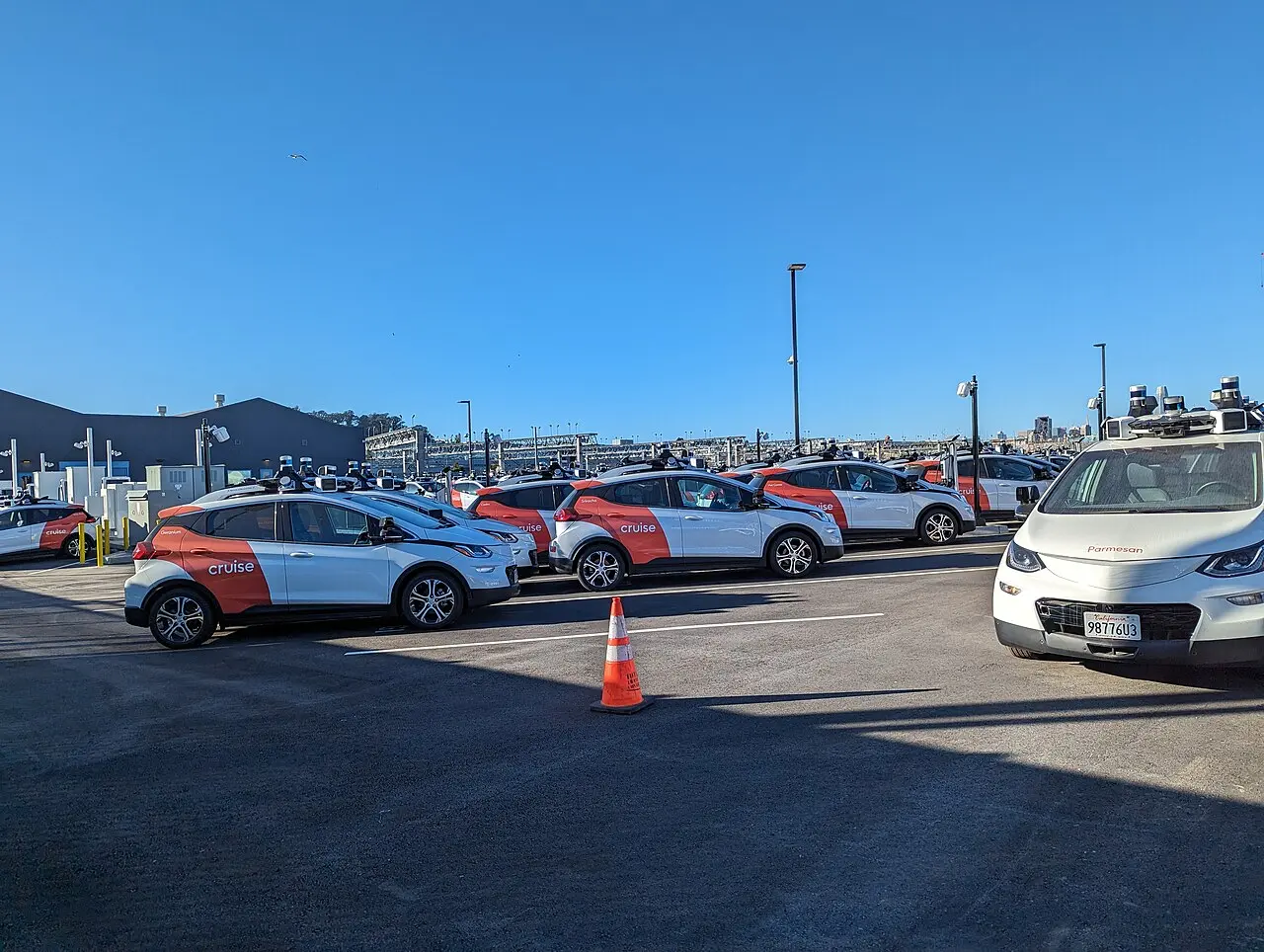
Cruise was a San Francisco-based autonomous ride-hailing company owned by GM (General Motors). On 2 October 2023, a Cruise vehicle with no one at the wheel ran over a pedestrian who had been thrown into its path by another car, stopped, and then, trying to pull over to the kerb, dragged the woman about 20 feet (about 6 metres). On 24 October the California DMV immediately suspended Cruise's driverless deployment and testing permits, citing among other grounds that the company had misrepresented safety information. Cruise halted driverless operations nationwide, later paid a $1.5 million penalty to NHTSA and a $500,000 criminal fine under a deferred prosecution agreement with the US Justice Department. On 10 December 2024 GM announced it would stop funding Cruise's robotaxi development.
Background: the 2016 acquisition and the San Francisco permit
According to TechCrunch, GM acquired Cruise in March 2016 for about $1 billion and went on to spend more than $10 billion trying to commercialise a robotaxi business. On 10 August 2023 the California Public Utilities Commission (CPUC) allowed Cruise and Waymo to charge fares for driverless passenger service in San Francisco at any time of day; that decision is covered on the Waymo goes fully driverless page.
2 October 2023: what happened
According to the Justice Department, the crash happened in San Francisco. A pedestrian struck by a human-driven car was thrown into the path of a Cruise vehicle operating without a driver; the Cruise vehicle ran over her and stopped. But because its detection system did not detect that a pedestrian was underneath it, the vehicle then attempted to pull over to the side of the road with the woman underneath, dragging her more than 20 feet.
The recall report Cruise filed with NHTSA in November explained the mechanism. After a collision, a "Collision Detection Subsystem" decides whether the vehicle pulls out of traffic or stays put. In this crash the system mischaracterised the collision as a lateral one and commanded the vehicle to pull over rather than remain stationary. The analysis by Exponent that Cruise later published found that a mapping error, which failed to recognise that the vehicle was already in the outermost lane, also contributed.
The day after: what regulators were not told
What made matters worse was less the crash than what followed. According to the Justice Department, Cruise's report on the crash omitted the secondary movement and the dragging. In a videoconference with NHTSA the next morning, the verbal summary did not include the dragging either. Cruise staff tried to show a video that depicted it, but because of technical difficulties that portion did not play. A one-day report filed that afternoon also omitted the dragging; Cruise gave NHTSA a copy of the video the same day but did not correct the report.
| Date | Event |
|---|---|
| 2 October 2023 | Pedestrian dragged in San Francisco |
| 3 October 2023 | Briefings to NHTSA, the DMV, the mayor's office and others do not verbally mention the dragging |
| 24 October 2023 | California DMV immediately suspends driverless deployment and testing permits |
| 26 October 2023 | Cruise pauses its driverless fleet |
| 7 November 2023 | Recall 23E-086 filed with NHTSA (software on 950 units) |
| 25 January 2024 | Report by outside law firm Quinn Emanuel published |
| 30 September 2024 | Consent order with NHTSA; $1.5 million penalty |
| 14 November 2024 | Deferred prosecution agreement with the Justice Department; $500,000 fine |
| 10 December 2024 | GM announces the end of robotaxi funding |
24 October: the DMV suspension
On 24 October the California DMV immediately suspended Cruise's deployment and driverless testing permits. As grounds it cited a determination that, based on their performance, the vehicles were not safe for the public's operation; that the manufacturer had misrepresented information related to the safety of its autonomous technology; and that immediate suspension was required for the safety of people on public roads. Its permit for testing with a safety driver was not affected. Cruise paused its driverless fleet on 26 October and later halted all its driverless, supervised and manual operations nationwide.
The investigation: "us versus them"
Quinn Emanuel, the law firm Cruise hired, interviewed 88 employees and contractors and reviewed more than 200,000 internal documents. According to Cruise's summary, the report found that the evidence to date did not establish that Cruise leadership or personnel intended to deceive or mislead regulators. But it attributed the failure to point out the dragging verbally, relying instead on letting the video speak for itself, to a failure of leadership, inadequate and uncoordinated internal processes, mistakes in judgment, an "us versus them" mentality with government officials, and a fundamental misunderstanding of regulatory requirements. It also quoted one employee's text message to another saying that the company's leaders had failed them.
According to TechCrunch, co-founder and CEO Kyle Vogt resigned and Cruise laid off 900 employees, about 24% of its workforce. According to Cruise, nine people left in December 2023, including key leaders from legal, government affairs, commercial operations, and safety and systems.
Penalties and retreat
On 30 September 2024 NHTSA announced a consent order with Cruise. Cruise paid a $1.5 million penalty for, among other things, failing to disclose post-crash details in its crash reports, and was required for two years, with an optional third, to report on vehicle miles travelled, how many vehicles were operating without a driver, and traffic citations and violations. On 14 November the Justice Department charged Cruise with providing a false record to NHTSA with the intent to influence its investigation, and Cruise agreed to pay a $500,000 fine under a deferred prosecution agreement. The agreement runs for three years and requires cooperation and a safety compliance programme; if Cruise fails to meet it, prosecution can resume.
On 10 December 2024 GM said it would no longer fund Cruise's robotaxi development, citing the considerable time and resources needed to scale the business and an increasingly competitive robotaxi market. GM would combine Cruise's and its own technical teams to focus on driver assistance and autonomy for personal vehicles, and expected to cut spending by more than $1 billion a year. According to TechCrunch, Vogt, who had already left, criticised the decision in harsh terms on X.
The effect reached Japan directly. On 19 October 2023, 17 days after the crash, Honda, GM and Cruise had announced a memorandum of understanding to form a joint venture and launch a driverless ride-hailing service in central Tokyo in early 2026. According to Honda, it would start with dozens of Cruise Origins, a six-seat vehicle with no driver's seat or steering wheel, and grow to 500. But Cruise abandoned its plans to build the Origin in mid-2024, and in December 2024 TechCrunch, citing the Nikkei, reported that Honda would stop funding the venture. Driverless taxis in Tokyo are now being pursued by Waymo with GO and Nihon Kotsu.
Social impact
The DMV's grounds for suspension included misrepresented safety information alongside its finding on vehicle safety. A robotaxi permit, in other words, depended not only on how the car performed but on whether the operator told regulators the facts. Quinn Emanuel wrote that regulators need to know all relevant facts about an accident to protect health and safety, and that treating a video as enough was a fundamentally flawed approach.
A Justice Department official said that companies with self-driving cars that seek to share roads and crosswalks must be fully truthful in their reports to regulators. NHTSA's consent order went on to require Cruise to report on the scale of its operations, and Tesla's robotaxi later drew criticism for redacting its own crash reports.
In October 2025 GM announced "eyes-off" driving for 2028, debuting on the Cadillac ESCALADE IQ, and said Cruise's technology and more than five million fully driverless miles of experience would underpin it. TechCrunch explained that such systems are generally called Level 3 and, unlike the Level 4 driverless cars Cruise had been building, still require a driver to take control when needed (see SAE levels of driving automation for the definitions). The wider story is in the autonomous driving timeline and the AI and society timeline.
Questions this page answers
- What happened in the Cruise crash?
- On 2 October 2023 in San Francisco, a pedestrian struck by a human-driven car was thrown in front of a Cruise vehicle with no driver. The Cruise vehicle ran over her and stopped, then, not detecting her underneath, tried to pull over and dragged her more than 20 feet. According to the recall report, the system had mischaracterised the collision as a lateral one.
- Why were Cruise's permits suspended?
- On 24 October 2023 the California DMV cited a determination that the vehicles were not safe for the public's operation, that the manufacturer had misrepresented safety information, and that immediate suspension was required for public safety. In its briefings the day after the crash, Cruise had not verbally mentioned the dragging.
- What penalties did Cruise face?
- Under a consent order with NHTSA on 30 September 2024 it paid a $1.5 million penalty and had to report on the scale of its operations. On 14 November 2024 the Justice Department charged it with providing a false record to NHTSA, and it agreed to pay a $500,000 fine under a three-year deferred prosecution agreement.
- What happened to Cruise afterwards?
- On 10 December 2024 GM said it would stop funding Cruise's robotaxi development and combine Cruise with its own engineers to focus on driver assistance and autonomy for personal vehicles. Honda was reported to have stopped funding the planned driverless service in Tokyo. In October 2025 GM announced eyes-off driving for 2028.
Sources
PrimaryDMV Statement on Cruise LLC Suspension — California DMV, Oct 24, 2023
Immediate suspension of deployment and driverless testing permits; the regulations cited; testing with a safety driver unaffected
justice.gov refuses automated requests, so the archived copy is cited. Sequence of the crash; dragging over 20 feet; omissions from reports; the deferred prosecution agreement and its three-year term
PrimaryPart 573 Safety Recall Report 23E-086 — Cruise LLC, Nov 7, 2023
The Collision Detection Subsystem; misclassification as a lateral collision; the 26 October pause; 950 units
PrimaryCruise Releases Third-Party Findings Regarding October 2 — Cruise, Jan 25, 2024 (archived)
The Quinn Emanuel review (88 interviews, over 200,000 documents); no established intent to deceive and the causes of failure; Exponent's technical analysis; nine departures in December
The March 2016 acquisition for about $1 billion and over $10 billion invested; 900 layoffs; Vogt's resignation; Level 3 versus Level 4
Last updated: