T1#consumer#regulation#labor#japan
Waymo Goes Fully Driverless — Ride-Hailing with No One at the Wheel
Metadata
- Date
- Decade
- 2020s
- Tier
- T1
- Sources
- 10
- Connections
- 03
- Tags
- #consumer#regulation#labor#japan
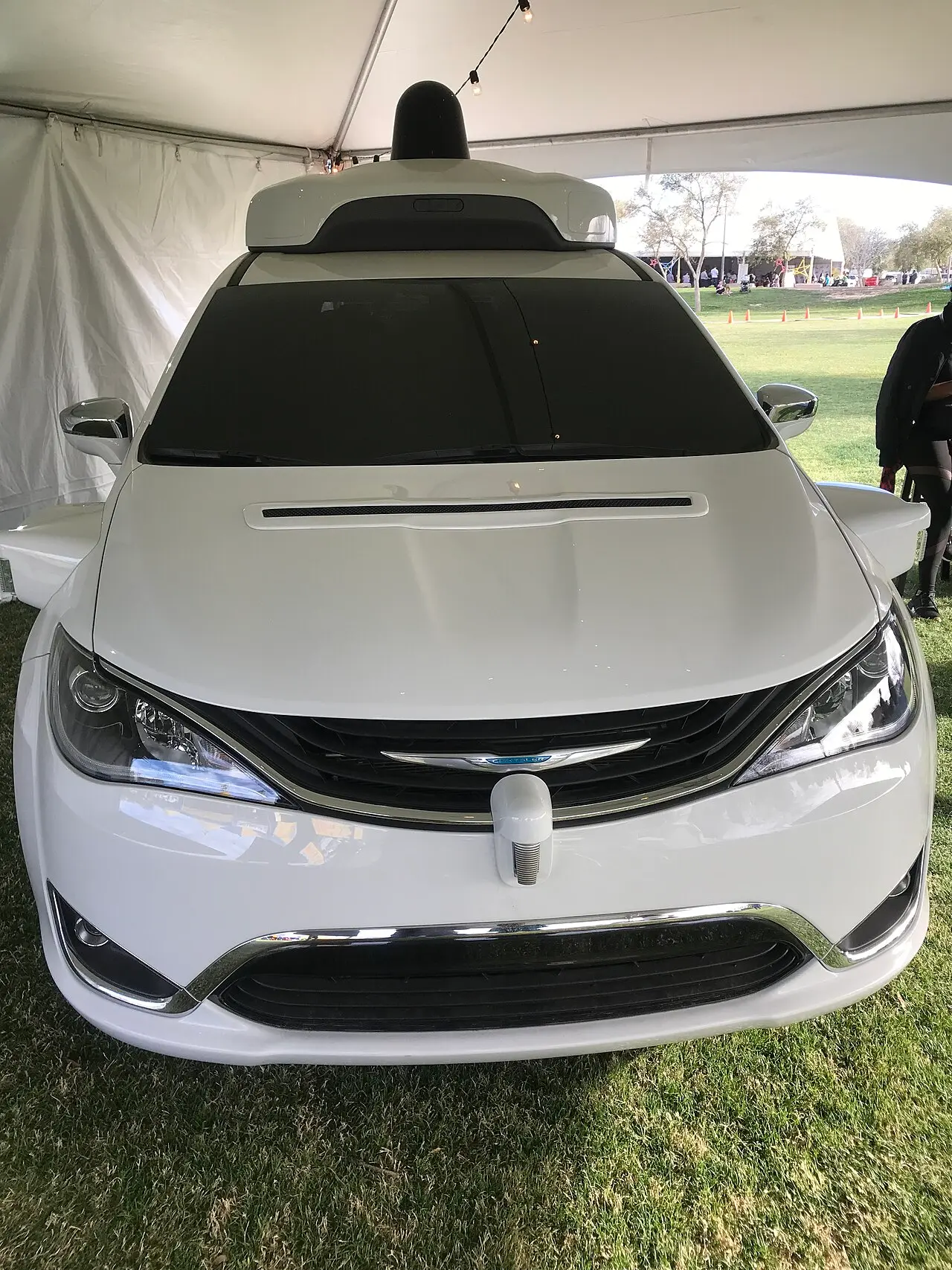
Waymo is the Alphabet-owned self-driving company that grew out of Google's self-driving car project. On 8 October 2020 it opened fully driverless rides, with no one in the driver's seat, to members of the public using its Waymo One ride-hailing service in metro Phoenix, Arizona. Until then such rides had been reserved for a small group of early riders under non-disclosure agreements and made up only 5–10% of its rides in 2020. From that day, a car summoned by an ordinary person through an app, with no human driving it, became an everyday service.
Waymo has since spread to San Francisco, Los Angeles and beyond, and by March 2026 it was giving 500,000 paid rides a week across 10 US cities. It has been testing in Tokyo, and in September 2026 it announced with GO and Nihon Kotsu that it aims to run fully driverless taxis there during 2027.
Roots: Google in 2009 and the DARPA races
According to Waymo's own history, Google's self-driving car project began in 2009 with a challenge to drive ten uninterrupted 100-mile routes autonomously in Toyota Prius cars. On 9 October 2010 Sebastian Thrun, who led the project, opened a post on Google's official blog by recalling that Larry Page and Sergey Brin founded Google to solve really big problems with technology, and disclosed that the cars had already logged over 140,000 miles.
Thrun wrote that the team had gathered engineers from the DARPA Challenges, the autonomous-vehicle races organised by the US government: Chris Urmson, technical team leader of the Carnegie Mellon team that won the 2007 Urban Challenge, and Mike Montemerlo, software lead of the Stanford team that won the 2005 Grand Challenge. The races are covered on the DARPA Grand Challenge page. The test cars of that era always carried a trained safety driver and a software operator.
| Year | Event (per Waymo's history) |
|---|---|
| 2009 | Google's self-driving car project begins |
| 2015 | Steve Mahan, who is legally blind, rides fully autonomously on public roads in Austin, Texas, in Firefly, a prototype with no steering wheel or pedals |
| 2016 | Waymo becomes an independent company under Alphabet |
| 2017 | Early rider program begins in metro Phoenix (Chrysler Pacifica Hybrid) |
| 2018 | Waymo One ride-hailing launches in metro Phoenix |
| 8 Oct 2020 | Fully driverless rides opened to the public |
| 2022 | Rider-only rides begin in San Francisco (employees and members of the public on the waitlist) |
| 2023 | First rider-only rides in Los Angeles, with employees; fleet becomes all-electric with the Jaguar I-PACE |
| 2024 | San Francisco and Los Angeles opened to anyone, without a waitlist |
| 2025 | Expansion to Austin and Atlanta |
Waymo calls the 2015 ride the world's first fully self-driving ride on public roads and describes Waymo One as the world's first commercial autonomous ride-hailing service; those are the company's own descriptions.
8 October 2020: what changed
According to Waymo's blog, it had run its early rider program in Phoenix since 2017, and over the preceding year had pioneered fully driverless, paid rides on high-speed roads across a service area larger than the city of San Francisco. In parallel it had been offering more people the public Waymo One service with a vehicle operator monitoring each ride.
With the 8 October change, existing Waymo One members first, and then new riders joining through the app over the following weeks, could take fully driverless rides. Waymo said that in the near term 100% of its rides would be fully driverless, and riders could now bring friends and family. Because of the COVID-19 pandemic, it said it would reintroduce rides with a trained operator, adding capacity and a larger service area, only after fitting barriers between the front row and the rear cabin.
The significance of that day is that the person responsible for driving was no longer in the car. Driver assistance such as Tesla's Autopilot assumes the driver monitors the road at all times; in a Waymo rider-only ride, the driving is done by the system on board.
Regulators and incidents: expansion and setbacks
On 10 August 2023 the California Public Utilities Commission granted Waymo and GM's Cruise permission to charge fares for driverless passenger service in San Francisco at any time of day. Commissioner John Reynolds observed that regulators did not yet have the data to judge autonomous vehicles against the standard human drivers set. Two and a half months later, on 24 October 2023, the California DMV immediately suspended Cruise's driverless deployment and testing permits.
Waymo has had problems of its own. According to NPR, the school district in Austin, Texas, documented 19 instances of Waymo vehicles illegally passing its stopped school buses. NHTSA opened an investigation, and in December 2025 Waymo said it would file a voluntary software recall. Its chief safety officer said that while the company was proud of its safety record, holding the highest safety standards means recognising when its behaviour should be better.
2026: half a million rides a week, and Tokyo
According to TechCrunch, Waymo's paid rides grew from 50,000 a week in May 2024 to 500,000 a week in March 2026. Its service expanded from Phoenix, San Francisco and Los Angeles to ten cities, adding Austin, Atlanta, Miami, Dallas, Houston, San Antonio and Orlando, with a fleet of a little over 3,000 vehicles. Even so, the same article noted that Waymo's numbers were still a sliver of Uber's human-driven ride-hailing business.
| City or region | When | Form |
|---|---|---|
| Metro Phoenix | October 2020 | Fully driverless rides for the public |
| San Francisco | Began 2022; open to anyone 2024 | Same |
| Los Angeles | Employees 2023; open to anyone 2024 | Same |
| 10 US cities | As of March 2026 | 500,000 paid rides a week (TechCrunch) |
| Tokyo | Testing since 2025; target is service during 2027 | Nihon Kotsu drivers on board for now |
In Japan, the taxi app GO, the taxi company Nihon Kotsu and Waymo announced a strategic partnership on 15 September 2026 to commercialise self-driving taxis in Tokyo. According to Car Watch, the three companies have been testing on public roads in seven Tokyo wards since 2025 with Nihon Kotsu drivers on board, and aim during 2027 to run Japan's first commercial taxi service with SAE Level 4 fully driverless operation, growing in stages to around 100 vehicles.
At the announcement, Ichiro Kawanabe, chairman of GO and of the national hire-and-taxi federation, said he became convinced this was the future after riding a Waymo in Phoenix in August 2023, and presented it as an answer to accidents, labour shortages and areas left without transport. Nihon Kotsu's president, Mr Wakabayashi, framed it as an effort to make up for a future shortage of drivers while coexisting with human-driven taxis. Waymo co-CEO Tekedra Mawakana said the company had cut injury crashes by 94% compared with human drivers; that is Waymo's own claim.
For AI's social effects more broadly see the AI and society timeline; for the company's parent, the Google page.
Questions this page answers
- When could the general public first ride in a Waymo with no driver?
- On 8 October 2020. That day Waymo opened fully driverless rides on its Waymo One service in metro Phoenix, Arizona, to members of the public. It started with existing Waymo One riders and said it would admit new people through its app over the following weeks.
- Where does Waymo operate?
- According to TechCrunch, as of March 2026 it was giving 500,000 paid rides a week in 10 US cities: Phoenix, San Francisco, Los Angeles, Austin, Atlanta, Miami, Dallas, Houston, San Antonio and Orlando. In September 2026 it announced, with GO and Nihon Kotsu, that it aims to run fully driverless taxis in Tokyo during 2027.
- How is Waymo related to Google?
- Waymo grew out of Google's self-driving car project, begun in 2009, and became an independent company under Google's parent Alphabet in 2016. The project recruited engineers from the Stanford and Carnegie Mellon teams that won DARPA's autonomous-vehicle races.
- Is Waymo's driverless service safe?
- Waymo's co-CEO said in September 2026 that it had cut injury crashes by 94% compared with human drivers, but that is the company's own claim. In December 2025, on the other hand, it filed a software recall after its cars failed to stay stopped for school buses in Austin, Texas, and NHTSA opened an investigation.
Sources
Opening on 8 October; 5–10% of 2020 rides fully driverless for early riders under NDA; the 2017 early rider program; the 2015 Firefly ride
PrimaryAbout Waymo — Waymo history
Project start in 2009; independence in 2016; Waymo One in 2018; San Francisco 2022; Los Angeles 2023; opening to all in 2024; Austin and Atlanta in 2025
PrimaryWhat we're driving at — Sebastian Thrun, Official Google Blog, Oct 9, 2010
Over 140,000 miles driven; engineers from the DARPA Challenges (Urmson and Montemerlo); a trained safety driver always aboard
SecondaryWaymo's skyrocketing ridership in one chart — TechCrunch, Mar 27, 2026
500,000 rides a week in 10 US cities; up from 50,000 a week in May 2024; a fleet of over 3,000
SecondaryGO、Waymo、日本交通、2027年中に国内初の完全無人タクシー運行を目指す — Car Watch, Sep 15, 2026
The three-company partnership; testing in seven Tokyo wards since 2025; up to about 100 vehicles in stages during 2027; executives' comments
Secondary東京で自動運転タクシー、27年にスタート GOとウェイモ — Impress Watch, Sep 15, 2026
Ichiro Kawanabe's remarks; the Waymo co-CEO's safety claims; Jaguar I-PACE vehicles
TertiaryWaymo — Wikipedia
Last updated: