T1#consumer#regulation#ethics#japan
Tesla Autopilot — A Decade Between the Name and the Reality
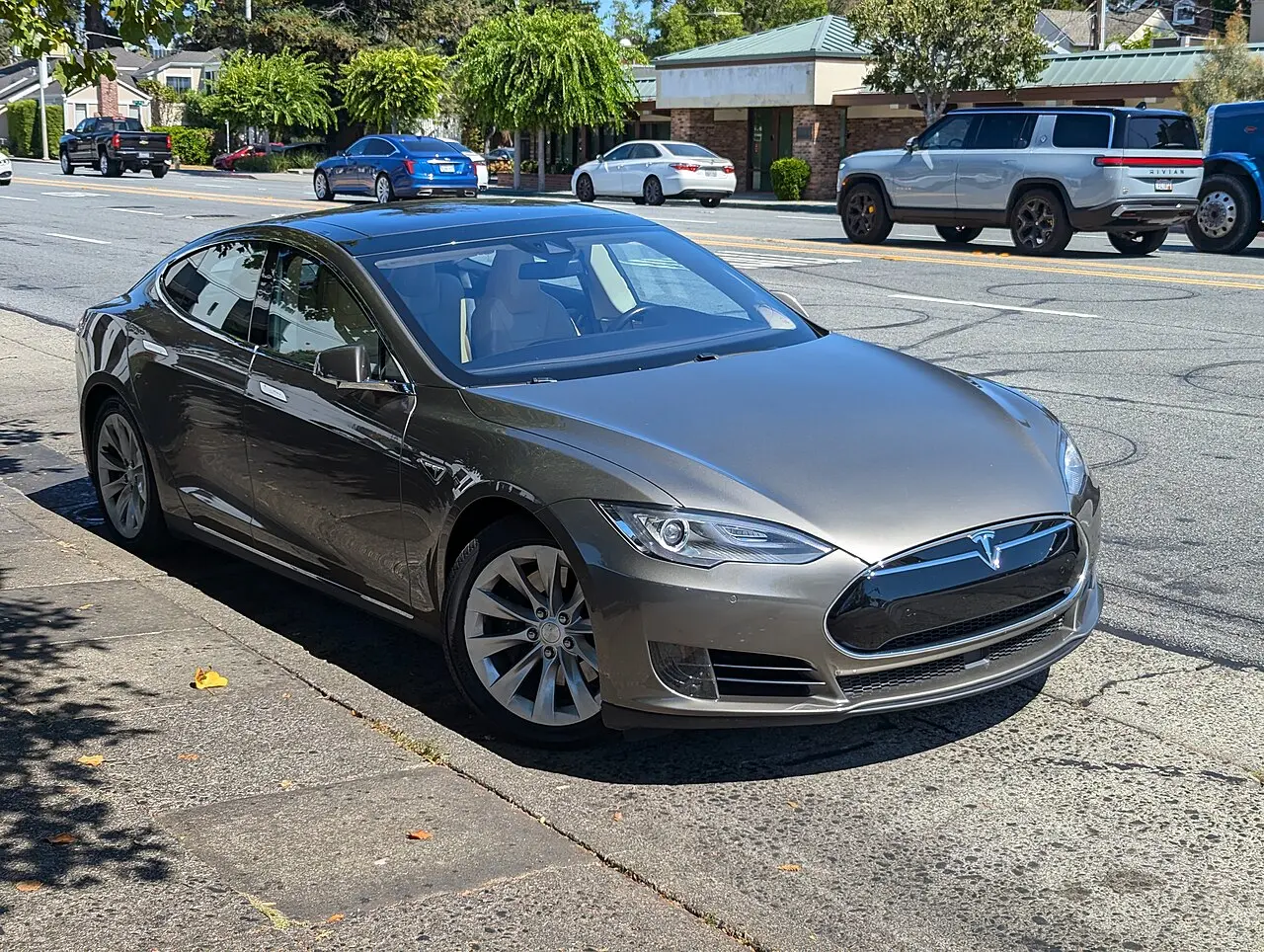
Metadata
- Date
- Decade
- 2010s
- Tier
- T1
- Sources
- 16
- Connections
- 01
- Tags
- #consumer#regulation#ethics#japan
Tesla Autopilot is the driver-assistance feature in software v7.0 for the Model S, which Tesla began rolling out in the United States on 14 October 2015. It steers within a lane, changes lanes when the driver taps the turn signal, and adjusts speed to keep a gap to the car ahead. It reached Japan on 15 January 2016. The name comes from aircraft autopilots, but in reality it is SAE Level 2 driver assistance, which assumes the driver monitors the road and remains responsible at all times. The gap between that name and that reality became the thread running through a decade of crash investigations, recalls, lawsuits and regulatory rulings.
October 2015: a feature delivered by software update
According to Tesla's announcement, in October 2014 the company had begun fitting the Model S with a forward radar, a forward-looking camera, 12 long-range ultrasonic sensors sensing 16 feet around the car, and a digitally controlled electric-assist braking system. Software v7.0 used that hardware to switch on new features, delivered to owners' cars over the air.
| Feature | What it does (Tesla's description) |
|---|---|
| Autosteer | Keeps the car within its lane |
| Auto lane change | Changes lanes with a tap of the turn signal |
| Traffic-Aware Cruise Control (TACC) | Manages speed while keeping a gap to the vehicle ahead |
| Autopark | Scans for a space and parallel parks on command |
The announcement stated that truly driverless cars were still a few years away and that the driver is still responsible for, and ultimately in control of, the car. According to Nikkan Kogyo Shimbun's Newswitch, Elon Musk told a press briefing that Autopilot was still in beta and recommended that drivers keep their hands on the wheel at all times.
| Region | Rollout | Note |
|---|---|---|
| United States | 14 October 2015 (date of Tesla's announcement) | v7.0 |
| Japan | 15 January 2016 | Tesla said it had transport-ministry approval |
Japan was not in the first wave. According to Car Watch, Tesla offered three features in Japan, Autopilot, Auto Lane Change and Autopark, and declared that Japan's self-driving society had begun in reality. In the same statement it noted that even with the self-driving features on, the driver retains full control of the car and bears responsibility. That Tesla's Japanese messaging used the word for "self-driving" at all anticipated the argument to come.
7 May 2016: the fatal crash near Williston, Florida
On the afternoon of 7 May 2016, west of Williston, Florida, a 2015 Tesla Model S 70D struck the side of a semitrailer that was turning left across the highway and passed underneath it. The driver, Joshua Brown, was killed. According to the NTSB report, the car was being driven with TACC and Autosteer, and its speed just before impact was 74 mph on a road with a 65 mph limit. Neither automatic emergency braking nor forward collision warning activated.
In a blog post on 30 June, Tesla disclosed that NHTSA had opened a preliminary evaluation and explained that neither Autopilot nor the driver noticed the white side of the trailer against a brightly lit sky, so the brake was not applied. The company called it the first known fatality in just over 130 million miles with Autopilot activated, compared with a fatality every 94 million miles across all US vehicles. That is Tesla's own claim. NHTSA closed its preliminary evaluation on 19 January 2017, saying it had not identified defects in the design or performance of the automatic emergency braking or Autopilot systems.
The NTSB's conclusion: 12 September 2017
The National Transportation Safety Board adopted its accident report on 12 September 2017. Its probable cause reads:
The National Transportation Safety Board determines that the probable cause of the Williston, Florida, crash was the truck driver's failure to yield the right of way to the car, combined with the car driver's inattention due to overreliance on vehicle automation, which resulted in the car driver's lack of reaction to the presence of the truck. Contributing to the car driver's overreliance on the vehicle automation was its operational design, which permitted his prolonged disengagement from the driving task and his use of the automation in ways inconsistent with guidance and warnings from the manufacturer.
The report found that Autopilot was active for 37 minutes of the 41-minute trip, during which the system detected the driver's hands on the wheel on seven occasions for a total of 25 seconds. His last input was raising the set speed to 74 mph, 1 minute 51 seconds before the crash; after that there was no steering or braking. The NTSB noted that Level 2 systems of this kind cannot reliably identify and respond to crossing traffic, and recommended that six manufacturers of Level 2 vehicles, Tesla among them, build in safeguards limiting the systems to the conditions for which they were designed, and develop better ways to sense the driver's level of engagement and alert drivers when it is lacking.
According to a Reuters report carried by Fortune, Brown's family issued a statement the day before the NTSB meeting saying it was simply not the case that the car had killed their son. The statement added that change always comes with risks, and that zero tolerance for deaths would totally stop innovation and improvements.
The 2023 recall and NHTSA's assessment
Crashes continued. NHTSA opened a preliminary evaluation in 2021 and upgraded it to an engineering analysis (EA22-002) in 2022. According to an NHTSA document dated 25 April 2024, the agency reviewed 956 crashes in which Autopilot was initially alleged to have been in use, up to August 2023. Among them were 211 in which the front of the Tesla struck a vehicle or obstacle in its path, including 13 fatal crashes, and many involved hazards an attentive driver would have seen in time.
On 12 December 2023 Tesla filed a recall of 2,031,220 vehicles, stating that in certain circumstances Autosteer's controls may not be sufficient to prevent driver misuse. The remedy was an over-the-air software update that made visual alerts more prominent and added checks when Autosteer is engaged or used outside controlled-access highways. In the same document NHTSA said that, compared with its peers, Tesla was an industry outlier for mismatching a weak driver-engagement system with Autopilot's permissive operating capabilities, and that the term "Autopilot" may lead drivers to believe the automation is more capable than it is and invite them to over-trust it.
2025–2026: courts, the name, and robotaxis
| Date | Event |
|---|---|
| 22 Jun 2025 | Invitation-only robotaxi rides begin in Austin, Texas, with a Tesla employee in the front passenger seat as a safety monitor (TechCrunch) |
| 1 Aug 2025 | A federal jury in Miami holds Tesla 33% responsible for a 2019 fatal crash and orders it to pay about $243 million (Reuters) |
| 7 Oct 2025 | NHTSA opens a preliminary evaluation of "FSD" running red lights and other violations, covering an estimated 2.88 million vehicles |
| 16 Dec 2025 | The California DMV rules that Tesla's use of "autopilot" and "Full Self-Driving Capability" is misleading and violates state law |
| Feb 2026 | A federal judge upholds the Miami verdict; Tesla is expected to appeal (Reuters) |
At the Miami trial, the plaintiffs' lawyer argued that Tesla designed Autopilot only for controlled-access highways yet deliberately chose not to restrict drivers from using it elsewhere. Tesla responded that the verdict was wrong and would set back automotive safety. After the DMV ruling Tesla stopped using the term "Autopilot", and according to Electrek it discontinued Autopilot as a standalone feature in the US and Canada in January 2026.
What changed over these ten years is where the line of responsibility is drawn. After the 2016 crash, NHTSA found no defect, while the NTSB pointed both to the driver's overreliance and to the design that allowed it. In the 2025 Miami verdict, a jury held the manufacturer partly responsible too. Who bears the gap between what a name promises and what a feature can do remains an open question, even as cars with no driver at all, such as Waymo's driverless service, become more common.
For the research roots of self-driving cars see the DARPA Grand Challenge; for AI's wider social effects, the AI and society timeline. See also Elon Musk.
Questions this page answers
- When did Tesla Autopilot become available?
- In the United States it arrived with Model S software v7.0, which Tesla announced on 14 October 2015. In Japan, Tesla began delivering it to the Model S on 15 January 2016, saying it had approval from the transport ministry. It required hardware that Tesla had been fitting to cars since October 2014.
- Is Autopilot self-driving?
- No. Both the NTSB and NHTSA class it as SAE Level 2, driver assistance in which the driver must monitor the road and remains responsible at all times. Tesla's own 2015 announcement said the driver is still responsible. In December 2025 the California DMV ruled that Tesla's use of the name was misleading and violated state law.
- What did the NTSB conclude about the 2016 fatal crash?
- In a report adopted on 12 September 2017 it found the probable cause to be the truck driver's failure to yield combined with the car driver's inattention due to overreliance on vehicle automation, and that a design permitting prolonged disengagement and use contrary to the manufacturer's guidance contributed to that overreliance. Autopilot was active for 37 minutes of the 41-minute trip, and the driver's hands were detected on the wheel for a total of 25 seconds.
- What was the Autopilot recall?
- It is the recall Tesla filed on 12 December 2023 after an NHTSA investigation, covering about 2.03 million vehicles including 2012–2023 Model S. Because Autosteer's controls might not be enough to prevent driver misuse, Tesla added stronger alerts and other controls by over-the-air software update. In an April 2024 document NHTSA described Tesla as an industry outlier for pairing a weak driver-engagement system with Autopilot's permissive operating capabilities.
Sources
PrimaryYour Autopilot has arrived — Tesla, Oct 14, 2015 (archived)
tesla.com refuses automated requests with 403, so the archived copy is cited. Version 7.0; hardware fitted since October 2014; lane keeping, lane change, speed control and parking; the driver remains responsible
PrimaryA Tragic Loss — Tesla, Jun 30, 2016 (archived)
NHTSA's preliminary evaluation; Tesla's account that neither Autopilot nor the driver noticed the white side of the trailer; the company's claim of a first fatality in just over 130 million miles
Probable cause; SAE Level 2; 74 mph in a 65 mph zone; 37 of 41 minutes on Autopilot with hands detected for 25 seconds in total; recommendations to manufacturers
PrimaryPart 573 Safety Recall Report 23V-838 — Tesla, Dec 12, 2023
2,031,220 vehicles; description of the defect; over-the-air software remedy
PrimaryAdditional Information Regarding EA22002 — NHTSA Office of Defects Investigation, Apr 25, 2024
Analysis of 956 crashes; 13 fatal crashes among 211 frontal-plane crashes; the industry-outlier finding; the remark on the name Autopilot
Secondary自動運転社会始まる。国交省が承認し、テスラ「モデルS」用自動運転ソフトウェアの配信開始 — Car Watch, Jan 15, 2016
Japanese release date; the three features; transport-ministry approval; Tesla's statement
TertiaryTesla Autopilot — Wikipedia
Last updated: