T1#energy
Apple M1 — The Mac Moves to Apple's Own ARM Chip
Metadata
- Date
- Decade
- 2020s
- Tier
- T1
- Sources
- 17
- Connections
- 04
- Tags
- #energy
Apple announced the M1 chip on 10 November 2020. The same day it opened orders for the first three Macs to use it — the MacBook Air, the 13-inch MacBook Pro and the Mac mini — and they reached stores and customers on Tuesday 17 November 2020. Japan got them on the same day, 17 November, so it was in the first wave.
US prices started at $999 for the MacBook Air, $1,299 for the 13-inch MacBook Pro and $699 for the Mac mini. In Japan they started at ¥104,800, ¥134,800 and ¥72,800 respectively, excluding tax. All three looked almost exactly like the models they replaced. What changed was the chip inside.
How the M1 came about: the timeline
| Date | Event |
|---|---|
| 10 January 2006 | Apple announces its first Intel-based Macs, the iMac and the MacBook Pro |
| 22 June 2020 | At WWDC, Apple announces the Mac's transition to Apple silicon: first system by the end of the year, transition complete in about two years |
| 4 August 2020 | A 27-inch iMac with 10th-generation Intel Core processors is announced |
| 10 November 2020 | M1 announced with the MacBook Air, 13-inch MacBook Pro and Mac mini; orders open |
| 17 November 2020 | The three Macs reach stores and customers, Japan included |
| 5 June 2023 | Apple announces the Apple silicon Mac Pro and says the Mac transition is complete (available 13 June) |
In June Apple had said it would keep releasing new versions of macOS for Intel-based Macs for years to come, and that it "has exciting new Intel-based Macs in development". Sure enough, an Intel 27-inch iMac followed in August. November 2020 was not the end of the Intel Mac but the beginning of the end. Against Apple's forecast of about two years, the completion it declared came with the Mac Pro roughly three years later.
What was inside the M1
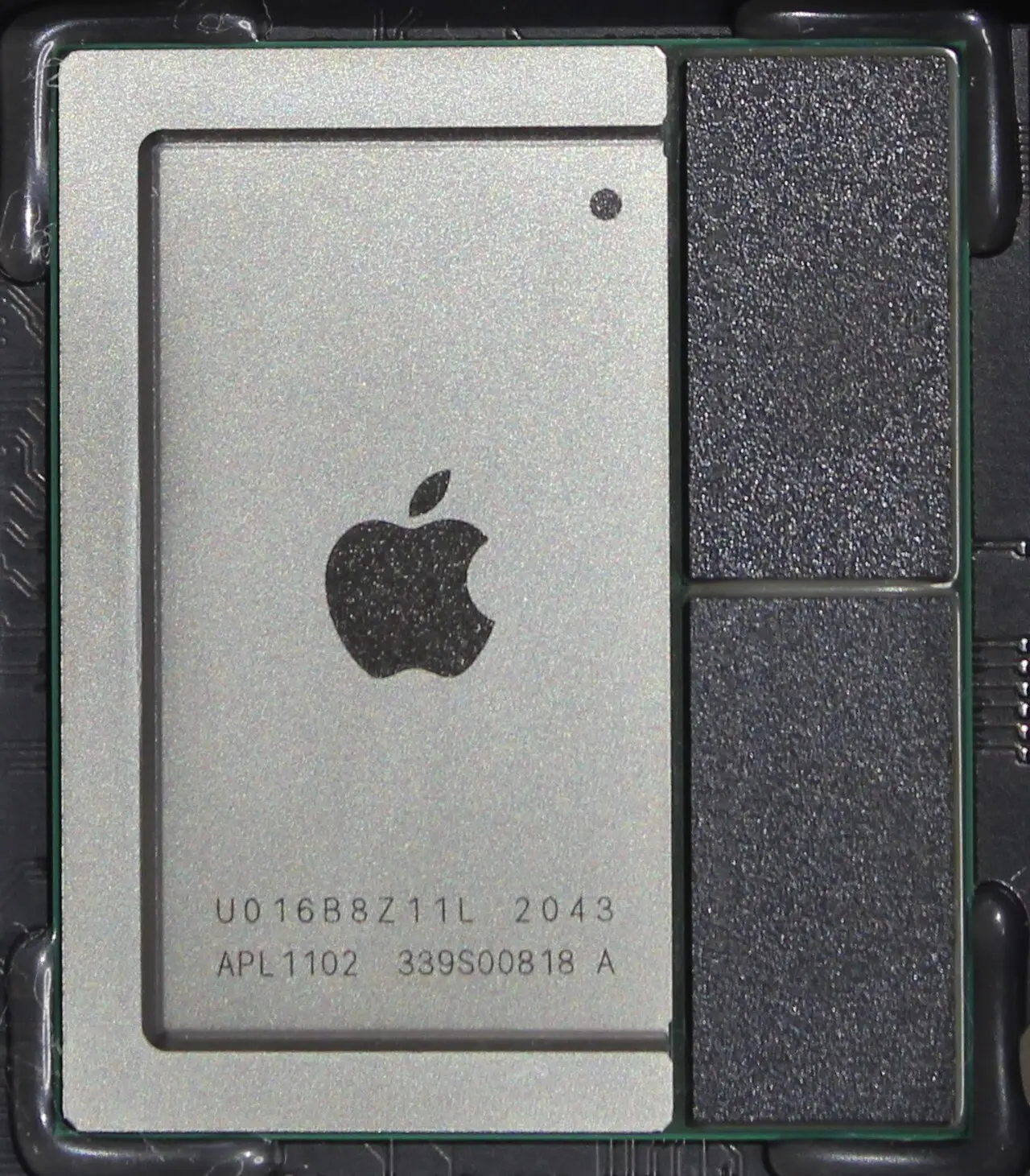
The M1 was the first chip Apple designed specifically for the Mac, combining the CPU, GPU, Neural Engine and more on one system on a chip (SoC).
| Item | M1 (per Apple) |
|---|---|
| Process | 5nm; Apple called it the first personal computer chip built on 5nm |
| Transistors | 16 billion |
| CPU | 8 cores: 4 high-performance, 4 high-efficiency |
| GPU | Up to 8 cores, 2.6 teraflops |
| Neural Engine | 16 cores, 11 trillion operations per second |
| Memory | A "unified memory architecture" pooling high-bandwidth, low-latency memory |
Apple claimed the world's fastest CPU core in low-power silicon and the world's fastest integrated graphics in a personal computer. Both are Apple's claims, based on its own testing. The chip is generally reported to be made by TSMC, but Apple's press release does not name the manufacturer.
In Apple's description, unified memory let every part of the SoC work on the same data without copying it between separate pools of memory. M1 Macs came with 8GB or 16GB.
Reading "up to 3.5x"
Apple said the M1 delivered up to 3.5x faster CPU performance, up to 6x faster GPU performance, up to 15x faster machine learning and up to twice the battery life of previous-generation Macs. Those headline numbers gather the biggest gains across the three machines. Apple's per-model claims, each against the model it replaced, were:
| Model | CPU | GPU | Other |
|---|---|---|---|
| MacBook Air | Up to 3.5x | Up to 5x | Fanless and silent; up to 18 hours of video playback |
| 13-inch MacBook Pro | Up to 2.8x | — | Up to 11x machine learning; up to 20 hours of video playback |
| Mac mini | Up to 3x | Up to 6x | Up to 15x machine learning |
All are Apple's measurements, not independent results.
How Intel apps kept running
Changing architecture means existing apps do not run as they are. Apple bridged the gap two ways: Rosetta 2, which translates apps built for Intel, and Universal 2, which packs Intel and Apple silicon code into one app. M1 Macs could also run iPhone and iPad apps directly. All three shipped with macOS Big Sur.
Apple had done this before. In the move from PowerPC to Intel, announced in June 2005 and begun in 2006, the first Rosetta let PowerPC apps run on Intel Macs; Rosetta 2 takes its name from it (see also ARM vs x86).
ARM elsewhere in 2020
The M1 arrived as ARM chips were spreading beyond phones.
- AWS Graviton2: on 11 May 2020 Amazon made EC2 instances on Graviton2, its own chip using 64-bit Arm Neoverse cores, generally available, claiming up to 40% better price performance than current x86-based instances
- Surface Pro X: in 2019 Microsoft had released the Surface Pro X, running Windows on ARM on its SQ1 chip, based on Qualcomm technology
- NVIDIA's bid for Arm: on 13 September 2020 NVIDIA announced it would buy Arm for $40 billion. It abandoned the deal on 7 February 2022, citing significant regulatory challenges
The ARM architecture, born in 1985, had long belonged to phones and embedded devices. Across 2019 and 2020 it moved into places x86 had held — cloud servers, Windows laptops and then the Mac.
What followed
In 2021 the M1 also went into the iMac and iPad Pro, and that October the larger M1 Pro and M1 Max arrived. Every Mac ran on Apple silicon from the Mac Pro of June 2023.
The companies are on Apple and Intel; other hardware milestones are on the hardware timeline.
Questions this page answers
- When was the Apple M1 chip announced and released?
- The M1 was announced on 10 November 2020, and orders for the M1 MacBook Air, 13-inch MacBook Pro and Mac mini opened the same day. They reached stores and customers on 17 November 2020, the same day in Japan.
- How much did the first M1 Macs cost?
- In the US they started at $999 for the MacBook Air, $1,299 for the 13-inch MacBook Pro and $699 for the Mac mini. In Japan they started at ¥104,800, ¥134,800 and ¥72,800 excluding tax.
- Did the M1 end the Intel Mac?
- No. When it announced the transition in June 2020, Apple said it had new Intel-based Macs in development, and an Intel 27-inch iMac followed in August. Apple declared the transition complete only in June 2023, with the Apple silicon Mac Pro.
- Where does the up to 3.5x faster CPU figure come from?
- From Apple's own testing: 3.5x is the MacBook Air against its predecessor. The up to 6x GPU and 15x machine-learning figures are for the Mac mini, and the MacBook Pro's CPU claim was 2.8x. None is an independent measurement.
Sources
PrimaryApple unleashes M1 — Apple Newsroom, Nov 10, 2020
5nm, 16 billion transistors, 8-core CPU, up-to-8-core GPU, 16-core Neural Engine, unified memory, performance claims
PrimaryIntroducing the next generation of Mac — Apple Newsroom, Nov 10, 2020
US prices and per-model claims for the three Macs, Rosetta 2, iPhone and iPad apps, Big Sur
Primary次世代のMacを発表 — Apple Newsroom(日本), 2020年11月11日
Japanese prices excluding tax
PrimaryApple announces Mac transition to Apple silicon — Apple Newsroom, Jun 22, 2020
The roughly two-year plan and "has exciting new Intel-based Macs in development"
PrimaryApple unveils new Mac Studio and brings Apple silicon to Mac Pro — Apple Newsroom, Jun 5, 2023
Apple's statement that the Mac Pro completed the transition; available 13 June
PrimaryApple Unveils New iMac with Intel Core Duo Processor — Apple Press Release, Jan 10, 2006
The first Intel-based Mac
Graviton2 general availability and the price-performance claim
The Intel 27-inch iMac of August 2020
SecondaryNovember 2020 Event — MacRumors
In stores from 17 November
Secondaryアップル、Mac用SoC「M1」搭載の3機種を11月17日に発売 — デジカメ Watch, 2020年11月
The 17 November release in Japan
TertiaryRosetta (software) — Wikipedia
TertiaryApple M1 — Wikipedia
TSMC N5 manufacture, 2021 M1 devices, M1 Pro and M1 Max
TertiaryApple silicon — Wikipedia
Last updated: