T1#market#energy
The AI Bubble Debate — Record Capex, Circular Deals and the Dot-Com Comparison
Metadata
- Date
- Decade
- 2020s
- Tier
- T1
- Sources
- 21
- Connections
- 10
- Tags
- #market#energy
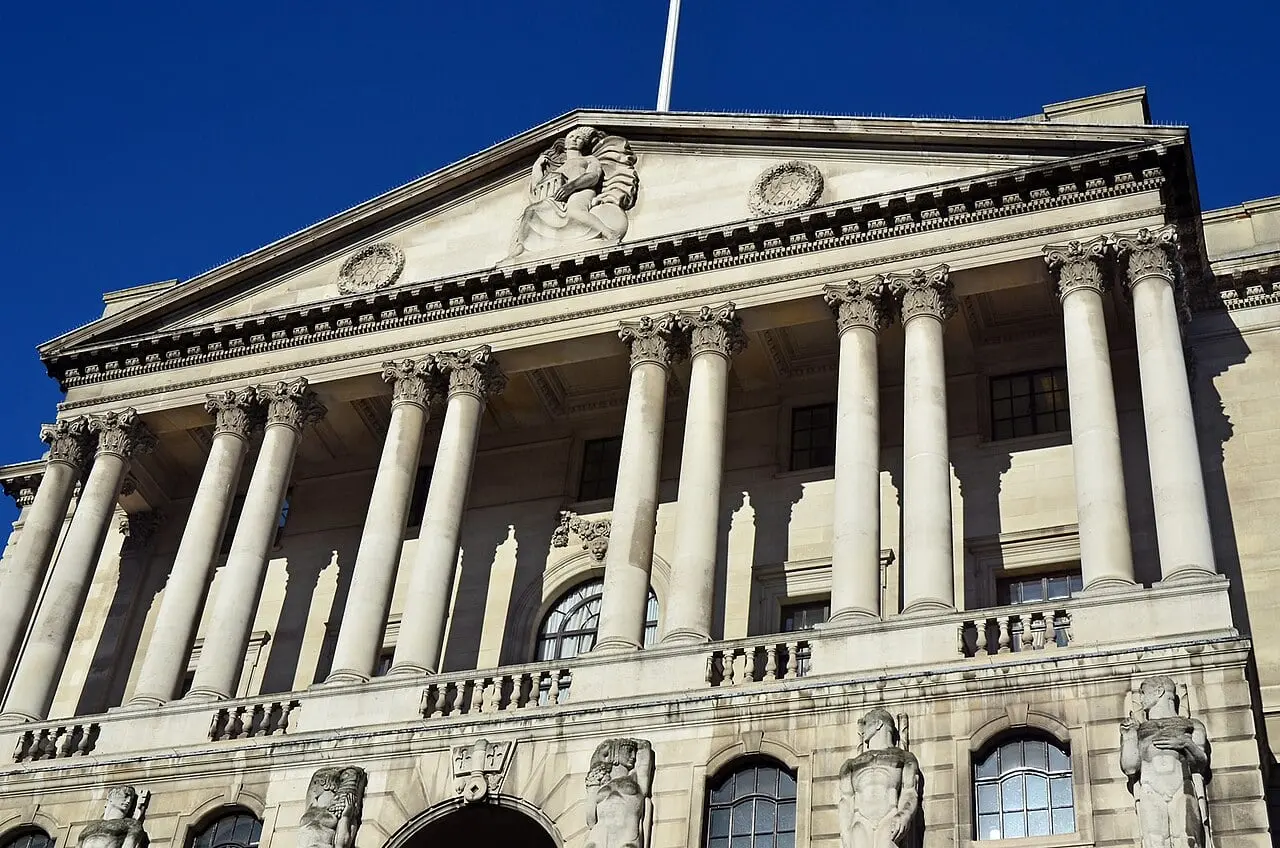
The AI bubble is the name for a debate: whether capital spending on generative AI and the share prices of AI companies have run beyond what future profits can justify. Simmering since ChatGPT's launch in late 2022, the question had reached the official documents of central banks and international institutions by late 2025. The emblematic moment came on 8 October 2025, when the Bank of England's Financial Policy Committee published the record of its latest meeting.
This article does not rule on whether AI is a bubble. As of October 2026 there is no verdict; what follows is who said what, when, and on the basis of which numbers.
8 October 2025 — "AI" in a Central Bank's Record
The Bank of England's Financial Policy Committee published the record of its 2 October meeting that day. It said: "The risk of a sharp market correction has increased." Equity valuations appeared stretched, particularly on backward-looking measures in the US. The earnings yield implied by the cyclically adjusted price-to-earnings (CAPE) ratio was close to its lowest level in 25 years, comparable to the peak of the dot-com bubble, and the top five members of the S&P 500 made up close to 30% of the index, a higher share than at any point in the past 50 years.
The record said equity markets were particularly exposed should expectations around the impact of AI become less optimistic, and that bottlenecks in power, data or commodity supply chains, or conceptual breakthroughs that changed anticipated AI infrastructure needs, could also harm valuations. The Guardian's report the same day noted that OpenAI's valuation had risen from $157 billion a year earlier to $500 billion, and that faith in the AI boom had been rattled by Massachusetts Institute of Technology research finding that 95% of organisations were getting zero return from their investments in generative AI.
Industry insiders had opened the debate earlier. The DeepSeek-R1 shock of January 2025 planted doubts about whether vast amounts of compute were really needed. In August, OpenAI's Sam Altman drew the dot-com comparison himself over dinner with reporters. As Fortune relayed The Verge's report, he said: "Are we in a phase where investors as a whole are overexcited about AI? My opinion is yes," and answered yes as well to whether AI was the most important thing to happen in a very long time.
The Scale of Investment — Company Capex
At the centre of the debate is the money flowing into AI data centres. The figures shift over time and are not defined identically, so they are shown here with their dates.
| Company | Figure | When and source |
|---|---|---|
| Meta | 2025 capital expenditure (including principal payments on finance leases): $72.22 billion | Results release, 28 January 2026 |
| Meta | 2026 outlook: $115–135 billion → $130–145 billion | Results releases, 28 January → 29 July 2026 |
| Amazon | About $200 billion across Amazon in 2026 | Statement by CEO Andy Jassy, 5 February 2026 (GeekWire) |
| Alphabet | 2026 outlook raised from up to $190 billion to $195–205 billion | July 2026 results (Outlook Business) |
| OpenAI | About $1.4 trillion in data-centre commitments over eight years | Altman's post, 6 November 2025 (TechCrunch) |
GeekWire noted that Amazon's capital spending also covers its fulfilment network and is not directly comparable with other companies'. Meta attributed the 2026 increase to investment in Meta Superintelligence Labs and its core business.
Circular Deals — When Investor and Customer Are the Same
In September and October 2025 a series of large deals centred on OpenAI followed in quick succession.
- Nvidia (22 September) — OpenAI would deploy at least 10 gigawatts of Nvidia systems, and Nvidia said it intended to invest up to $100 billion in OpenAI progressively as each gigawatt was deployed. What was signed was a letter of intent
- Oracle (reported in September) — According to DCD, The Wall Street Journal reported that OpenAI had agreed to buy $300 billion of computing power from Oracle over five years. Oracle said its remaining performance obligations had reached $455 billion, and its shares rose 43%, though DCD noted it was unclear whether the backlog included the reported contract
- AMD (6 October) — OpenAI would deploy 6 gigawatts of AMD GPUs, and AMD issued OpenAI a warrant for up to 160 million AMD shares, vesting with deployment milestones and AMD share-price targets
The chip seller invests in the chip buyer, and the money comes back as chip purchases. Critics called the pattern circular and asked whether it made demand look larger than it was.
What happened to the pledges varied. According to Fortune, Nvidia's Jensen Huang told reporters in February 2026 of the $100 billion investment: "It was never a commitment." On 31 March OpenAI said it had closed a $122 billion funding round at an $852 billion valuation; CNBC reported that Amazon had agreed to invest up to $50 billion, and Nvidia and SoftBank $30 billion each.
The Counter-Argument — "This Time There Are Earnings"
The bubble case has weighty critics. At a press conference on 29 October 2025, Federal Reserve Chair Jerome Powell said: "This is different in the sense that these companies, the companies that are so highly valued, actually have earnings and stuff like that," adding that AI investment in data centres and chips was a major source of economic growth. CNBC added in the same piece that OpenAI and Anthropic still had modest revenues relative to their spending.
On Nvidia's earnings call on 19 November, Huang said: "There's been a lot of talk about an AI bubble," "From our vantage point, we see something very different." The company reported quarterly revenue of $57 billion, $51.2 billion of it from data centres. Wedbush analyst Dan Ives had written to Fortune in August 2025 that this was a 1996 moment, not a 1999 one.
2026 — Wobbles and Rebounds
Through 2026 caution and optimism kept trading places.
| Date | Event |
|---|---|
| 29 July 2026 | South Korea's KOSPI fell 6%, after a near-11% rout the day before, leaving it almost 40% below a peak reached little more than a month earlier; about $2.18 trillion in market value was lost (Reuters) |
| 24 September 2026 | Oracle was reported to have sent a force majeure notice to the developer of its Project Jupiter data centre in New Mexico; its shares fell more than 3%, while Oracle said the project remained on schedule (CNBC) |
| 13 October 2026 | The IMF's Global Financial Stability Report named an AI-related market correction as a main risk, alongside sharp rises in sovereign bond yields and cyber threats |
The IMF report said weaker or less durable investment and profitability in AI could lead to a correction in AI-related asset prices, amplified by rising leverage and concentrated exposures. According to TNW, the IMF reviewed 14 publicly disclosed deals since 2023, in which investors led by hyperscalers put about $300 billion of equity and $650 billion of debt into financially weaker AI firms in return for about $1.4 trillion of future revenue commitments. The same report also said financial markets had remained resilient, supported by solid growth and strong corporate earnings.
On 17 October Fortune surveyed how such warnings had come and gone while stocks set record after record. It reported that, with the Iran war and oil prices pushing bond yields to their highest in more than 20 years and the Federal Reserve raising rates again, the debt-laden cloud provider CoreWeave had seen its stock tumble and its credit default swaps surge. Dan Greenhaus of Solus countered that canary-in-the-coal-mine warnings had been wrong many times in three years. The same article cited Gartner's estimate that AI data-centre owners need a cumulative $8.5 trillion in revenue through 2030 to cover capital spending, financing costs and a return, and Bank of America's view that AI investment is following a classic capital cycle.
Power as a Constraint
The power bottleneck the Bank of England flagged has become a real constraint on whether the investment pays back. The scale of data-centre electricity demand is estimated in the International Energy Agency's report. In the Oracle case of September 2026, CNBC reported that the more-than-2.4-gigawatt Project Jupiter had faced delays to the natural gas pipeline meant to fuel it and local opposition ahead of the midterm elections. The facility is part of the Stargate build-out.
The Dot-Com Comparison
The AI bubble debate is almost always framed against the dot-com bubble, but the comparison runs in opposite directions depending on who makes it. The Bank of England pointed to a valuation measure comparable to the dot-com peak; Altman said the resemblance lay in overexcitement layered on a real technology, the internet. Powell said the difference is that today's highly valued companies actually have earnings. Bank of America argued that capital cycles usually end in disappointment through overinvestment and competition even when the technology lives up to expectations, writing: "This monetization disappointment in the face of intense competition is precisely the failure mode seen in past capital cycles."
Whether AI is an important technology and whether today's investment and share prices will be rewarded are two separate questions. As of October 2026, that is about as far as most of the participants agree.
For the surrounding events, see the AI timeline and the AI and society timeline.
Questions this page answers
- What is the AI bubble?
- It is the debate over whether capital spending on generative AI and the share prices of AI companies have run beyond what future profits can justify. On 8 October 2025 the Bank of England said valuations looked stretched, particularly for AI-focused technology companies, and on 13 October 2026 the IMF named an AI-related correction as one of the main risks to financial stability. Federal Reserve Chair Jerome Powell and Nvidia's Jensen Huang, among others, have argued that this is different from the dot-com bubble.
- What are the AI 'circular deals'?
- They are deals in which AI companies act as one another's investors, lenders and customers. In September 2025, for example, Nvidia said it intended to invest up to $100 billion in OpenAI progressively as each gigawatt of Nvidia systems was deployed, and in October AMD gave OpenAI a warrant for up to 160 million AMD shares alongside a GPU supply deal. In October 2026 the IMF warned that such arrangements could spread one company's distress to others.
- Is the AI bubble the same as the dot-com bubble?
- Views differ. In October 2025 the Bank of England noted that the earnings yield implied by the cyclically adjusted P/E ratio was comparable to the peak of the dot-com bubble. That same month Fed Chair Jerome Powell said that the highly valued companies of today actually have earnings. In October 2026 Bank of America analysts argued that capital cycles usually end in disappointment even when the underlying technology lives up to expectations.
- How does data-centre power fit into the bubble debate?
- Power is one of the constraints on whether the investment pays back. In October 2025 the Bank of England said bottlenecks in power, data or commodity supply chains could harm valuations of AI-linked companies. In September 2026 Oracle was reported to have sent a force majeure notice over its New Mexico data-centre project, which had faced delays to a natural gas pipeline and local opposition.
Sources
Altman's remarks as reported by The Verge; views of Wedbush's Dan Ives and Ray Dalio
SecondaryIMF warns $1.4tn in circular AI deals could deepen a market correction — TNW, 13 October 2026
The 14 deals the IMF reviewed (about $300bn of equity, $650bn of debt, $1.4tn of future revenue commitments)
TertiaryAI bubble — Wikipedia
Last updated: