T1
iPhone 5 — Taller Screen, LTE, Lightning
Metadata
- Date
- Decade
- 2010s
- Tier
- T1
- Sources
- 09
- Connections
- 02
The iPhone 5 was announced on 12 September 2012 and released on Friday 21 September 2012. Pre-orders opened on 14 September. Apple's press release named nine first-day countries — the US, Australia, Canada, France, Germany, Hong Kong, Japan, Singapore and the UK — so Japan got it on the same day as the US. A second wave of 22 countries, mostly in Europe plus New Zealand, followed on 28 September.
With a two-year contract, US prices were $199 for 16GB, $299 for 32GB and $399 for 64GB, the same three tiers as before. What changed was the shape of the phone, the network it could use, and — the part people argued about — the hole in the bottom.
What was new in the iPhone 5
| iPhone 5 (2012) | What it replaced | |
|---|---|---|
| Display | 4-inch Retina, 1136 × 640 | 3.5-inch, 3:2 aspect ratio |
| Aspect ratio | Almost exactly 16:9 | 3:2 |
| Cellular | LTE and DC-HSDPA | No LTE on any earlier iPhone |
| Body | 7.6 mm anodised aluminium | Glass back on iPhone 4 and 4S |
| Chip | A6 | A5 |
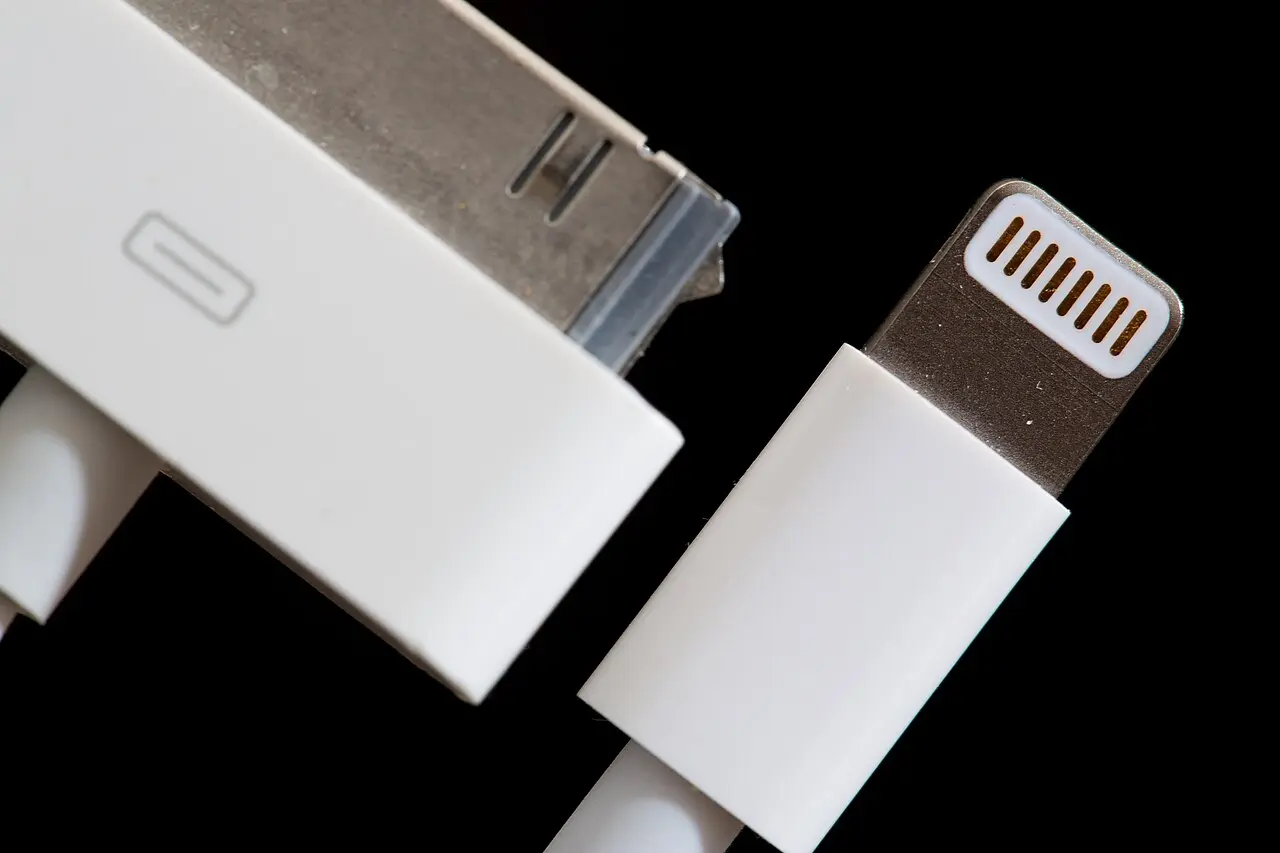
| Connector | Lightning, 8 pins, reversible | 30-pin Dock connector |
| In the box | EarPods | Earlier Apple earphones |
Apple's own comparison with the iPhone 4S was that the body was 18 percent thinner and 20 percent lighter, and that the A6 offered up to twice the CPU and graphics performance. Those are Apple's figures.
A taller screen, not a wider one
The iPhone 4S had a 3.5-inch, 960 × 640 screen. The iPhone 5 went to four inches but kept the 640-pixel width: the panel grew only in height, to 1136 × 640, an aspect ratio of almost exactly 16:9. On the home screen that bought one extra row of icons — six rows of four instead of five.
Keeping the width kept the phone narrow. The iPhone 6 gave that up in 2014.
The first iPhone with LTE
The iPhone 5 was the first iPhone to support LTE. Apple's release listed LTE and DC-HSDPA as well as dual-band 802.11n Wi-Fi at up to 150 Mbps. The iPhone 4S had no LTE; its fastest mode was HSPA+ at up to 14.4 Mbps.
Lightning: the end of the 30-pin connector
The change that defined the model is in its name on this site. Since the third-generation iPod, introduced in April 2003 together with a dock, Apple's portable devices had used the wide 30-pin Dock connector. Nine years of speakers, alarm clocks, car kits and hotel-room docks were built around it.
The iPhone 5 replaced it with Lightning, which Apple described as smaller, smarter and more durable than the previous connector. It has eight contacts and an adaptive interface, and it is reversible: there is no wrong way up. A smaller port also left more room inside a thinner body.
The cost of the change fell on accessories. Apple's answer was an adapter, not a free one:
- Lightning to 30-pin Adapter: $29, with a cable version at $39. According to AppleInsider's report from the day of the announcement, Apple's own documentation said video out and iPod out were not supported through it
- Lightning to USB Cable: $19
- The adapter was advertised as shipping in October, after the phone itself
So on launch day, a new iPhone 5 owner could not plug into most existing docks at all, and with the adapter many but not all 30-pin accessories worked. The Lightning port itself would last eleven years, until the iPhone 15 moved to USB-C in 2023 under pressure from EU rules.
EarPods
The box held a new pair of headphones, EarPods, which Apple said had a design for a more natural fit and greater durability. They were sold separately for $29. In 2012 they plugged into a 3.5 mm jack on the bottom of the phone — the jack that the iPhone 7 would remove four years later.
Sales: two million pre-orders, five million in three days
Apple reported on 17 September 2012 that pre-orders had topped two million in 24 hours, more than double the previous record of one million set by the iPhone 4S. On 24 September it reported more than five million iPhone 5 units sold in the three days after launch, and said demand had exceeded the initial supply; many pre-orders would not ship until October. Both figures are Apple's own and were published without a regional breakdown.
The Maps problem was iOS 6, not the phone
The iPhone 5 shipped with iOS 6, which replaced the Google-based Maps app with Apple's own. The new app was widely criticised for misplaced landmarks and missing detail. On 28 September 2012, a week after launch, Tim Cook published an open letter of apology. Computerworld quoted him as writing that "we fell short on this commitment", and the letter pointed users to rival apps such as Bing, MapQuest and Waze in the meantime.
Strictly this was a software failure that also affected older iPhones updated to iOS 6. But it arrived with the iPhone 5, and for many buyers the two were the same event.
Where the iPhone 5 sits
Apple discontinued it on 10 September 2013, the day it announced its successors, the iPhone 5s and the iPhone 5c.
For the earlier screen jump, see the iPhone 4 and its Retina display. The whole line is on the iPhone timeline, and the company on Apple.
Questions this page answers
- When was the iPhone 5 released?
- It was announced on 12 September 2012, opened for pre-order on 14 September and released on 21 September. The first-day countries were the US, Australia, Canada, France, Germany, Hong Kong, Japan, Singapore and the UK, so Japan was in the first wave. A further 22 countries followed on 28 September.
- How much did the iPhone 5 cost at launch?
- In the US, with a two-year contract, it cost $199 for 16GB, $299 for 32GB and $399 for 64GB. Apple's press release gave only US dollar prices.
- Did the Lightning connector start with the iPhone 5?
- Yes. The 8-pin, reversible connector was announced alongside the iPhone 5 on 12 September 2012. The 30-pin Dock connector it replaced dated back to the third-generation iPod of 2003, and older accessories needed the separately sold Lightning to 30-pin Adapter, priced at $29 in the US.
- Did the iPhone 5 support LTE?
- Yes. It was the first iPhone with LTE, and Apple advertised support for both LTE and DC-HSDPA. The previous year's iPhone 4S had no LTE.
Sources
PrimaryApple、iPhone 5を発表 — Apple Newsroom(日本), 2012年9月13日
Launch countries including Japan, pre-order date, and the separately sold adapter
PrimaryApple Introduces New iPods — Apple Press Release, Apr 28, 2003
The third-generation iPod, introduced with its dock
TertiaryDock connector — Wikipedia
TertiaryiPhone 5 — Wikipedia
Last updated: