T1#retina#antenna#design
iPhone 4 — Retina Display and 'Antennagate'
Metadata
- Date
- Decade
- 2010s
- Tier
- T1
- Sources
- 10
- Connections
- 04
- Tags
- #retina#antenna#design
The iPhone 4 is remembered for two things. Its form, and its failure.
It was presented on 7 June 2010 at WWDC in San Francisco and went on sale seventeen days later, on 24 June, simultaneously in the United States, the UK, France, Germany and Japan—SoftBank Mobile carried it in Japan. US pricing started at $199 with a two-year AT&T contract.
Form
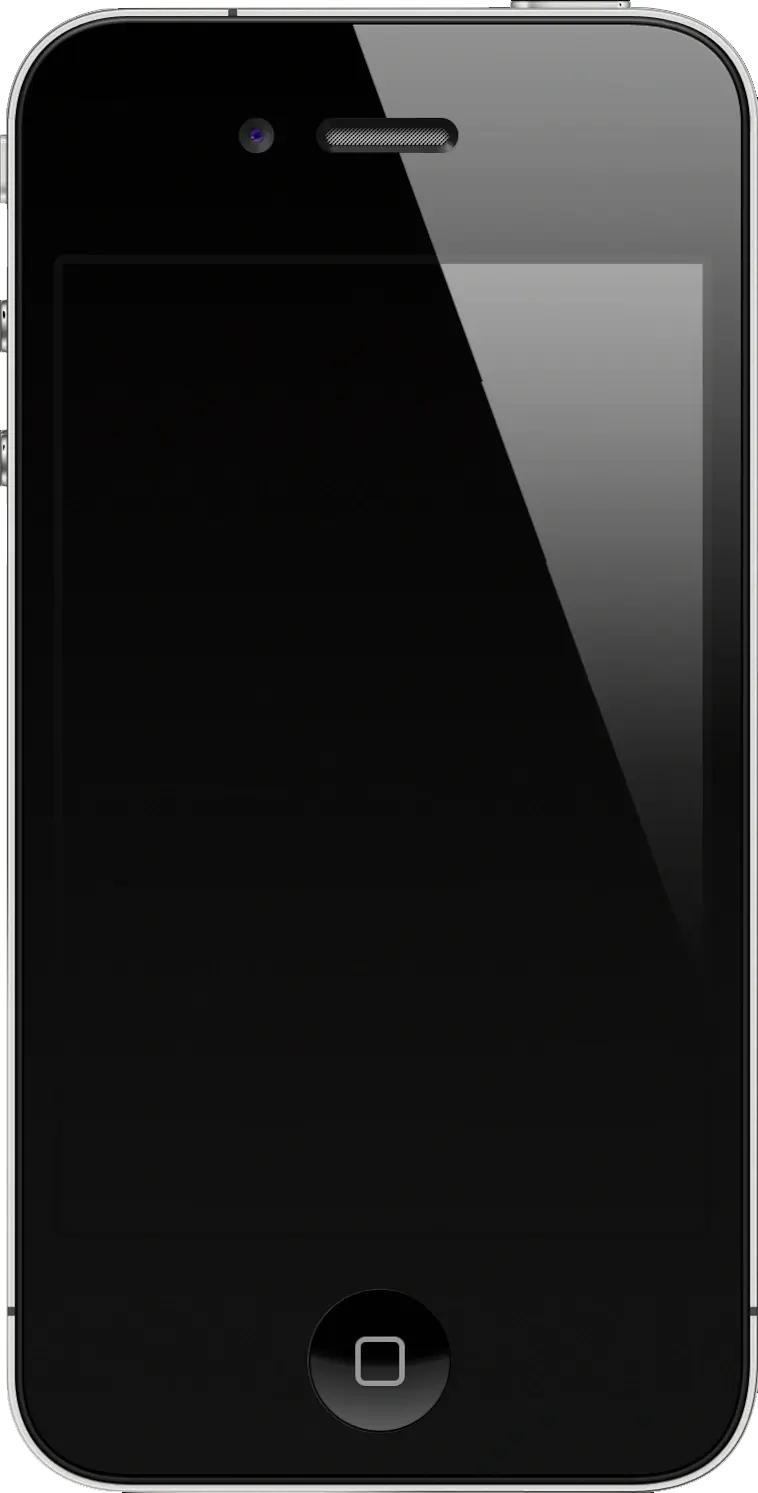
The iPhone 4's industrial design draws a clear line between the iPhones that came before it and those that came after. Glass front, glass back, and between them a thin band of stainless steel. The edges did not curve; they cut straight up. The design that Jonathan Ive and his team presented fixed an image of what an iPhone was supposed to look like. Apple itself abandoned the vocabulary within two years—the iPhone 5 (2012) went to aluminium, the iPhone 6 (2014) to a rounded unibody—and flat sides did not return until the iPhone 12 in 2020. That the 2020 phone was immediately described as looking like an iPhone 4 is the measure of how well the shape stuck.
Display
The 'Retina display' argument was simple. The 3.5-inch panel carried 960 x 640 pixels, four times as many as the iPhone 3GS. Apple's press release put it this way: the resulting 326 pixels per inch "is so dense that the human eye is unable to distinguish individual pixels when the phone is held at a normal distance." Jobs put a number on "normal distance" in the keynote: ten to twelve inches.
The claim was contested immediately. Raymond Soneira of DisplayMate argued that at an angular resolution of 0.6 arc-minutes the eye needs about 477 ppi at twelve inches, so 326 ppi falls short of the retinal limit. Defenders—the astronomer Phil Plait among them—replied that Soneira's arithmetic assumed perfect eyesight, and that an average pair of eyes could not pick out the iPhone's pixels at a foot. The answer depends on whose eyes you mean. The experience of holding the device made the argument feel beside the point: text felt printed, not displayed.
Apple went on to extend the 'Retina' name across its screened products—the third-generation iPad of March 2012 was launched on it, and the MacBook Pro and iMac followed. But industry norms did not move within a year. The first Android handsets to beat 326 ppi arrived around the HTC Rezound of November 2011 (4.3 inches, 1280 x 720, roughly 342 ppi), some eighteen months after the iPhone 4. Once it started, it moved fast; by the middle of the decade the mobile resolution race was effectively over.
The Flaw
Within hours of the phones reaching customers, reports of a peculiar defect began: gripping the lower-left corner of the device, with bare skin, caused signal to drop—sometimes severely.
The cause lay in the structure itself. The iPhone 4 used the stainless-steel side band as its antenna. The band was divided into two segments; the gap between them, at the lower-left corner, ran across the spot where a left-handed grip naturally rested. Bare skin bridged the two segments, and reception collapsed.
The first response poured fuel on it. On 24 June a terse reply attributed to Steve Jobs, sent to a customer who had written in, went round the web—outlets that published it disagree on the wording ("Just don't hold it that way," "Just avoid holding it that way"), so no verbatim text can be established. The same day Apple issued a statement to the press: "Gripping any phone will result in some attenuation of its antenna performance, with certain places being worse than others depending on the placement of the antennas. This is a fact of life for every wireless phone. If you ever experience this on your iPhone 4, avoid gripping it in the lower left corner in a way that covers both sides of the black strip in the metal band, or simply use one of many available cases."
The phrase that stuck to the episode—"you're holding it wrong"—was never said by Jobs or by Apple. What was actually said was worse than the paraphrase, not better.
The open letter of 2 July made a stranger argument still. Apple said the formula it used to convert signal strength into bars was, in its own word, "totally wrong": it had been displaying up to two bars more than it should, so users in genuinely weak coverage saw a dramatic collapse from four or five bars that "were never real in the first place." The letter promised a free software update within a few weeks to correct the formula, and reminded owners they could return an undamaged iPhone 4 within thirty days for a full refund. It announced no bumpers.
The free cases came a fortnight later, at the press conference of 16 July. "We're not perfect," Jobs told the room. "We know that, you know that. And phones aren't perfect either." Apple offered every customer who bought an iPhone 4 before 30 September a Bumper or a selected third-party case at no charge, claimed through a dedicated App Store app, and refunded anyone who had already bought a Bumper. The case covered the gap in the side antenna, working around the flaw physically.
Sales Climbed Anyway
'Antennagate' was not, in the end, fatal. Sales kept climbing: in the quarter ending 25 September 2010 Apple sold 14.1 million iPhones, up 91 percent year on year, on revenue of $20.34 billion and net profit of $4.31 billion—both all-time records for the company at that point.
Nor was it the first time Jobs had to go out in front and put out a fire. In September 2007 he answered furious early iPhone buyers, angry at the $200 price cut, with an open letter and a $100 store credit. What was new here was the scale and the format: a summoned press conference. He died in October 2011, fifteen months after the launch.
And it became a reference point. From here on, industry writers were rather more willing to record, plainly, that Apple sometimes shipped the kind of failure that a more careful company would not have shipped.
Sources
SecondaryDouble Stevemails on iPhone 4 reception — Engadget, Jun 24, 2010
Apple's official comment, verbatim
TertiaryHTC Rezound — Wikipedia
Released November 2011, about 342 ppi
TertiaryiPhone 4 — Wikipedia
Last updated: