T1#standard
The Origins of Wi-Fi — IEEE 802.11 Approved
Metadata
- Date
- Decade
- 1990s
- Tier
- T1
- Sources
- 14
- Connections
- 01
- Tags
- #standard
When was Wi-Fi invented? There is no single inventor or single date, but if one starting point has to be picked it is 26 June 1997, when the IEEE Standards Board approved IEEE 802.11, the first international standard for wireless local area networks. That first version used radio in the 2.4 GHz band or infrared and, according to Wikipedia, ran at 1 or 2 megabits per second. What made it take off was the faster 802.11b, approved on 16 September 1999. In the same year an industry group formed to certify interoperability, and "Wi-Fi" is the brand name that group gave the technology.
The standard's milestones
| Date | Event |
|---|---|
| 26 June 1997 | IEEE 802.11-1997 approved by the IEEE Standards Board (published 18 November) |
| 16 September 1999 | 802.11b (higher speed at 2.4 GHz) and 802.11a (a high-speed physical layer at 5 GHz) approved on the same day |
| 1999 | The interoperability alliance that became the Wi-Fi Alliance is formed |
| 21 July 1999 | Apple announces the iBook and AirPort wireless networking |
| 3 October 2018 | The Wi-Fi Alliance introduces generational names, making 802.11ax "Wi-Fi 6" |
| 8 January 2024 | The Wi-Fi Alliance launches Wi-Fi CERTIFIED 7 |
The 1997 standard
According to the IEEE, 802.11-1997 specified the medium access control (MAC) and physical layers for wireless LANs and contained three physical layers: two radio units in the 2400–2500 MHz band, one using frequency hopping and the other direct-sequence spread spectrum, and one baseband infrared unit.
All those options had a cost. Wikipedia notes that the original specification offered so many choices that interoperability was sometimes hard to achieve, and that comparatively few networks were built on it.
Wikipedia describes WaveLAN, developed by NCR and AT&T in 1991 in Nieuwegein in the Netherlands for cash-register systems, as the precursor to 802.11. NCR's Vic Hayes chaired IEEE 802.11 for ten years.
802.11b and the name "Wi-Fi"
The turning point was 802.11b, approved by the IEEE on 16 September 1999. A direct extension of the original standard's direct-sequence technique, it raised the speed to 11 megabits per second, and according to Wikipedia products began appearing that year.
Also in 1999, companies backing 802.11b formed an industry group. Wikipedia names it the Wireless Ethernet Compatibility Alliance (WECA), with members including 3Com, Aironet, Harris Semiconductor, Lucent Technologies, Nokia and Symbol Technologies. The Wi-Fi Alliance's own history says the group was formed in 1999 and in 2000 adopted "Wi-Fi" as the proper name for its technical work and announced its official name, Wi-Fi Alliance. Wikipedia, citing an October 2002 news report, dates WECA's renaming to 2002, so the sources differ on when the rename happened.
The name was devised by the brand consultancy Interbrand. According to Wikipedia, the group hired Interbrand to come up with something catchier than "IEEE 802.11b Direct Sequence". Whether Wi-Fi stands for "Wireless Fidelity" is disputed, Wikipedia adds.
AirPort: what it cost in 1999
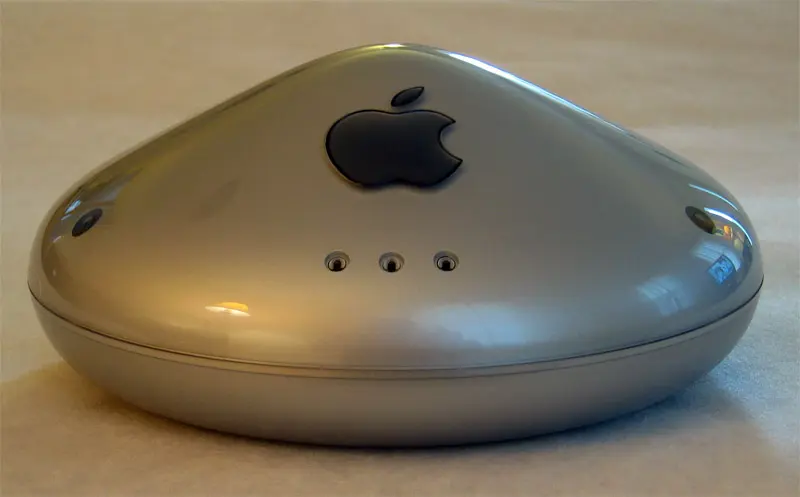
One product that brought wireless networking within reach of ordinary users was AirPort, which Apple announced with the iBook at Macworld Expo on 21 July 1999. TidBITS reported at the time that AirPort was based on Lucent technology and the 802.11 direct-sequence standard, with a theoretical speed of 11 Mbps; the iBook card cost $99 and the AirPort Base Station $299. The same article compared that with the previous going rate of at least $300 for a PC Card and $700 to $1,100 for a base station.
The CSIRO patent
Histories of Wi-Fi often mention Australia's Commonwealth Scientific and Industrial Research Organisation (CSIRO). CSIRO holds US Patent 5,487,069, "Wireless LAN", with a priority date of 27 November 1992; it was granted on 23 January 1996.
According to CSIRO's 2013 case study, its researchers solved the main problem of indoor wireless networking — radio waves bouncing around a room and causing echoes and fades — and invented a wireless LAN that allowed high-speed indoor communication. It names the inventors as John O'Sullivan, Terry Percival, Diet Ostry, Graham Daniels and John Deane, and says CSIRO has licence agreements with more than 20 companies and has received around $430 million in licensing revenue. O'Sullivan received the Prime Minister's Prize for Science in 2009.
"Inventing the wireless LAN" is CSIRO's own description. What is firm is that CSIRO holds a US patent on wireless LAN technology and has licensed it widely; the standard itself was written by the IEEE 802.11 working group.
Generation names
On 3 October 2018 the Wi-Fi Alliance introduced generational numbering in place of standard numbers — Wi-Fi 4 for 802.11n, Wi-Fi 5 for 802.11ac and Wi-Fi 6 for 802.11ax — so that users could tell which generation their device or connection supported. On 8 January 2024 it launched Wi-Fi CERTIFIED 7, listing among the new features 320 MHz channels in countries that make the 6 GHz band available to Wi-Fi, and Multi-Link Operation (MLO), which lets devices use several links at once.
The story continues on the mobile timeline and the internet and web timeline. For the other short-range radio in the 2.4 GHz band, see Bluetooth; the wired LAN began with Ethernet.
Questions this page answers
- When was Wi-Fi invented?
- There is no single inventor or date, but the starting point is 26 June 1997, when the wireless LAN standard IEEE 802.11 was approved. It took off with 802.11b, approved on 16 September 1999, and an industry group formed that year gave it the brand name Wi-Fi.
- Does Wi-Fi stand for 'Wireless Fidelity'?
- Not clearly. The name was devised by the brand consultancy Interbrand, and Wikipedia says it is disputed whether it is short for 'Wireless Fidelity'.
- How fast was the first Wi-Fi?
- The 1997 802.11 standard ran at 1 or 2 megabits per second and the 1999 802.11b at 11 megabits per second. Apple's AirPort, announced in 1999, had a theoretical speed of 11 Mbps.
- Did CSIRO invent Wi-Fi?
- Australia's CSIRO holds a US patent, 'Wireless LAN', granted in 1996, describes its work as inventing the wireless LAN, and says it has earned around $430 million from licences with more than 20 companies. The standard itself was written by the IEEE 802.11 working group.
Sources
PrimaryIEEE 802.11-1997 — IEEE Standards Association
Board approval on 26 June 1997, publication on 18 November, and the three physical layers
PrimaryHistory — Wi-Fi Alliance
PrimaryWireless technology having profound global impact — CSIRO impact case study, July 2013
CSIRO's account: indoor reverberation, the five inventors, licences with more than 20 companies, around $430 million in revenue, and the 2009 Prime Minister's Prize
SecondaryiBook: An iMac to Go — TidBITS, July 26, 1999
AirPort pricing ($99 card, $299 base station), Lucent technology and a theoretical 11 Mbps
TertiaryWi-Fi — Wikipedia
TertiaryWi-Fi Alliance — Wikipedia
TertiaryIEEE 802.11b-1999 — Wikipedia
Last updated: