T1#standard
Bluetooth 1.0 — Ericsson's Short-Range Radio, Named After a Viking King
Metadata
- Date
- Decade
- 1990s
- Tier
- T1
- Sources
- 06
- Connections
- 02
- Tags
- #standard
When was Bluetooth invented? The technology came out of Ericsson in Lund, Sweden. According to the National Inventors Hall of Fame, Ericsson engineer Jaap Haartsen began formulating the system that would become Bluetooth in 1994. In May 1998 Ericsson, IBM, Intel, Nokia and Toshiba announced it publicly as the Bluetooth Special Interest Group, and the first version of the specification, Bluetooth 1.0, was released on 26 July 1999. The name comes from Harald "Bluetooth", the tenth-century king who united Denmark and Norway.
Timeline
| When | What happened |
|---|---|
| 1989 | According to Wikipedia, Nils Rydbeck, CTO of Ericsson Mobile, starts work on a "short-link" radio, aimed at wireless headsets |
| 1994 | Haartsen begins formulating the system that becomes Bluetooth |
| 1996 | According to the Bluetooth SIG, Intel, Ericsson and Nokia meet to plan standardisation; Intel's Jim Kardach suggests "Bluetooth" as a temporary code name |
| 20 May 1998 | The five companies unveil the technology, code-named Bluetooth, using the 2.45 GHz ISM band |
| 26 July 1999 | Bluetooth 1.0 specification released; more than 850 member companies |
| 2001 | According to Wikipedia, the Ericsson R520m becomes the first commercially available Bluetooth phone |
A short-range radio from Ericsson
The National Inventors Hall of Fame says Haartsen, who earned his doctorate at Delft University of Technology in the Netherlands, joined Ericsson in the US in 1991 and moved to its mobile phone division in Lund in 1993 to work on indoor wireless systems. His task was to find a short-range radio connection that would add functions to mobile phones and create new sales. In 1994 he began formulating a system for connecting all kinds of electronic devices. At first, it was meant simply as a more convenient alternative to wired voice calls.
Wikipedia starts the story earlier. In its account, Nils Rydbeck, CTO of Ericsson Mobile, launched the work in 1989 with the aim of making wireless headsets; he assigned Tord Wingren to specify it and Haartsen and Sven Mattisson to develop it, and principal design and development began in 1994.
Named after a king
According to the Bluetooth SIG, the name goes back more than a millennium to King Harald "Bluetooth" Gormsson, known for two things: uniting Denmark and Norway in 958, and a dead tooth of a dark blue-grey colour that earned him his nickname.
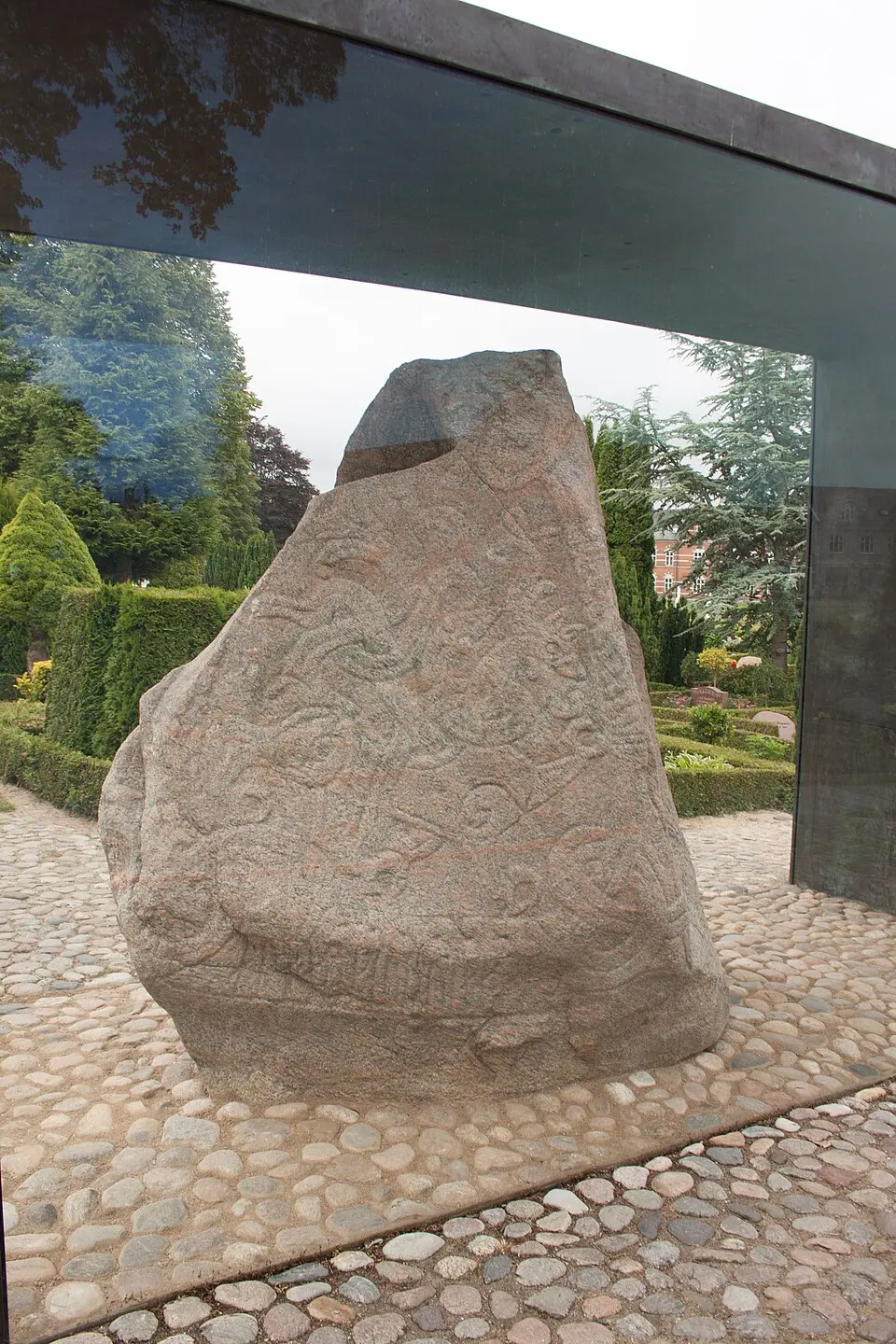
When Intel, Ericsson and Nokia met in 1996 to plan the standardisation of the short-range radio, Intel's Jim Kardach suggested Bluetooth as a temporary code name. Kardach was later quoted as saying: "King Harald Bluetooth…was famous for uniting Scandinavia just as we intended to unite the PC and cellular industries with a short-range wireless link." Wikipedia dates Kardach's proposal to 1997, and says he came up with it after finding a picture of Harald Bluetooth's runestone in Gwyn Jones's A History of the Vikings.
Bluetooth was only meant to be a placeholder until marketing came up with something better. The shortlisted names were RadioWire and PAN (Personal Area Networking). PAN was the favourite until a search found tens of thousands of hits for it on the internet; a full trademark search on RadioWire could not be completed in time for launch, which left Bluetooth. The name spread through the industry before it could be changed. The logo is a bind rune merging two Younger Futhark runes, ᚼ (Hagall) and ᛒ (Bjarkan), Harald's initials.
The 1998 announcement
On 20 May 1998 Ericsson, IBM, Intel, Nokia and Toshiba unveiled the technology, code-named Bluetooth. It would carry voice and data over short-range radio so that users could connect a wide range of devices quickly without cables. The radio would operate in the globally available 2.45 GHz ISM band. The announcement divided the work as follows.
| Company | Contribution |
|---|---|
| Ericsson | Basic radio technology |
| Toshiba and IBM | A common specification for integrating Bluetooth into mobile devices |
| Intel | Chip and software expertise |
| Nokia | Radio technology and mobile handset software |
According to the National Inventors Hall of Fame, Haartsen played a key role in creating the SIG and chaired its air protocol specifications group from 1998 to 2000.
Bluetooth 1.0, 26 July 1999
On 26 July 1999 the five founding companies announced the release of the Bluetooth 1.0 specification. It consisted of two documents: the Foundation Core, with the design specifications, and the Foundation Profile, with interoperability guidelines. More than 200 engineers had contributed, the announcement said, and more than 850 companies had joined the SIG since its formation in May 1998. Products were expected in 2000. The research firm Dataquest was quoted as predicting that 79 percent of digital handsets and more than 200 million PCs would include Bluetooth by 2002.
According to Wikipedia, the basic data rate was 1 Mbit/s. The National Inventors Hall of Fame puts the range of the first generation at about 11 yards, roughly 10 metres.
What came next
According to Wikipedia, the first Bluetooth phone was the Ericsson T36, a prototype that was never released; its revised version, the T39, reached shops in June 2001, but the Ericsson R520m, released in the first quarter of 2001, was the first commercially available Bluetooth phone.
Today the Bluetooth SIG describes two radios: Bluetooth Classic, which uses 79 channels in the 2.4 GHz band and is mainly used for wireless audio, and the low-power Bluetooth LE, which uses 40 channels and supports broadcast and mesh as well as point-to-point links, and is also used to locate devices.
For the other pillar of short-range wireless see Wi-Fi; the wider story is on the mobile timeline. For an example of a phone platform that included Bluetooth as a standard feature, see Nokia's Symbian.
Questions this page answers
- When was Bluetooth invented?
- Ericsson's Jaap Haartsen began formulating the system that became Bluetooth in 1994. Ericsson, IBM, Intel, Nokia and Toshiba unveiled it on 20 May 1998, and the first specification, Bluetooth 1.0, was released on 26 July 1999.
- Where does the name Bluetooth come from?
- From the nickname of King Harald Gormsson, who united Denmark and Norway in 958. Intel's Jim Kardach proposed it as a temporary code name, likening the king's unification to uniting the PC and cellular industries. The intended names, PAN and RadioWire, fell through, so Bluetooth stayed.
- What does the Bluetooth logo represent?
- It is a bind rune merging two Younger Futhark runes, ᚼ (Hagall) and ᛒ (Bjarkan), King Harald's initials.
- What was the first Bluetooth product?
- According to Wikipedia, the first Bluetooth phone was the unreleased Ericsson T36 prototype, and the Ericsson R520m, released in the first quarter of 2001, was the first commercially available one. When the 1.0 specification came out in 1999, products were expected in 2000.
Sources
Release of the 1.0 specification, Foundation Core and Foundation Profile, over 200 engineers, over 850 members, products expected in 2000, and Dataquest's forecast
The five-company announcement, the code name Bluetooth, the 2.45 GHz ISM band and each company's role
PrimaryThe Bluetooth origin — Bluetooth SIG
King Harald, the 1996 meeting and Kardach's proposal and quote, PAN and RadioWire, and the runic logo
SecondaryJaap C. Haartsen — National Inventors Hall of Fame
Haartsen's career, starting the design in 1994, his SIG role and the first generation's range of about 11 yards
TertiaryBluetooth — Wikipedia
Last updated: