T1#consumer#research
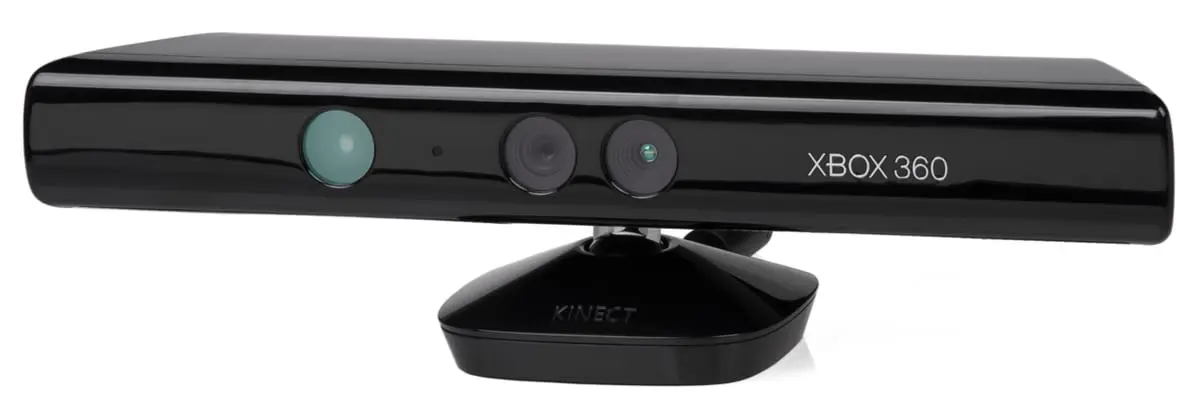
What Is Kinect? The Xbox Sensor That Made the Body the Controller
Metadata
- Date
- Decade
- 2010s
- Tier
- T1
- Sources
- 15
- Connections
- 01
- Tags
- #consumer#research
Kinect is a sensor Microsoft released for the Xbox 360 that let players control games with their body and voice. It launched in North America on 4 November 2010 at $149.99, with Kinect Adventures in the box. Japan followed on 20 November 2010 at ¥14,800. North America came first; Japan was somewhat later than the US and Europe.
| Region | Release | On its own | With an Xbox 360 4GB | Source |
|---|---|---|---|---|
| North America | 4 November 2010 | $149.99 | $299.99 | Microsoft |
| Japan | 20 November 2010 | ¥14,800 | ¥29,800 | Microsoft Japan (via Mynavi News) |
Japan also had a limited package with a 250 GB Xbox 360 at ¥39,800. Every package included Kinect Adventures.
Control without a controller
On 14 June 2010, closing a two-day world premiere, Microsoft gave its new way to play a name, "Kinect for Xbox 360", and said it would arrive in North America from 4 November and roll out to the rest of the world thereafter. The launch-day release described Kinect as letting you use your body and voice to play games and entertainment, "literally turning you into the controller", and summed it up as "No buttons. No barriers. Just you." According to the same release it was available at more than 30,000 retailers, with 17 Kinect games for the holiday season. The sensor worked with Xbox 360 consoles already in homes; Microsoft put that installed base at 40 million in July and 45 million in its November release.
The Wii had opened up motion play four years earlier. Microsoft's July release noted that Kinect required no controller, wand or balance board.
It was not cheap. Writing in PC Watch, Hiroshige Goto described ¥14,800 or $149 as extremely high for a console add-on, and estimated that a late change, adding chips to take processing load off the console compared with the early "Project Natal" demonstrations, had pushed the cost up. That is the author's analysis.
The record for speed
Guinness World Records lists Kinect for Xbox 360 as the fastest-selling gaming peripheral. According to the record page, it sold through an average of 133,333 units per day in its first 60 days on sale, from 4 November 2010 to 3 January 2011. Over 60 days that is about 8 million.
When the record was reported on 9 March 2011, it carried the title "fastest selling consumer electronics device". On the same day, according to PCWorld, Microsoft said Kinect had sold 10 million units since launch; PCWorld cautioned that this was units sold to stores, not sold through to customers. The Guinness page says "sold through", so the two figures may not count the same thing.
| As of | Figure | Source and metric |
|---|---|---|
| 4 November 2010 – 3 January 2011 | 133,333 a day on average (about 8 million) | Guinness World Records (sold through) |
| March 2011 | 10 million | Microsoft (PCWorld notes it as sold-in) |
| October 2017 (end of production) | About 35 million | TechCrunch report |
Into the research lab
Kinect found uses outside games. Microsoft Research published the method behind Kinect's body-part recognition as "Real-Time Human Pose Recognition in Parts from a Single Depth Image" at CVPR 2011, where it received the CVPR Best Paper Award. The method predicts the 3D positions of body joints from a single depth image and runs at 200 frames per second on consumer hardware.
On 1 February 2012 Microsoft released Kinect for Windows hardware and version 1.0 of its SDK for PCs. Distribution partners in twelve countries began shipping it at a suggested retail price of $249, with academic pricing of $149 promised for later that year. Up to four sensors could be connected to one computer.
Bundled with Xbox One, then unbundled
On the Xbox One in 2013, a new Kinect came with every console. But according to Gematsu, on 13 May 2014 Xbox chief Phil Spencer announced that an Xbox One without Kinect would go on sale on 9 June at $399. The version with Kinect stayed at $499.
On 22 October 2014 Microsoft released Kinect SDK 2.0 and a $49.99 adapter for connecting the Xbox One Kinect to Windows PCs.
In October 2017 Microsoft confirmed that it had stopped making Kinect for Xbox One. According to TechCrunch, Kinect's creator Alex Kipman and Xbox's Matthew Lapsen told Fast Co., and a Microsoft spokesperson said: "Manufacturing for Kinect for Xbox One has ended but it is not the end of the journey for the technology." About 35 million had been sold in all.
Azure Kinect
On 24 February 2019, at MWC in Barcelona, Microsoft announced Azure Kinect DK, a $399 camera for developers. According to CNBC it had a 1-megapixel depth camera, a 12-megapixel camera and a seven-microphone array. According to TechCrunch it began shipping in the US and China in July 2019.
The Azure Kinect DK ended production too. According to The Robot Report, Microsoft decided in 2023 to stop making it; additional units could be bought from Microsoft until the end of October 2023 or while supplies lasted, and the SDK remains available. Depth cameras continue through Microsoft's partners, such as Orbbec.
For Xbox history, see the Microsoft timeline; for consoles as a whole, the game consoles timeline.
Questions this page answers
- When was Kinect released?
- In North America on 4 November 2010, at $149.99 on its own or $299.99 with an Xbox 360 4GB console; in Japan on 20 November 2010, at ¥14,800 on its own or ¥29,800 with the console. All included Kinect Adventures.
- How many Kinect units were sold?
- Guinness World Records says it sold through an average of 133,333 units a day over its first 60 days, 4 November 2010 to 3 January 2011 (about 8 million), the fastest-selling gaming peripheral. Microsoft gave 10 million in March 2011, and about 35 million in all was reported when production ended in 2017.
- When was Kinect discontinued?
- In October 2017 Microsoft confirmed that manufacturing of Kinect for Xbox One had ended. Its developer-oriented successor, the Azure Kinect DK, also ended production in 2023.
Sources
The name revealed at E3 2010; North America from 4 November, the rest of the world thereafter
Kinect at $149.99, or $299.99 with an Xbox 360 4GB console
Secondaryマイクロソフト、「Xbox 360 Media Briefing 2010」開催 - 「Kinect」の発売日・価格を発表 — マイナビニュース、2010年9月8日
The Japanese release date (20 November) and the prices of the three packages
Secondary【後藤弘茂のWeekly海外ニュース】Xbox 360用「Kinect」の高価格は、Microsoftの苦渋の決断の結果 — PC Watch、2010年9月
Japan launching later than the US and Europe; the author's analysis of why the price was $149
The 10 million figure of March 2011 (noted as sold-in), and the record's original title, fastest-selling consumer electronics device
PrimaryReal-Time Human Pose Recognition in Parts from a Single Depth Image — Microsoft Research (CVPR 2011)
Kinect's body-part recognition algorithm, 200 frames per second, the CVPR Best Paper Award
Kipman and Lapsen to Fast Co., Microsoft's statement, around 35 million units in total
Last updated: