T1#energy#market#regulation#enterprise
The Three Mile Island Unit 1 Restart Deal — Data Centres Call a Reactor Back
Metadata
- Date
- Decade
- 2020s
- Tier
- T1
- Timelines
- A General History of Information Technology · A History of Artificial Intelligence · A History of Cloud Computing
- Sources
- 08
- Connections
- 01
- Tags
- #energy#market#regulation#enterprise
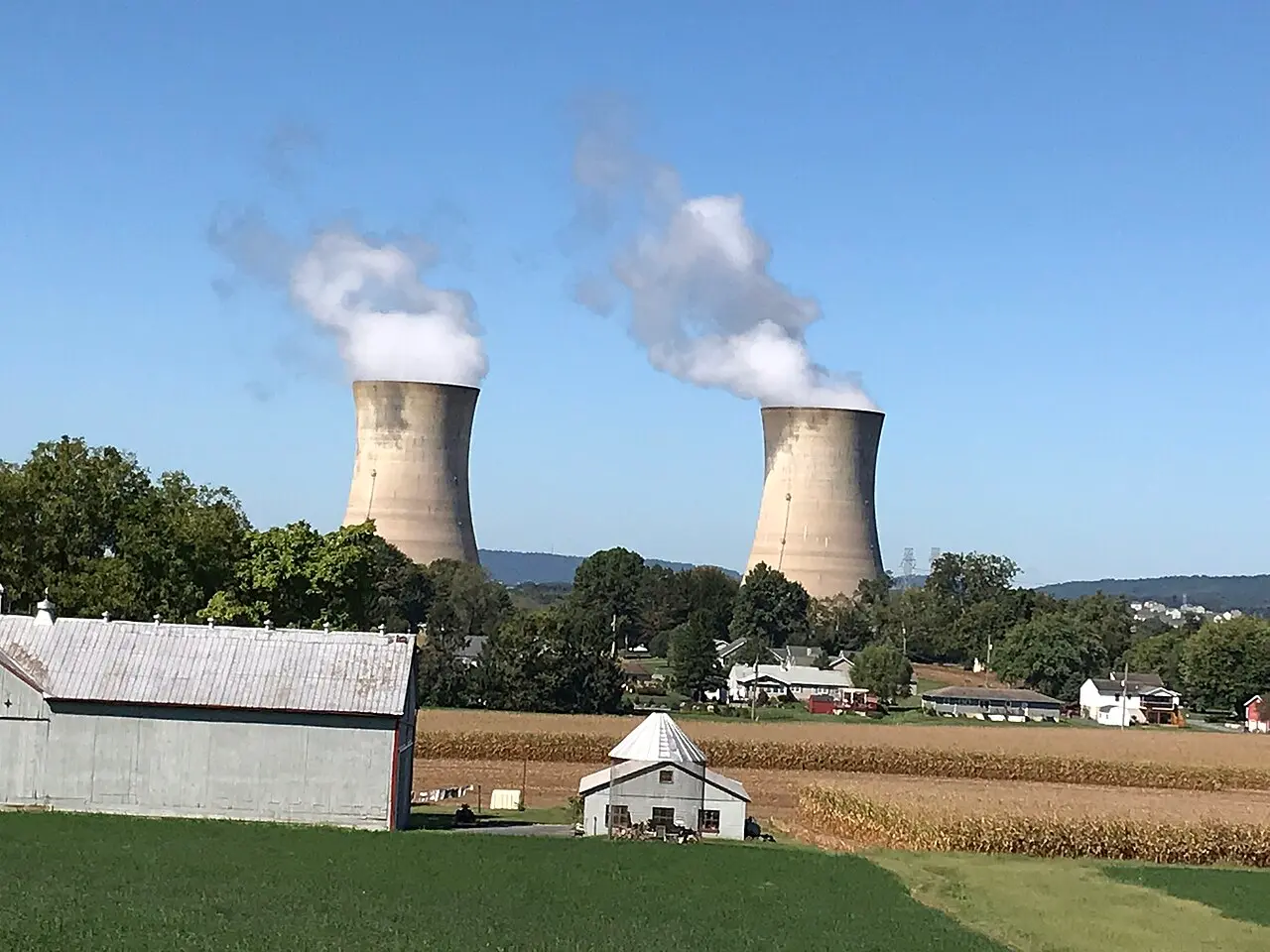
On 20 September 2024, Constellation Energy announced a 20-year power purchase agreement with Microsoft that would restart Three Mile Island Unit 1 in Pennsylvania — the largest PPA in Constellation's history, returning roughly 835 megawatts of carbon-free generation to the grid.
The date was not accidental. Unit 1 had been shut down on 20 September 2019, not because of an accident but because it did not pay. Five years to the day later, the announcement reversed that decision.
First, Get the Unit Right
The most common error in coverage of this deal is the claim that the reactor that failed in 1979 is coming back. It is not.
Constellation's announcement anticipated the confusion and addressed it directly: "The Unit 1 reactor is located adjacent to TMI Unit 2, which shut down in 1979 and is in the process of being decommissioned by its owner, Energy Solutions. TMI Unit 1 is a fully independent facility, and its long-term operation was not impacted by the Unit 2 accident."
Unit 1 ran for a quarter of a century after the accident and closed in 2019 for economic reasons. The US Department of Energy, announcing its loan in 2025, described the plant as having "ceased operations in 2019 but was never fully decommissioned." A reactor that has entered decommissioning and a reactor that has been laid up intact are not remotely the same restart problem.
The Terms and the $16 Billion Misread
From the announcement itself:
| Item | Detail |
|---|---|
| Structure | A 20-year PPA with Microsoft — Constellation's largest ever |
| Capacity | Approximately 835 MW added to the grid |
| Purpose | To help match the power Microsoft's data centres in PJM use with carbon-free energy |
| Renaming | Crane Clean Energy Center, after former CEO Chris Crane, who died in April 2024 |
| Restart target as announced | 2028 |
| Approvals required | US Nuclear Regulatory Commission approval "following a comprehensive safety and environmental review, as well as permits from relevant state and local agencies" |
| Separate filing | Licence renewal to extend operations to at least 2054 |
Microsoft's comment came from Bobby Hollis, its VP of Energy: "This agreement is a major milestone in Microsoft's efforts to help decarbonize the grid in support of our commitment to become carbon negative."
No contract value was disclosed — and here a caution is needed. A figure of $16 billion appears in the announcement, but it is not the value of the deal. It is the estimate, from an economic impact study The Brattle Group produced for the Pennsylvania Building & Construction Trades Council, of what restarting the plant would add to the state's GDP. The same study projected about 3,400 direct and indirect jobs and more than $3 billion in state and federal taxes. A number of articles have reported the $16 billion as the price of the PPA; opening the source does not support that.
From 2028 to 2027
A year later, on 23 September 2025, Constellation said the restart had moved forward to 2027. The reason given is neither money nor construction but grid paperwork: "Constellation's interconnection request to PJM, the regional grid operator, received accelerated approval, clearing the path for grid integration and allowing Constellation to accelerate the restart to 2027."
The same release listed progress: nearly 80% staffed with over 500 full-time employees on site; inspections of steam generators, main generator, emergency diesel generators and underground piping completed or near completion; upgrades to the training centre and control room simulator; a second Initial License Training class to begin in early 2026 so that reactor operators can obtain NRC licences. The NRC had by then approved renaming the plant the "Christopher M. Crane Clean Energy Center".
On 18 November 2025 the US Department of Energy closed a $1 billion loan under the Energy Dominance Financing Program. Constellation described it as the first time DOE's Loan Programs Office had concurrently finalised a conditional commitment and financial close. CEO Joe Dominguez said: "Under the Trump administration, the FERC and DOE have made it possible for us to vastly expedite this restart without compromising quality or safety." That is the operator's assessment, not a neutral one.
Where It Stands (August 2026)
The restart has not happened. It is still inside the regulatory process.
In June 2026 the NRC issued a draft environmental assessment with a finding of no significant impact and took public comment until 8 July; the final assessment is expected in September 2026. Both Constellation and NRC staff estimate the regulatory approvals for the operating licence around May 2027. Nuclear material is scheduled to arrive on site by the end of 2026 and to be held in storage until approval; fuel loading follows, with generation later in 2027 and no fixed date announced.
A public meeting on 28 July 2026 brought NRC, FEMA and Constellation staff together with residents. The opposition centres on emergency planning: people who lived through 1979, and the long-time activist Eric Epstein, questioned whether the road network could handle an evacuation. County officials pointed to 600 permanent jobs. The same plant is described in the same room as employment and as hazard.
176 TWh, and What It Projects To
The deal is easier to place once the electricity numbers are in view.
A Lawrence Berkeley National Laboratory report released by the US Department of Energy on 20 December 2024 put US data centre consumption at 176 TWh in 2023 — about 4.4% of total US electricity, up from 58 TWh in 2014, and projected 325 to 580 TWh, or 6.7% to 12%, by 2028. Globally, IEA figures cited by the European Commission in November 2025 put data centres at about 415 TWh in 2024, roughly 1.5% of world electricity, growing at about 12% a year and on course to more than double to about 945 TWh by 2030.
These are projections, not measurements. What is not a projection is that major operators began signing long-dated generation contracts on the strength of them. On 3 June 2025 Constellation and Meta signed a 20-year agreement for the Clinton Clean Energy Center in Illinois — 1,121 megawatts, starting June 2027, a market-based replacement for the state's expiring zero-emission-credit support. While programmes like Stargate get announced as capital expenditure, the electricity to run them is being arranged in a parallel set of contracts.
The Buyer Decided the Plant Exists
Restarting a laid-up nuclear plant is not an unprecedented engineering problem. The novelty is on the buyer's side.
In a regulated market a utility builds generation against a demand forecast and recovers the cost through rates. This was different: a single private company bought twenty years of output in advance, and on the strength of that contract a plant closed for economics came back. The consumer of electricity had moved into the position of deciding whether a power station exists.
You can read that as climate progress — a carbon-free baseload unit returns, and Stargate-scale investment does not have to be met with gas. You can read it as the allocation of a public good shifting towards whoever can pay for two decades up front. As of 2026 both readings survive, for the simple reason that the reactor has not yet been switched on.
Sources
Last updated: