T1
iPhone 13 — Smaller Notch, ProMotion
Metadata
- Date
- Decade
- 2020s
- Tier
- T1
- Sources
- 07
- Connections
- 02
The iPhone 13 range was announced on 14 September 2021, opened for pre-order on Friday 17 September and went on sale on Friday 24 September. All four models — iPhone 13, 13 mini, 13 Pro and 13 Pro Max — shipped the same day. After the iPhone 12 had been split between October and November, this was a return to a single September launch. Japan was in the first wave, named in Apple's release alongside Australia, Canada, China, Germany, India, the UK and the US.
US starting prices were $699 for the 13 mini, $799 for the 13, $999 for the 13 Pro and $1,099 for the 13 Pro Max.
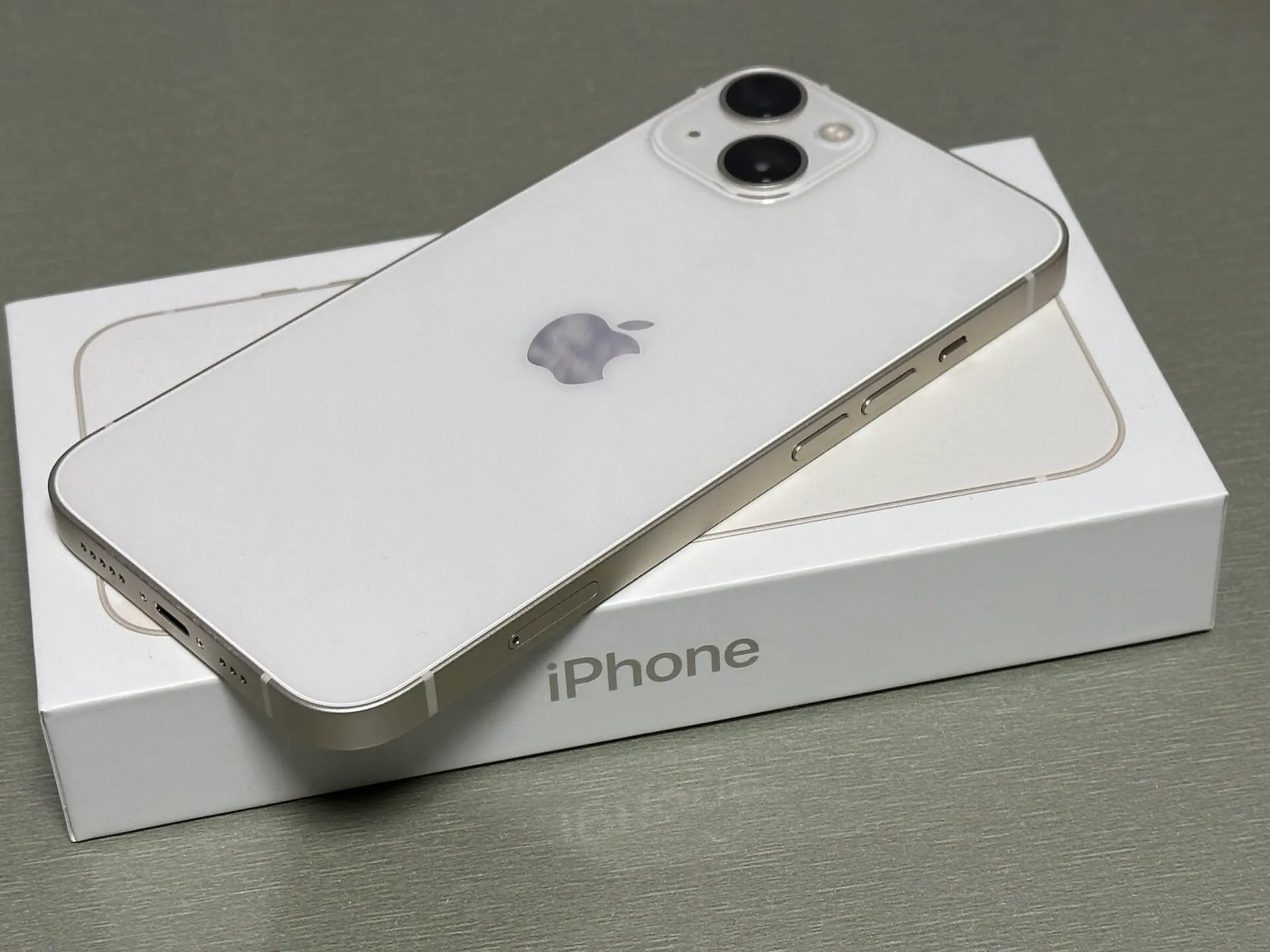
From the outside little changed: the rear cameras went diagonal and the notch got a bit narrower. The substance was in the parts you touch every day — screen, camera, battery and storage — so this page takes those four in turn.
Screen: 120 Hz, for the Pros only
The biggest change was ProMotion on the two Pro models. Apple's release said the 13 Pro and 13 Pro Max "introduce the most advanced display ever on iPhone, Super Retina XDR with ProMotion, supporting an adaptive refresh rate from 10Hz to 120Hz".
Refresh rate is how many times a second the screen is redrawn. At 120 Hz, scrolling and animation look smoother; when little on screen is moving, the rate drops to save power. The adaptive part was the point: a fast screen without paying for it in battery life.
This was the first ProMotion iPhone, and in this generation the standard iPhone 13 and 13 mini did not get it. Refresh rate — a difference anyone notices within seconds of touching the phone — became the line between Pro and non-Pro.
The standard models' screens did improve. Apple said the iPhone 13's Super Retina XDR reached 800 nits outdoors, a 28 percent increase in maximum outdoor brightness.
How much smaller was the notch?
The cut-out at the top of the screen, essentially unchanged since the iPhone X, shrank for the first time.
The size figure needs care. The press release says only that "a redesigned TrueDepth camera system is smaller while still packing in the same breakthrough technologies" — it gives no percentage. The "20 percent" comes from the keynote: 9to5Mac's Benjamin Mayo reported Apple's statement that the TrueDepth components "now fit in a space that is 20% smaller", then pointed out that, comparing photos side by side, the new notch was narrower but appeared about a millimetre taller.
The notch itself disappeared the following year with the iPhone 14 Pro.
Camera: letting the phone pull focus
The standard models' two rear cameras moved to a diagonal layout, which made the 13 easy to tell from the 12 at a glance.
Apple listed these changes:
| Feature | Models | Gist of Apple's description |
|---|---|---|
| Cinematic mode | all four | depth effect in video "with automatic focus changes"; focus can be adjusted after recording |
| Sensor-shift optical image stabilisation | all four | previously exclusive to the 12 Pro Max; now on the standard Wide camera too |
| Wide camera light capture | 13 / 13 mini | larger 1.7 µm pixels gather 47 percent more light |
| Photographic Styles | all four | personal preferences applied while keeping multi-frame processing |
| Macro photography | Pro only | Ultra Wide focuses as close as 2 cm |
| 3x Telephoto (77 mm) | Pro only | 3x optical zoom |
| ProRes video | Pro only | promised in "a future iOS 15 update" at announcement |
Cinematic mode automated what a film crew calls pulling focus — moving the focus to whoever the shot should be about. When a subject turns or someone walks into frame, focus shifts with them. It treated video as material you could re-edit afterwards, down to where the focus sat.
Sensor-shift stabilisation reaching the standard models mattered too, if less visibly. A feature limited to the top-end 12 Pro Max one year was in the cheapest 13 mini the next.
Battery: all figures are Apple's
Apple stated the gains against each model's direct predecessor:
| Model | Compared with | Extra per day (Apple's claim) |
|---|---|---|
| iPhone 13 mini | iPhone 12 mini | up to 1.5 hours |
| iPhone 13 | iPhone 12 | up to 2.5 hours |
| iPhone 13 Pro | iPhone 12 Pro | up to 1.5 hours |
| iPhone 13 Pro Max | iPhone 12 Pro Max | up to 2.5 hours |
These are Apple's rated figures and vary with use. That Apple claimed longer battery life for the Pros even after giving them a faster display suggests power saving was one reason the refresh rate was made adaptive.
Storage: 64 GB disappears
Every model now started at 128 GB; for the standard models that was double the previous year's 64 GB. The Pros added a new 1 TB option.
Put the other way round, 64 GB disappeared from new iPhones in this generation. Apple did not give a reason, but it coincided with features that produce large files: Cinematic mode video and, on the Pros, ProRes.
The last mini generation
The iPhone 13 mini was the second year of the 5.4-inch mini. The following year's four-model iPhone 14 range had no mini; a 6.7-inch iPhone 14 Plus took its place. Demand for a small iPhone did not vanish, but in the lineup, the mini ended here.
5G and the A15
Apple said the iPhone 13 range supported more 5G bands, "allowing it to work in more places on 5G". The chip was the A15 Bionic, whose six-core CPU Apple described as "up to 50 percent faster than the competition, the fastest in any smartphone". Note the comparison: against rival phones, not against last year's iPhone.
For the full product line see iPhone; for the company, Apple.
Questions this page answers
- When was the iPhone 13 released?
- It was announced on 14 September 2021, opened for pre-order on 17 September and released on 24 September. All four models, iPhone 13, 13 mini, 13 Pro and 13 Pro Max, went on sale that day, and Japan was in the first wave with Australia, Canada, China, Germany, India, the UK and the US.
- Does the iPhone 13 have a 120 Hz display?
- Only the iPhone 13 Pro and 13 Pro Max. They were the first iPhones with ProMotion, an adaptive refresh rate from 10 Hz to 120 Hz. The standard iPhone 13 and 13 mini do not have ProMotion.
- How much smaller is the iPhone 13 notch?
- Apple said at its event that the TrueDepth components now fit in an area 20 percent smaller; the press release itself gives no figure and says only that the system is smaller. Side-by-side comparisons showed the notch narrower but slightly taller.
- What did the iPhone 13 range cost in Japan at launch?
- Including tax, the iPhone 13 mini started at ¥86,800, the iPhone 13 at ¥98,800, the iPhone 13 Pro at ¥122,800 and the iPhone 13 Pro Max at ¥134,800, each with 128 GB as the smallest capacity.
Sources
PrimaryApple、iPhone 13とiPhone 13 miniを発表 — Apple Newsroom(日本), 2021年9月
Japanese pricing (tax included) and dates
The keynote's 20 percent figure, and the notch being narrower but slightly taller
PrimaryApple introduces iPhone 14 and iPhone 14 Plus — Apple Newsroom, Sep 7, 2022
Confirms the following year's lineup had no mini
TertiaryiPhone 13 — Wikipedia
Last updated: