T1
iPhone X — The Home Button Goes, Face ID Arrives
Metadata
- Date
- Decade
- 2010s
- Tier
- T1
- Sources
- 11
- Connections
- 06
Apple announced iPhone X on 12 September 2017, opened pre-orders on 27 October "in more than 55 countries and territories", and put it in stores on Friday 3 November. Japan was in that first wave, named in Apple's own availability list alongside Australia, China, Germany, the UK, the US and some forty others. It started at US$999 for the 64GB model — a United States figure, and not the price anywhere else.
Ten years after Steve Jobs unveiled the first iPhone, Apple again dismantled the assumptions of its own product.
Two Removals
The first was the physical home button. From 2007 onward it had been the iPhone's UI pole star: wherever you were, pressing it returned you to the home screen. After Touch ID in 2013 it also held the fingerprint sensor. It was the physical handle by which an iPhone announced itself as an iPhone.
The second was Touch ID itself — the fingerprint authentication woven into Apple Pay, App Store purchases, and lock-screen unlocks.
Both went at once, and iOS 11 was, in Apple's words, "redesigned to take full advantage of the Super Retina display and replaces the Home button with fast and fluid gestures". Swipe up from the bottom to go home.
What Is Actually Behind the Notch
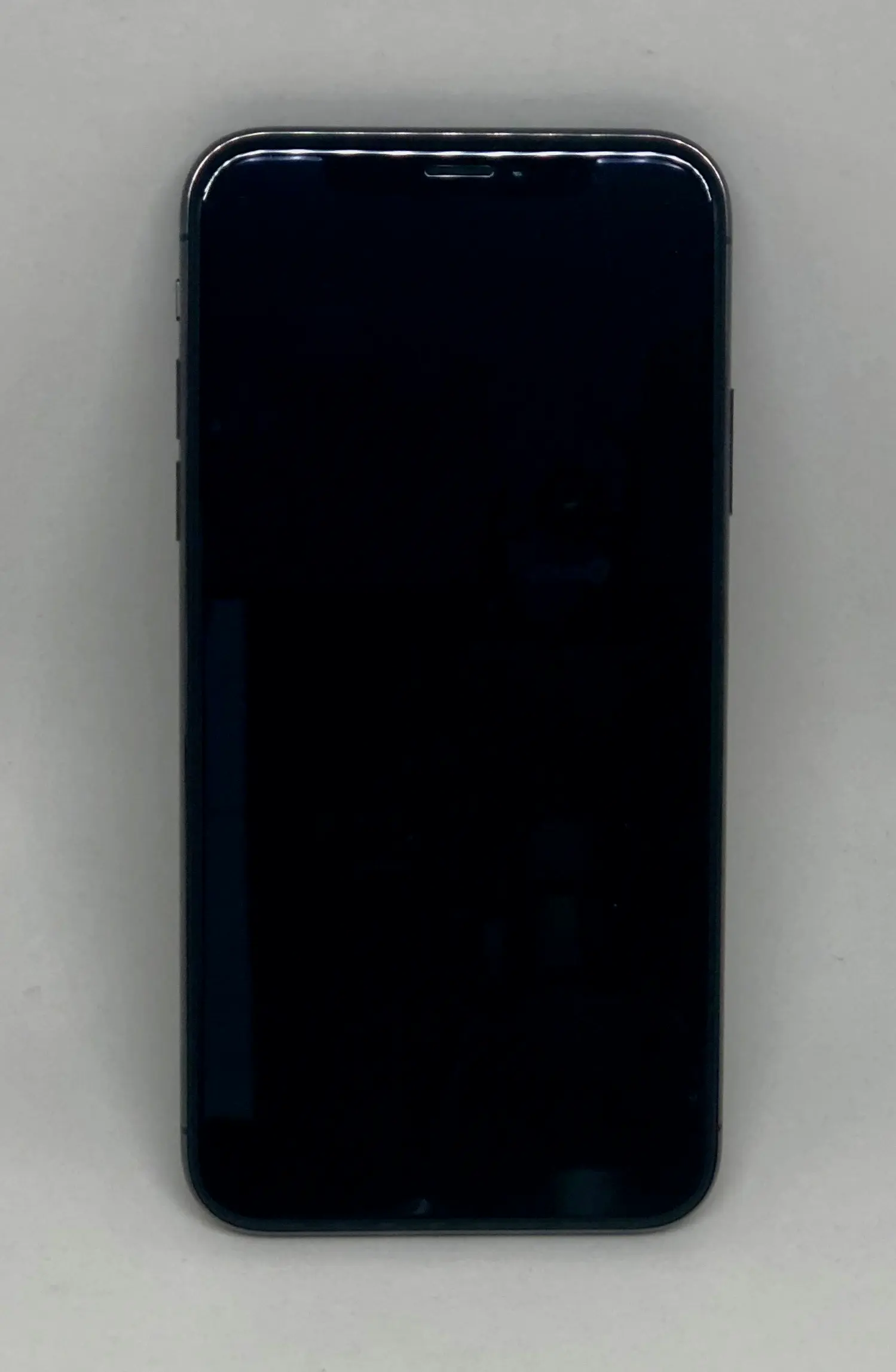
Behind the rectangular cut-out — what would, in due course, be called the notch — sat the TrueDepth camera system, which Apple described at announcement as "a dot projector, infrared camera and flood illuminator", together with the ambient-light and proximity sensors, the 7MP front camera, the speaker and the microphone.
The authentication path uses two different images of the same face:
- The dot projector casts "more than 30,000 invisible IR dots" onto the face. The infrared camera reads how that grid deforms, which yields a depth map.
- The same infrared camera captures a flat infrared image.
- A portion of the device's neural engine — and this is the part that matters for security — runs inside the Secure Enclave, where it "transforms the depth map and infrared image into a mathematical representation and compares that representation to the enrolled facial data".
That machine-learning work had dedicated silicon for the first time. The A11 Bionic shipped with a dual-core neural engine performing, by Apple's figure, "up to 600 billion operations per second", "designed for specific machine learning algorithms" and enabling "Face ID, Animoji and other features".
The depth map is the anti-spoofing argument: Face ID "matches against depth information, which isn't found in print or 2D digital photographs", backed by what Apple calls "sophisticated anti-spoofing neural networks". Face ID is also attention-aware — it "recognizes if your eyes are open and your attention is directed towards the device", which is what stops a phone being held up to a sleeping owner's face.
Enrolment is not frozen. Apple says Face ID adapts to cosmetics and facial hair automatically, refines the stored representation on each successful authentication, and also updates it when it sees a close match that is then followed by the correct passcode.
The Probabilities Are Apple's Own
| Stated false-accept probability | Failed attempts before passcode | |
|---|---|---|
| Touch ID | 1 in 50,000, with a single enrolled finger | 5 |
| Face ID | less than 1 in 1,000,000, with a single enrolled appearance | 5 |
Both figures come from Apple's own support documents, and Apple states the limits itself. The probability "is higher … for twins and siblings that look like you, and among children under the age of 13, because their distinct facial features might not have fully developed" — in those cases Apple recommends using a passcode instead. The biometric is also deliberately not sufficient on its own: a passcode is forced after a restart, after 48 hours without an unlock, after a remote lock command, and after five failed matches.
No independent audit of the one-in-a-million figure was published. It is a vendor claim, and it should be read as one.
The Screen
Removing the home button let the display cover nearly the whole front. The 5.8-inch Super Retina panel was, Apple said, "the first OLED panel that rises to the standards of iPhone" — and OLED does not illuminate dark pixels at all, so the boundary between bezel and image disappears rather than merely narrowing.
Jony Ive, then Apple's chief design officer: "For more than a decade, our intention has been to create an iPhone that is all display. The iPhone X is the realization of that vision."
The Senator, the Billion Images, and the Blind User
The day after the announcement — 13 September 2017 — Senator Al Franken, then on the Senate Judiciary Subcommittee on Privacy, Technology and the Law, sent Tim Cook a letter with ten questions, and asked for answers by 13 October. Among them: can Face ID data be extracted from a device or stored remotely; where did the billion training images come from and how was diversity ensured; are faceprints of people other than the owner retained; how will Apple respond to law-enforcement requests for the faceprint data or for the Face ID system itself.
Apple answered through Cynthia Hogan, vice president for public policy in the Americas, in a letter made public on 16 October:
The accessibility of the product to people of diverse races and ethnicities was very important to us. Face ID uses facial matching neural networks that we developed using over a billion images, including IR and depth images collected in studies conducted with the participants' informed consent.
We worked with participants from around the world to include a representative group of people accounting for gender, age, ethnicity, and other factors.
Franken said he appreciated the engagement and planned to follow up. He did not get an answer to the law-enforcement question beyond Apple's existing position that the data never leaves the device.
The accessibility problem is sharper, and Apple resolves it by giving up the security property. Attention awareness is the safeguard against an unconscious or unwilling user being scanned — so a blind or low-vision user who cannot reliably look at the screen has to switch it off. Apple provides exactly that: Settings > Accessibility > Face ID & Attention > Require Attention for Face ID, "automatically turned off if you enable VoiceOver during initial set up". A separate "Accessibility Options" path at enrolment drops the requirement for a full range of head motion. The trade is stated plainly in Apple's documentation and cannot be engineered away: the feature that protects a sleeping user is the same feature that excludes a blind one.
Apple's Own Numbers on the $999 Phone
US$999 set a reference point that the industry has not since moved back from. Apple's own account of the result came on 1 February 2018, for the quarter ended 30 December 2017: revenue of $88.3 billion, up 13% and an all-time record, and earnings of $3.89 per diluted share, up 16% and also a record. Tim Cook: "iPhone X surpassed our expectations and has been our top-selling iPhone every week since it shipped in November."
That is Apple describing Apple's own numbers, in a quarter Apple also called the biggest in its history. It is evidence that the thousand-dollar phone sold; it is not an independent verdict on the price.
Face ID Stayed, the Notch Did Not
- Face ID did. Every iPhone flagship since has used it, and so does the cheapest current model: iPhone 16e, announced 19 February 2025 at US$599, has Face ID by way of the TrueDepth camera and no home button.
- The notch did not. By the iPhone 15 generation of September 2023, every model in the line had the Dynamic Island in its place.
- The mask gap closed slowly. Apple's support document now states that Face ID works with face masks on iPhone 12 or later, and that the one-in-a-million figure holds whether or not a mask is worn — while noting that for lookalikes and young children the probability of a false match is increased further when masked.
The anxiety about the missing home button — the unease of being asked to abandon a habit ten years deep — did not last. The swipe-up gesture turned out to be something fingers learn quickly.
Sources
TertiaryiPhone X — Wikipedia
Last updated: