T1#research#consumer#labor#japan
Google Neural Machine Translation — The Overnight Jump in Translation
Metadata
- Date
- Decade
- 2010s
- Tier
- T1
- Timelines
- A History of Artificial Intelligence
- Sources
- 09
- Connections
- 06
- Tags
- #research#consumer#labor#japan
GNMT (Google Neural Machine Translation) is the deep-learning machine translation system Google announced on 27 September 2016. At launch Google switched all of Google Translate's Chinese-to-English translation to GNMT, and on 15 November 2016 (16 November in Japan) it extended the system to eight language pairs to and from English, including Japanese. The November switch is the moment many people in Japan noticed that English–Japanese translation had suddenly started producing readable Japanese.
Until then Google Translate had used phrase-based statistical translation, which split a sentence into phrases, translated them largely independently and picked the statistically most likely combination. Google's Japanese blog recalled that Google Translate had started out as a pioneer of statistical machine translation; how that approach arose is told on the statistical machine translation page. GNMT replaced it with a neural network that treats the whole sentence as one unit.
September 2016: the paper and the Chinese-to-English switch
On 26 September 2016 Google researchers led by Yonghui Wu and Mike Schuster posted "Google's Neural Machine Translation System: Bridging the Gap between Human and Machine Translation" to arXiv. The author list includes Japanese researchers such as Taku Kudo and Hideto Kazawa. The next day, Quoc V. Le and Mike Schuster announced the production deployment on Google's research blog.
| Element | Detail |
|---|---|
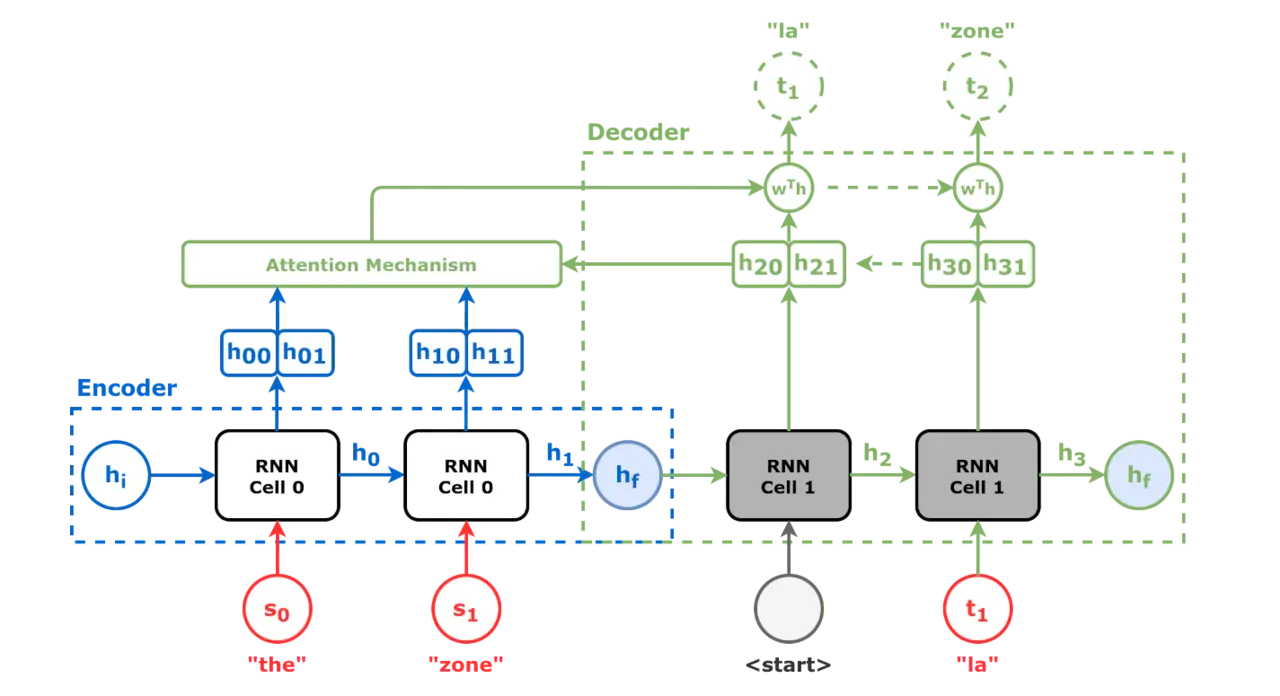
| Structure | An eight-layer LSTM encoder and an eight-layer decoder joined by attention |
| Going deep | Residual connections between layers (citing the ResNet paper) |
| Rare words | Words split into wordpieces, a method first developed to solve a Japanese/Korean segmentation problem in Google's speech recognition |
| Speed | Low-precision arithmetic at inference, accelerated on Google's own TPU chips |
| Evaluation (Google's own) | In side-by-side comparison by human raters, errors cut by an average of 60% against the phrase-based system |
According to the paper, simply stacking LSTM layers worked well up to four layers, barely with six and very poorly beyond eight; residual connections were added to get past that limit. Wordpieces strike a balance between the flexibility of characters and the efficiency of whole words, so even a word missing from the vocabulary can be translated as a combination of parts.
The research blog said that, as of 27 September, the Google Translate mobile and web apps were using GNMT for 100% of Chinese-to-English translations, about 18 million a day. It also said GNMT reduced translation errors by more than 55% to 85% on several major language pairs. Both figures come from Google's own evaluation on sentences sampled from Wikipedia and news sites.
November 2016: eight language pairs, Japanese included
| Date | Event | Coverage |
|---|---|---|
| 26 Sep 2016 | Paper posted to arXiv | — |
| 27 Sep 2016 | Research blog announcement; production launch | Chinese to English |
| 15 Nov 2016 (US) | Announcement on Google's blog | Eight pairs: English with French, German, Spanish, Portuguese, Chinese, Japanese, Korean and Turkish |
| 16 Nov 2016 (Japan) | Google Japan blog, "Google 翻訳が進化しました。" | Same |
In the November announcement Barak Turovsky, Google Translate's product lead, wrote that these eight pairs covered the native languages of around one-third of the world's population and more than 35% of all Google Translate queries, and that "Google Translate is improving more in a single leap than we've seen in the last ten years combined". That is the provider's own assessment. The same day, businesses and developers gained access to the system through an API.
Japan was in the first expansion wave. But many Japanese users noticed the change before the official announcement.
What happened in Japan
According to a long New York Times Magazine article in December 2016, late one Friday night in early November Jun Rekimoto, a professor at the University of Tokyo, noticed posts on social media saying Google Translate had suddenly improved. He tested it himself and wrote up the results on his blog. First he set passages from two published Japanese translations of The Great Gatsby, by Takashi Nozaki and by Haruki Murakami, beside Google's version. Then he translated the opening of Hemingway's "The Snows of Kilimanjaro" into Japanese himself, ran it back into English through Google, and invited readers to guess which version was the machine's. By dawn, the article reports, Google Translate was the number-one trend on Japanese Twitter.
Japanese assessments pointed the same way. In December 2016 Lifehacker Japan wrote that, subjectively, English-to-Japanese output had gone from something like 15 points to 85. Hiromi Nakaiwa, president of the Asia-Pacific Association for Machine Translation (AAMT), wrote in the Japio YEAR BOOK 2017 that rule-based translation built on hand-made dictionaries and rules, and statistical translation, had been mainstream in Japan, and that the November 2016 rollout greatly improved machine translation quality involving Japanese and had a large impact not only on researchers but on society.
How translation work changed
Once neural translation came close to being usable, the question shifted from whether machine translation helps to how to use it. Lifehacker Japan said the new Google Translate was good enough for getting the gist of, say, a business email, but that for professional work a person who can read the original must check the output, since nonsensical translations still turned up. It suggested a workflow for translators in which the machine drafts first and a human then fixes the details.
Google itself stated that machine translation was by no means solved. The research blog wrote that GNMT could still make significant errors a human translator never would, such as dropping words, mistranslating proper names or rare terms, and translating sentences in isolation rather than considering the context of the paragraph or page.
Hope and disappointment in machine translation have a long history; the disappointment of the 1960s is mentioned on the AI winter page. The year after GNMT, Google researchers published the Transformer, which translates with attention alone and no recurrence, and the leading approach changed again. For the wider story see the AI timeline and the Google page.
Questions this page answers
- What is GNMT?
- It is the neural-network machine translation system Google introduced into Google Translate in 2016. Unlike the earlier phrase-based statistical system, which translated pieces of a sentence largely independently, it treats the whole sentence as a unit. An encoder and a decoder of eight LSTM layers each are joined by attention, and words are split into sub-word units called wordpieces.
- When did Google Translate's Japanese switch to neural translation?
- In November 2016. Google announced on 15 November (US time), and on 16 November in its Japanese blog, that neural machine translation was live for eight language pairs to and from English, including Japanese. The first deployment on 27 September covered only Chinese to English.
- How much did accuracy improve?
- Google's paper reported that in side-by-side comparison by human raters it reduced errors by an average of 60% compared with the earlier phrase-based system, and the blog post gave reductions of more than 55% to 85% on several major language pairs. Both are Google's own evaluations. In Japan, Lifehacker Japan described English-to-Japanese quality as subjectively going from 15 points to 85.
- Did GNMT make human translators unnecessary?
- No. Google itself wrote that GNMT could still make errors a human translator never would, such as dropping words, mistranslating proper names or rare terms, and translating sentences in isolation from the paragraph. Japanese reviews likewise said a person who can read the original must check the output for professional use, and suggested a workflow in which the machine drafts and a human revises.
Sources
100% of Chinese-to-English on GNMT (about 18 million translations a day); errors cut by more than 55% to 85%; TensorFlow and TPUs; more than 10,000 language pairs; the kinds of errors that remain
Eight-layer LSTM encoder and decoder; residual connections; attention; wordpieces (first developed for a Japanese/Korean segmentation problem in speech recognition); low-precision inference on TPUs; errors cut by an average of 60%
Eight language pairs with English, including Japanese; over 35% of queries; 103 languages; the 'single leap' wording
PrimaryGoogle 翻訳が進化しました。 — Google 翻訳チーム, Google Japan Blog, 2016年11月16日
The Japanese announcement; Google Translate's origins in statistical machine translation; launch in eight languages
SecondaryThe Great A.I. Awakening — Gideon Lewis-Kraus, The New York Times Magazine, Dec 14, 2016
Jun Rekimoto of the University of Tokyo noticing the change on social media late one Friday night in early November and testing it on his blog; Google Translate becoming the top trend on Japanese Twitter
Secondary最近の機械翻訳を取り巻く状況変化とニューラル機械翻訳技術 — 中岩浩巳(アジア太平洋機械翻訳協会 会長), Japio YEAR BOOK 2017
Assessment that the November 2016 rollout greatly improved translation quality involving Japanese and had a large social impact; rule-based and statistical MT had been mainstream in Japan
Last updated: