T1#google#consumer#launch#education
The First Chromebooks — A Laptop Built Around the Browser
Metadata
- Date
- Decade
- 2010s
- Tier
- T1
- Sources
- 09
- Connections
- 02
- Tags
- #google#consumer#launch#education
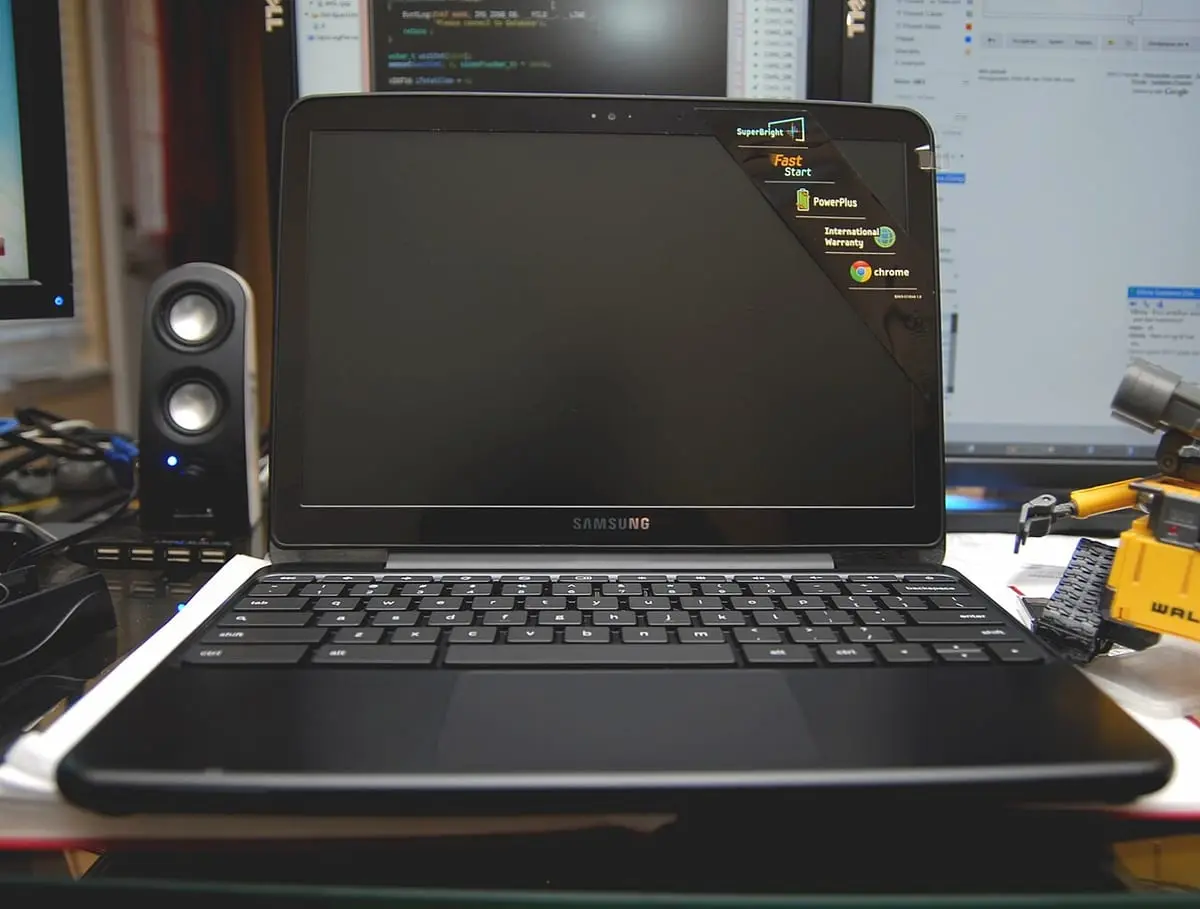
A Chromebook is a laptop that runs Google's Chrome OS. The first ones were made by Samsung and Acer, announced at Google I/O on 11 May 2011, and went on sale online on 15 June 2011 in the US, UK, France, Germany, the Netherlands, Italy and Spain. In the US they were sold through Amazon and Best Buy. Japan was not among the launch countries.
Six months earlier, on 7 December 2010, Google had started a pilot programme that handed out unbranded test notebooks, the machine later known as the Cr-48.
The dates
| Date | Event |
|---|---|
| 7 December 2010 | Chrome OS pilot programme begins: test notebooks for selected users, developers, schools and businesses, starting in the US |
| December 2010 to March 2011 | According to Wikipedia, about 60,000 test machines (Cr-48) were given away |
| 11 May 2011 | Samsung and Acer Chromebooks announced at Google I/O, along with monthly plans for schools and businesses |
| 15 June 2011 | Online sales begin in the US and six European countries |
According to Wikipedia, launch prices ran from $349 to $499 depending on the model and whether it had 3G, and Acer's AC700 did not actually ship until early July.
The Cr-48 test notebook
In its December 2010 announcement Google wrote that Chrome OS was not done yet but had reached the stage where it needed feedback from real users. Some features required new hardware, and Google did not want to sell pre-beta computers, so it would give test notebooks to qualified users, developers, schools and businesses instead.
| Item | Test notebook (per Google) |
|---|---|
| Look | Black, with no branding, no logos and no stickers |
| Screen | 12.1 inches |
| Input | Full-sized keyboard and touch pad |
| Connectivity | Integrated 3G from Verizon |
| Battery | Eight hours of use, eight days of standby |
Setting up a new machine took less than a minute, Google wrote, and simply logging in brought back your apps, bookmarks and browser settings. It also said retail models would come from Acer and Samsung in the first half of 2011.
The browser as the operating system
Google's reasoning was that many people already spent all their time in a web browser, so an operating system that was essentially a browser could make computers faster, much simpler and fundamentally more secure. In May 2011 it described the Chromebook this way:
- No waiting minutes for the computer to boot and the browser to start; you would be reading email in seconds
- Automatic updates, so the software would get faster over time
- Apps, photos and documents available anywhere, with no need to worry about losing the computer or forgetting to back up
- A day of use on a single charge, with optional 3G
- Many layers of built-in security and no anti-virus software to buy
At the core sat the Chrome browser, which Google said had more than 160 million active users at the time. The announcement presented Chromebooks as bringing Chrome's speed, simplicity and security without the headaches of operating systems designed 20 to 30 years earlier. These were all Google's own claims.
Designed with schools in mind
From the first announcement Google aimed at schools and businesses as well as individuals. "Chromebooks for Business and Education" bundled the devices with a cloud console for remotely managing users, devices, applications and policies, plus enterprise-level support, warranties and replacements, and regular hardware refreshes. Monthly subscriptions started at $20 per user for schools and $28 for businesses.
The later spread is best shown with each figure's origin kept separate.
| When | Figure | Source |
|---|---|---|
| Q3 2017 | Google's operating systems at 59.8% of the US K-12 mobile computing market | Futuresource estimate, as reported by EdWeek Market Brief |
| January 2020 | 40 million students and educators using Chromebooks | |
| End of July 2021 | 40.0% of devices delivered to Japan's public primary and lower-secondary schools run ChromeOS (Windows 30.9%, iOS 29.1%) | Japan's education ministry (final figures, by units) |
| February 2022 | 50 million students and teachers using Chromebooks |
The Japanese figure counts devices delivered under the GIGA School programme. The US figure is market share and Google's figures are user counts, so the three measures cannot be compared with each other.
ChromeOS since
On 12 June 2024 Google announced that ChromeOS would be developed on large portions of the Android stack, taking in the Android Linux kernel and Android frameworks as part of its foundation in order to deliver AI features faster. It said the changes would not be ready for consumers for quite some time. The Chromebook, which began as an operating system that was only a browser, was moving thirteen years later toward sharing its foundations with Android.
Where it sits
The first Chromebooks turned into a product the idea that a laptop's value lives on the web rather than in the machine, with management and updates handed to the cloud. Among the first customers Google pitched it to were schools, which manage many devices at once. For devices more broadly see the hardware timeline; for the company, Google.
Questions this page answers
- When did the first Chromebooks go on sale?
- They were announced on 11 May 2011 and went on sale online on 15 June in the US, UK, France, Germany, the Netherlands, Italy and Spain. Samsung and Acer made them; in the US they were sold through Amazon and Best Buy.
- What was the Cr-48?
- The test notebook Google handed out in its Chrome OS pilot programme from December 2010. It was black and unbranded, with a 12.1-inch screen and built-in Verizon 3G. It was never sold; it existed to test the software ahead of the retail Chromebooks the following year.
- How widely are Chromebooks used in schools?
- Google said in February 2022 that 50 million students and teachers used Chromebooks. In Japan, an education ministry survey found that of devices delivered to public primary and lower-secondary schools as of the end of July 2021, 40.0% ran ChromeOS, 30.9% Windows and 29.1% iOS.
Sources
Pilot programme, the test notebook's specifications (12.1 inches, Verizon 3G, eight hours), Acer and Samsung models due in the first half of 2011
PrimaryA new kind of computer: Chromebook — Official Google Blog, May 11, 2011 (Internet Archive)
The first Chromebooks from Samsung and Acer, online on 15 June in seven countries, Amazon and Best Buy, monthly plans for schools and businesses ($20 and $28)
PrimaryImproving 40 million Chromebooks for education — Google, Jan 21, 2020
Forty million students and educators (Google's figure)
PrimarySupporting education with a new line of Chromebooks — Google, Feb 3, 2022
Fifty million students and teachers (Google's figure)
Futuresource estimate: Google's operating systems at 59.8% of the US K-12 mobile computing market in Q3 2017
Primary端末利活用状況等の実態調査(令和3年7月末時点)(確定値) — 文部科学省
Share of delivered devices by OS (units): ChromeOS 40.0%, Windows 30.9%, iOS 29.1%
ChromeOS to be developed on large portions of the Android stack, including the Android Linux kernel and frameworks
TertiaryChromebook — Wikipedia
The Cr-48 name and about 60,000 units distributed, the Acer AC700 shipping in early July, launch prices of $349 to $499
Last updated: