T1#research
The K Computer — Japan Back on Top of the TOP500
Metadata
- Date
- Decade
- 2010s
- Tier
- T1
- Sources
- 11
- Connections
- 00
- Tags
- #research
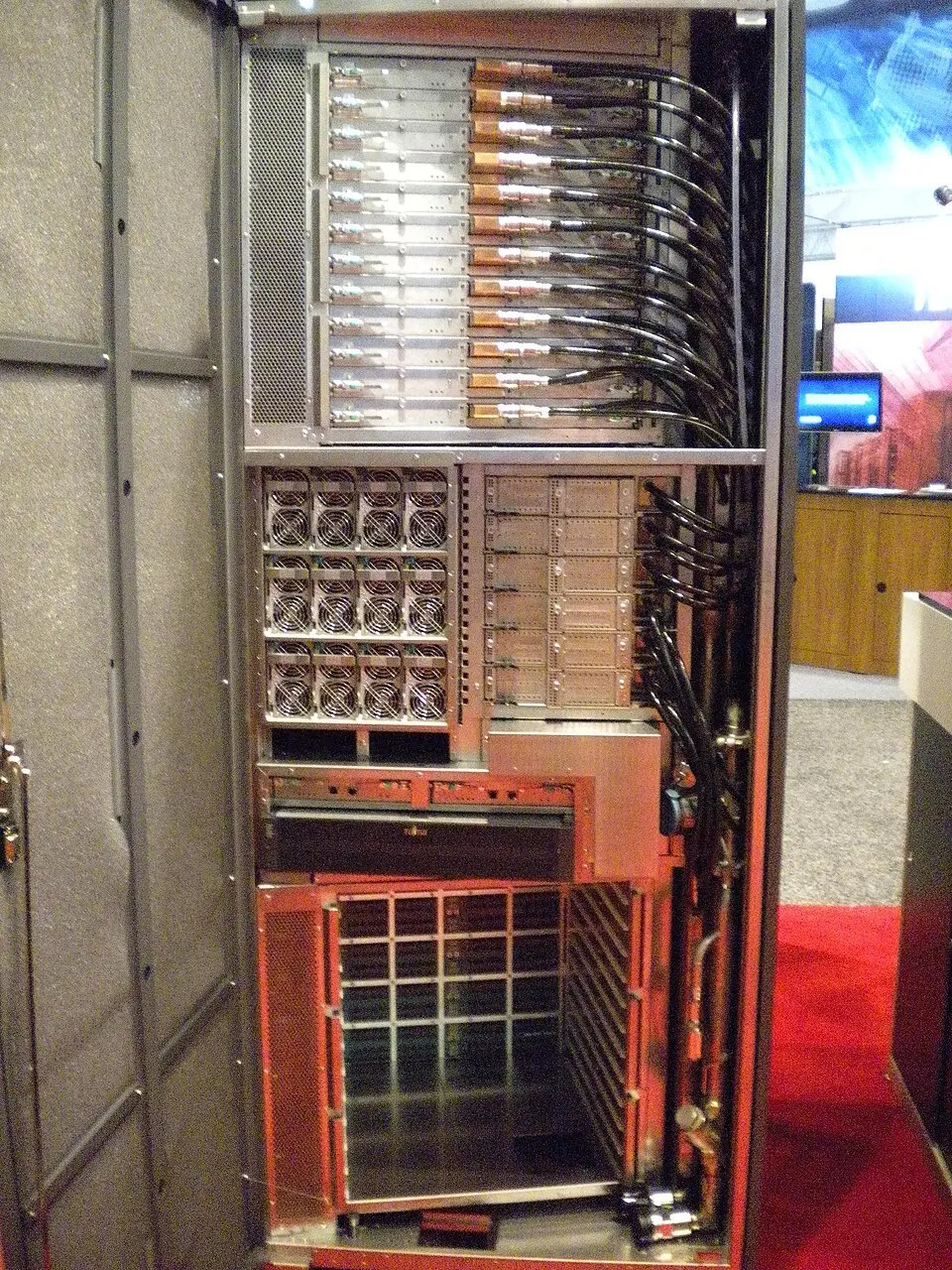
The K computer (Japanese: 京, kei) was a supercomputer developed jointly by RIKEN and Fujitsu. On 20 June 2011 the 37th TOP500 list was announced at the ISC'11 conference in Hamburg, Germany, and the K computer took first place with 8.162 petaflops (8.162 quadrillion floating-point operations per second) on the LINPACK benchmark. It was the first time a Japanese machine had led the TOP500 since June 2004, seven years earlier. And the machine was not even finished: the record came from 672 of the eventual 864 racks.
That November, fully built, it reached 10.51 petaflops and kept first place for a second list in a row. TOP500 described it as the first system ever to exceed 10 petaflops. The name kei is the Japanese unit for 10 to the 16th power, which is 10 peta.
What the TOP500 measures
The TOP500 ranks the world's supercomputers by their speed on LINPACK. It began in 1993 and is published twice a year, in June and November. LINPACK measures how fast a machine solves a large dense system of linear equations; it was developed by Jack Dongarra of the University of Tennessee.
| June 2011 (37th list) | November 2011 (38th list) | |
|---|---|---|
| Configuration | 672 racks, 68,544 CPUs (548,352 cores) | 864 racks, 705,024 cores |
| LINPACK performance | 8.162 petaflops | 10.51 petaflops |
| Efficiency | 93.0% (peak 8.774 petaflops) | — |
| Rank | No. 1 (China's Tianhe-1A second at 2.57 petaflops) | No. 1 |
In June 2011 TOP500 noted that the K computer's result was more than three times that of the next system and that it used almost twice as many cores as any other machine on the list. It also stressed that, unlike many recent very large systems, the K computer used no graphics processors (GPUs) or other accelerators. According to the TOP500 system record, its processors were Fujitsu's SPARC64 VIIIfx (eight cores at 2 GHz), its nodes were linked by the custom Tofu interconnect, it ran Linux, and in its completed configuration it drew about 12.66 megawatts.
RIKEN called the 93.0% efficiency remarkably high for a top-class large system, and described the K computer as a fully domestic machine, with everything from processor research and development to system design and manufacturing done in Japan.
First place after the earthquake
The ranking came just over three months after the Great East Japan Earthquake of March 2011. In the announcement, RIKEN President Ryoji Noyori thanked the companies that had kept building the machine despite the hardship, and Fujitsu Chairman Michiyoshi Mazuka wrote that partner companies in the Tohoku region had kept supplying parts even though they themselves had been hit by the disaster.
The spending screening and "second place"
The K computer had become a household name in Japan before it ever topped the list. In November 2009, the budget for the next-generation supercomputer came up in the spending screening (jigyō shiwake) run by the Government Revitalization Unit of the Democratic Party of Japan government. A written question submitted in the House of Councillors in July 2012 by Eriko Yamatani quotes Renho, a member of the House of Councillors who served as one of the screeners, as asking what reason there was to be number one in the world, and whether second place would not do.
The same written question says that the fiscal 2010 budget, after being effectively frozen, was eventually funded at 4 billion yen less than requested; that is the questioner's account. Development continued, and about a year and a half after the screening the K computer was ranked first in the world.
Completion, second place and shutdown
| Date | Event |
|---|---|
| July 2010 | RIKEN chooses the name kei (K) |
| Late September 2010 | Racks begin arriving in Kobe |
| 20 June 2011 | No. 1 on the 37th TOP500 (8.162 petaflops) |
| Late August 2011 | All 864 racks delivered and installed |
| November 2011 | No. 1 on the 38th TOP500 (10.51 petaflops) |
| June 2012 | The US Sequoia (16.32 petaflops) takes No. 1; K is second |
| 29 June 2012 | Final system tests completed; K is finished |
| September 2012 | Shared use begins |
| 16 August 2019 | Shared resources withdrawn |
| 30 August 2019 | Shutdown |
According to RIKEN, in 2011 the K computer not only led two consecutive TOP500 lists but also took first place in all four HPC Challenge categories and won the Gordon Bell Prize, which RIKEN presented as evidence that it performed on real applications and not just on LINPACK. It was built under the Ministry of Education's programme to create an Innovative High Performance Computing Infrastructure (HPCI) and installed at the RIKEN Advanced Institute for Computational Science in Kobe (later the RIKEN Center for Computational Science).
When it was completed, RIKEN listed expected uses including analysis of next-generation semiconductor materials, searching for drug candidates, earthquake and tsunami simulation, and global atmospheric models at 800-metre resolution to predict localised torrential rain.
Its time at the top lasted one year: in June 2012 it was overtaken by IBM's Sequoia in the United States. Even so, the K computer served many research institutions and companies for nearly seven years. Shared use ended on 16 August 2019, and the machine was switched off at a shutdown ceremony on 30 August. Its role passed to Fugaku, which RIKEN and Fujitsu had been developing since 2014 and which switched from SPARC to the Arm instruction set (see Arm architecture).
Other computing milestones of the era are on the hardware timeline.
Questions this page answers
- When did the K computer become the world's No. 1?
- In the 37th TOP500 list, announced on 20 June 2011, with 8.162 petaflops on LINPACK while still under construction. It kept first place in November 2011 at 10.51 petaflops, two lists in a row, and fell to second behind the US Sequoia in June 2012.
- Where does the name 'Kei' come from?
- It is the Japanese unit for 10 to the 16th power, or 10 peta, chosen by RIKEN in July 2010. RIKEN added that the character originally meant a large gate, expressing the hope of a new gateway for computational science.
- What was the 'Is second place not good enough?' remark?
- It is the remark attributed to Renho, then a member of the House of Councillors acting as a screener, when the next-generation supercomputer budget came up in the government's spending screening in November 2009. A 2012 written question in the House of Councillors quotes her as asking what reason there was to be number one, and whether second place would not do.
- When was the K computer retired?
- It opened for shared use in September 2012 and stopped providing shared resources on 16 August 2019. It was shut down at a ceremony at the RIKEN Center for Computational Science on 30 August. Its successor is Fugaku.
Sources
Primary京速コンピュータ「京」が世界1位に — 理化学研究所・富士通, 2011年6月20日
First place in the 37th TOP500 at ISC'11; 672 racks and 68,544 CPUs; 8.162 petaflops at 93.0% efficiency; first since June 2004; the name; building it after the March 2011 earthquake
PrimaryJune 2011 — TOP500
Release on Monday 20 June in Hamburg; Japan back on top for the first time since the Earth Simulator was dethroned in November 2004
PrimaryHighlights — June 2011 — TOP500
548,352 cores, more than three times the next system, no accelerators
PrimaryHighlights — November 2011 — TOP500
10.51 petaflops when fully built, 705,024 cores, the first system ever above 10 petaflops
PrimaryK computer, SPARC64 VIIIfx 2.0GHz, Tofu interconnect — TOP500
SPARC64 VIIIfx 8-core 2 GHz, Rpeak 11,280.38 TFlop/s, power 12,659.89 kW, HPCG 602.736 TFlop/s
Primaryスーパーコンピュータ「京」が完成 — 理化学研究所・富士通, 2012年7月2日
Completion on 29 June; delivery from late September 2010 and all 864 racks installed by late August 2011; all four HPC Challenge awards and the Gordon Bell Prize
Primaryありがとう「京」シャットダウンセレモニーを開催 — 理化学研究所, 2019年8月30日
Shared use from September 2012, ended 16 August 2019, shut down 30 August
Primary次世代スーパーコンピュータ「京」に関する質問主意書(第180回国会 質問第181号)— 参議院, 2012年7月9日
Quotes Renho's remark at the November 2009 spending screening and gives the questioner's account of the fiscal 2010 budget
TertiaryK computer — Wikipedia
Last updated: