T1#ethics#regulation
The AI Pause Letter — Halt Training Beyond GPT-4 for Six Months
Metadata
- Date
- Decade
- 2020s
- Tier
- T1
- Sources
- 06
- Connections
- 07
- Tags
- #ethics#regulation
The AI pause letter ("Pause Giant AI Experiments: An Open Letter") is an open letter dated 22 March 2023 and published by the Future of Life Institute (FLI), a US non-profit. It called on all AI labs to immediately pause, for at least six months, the training of AI systems more powerful than GPT-4. It was dated eight days after the announcement of GPT-4, and its signatories included Elon Musk, Steve Wozniak and Yoshua Bengio. It was widely reported at the end of March; a critical response dated its publication to Tuesday 28 March. As of 17 October 2026 FLI's page showed 31,810 signatures.
The short answer to what it achieved: no pause happened. But the letter dragged into the open an argument about who gets to talk about AI's dangers, and on what time horizon, and it came just before a year of government action.
What the letter asked for
Its central sentence reads:
We call on all AI labs to immediately pause for at least 6 months the training of AI systems more powerful than GPT-4.
The pause was to be public and verifiable and include all key actors; if it could not be enacted quickly, governments should step in and institute a moratorium. During the pause, labs and independent experts were to develop shared safety protocols, audited and overseen by outside experts. The letter added that this did not mean a pause on AI development in general, only a step back from the race toward ever-larger unpredictable black-box models.
| Demand | Detail |
|---|---|
| Pause training | Systems more powerful than GPT-4, for at least six months, publicly and verifiably |
| Role of government | Institute a moratorium if a voluntary pause cannot be enacted quickly |
| Safety protocols | Developed jointly by labs and independent experts, with outside audit |
| Governance | New AI regulators; oversight and tracking of highly capable systems and large pools of compute; provenance and watermarking; auditing and certification; liability for AI-caused harm; public funding for safety research; institutions for economic and political disruption, especially to democracy |
The letter framed the social stakes as questions: should we let machines flood our information channels with propaganda and untruth; automate away all the jobs, including the fulfilling ones; develop nonhuman minds that might outnumber and replace us; risk loss of control of our civilisation? Then: "Such decisions must not be delegated to unelected tech leaders."
Signatures and backlash
The names that headlined coverage were Musk, Wozniak and Bengio (MIT Technology Review). Geoffrey Hinton, who would soon begin speaking publicly about AI risk, did not sign; that story is in the article on Hinton leaving Google.
Criticism came from several directions. On 31 March the listed authors of the "Stochastic Parrots" paper, including Timnit Gebru and Emily M. Bender, issued a statement. They agreed with some recommendations, such as provenance and watermarking for synthetic media, but said these were overshadowed by fearmongering and AI hype. In their view the letter steered attention toward imagined risks from "powerful digital minds" and ignored harms already under way: worker exploitation and massive data theft to build products, an explosion of synthetic media, and the concentration of power in a few hands. What was needed, they argued, was regulation enforcing transparency—disclosure of training data and model architectures—and accountability of builders for their systems' outputs.
Objections also came from the builders. At an MIT event on 13 April, OpenAI's Sam Altman said, as reported by SiliconANGLE, "The letter is missing most technical nuance about where we need the pause." He added that an earlier version of the letter had claimed OpenAI was training GPT-5, and that it was not and would not for some time.
A one-sentence statement two months later
Where FLI's letter split opinion with a concrete demand, the statement released by the Center for AI Safety (CAIS) on 30 May 2023 was a single sentence: mitigating the risk of extinction from AI should be a global priority alongside pandemics and nuclear war. Besides Hinton and Bengio, its signatories included the heads of the leading labs—Altman, Demis Hassabis of Google DeepMind and Dario Amodei of Anthropic. The people building frontier systems, absent from FLI's letter, had now acknowledged the risk itself. The statement's wording and Hinton's role in it are covered in the Hinton article.
Six months on: no pause, but the debate stayed
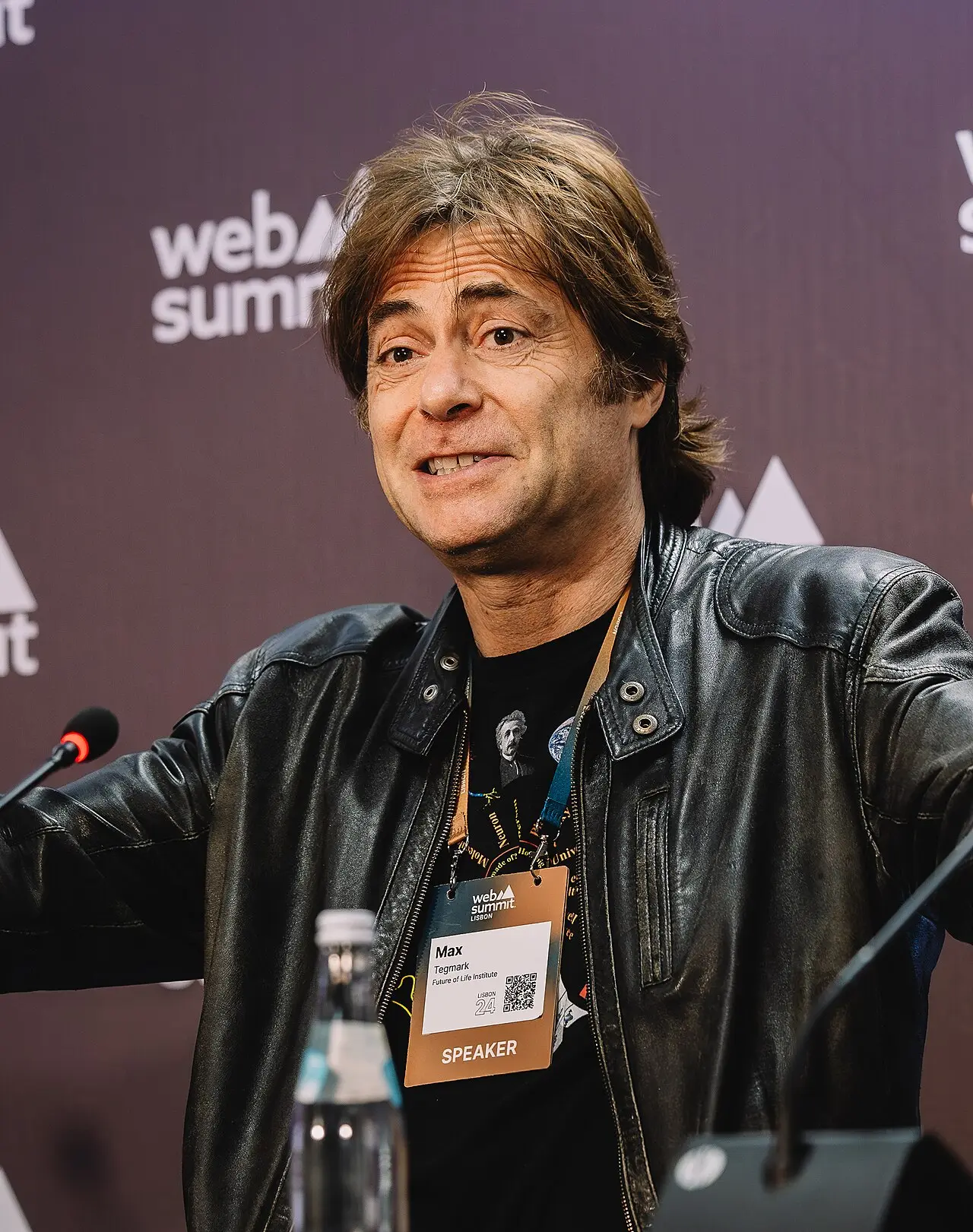
When the six months ran out in September 2023, FLI president Max Tegmark told MIT Technology Review that the letter's key goal had been to mainstream the conversation, and that this part had succeeded. He also conceded that all the companies were still going full steam ahead and that the US still had no meaningful regulation. In his reading, the CEOs knew they could not pause alone without being outcompeted; a pause would come only if governments imposed safety standards that forced everyone to stop. The magazine noted that Musk, a signatory, had since set up an AI company, X.AI.
Governments did act that year. The Biden executive order came on 30 October, the UK hosted the AI Safety Summit on 1–2 November, and the EU adopted the AI Act in March 2024. There is no evidence that the letter caused these. But its list of demands already contained items—a dedicated AI regulator, tracking of compute—that would be debated in many capitals afterwards.
Social impact: what was really being argued
The letter's most lasting effect was to make visible a split between two camps. One puts long-term, catastrophic risks such as loss of control first; FLI and CAIS stand there. The other puts present harms first—jobs and working conditions, bias, disinformation, concentration of power—with the DAIR statement as its clearest voice. Speaking for the first camp, Tegmark argued that infighting between the two would only help Big Tech divide and conquer those who want to rein it in.
The letter did name workers' concerns: automating away jobs was one of its questions, and it called for institutions to cope with economic and political disruption. But its main demand was a pause in development, not a voice or compensation for those affected. That gap is what the DAIR statement pressed on, arguing that immigrants, gig workers and artists whose work is used for training should have a say.
The wider story is on the AI timeline; see also the glossary entries for AGI and large language model.
Questions this page answers
- What did the AI pause letter demand?
- It asked all AI labs to immediately pause, publicly and verifiably, the training of AI systems more powerful than GPT-4 for at least six months, with governments imposing a moratorium if that did not happen quickly. It also called for AI regulators, tracking of compute, watermarking and liability for harm.
- Who signed it?
- Coverage headlined Elon Musk, Steve Wozniak and Yoshua Bengio. FLI's page showed 31,810 signatures on 17 October 2026. Geoffrey Hinton did not sign.
- How was the letter criticised?
- On 31 March the authors of the Stochastic Parrots paper said it steered attention to imagined risks and ignored present harms such as worker exploitation, synthetic media and concentration of power. OpenAI's Sam Altman said it was missing most technical nuance about where a pause was needed.
- Did any lab actually pause?
- No. In September 2023 FLI president Max Tegmark said the goal of mainstreaming the conversation had succeeded, but that all the companies were going full steam ahead and the US still had no meaningful regulation.
Sources
PrimaryPause Giant AI Experiments: An Open Letter — Future of Life Institute, Mar 22, 2023
Full text, publication date (22 March 2023), and 31,810 signatures as viewed on 17 October 2026
The critique that present harms were ignored, the call for transparency and accountability regulation, and the dating of publication to 28 March
SecondaryWhat's changed since the "pause AI" letter six months ago? — MIT Technology Review, Sep 26, 2023
Tegmark's assessment (conversation mainstreamed, companies at full steam, no US regulation) and Musk's founding of X.AI
Last updated: