T1#regulation#market#ethics#privacy
Biden's Executive Order on Safe, Secure, and Trustworthy AI
Metadata
- Date
- Decade
- 2020s
- Tier
- T1
- Timelines
- A General History of Information Technology · A History of Artificial Intelligence · AI and Society: A History
- Sources
- 09
- Connections
- 00
- Tags
- #regulation#market#ethics#privacy
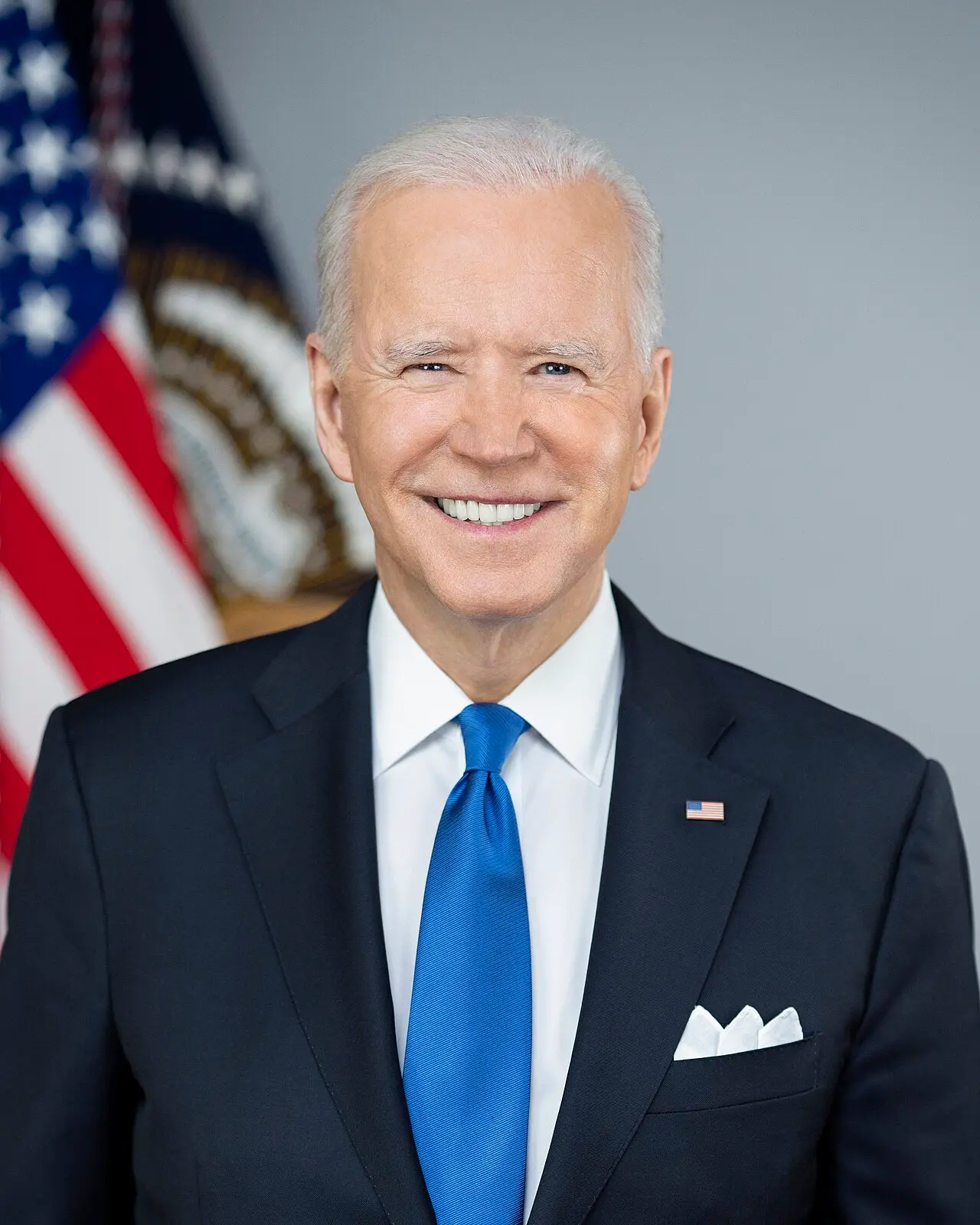
On 30 October 2023, US President Joe Biden signed at the White House an executive order titled Safe, Secure, and Trustworthy Development and Use of Artificial Intelligence (Executive Order 14110).
Thirty-six pages in the Federal Register, roughly 20,000 words. By Stanford HAI's count it placed 150 distinct requirements on more than fifty federal agencies and entities—the most comprehensive AI regulatory framework in US history.
The Compute Threshold and Four More Rules
The order set out eight objectives and dozens of specific measures. The industry-facing core can be summarised as follows.
1. Reporting obligation for large models. Section 4.2 set an interim trigger, to hold until the Secretary of Commerce defined technical conditions: any model trained using "a quantity of computing power greater than 10²⁶ integer or floating-point operations"—or 10²³ where the training data is primarily biological sequence data. GPT-4-class models of the day sat roughly on that line. Covered companies had to report training plans, red-team evaluation results, and capability assessments to the Secretary of Commerce. The legal basis—the Defense Production Act, 50 U.S.C. 4501 et seq.—was an unusual instrument to reach for in software regulation.
2. NIST-led safety standards. Section 4.1 tasked the National Institute of Standards and Technology with developing AI safety evaluation guidelines. NIST AI 600-1, the Generative AI Profile finalised on 26 July 2024, was a direct product of that clause.
3. Anti-discrimination. AI use in high-impact public domains—immigration adjudication, housing, hiring, criminal justice—was required to incorporate anti-discrimination safeguards.
4. Privacy. Stronger protections were called for over the personal data used in AI training, and Congress was urged to pass federal privacy legislation.
5. Federal-government use. Every agency had to perform AI risk assessments and appoint AI governance officials.
Industry Response
Major firms—OpenAI, Anthropic, Microsoft, Google—largely welcomed the order. Each already had a "responsible AI" policy, and alignment with the order's text was easy.
Criticism came from the open-source community and smaller researchers: drawing the line by compute threshold would stop working as models trainable at home grew capable; reporting obligations were textbook regulatory capture favouring incumbents.
Republican critique was also sharp: the executive branch was exercising power that belonged to Congress. Throughout the 2024 election season, a future Trump administration's intent to rescind the order was openly telegraphed.
Relative to the EU AI Act
Chronologically, Biden's order (30 October 2023) came four and a half months before the European Parliament's plenary approval of the AI Act (13 March 2024)—and further still before the Council's final adoption on 21 May 2024, publication in the Official Journal on 12 July, and entry into force on 1 August. But the EU's instrument was more systematic—a tiered risk-based classification—and carried the force of law. Biden's executive order was an executive order, not a statute.
An executive order is created and revoked by executive decision alone. That property would decide its fate in January 2025.
448 Days
On 20 January 2025, the second Trump administration took office. Executive Order 14148, Initial Rescissions of Harmful Executive Orders and Actions, signed that day, revoked 67 Biden executive orders and 11 presidential memoranda; EO 14110 was on the list. Three days later, EO 14179, Removing Barriers to American Leadership in Artificial Intelligence (23 January 2025), directed agencies to identify and unwind the actions taken under it.
Signature to revocation: 448 days. Because US AI regulation had been built on executive order rather than statute, it evaporated with the change of administration.
Some of it survived. NIST AI 600-1 remains published. The US AI Safety Institute—announced by Commerce Secretary Gina Raimondo on 1 November 2023 at the AI Safety Summit at Bletchley Park, a UK-hosted conference rather than a product of the executive order—was restructured in June 2025 into the Center for AI Standards and Innovation (CAISI), trading "safety" for "standards and innovation" on the door.
US AI policy has since steered toward acceleration rather than restraint. On 23 July 2025 the administration released Winning the Race: America's AI Action Plan alongside three executive orders—faster federal permitting for data centres (14318), excluding "woke AI" from federal procurement (14319), and promoting export of the American AI technology stack (14320). EO 14365 of 11 December 2025 asserted federal primacy over state AI statutes and stood up an AI Litigation Task Force at the Department of Justice. The EU AI Act, meanwhile, remains statute, and US firms must still comply with it.
What the document of 30 October 2023 left behind was less the regulation itself than a norm: that governments are entities that intervene in AI. That norm has continued to influence policy in many countries since.
Questions this page answers
- Is Executive Order 14110 still in force?
- No. It was rescinded on 20 January 2025 by Executive Order 14148, which revoked a series of Biden-era orders.
- What did EO 14110 actually require?
- Reporting to the government for models trained above a compute threshold, NIST-led development of AI safety evaluation standards, and measures against AI discrimination in immigration, housing and criminal justice.
Sources
Last updated: