T1#ethics#regulation#labor#award
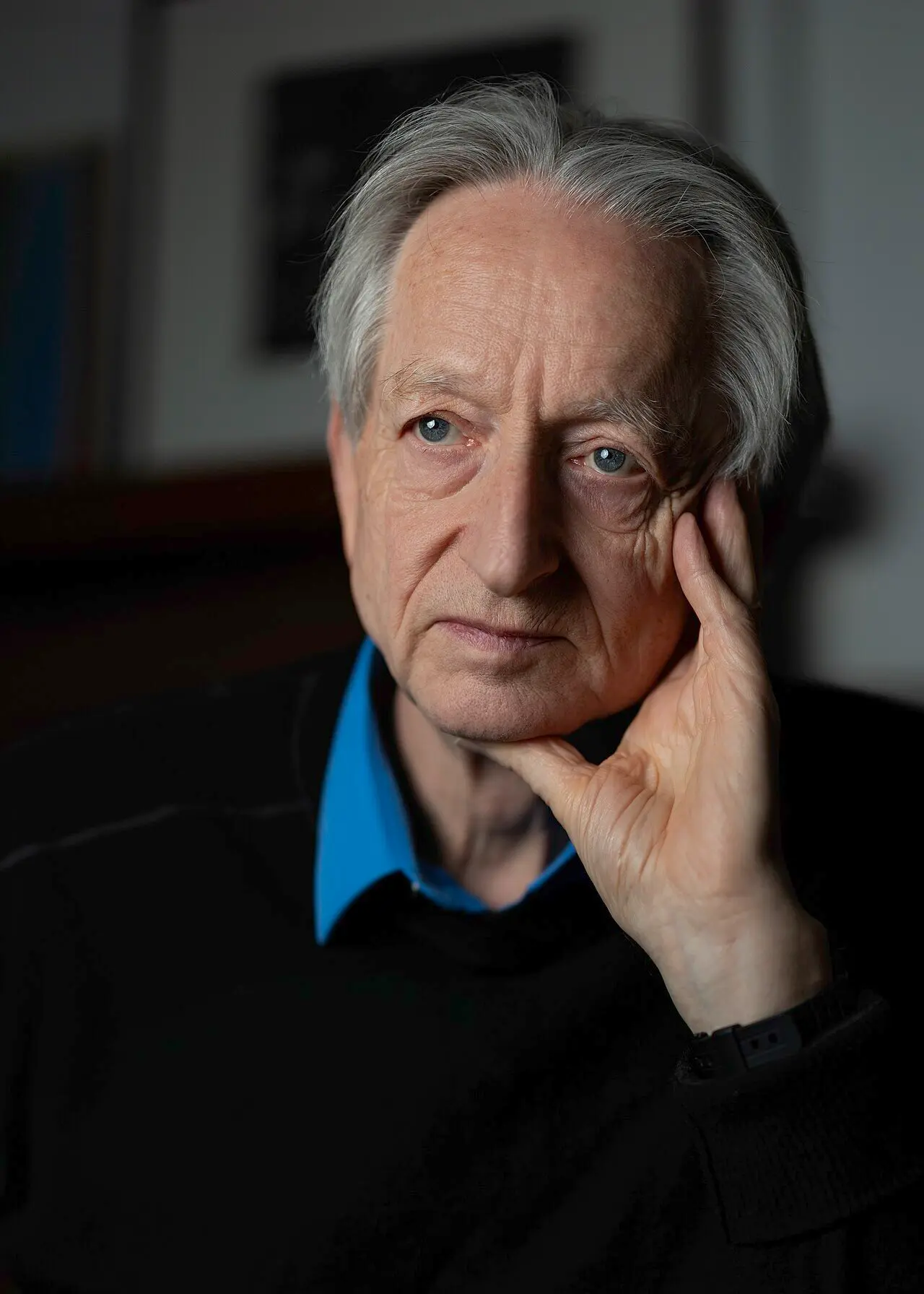
Geoffrey Hinton Leaves Google to Warn About AI's Dangers
Metadata
- Date
- Decade
- 2020s
- Tier
- T1
- Timelines
- A General History of Information Technology · A History of Artificial Intelligence · AI and Society: A History
- Sources
- 07
- Connections
- 03
- Tags
- #ethics#regulation#labor#award
On 1 May 2023, the New York Times published Cade Metz's interview with the "Godfather of AI" under the headline 'The Godfather of A.I.' Leaves Google and Warns of Danger Ahead.
Geoffrey Hinton, 75, had resigned after more than a decade at Google in order to speak. The interview had been conducted the week before, in the dining room of his home in Toronto — "a short walk", the piece notes, "from where he and his students made their breakthrough."
Why He Left
The sequence matters, because it was widely misreported. Hinton did not sign the March 2023 open letter calling for a six-month moratorium on frontier training runs, nor the letter from nineteen current and former leaders of the AAAI that followed days later. He told the Times he "did not want to publicly criticize Google or other companies until he had quit his job." He notified Google in April, and spoke by phone with Alphabet CEO Sundar Pichai on Thursday 27 April; he declined to discuss what was said.
The Times piece nonetheless read, to many, as a break with his employer. Hinton corrected that himself the next day, in a post on Twitter: "I left so that I could talk about the dangers of AI without considering how this impacts Google." And: "Google has acted very responsibly."
Google's chief scientist Jeff Dean replied in a statement: "We remain committed to a responsible approach to A.I. We're continually learning to understand emerging risks while also innovating boldly."
Ten years earlier, in 2013, Google had acquired Hinton and his two students Alex Krizhevsky and Ilya Sutskever by buying their company, DNN Research, outright — for $44 million, by the Times's figure. The three were the authors of AlexNet. Sutskever later left to become chief scientist at OpenAI, where he sat at the centre of ChatGPT and GPT-4. Hinton stayed, and watched the same technology unfold in two organisations at two different speeds.
Not the Danger — the Timing
Hinton had spent fifty years on neural networks — from embracing the idea as an Edinburgh graduate student in 1972, through leaving Carnegie Mellon for Canada in the 1980s because he was unwilling to take Pentagon money. What changed in 2022 was not his estimate of the danger but his estimate of the timing, and the reason was that the systems started doing something he had not expected them to do:
Maybe what is going on in these systems is actually a lot better than what is going on in the brain.
And, on extrapolation rather than on any particular capability:
Look at how it was five years ago and how it is now. Take the difference and propagate it forwards. That's scary.
What He Warned About
Short-term — a flood of misinformation. AI-generated fake photos, video and text would fill the internet, and the average person would "not be able to know what is true anymore."
Medium-term — job displacement. Chatbots complemented office workers for now, but could replace paralegals, personal assistants, translators "and others who handle rote tasks". "It takes away the drudge work," he said. "It might take away more than that."
Long-term — autonomous weapons and self-executing systems. Hinton is, in the Times's words, "deeply opposed to the use of artificial intelligence on the battlefield — what he calls 'robot soldiers'". The newer worry was narrower and stranger: models that learn unexpected behaviour from the data they analyse, in a world where individuals and companies allow AI systems "not only to generate their own computer code but actually run that code on their own."
Structural irreversibility. Until the previous year, he said, Google had acted as a "proper steward" for the technology; once Microsoft put a chatbot into Bing, Google had to race. Unlike nuclear weapons, there is no way of knowing whether companies or countries are working on the technology in secret, so verification-based arms control has nothing to attach to. His ask was correspondingly narrow: "I don't think they should scale this up more until they have understood whether they can control it."
"I Console Myself"
The most quoted line from the interview:
I console myself with the normal excuse: If I hadn't done it, somebody else would have.
The second most quoted is the one he retired. Asked over the years how he could work on something potentially dangerous, Hinton used to paraphrase Robert Oppenheimer: "When you see something that is technically sweet, you go ahead and do it."
"He does not say that anymore."
The Dissent
The Times recorded the counter-case in its own copy: "Many other experts, including many of his students and colleagues, say this threat is hypothetical."
The most prominent of them is a peer. Yann LeCun, Meta's chief AI scientist, is one of the three "godfathers of AI" holding the ACM A.M. Turing Award for this body of work — Hinton received his in 2018 — and has consistently played down the existential argument, saying on the contrary that AI "could actually save humanity from extinction". The disagreement is not about whether the systems are powerful. It is about whether increasing capability implies loss of control.
A One-Sentence Statement, and Rising Odds
Four weeks later, at the end of May 2023, the Center for AI Safety published a one-sentence statement:
Mitigating the risk of extinction from AI should be a global priority alongside other societal-scale risks such as pandemics and nuclear war.
Hinton is its first listed signatory, as emeritus professor of computer science at the University of Toronto.
He kept revising the number upward. On BBC Radio 4's Today programme in late December 2024 — the edition guest-edited by former chancellor Sajid Javid — he was asked whether he still put the odds of an AI catastrophe at one in ten. "Not really, 10% to 20%," he said, within the next three decades. Pressed that this was a rise, he answered: "If anything. You see, we've never had to deal with things more intelligent than ourselves before." His analogy for the resulting position: "I like to think of it as: imagine yourself and a three-year-old. We'll be the three-year-olds." And on the remedy, which had not changed since 2023: "My worry is that the invisible hand is not going to keep us safe. So just leaving it to the profit motive of large companies is not going to be sufficient to make sure they develop it safely. The only thing that can force those big companies to do more research on safety is government regulation."
In October 2024 he shared the Nobel Prize in Physics with John Hopfield, and used Nobel week to make the same argument from a considerably larger platform — see the 2024 Nobel Prizes for AI.
When the Warning Came from Inside
Until 2023, the loudest voices warning about AI risk had been external critics, philosophers, and ethics researchers. A person at the very front of development, leaving a major company in order to warn, registered differently with governments, the press, and the lay reader.
The October 2023 Biden Executive Order, the March 2024 EU AI Act, the establishment of national AI safety institutes — none of these can be attributed to Hinton alone, but the political weather they moved through was warmer for the fact that the person most associated with building the technology had publicly changed his mind about it.
The Times piece of 1 May 2023 is remembered as the document that quietly opened the era of AI regulation.
Sources
TertiaryGeoffrey Hinton — Wikipedia
Last updated: