T1#regulation#ethics
Getty Images v. Stability AI — Is a Trained Model an 'Infringing Copy'?
Metadata
- Date
- Decade
- 2020s
- Tier
- T1
- Sources
- 10
- Connections
- 02
- Tags
- #regulation#ethics
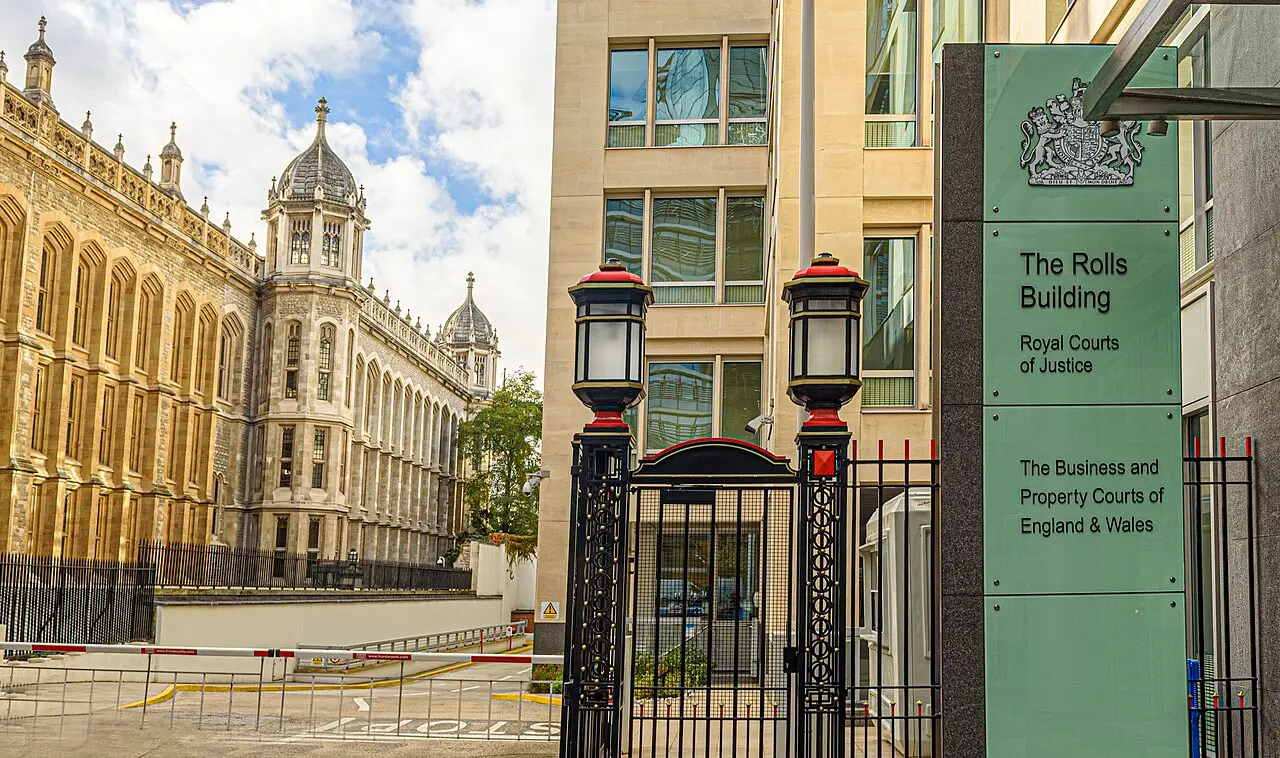
On 17 January 2023 the photo agency Getty Images announced that it had, that week, commenced proceedings in the High Court in London against Stability AI, the developer of the image generator Stable Diffusion. Getty's case was that Stability AI had copied and processed millions of images it owns or represents, together with their metadata, without a licence. The English first-instance judgment came on 4 November 2025, and Getty lost most of what remained of its case. The court held that a trained AI model whose weights neither store nor reproduce the works it learned from is not an "infringing copy" under UK copyright law.
What was claimed
Getty's business dates from 1995. In the judgment's words its collection comprises millions of high-quality photographs of world events, sport, celebrities, architecture, nature and travel, created over many years by hundreds of thousands of photographers. In its statement Getty said it had licensed content to other AI companies for training, and that Stability AI had not sought a licence. According to the judgment, Getty's letter of claim, sent on 16 January 2023, asserted that Getty content — said to be 12 million links — had been scraped from the internet and used to train AI models without consent.
Getty also sued in the United States, in the District of Delaware, on 3 February 2023. That case, which the litigation blog ChatGPT Is Eating the World described as having languished without much activity, was refiled in the Northern District of California on 14 August 2025.
A case that shrank
The English trial was heard in June 2025. Shortly before closing submissions, Getty abandoned large parts of its claim. The judgment sets out what was left.
| Claim | Outcome | Reason |
|---|---|---|
| Training and development | Abandoned | No evidence that training and development took place in the UK |
| Outputs | Abandoned | Stability had blocked the prompts behind the infringing examples, so the relief sought had substantially been achieved |
| Database right | Could not be advanced | Inherently linked to the two above |
| Secondary infringement (importing an infringing copy, etc.) | Dismissed | The model does not store or reproduce the works |
| Trade marks | Succeeded in part | Only certain watermarks generated by older models |
| Passing off | Not decided | — |
UK copyright law reaches acts done in the UK. Because the training took place outside the country, "using the photos to train without permission" could not itself be litigated in England. The cross-border way generative models are trained shaped the case.
The core holding — the weights are not an "infringing copy"
What remained on copyright was whether Stable Diffusion itself is an "infringing copy". UK law makes it a secondary infringement to import into the UK, or possess or distribute in the course of business, an "article" that is an infringing copy. Getty argued that because making the model weights involved copying its works, the weights would have infringed had they been made in the UK, and so are an infringing copy. Getty did not say that the model contains copies of the works.
Mrs Justice Joanna Smith accepted Getty's point that an "article" can be intangible — and still found for Stability. The model weights are altered during training by exposure to the works, but "by the end of that process the Model itself does not store any of those Copyright Works; the model weights are not themselves an infringing copy and they do not store an infringing copy." Getty's central submission that "as soon as it is made, the AI model is an infringing copy" was, she wrote, "entirely misconceived".
On trade marks, she found that older versions of Stable Diffusion (v1.x and v2.x) had generated images bearing watermarks resembling Getty Images' and iStock's, but it was impossible to know on what scale, and there was no evidence of a single UK user generating such watermarks with SD XL or v1.6. She summed up her findings as "both historic and extremely limited in scope".
Who gained and who lost
The judgment opens by noting that each side stressed what the case meant for the industry it represents. Getty's case was that if creative industries are exploited by innovators without regard to creators' efforts and intellectual property, the result will pose an existential threat to those industries for generations; Stability spoke for the AI industry and innovators. The judge called the balance between them a matter "of very real societal importance", while cautioning that the court could decide only the diminished case actually before it.
What stands, at least at first instance in England, is a ruling that offering in the UK a model trained abroad is not, by that alone, secondary copyright infringement. Getty was granted permission to appeal on that point; the judge found it a pure question of statutory construction "on which the minds of reasonable lawyers may differ". Stability AI was refused permission at first instance to appeal the trade mark findings.
Outside the courtroom
In December 2024 the UK government opened a consultation on AI and copyright whose preferred option was a broad exception allowing AI training, with an opt-out for rights holders. According to the law firm Stephenson Harwood, most responses — especially from the creative industries — opposed it, and in the report and impact assessment published on 18 March 2026 the government moved away from that option without proposing a specific alternative.
Getty itself moved toward AI partnerships. On 21 June 2026 it announced a multi-year display agreement with OpenAI under which its licensed content appears in ChatGPT's search and discovery features; the announcement says nothing about training. In the US case, the Northern District of California granted in part and denied in part Stability AI's motion to dismiss on 23 April 2026, and the litigation continues.
The US ruling on training with books is told in Bartz v. Anthropic, and the news publishers' fight in The New York Times v. OpenAI.
Questions this page answers
- When did Getty Images sue Stability AI?
- Getty announced in a statement of 17 January 2023 that it had commenced proceedings in the High Court in London that week; according to the judgment, the letter of claim was sent on 16 January. In the US it sued in Delaware on 3 February 2023 and refiled in the Northern District of California on 14 August 2025.
- Did Getty lose in England?
- Largely, yes. The secondary infringement claim was dismissed, and trade mark infringement was found only for certain iStock and Getty Images watermarks generated by older model versions — findings the judge called historic and extremely limited in scope. Getty had dropped its training and outputs claims during trial.
- Why wasn't the training itself decided?
- Because there was no evidence that Stable Diffusion was trained or developed in the UK, and UK copyright law reaches acts done in the UK, Getty abandoned the claim. The judgment notes that because training took place in the United States or elsewhere, the court could not conclude that it was an infringement.
- What has happened since?
- Getty was granted permission to appeal the secondary infringement ruling to the Court of Appeal; Stability AI was refused permission at first instance to appeal the trade mark findings. In the US, the Northern District of California granted in part and denied in part Stability's motion to dismiss on 23 April 2026.
Sources
The abandoned claims (training, outputs, database right); dismissal of secondary infringement (paras 600 and 758); limited trade mark findings; passing off not decided; the letter of claim of 16 January
PrimaryGetty Images Statement — Getty Images, Jan 17, 2023
Proceedings commenced in the High Court in London; Getty says it has licensed content to other AI companies for training and Stability AI sought no licence
PrimaryGetty Images (US), Inc. v. Stability AI, Inc., No. 1:23-cv-00135 (D. Del.) — CourtListener docket
Filed 3 February 2023; terminated 18 August 2025
PrimaryGetty Images (US), Inc. v. Stability AI, Ltd., No. 3:25-cv-06891 (N.D. Cal.) — CourtListener docket
Filed 14 August 2025 before Judge Trina L. Thompson; motion to dismiss granted in part and denied in part on 23 April 2026
SecondaryPermission to appeal granted in Getty Images v Stability copyright claim — The IPKat, Jan 7, 2026
Getty granted permission on secondary infringement; Stability refused on trade marks; [2025] EWHC 3343 (Ch)
The government moved away from its preferred TDM exception with opt-out and proposed no specific alternative
Last updated: