PERSON
Demis Hassabis
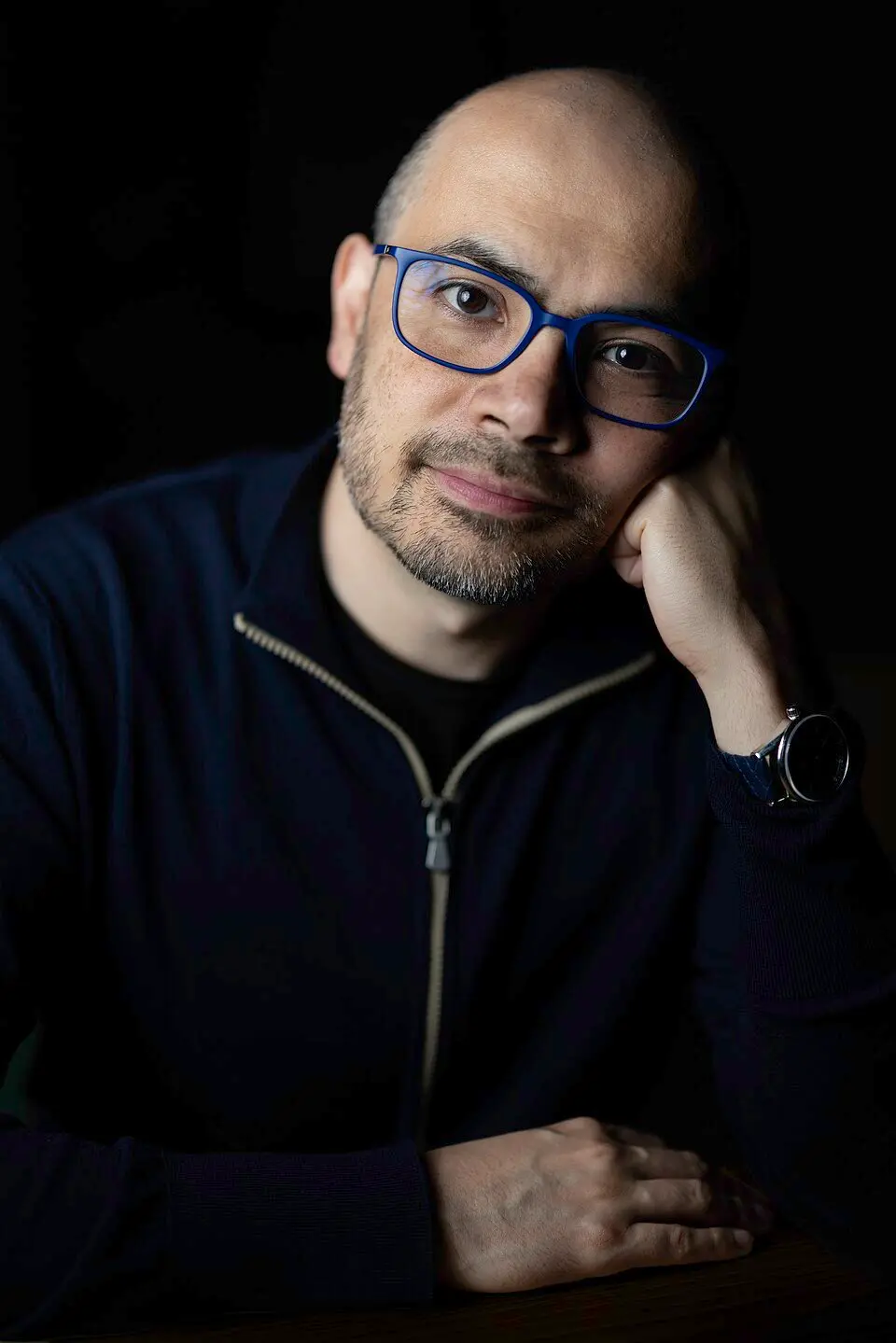
Born in London in 1976; moved from games development to a PhD in cognitive neuroscience at University College London, then co-founded DeepMind in 2010 with Shane Legg and Mustafa Suleyman. Google acquired the lab in 2014; it produced AlphaGo (2016) and AlphaFold. Knighted in March 2024 for services to artificial intelligence, and on 9 October 2024 he shared the Nobel Prize in Chemistry with David Baker and John Jumper. On 5 August 2026 he handed over as CEO of Google DeepMind to become its Chair and Chief Scientist of Alphabet.
Profile
- Born
- 1976
- Status
- Living
- Span
- 1976–
- Appearances
- 03
- Name
- ENDemis HassabisJAデミス・ハサビス
Demis Hassabis (born 27 July 1976) co-founded DeepMind and led it from its incorporation in 2010 until August 2026 — the lab that produced AlphaGo (2016) and AlphaFold. On 9 October 2024 he shared the Nobel Prize in Chemistry with John Jumper for protein structure prediction. The shape of the career is unusual: games developer, cognitive neuroscientist, founder, laureate — with each stage functioning as equipment for the next.
Background — chess, games, neuroscience
Hassabis was born in London. He was a chess prodigy and an early programmer. The official biography published by Isomorphic Labs, the company he now leads, records that he "designed and programmed the award-winning game Theme Park at the age of 17". He then graduated from Cambridge, ran his own games company, and took a PhD in cognitive neuroscience at University College London.
The order matters. Somebody who had passed through game AI as entertainment and then cognitive neuroscience as a discipline went on to restate "what is intelligence" as an engineering problem. DeepMind's founding premise, general intelligence informed by neuroscience, was not an accident of marketing.
Founding DeepMind (2010)
The UK register records DeepMind Technologies Limited, company number 07386350, as incorporated on 23 September 2010 — and carrying, until 15 November that year, an entirely different name: FRIARS 2022 LIMITED. It was an off-the-shelf shell company, renamed once the founders were ready, which is an ordinary way to start in Britain and a slightly deflating origin for one of the most consequential labs of the century. The co-founders were Shane Legg and Mustafa Suleyman. Google acquired the company in 2014, and in April 2023 it was merged with Google Brain to form Google DeepMind.
The lab's own trajectory — DQN, AlphaGo, AlphaZero, AlphaFold, Gemini — is set out in the DeepMind entry. What follows here is only Hassabis's position within it.
Knighthood (March 2024)
British honours are not confined to the annual lists, and this one was not a New Year honour. Hassabis's knighthood appears in a Knights Bachelor notice published in The London Gazette on 19 April 2024: "Demis HASSABIS, C.B.E., F.R.S., FREng., CEO and Co-Founder, DeepMind. For services to Artificial Intelligence." The notice is dated 28 March 2024. He had received a CBE in 2018 for services to science and technology, and is a Fellow of both the Royal Society and the Royal Academy of Engineering.
The Nobel Prize in Chemistry (9 October 2024)
That both the physics and the chemistry prizes went to AI work in one week is covered in the 2024 entry. The prize that concerns Hassabis is the Chemistry one, announced on 9 October — a different prize on a different day from the Physics prize announced on the 8th to Hopfield and Hinton.
One half of the Chemistry prize went to David Baker "for computational protein design"; the other half jointly to Demis Hassabis and John Jumper of Google DeepMind "for protein structure prediction". Hassabis's prize share is one quarter, and his affiliation at the time of the award is recorded as Google DeepMind, London. The Nobel Foundation's own summary attributes the achievement to a single artefact: "In 2020, Demis Hassabis and John Jumper presented an AI model called AlphaFold2."
Isomorphic Labs and the 2026 change of role
In 2021 the drug-discovery line of AlphaFold was spun out of DeepMind as Isomorphic Labs, with Hassabis as founder and CEO alongside his DeepMind role.
On 5 August 2026 an internal message published jointly by Sundar Pichai and Hassabis announced that he was handing over the day-to-day running of Google DeepMind. His new titles are Chair of Google DeepMind and Chief Scientist of Alphabet, and he continues to lead Isomorphic Labs. His successor is Koray Kavukcuoglu, the lab's CTO and Google's Chief AI Architect, who takes the role not as CEO but as SVP of Google DeepMind, overseeing Gemini model development, frontier research, and the Gemini app and developer teams. Hassabis's own account: "I've been working towards AGI my whole life and now, like many of you, I feel it is close at hand." And: "I've decided that now is the right time for me to hand over my day-to-day operational responsibilities at GDM, so that I have the time and space to focus on the big picture and help influence what is to come to the best of my ability."
Legacy
Hassabis's contribution is less any particular algorithm than a way of choosing problems. Go and protein folding share a profile: an enormous search space, cheap verification of a candidate answer, and a long history of human intuition holding the advantage. Aiming deep reinforcement learning at exactly that profile, and winning, is what created the genre now called AI for Science.
All of it also happened inside a commercial parent. The disputes over what gets released and when, the fate of the ethics commitments reported at the time of the acquisition, the loosening of military-use policy — these belong, as the DeepMind entry sets out, to the shape of the lab itself. The present arrangement, in which a Nobel laureate is simultaneously Chief Scientist of Alphabet, folds that tension into a single job title.
Appearances
Sources
TertiaryDemis Hassabis — Wikipedia
Last updated: