T1#consumer#launch#market
The Segway — From the 'Ginger' Frenzy to the End of Production
Metadata
- Date
- Decade
- 2000s
- Tier
- T1
- Sources
- 10
- Connections
- 00
- Tags
- #consumer#launch#market
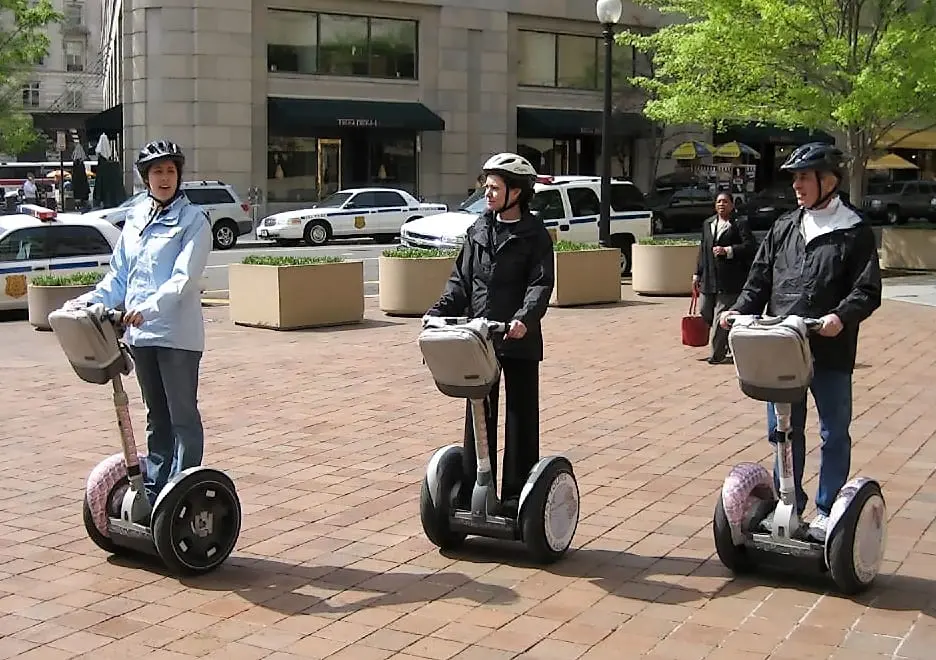
The Segway is a vehicle you stand on between two wheels, going, stopping and turning just by shifting your weight. The inventor Dean Kamen unveiled it on 3 December 2001, riding it through New York's Bryant Park on ABC's morning programme Good Morning America, as the Segway Human Transporter (later the Segway PT). For most of the year before, the machine had been discussed only under the code names Ginger and IT, attracting outsized expectations while nobody knew what it was. It never sold in the numbers expected, and US production ended on 15 July 2020.
| Date | Event |
|---|---|
| 1999 | Kamen founds the company that would become Segway |
| January 2001 | A book proposal about the project leaks to Inside.com; speculation about Ginger and IT spreads |
| February 2001 | Ground broken on the factory and headquarters in Bedford, New Hampshire |
| 3 December 2001 | Unveiled on Good Morning America |
| November 2002 | Goes on sale to the public through Amazon.com |
| August 2006 | Second-generation i2 and x2 introduced |
| December 2009 | Bought by the British entrepreneur James Heselden |
| February 2013 | Bought by Summit Strategic Investments |
| April 2015 | Combined with China's Ninebot |
| 15 July 2020 | Production of the Segway PT in Bedford ends |
"Ginger": a frenzy without an object
According to TIME (dated 2 December 2001), it began in January 2001, when a book proposal about Kamen's invention leaked to the news site Inside.com. Without saying what the machine was, the proposal quoted assessments from Silicon Valley's most powerful figures. TIME summarised them this way: Steve Jobs said it was as big a deal as the PC, and the investor John Doerr said it might be bigger than the internet. The press filled with guesses: a hydrogen-powered hovercraft, an antigravity device.
The name Ginger had a story. Kamen's R&D company, DEKA, had built the IBOT, a wheelchair that climbs stairs. According to TIME, the team nicknamed the IBOT Fred Upstairs, after Fred Astaire, for the way it danced up steps, and its smaller partner became Ginger. The Segway grew out of the idea of taking the IBOT's machine-does-the-balancing technology into a vehicle for everyone.
The unveiling: Bryant Park, 3 December 2001
According to the Associated Press, on the morning of Monday 3 December Kamen and the programme's hosts rode the machine around Manhattan's Bryant Park and up and down ramps. A spokesman said it went up to 12 mph and covered 15 miles on a charge over level ground. The first buyers would be the US Postal Service and the City of Atlanta, paying $8,000 each for heavy-duty models. A 65-pound consumer model at $3,000 would not be available for at least a year.
TIME, which had followed Kamen for three months, described the mechanism and the ambition. Gyroscopes, an accelerometer and ten microprocessors read the rider's shifts in balance; there were no brakes, no engine, no throttle and no steering wheel. Development had cost more than $100 million, and a 77,000 sq ft factory near the Manchester headquarters was to be capable of 40,000 machines a month by the end of the following year. Doerr predicted it would be the fastest company in history to reach $1 billion in sales. Kamen's own words were that the Segway "will be to the car what the car was to the horse and buggy" (TIME). He imagined city centres cleared of cars, with pedestrians moving about on Segways.
Why it did not sell, according to those who counted
Public sales began through Amazon.com in November 2002 (Segway's company history), but volumes stayed small. English Wikipedia says the launch target was 40,000 units a year, with 50,000 to 100,000 expected in the first 13 months, against 6,000 sold by 2003 and about 23,500 by September 2006 (figures from Wikipedia only). Asked by TIME in August 2006, CEO James Norrod would say only that Segway had sold tens of thousands and that sales were growing 50% a year. A 2009 tally by 24/7 Wall St., published by TIME, put sales from 2001 to the end of 2007 at 30,000 units.
The same tally gave two main reasons. The price, well above $3,000 for most models and $7,000 for some, was too high for a mass market. And some countries classified the Segway as a road vehicle requiring a licence, while others barred it from roads altogether. In the US, TIME reported in 2006, 44 states allowed it on sidewalks, yet it did not catch on with consumers, and sales leaned towards security and police users. In August 2006 the company tried again with the second-generation i2 at $4,995 and the off-road x2.
Changing hands, and on to Ninebot
According to Segway's history, the company was sold to the British entrepreneur James Heselden in December 2009 and to Summit Strategic Investments in February 2013. In 2014 Segway and Kamen's DEKA complained to the US International Trade Commission that Chinese companies, Ninebot among them, were infringing its patents. Then on 15 April 2015 Beijing-based Ninebot announced that it was buying Segway, for an undisclosed sum. Ninebot said it had raised $80 million from Xiaomi, Sequoia Capital and Shunwei, and TechCrunch reported that the two brands would remain separate after the deal closed. Segway ended up owned by the company it had been fighting.
End of production: 15 July 2020
In June 2020 Fast Company reported the end of Segway PT production. As relayed by New Atlas, the last PTs would leave the line on 15 July, 21 people would lose their jobs and 12 would stay on for warranties and repairs. About 140,000 units had been sold in total, and by the end the PT accounted for only about 1.5% of the parent company's revenue. According to Segway's New Zealand distributor, what ended was US production in Bedford, which had built about 140,000 PTs since 2002; the three-wheeled SE-3 Patroller for security work and the PT-based RMP robotics platform ended too. The distributor said it had sourced its PTs since 2018 from parent company Segway-Ninebot's production line in China, and that this would continue.
Where it fits
As engineering, the Segway lived up to the praise it got at launch. The plan to redesign cities stopped short at price, law and how riders looked to everyone else. What tends to be remembered is less the invention itself than the way expectations swelled while its identity was kept secret. The name lives on under Ninebot as a brand for electric scooters and other vehicles. For hardware of the same era, see the hardware timeline.
Questions this page answers
- When was the Segway unveiled?
- On Monday 3 December 2001, when the inventor Dean Kamen rode it through New York's Bryant Park with the hosts of ABC's Good Morning America. It went on sale to the public through Amazon.com in November 2002.
- What were 'Ginger' and 'IT'?
- The code names of the Segway before it was unveiled. A book proposal about the project leaked to Inside.com in January 2001, spreading lavish praise without saying what the device was. According to TIME, Ginger came from Kamen's stair-climbing IBOT wheelchair, nicknamed Fred Upstairs after Fred Astaire; its smaller partner became Ginger.
- How many Segways were sold?
- 24/7 Wall St. put sales from 2001 to the end of 2007 at 30,000 units, and when the end of production was reported in 2020 the total was roughly 140,000. At launch TIME reported a factory meant to turn out 40,000 a month, so the gap with expectations was wide.
- When did Segway production end?
- US production of the Segway PT at Bedford, New Hampshire ended on 15 July 2020. Segway's New Zealand distributor said supply for the Asia-Pacific region would continue from parent company Segway-Ninebot's production line in China.
Sources
SecondaryReinventing the Wheel — John Heilemann, TIME, Dec 2, 2001
The January leak and the speculation, the origin of the code name Ginger, development cost of more than $100 million, about $8,000 for institutions and an expected $3,000 consumer model, the 77,000 sq ft factory and 40,000 a month, Doerr's sales prediction, Kamen's statement
SecondaryMuch-hyped invention's a scooter — The Associated Press via HeraldNet, Dec 3, 2001
The Monday-morning unveiling in Bryant Park on Good Morning America, the name Segway Human Transporter, 12 mph, 15 miles per charge, the Postal Service and Atlanta as first buyers at $8,000 each
PrimaryAbout Us — Segway (company history)
Founding in 1999, ground-breaking at Bedford in February 2001, the December unveiling, public sale through Amazon.com in November 2002, the second generation in August 2006, the sales of December 2009 and February 2013, the April 2015 combination with Ninebot
SecondaryThe Segway Riddle — TIME, Aug 14, 2006
The CEO saying only that Segway had sold tens of thousands; use by security agencies; the new $4,995 model; Kamen's revised outlook
SecondarySegway — The 10 Biggest Tech Failures of the Last Decade — TIME (from 24/7 Wall St.), May 14, 2009
30,000 units sold from 2001 to the end of 2007; the price and legal-status problems in various countries
Undisclosed price, $80 million raised, the previous year's patent complaint at the US International Trade Commission
SecondaryThe classic Segway personal transporter will cease production in July — New Atlas, Jun 24, 2020
Relays Fast Company's report: production ending 15 July, 21 jobs lost and 12 kept for service, about 140,000 units in total, about 1.5% of the parent's revenue
SecondaryUS Production of PT Ending — Segway New Zealand
Distributor notice: US production ends 15 July 2020, about 140,000 units since 2002, SE-3 and RMP also ended, Asia-Pacific supply continues from the line in China
TertiarySegway Inc. — Wikipedia
Sales targets at launch, and units sold by 2003 and 2006
Last updated: