T1#consumer
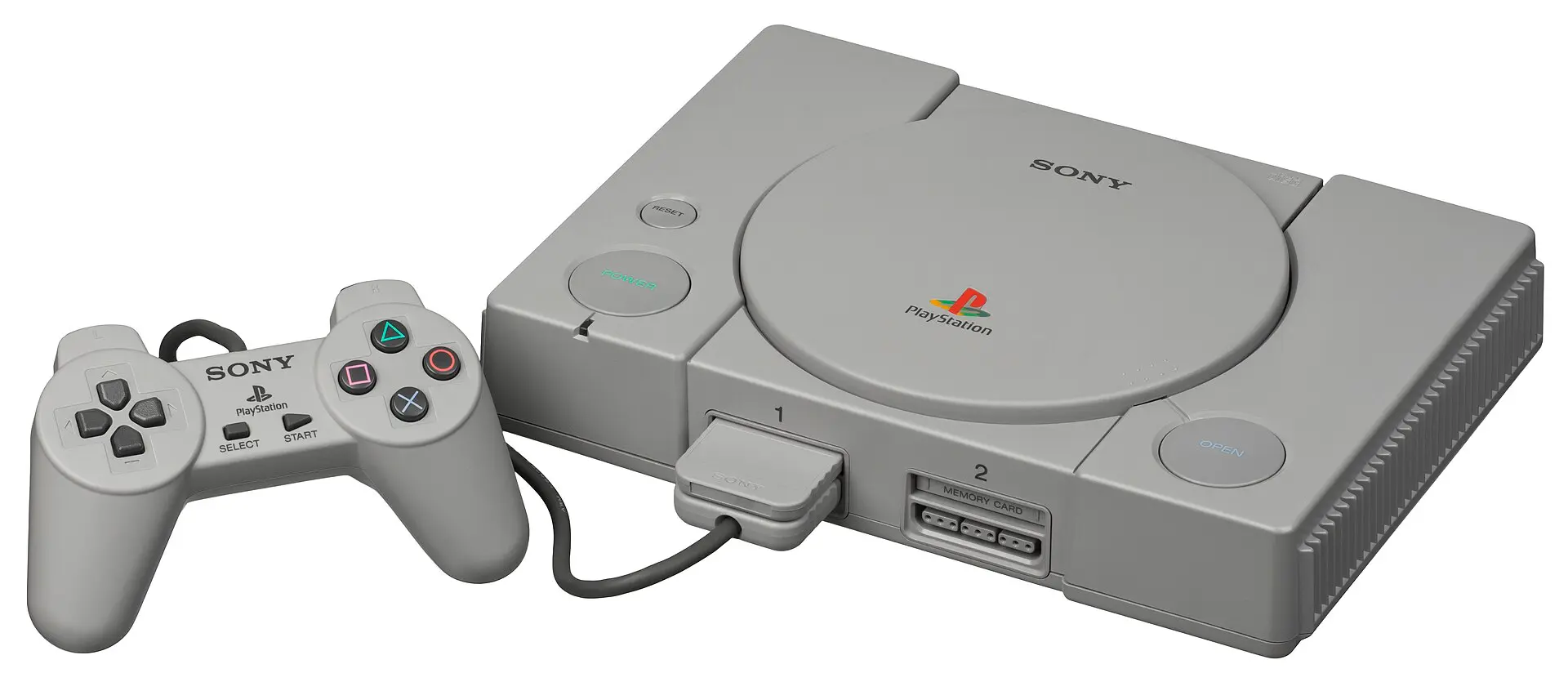
The Original PlayStation Released in Japan
Metadata
- Date
- Decade
- 1990s
- Tier
- T1
- Sources
- 07
- Connections
- 00
- Tags
- #consumer
In North America the original PlayStation went on sale on 9 September 1995, priced at US$299. Japan had already had it for nine months—it launched there on 3 December 1994 at ¥39,800—and Europe followed twenty days after North America, on 29 September 1995. Depending on where you bought one, "the year the PlayStation came out" is either 1994 or 1995.
| Region | Release date | Price | Source |
|---|---|---|---|
| Japan | 3 December 1994 | ¥39,800 | SIE "PlayStation History"; English Wikipedia (price) |
| North America | 9 September 1995 | US$299 | SIE "PlayStation History"; heise online (price) |
| Europe | 29 September 1995 | — | SIE "PlayStation History" |
It began as a plan with Nintendo
Sony's route into consoles runs through Nintendo. Sony had been working with Nintendo on a device that would add CD-ROM to the Super Famicom, sold in North America as the SNES. According to English Wikipedia, Sony announced the partnership and its "Play Station" on the first day of CES in 1991; the next morning, Nintendo took the stage to reveal that it was allied with Philips instead. Norio Ohga and Ken Kutaragi then decided that Sony would build a console of its own.
The company to do it came together in November 1993, when Sony and Sony Music Entertainment (Japan) set up Sony Computer Entertainment as a joint venture, according to SIE's corporate timeline. The console went on sale about a year later.
The 1994 race for the next generation
The PlayStation was not the first machine of the 32-bit generation. The 3DO had launched in North America in October 1993 and in Japan in March 1994. Sega's Saturn reached Japanese stores on 22 November 1994, eleven days before the PlayStation. Two CD-ROM-based 32-bit consoles therefore arrived in Japan within a fortnight, just ahead of the year-end shopping season.
The Saturn cost ¥44,800 and the PlayStation ¥39,800, so Sony's machine was ¥5,000 cheaper. Even so, the Saturn started stronger: according to English Wikipedia, it had sold half a million units in Japan by the end of 1994 against 300,000 for the PlayStation. The same article explains that the PlayStation gradually overtook it during 1995, helped by stronger third-party support and a more efficient ordering system. On its launch date, in other words, the PlayStation was not yet winning in Japan.
What set the PlayStation apart was the scale that followed. SIE's corporate timeline records these worldwide shipment milestones:
| Date | Cumulative worldwide shipments |
|---|---|
| December 1996 | 10 million |
| August 1997 | 20 million |
| 12 December 1998 | 50 million |
| December 1999 | 70 million |
Inside: an R3000 and a CD drive
SIE's official history lists a 32-bit R3000 CPU, 16.7 million colours and up to 360,000 polygons per second. English Wikipedia adds a clock speed of 33.8688 MHz, with 2 MB of main RAM and 1 MB of video RAM.
The decisive choice was the software medium. English Wikipedia explains that Nintendo's cartridges were expensive to manufacture, with Nintendo controlling production and prioritising its own games, whereas compact discs could be pressed cheaply at dozens of plants around the world—and it counts the CD-ROM format among the reasons developers were drawn to the PlayStation. Nintendo, for its part, stayed with cartridges on its next console, the Nintendo 64, and the two companies' paths split on exactly this point.
North America was settled by one word
The North American price was announced on 11 May 1995, on the first day of E3 in Los Angeles. According to a retrospective in heise online, Sega had unveiled the Saturn at US$399 only hours earlier; Sony's presenter walked up, said a single number—"299"—and left the stage. The same press event announced a launch on 9 September 1995 in more than 12,000 stores. According to English Wikipedia, Sega used the same E3 to reveal that it had already shipped 30,000 Saturns to major retailers for immediate sale, so in North America the Saturn reached stores four months ahead of the PlayStation.
In Japan the two machines reached stores eleven days apart. In North America the Saturn was on sale first, and the PlayStation waited for its launch day with a price US$100 lower already announced four months earlier. The gap from the Japanese launch to the North American one was 280 days; to Europe, 300 days.
102 million, and what followed
SIE's official history says the original PlayStation sold more than 102 million consoles worldwide between 1994 and 2006. English Wikipedia gives 23 March 2006 as the end of production and 102.49 million as the lifetime total. Along the way, the smaller PS one launched in Japan in July 2000 and in the UK and North America in September 2000; PlayStation 2 had already launched in Japan in March 2000. The original model therefore stayed in production for six years alongside its successor.
Sony's consoles kept coming, generation after generation, up to the PlayStation 5 in 2020—twenty-six years after the Japanese launch of the first one.
Questions this page answers
- When was the original PlayStation released?
- In North America it launched on 9 September 1995 at US$299. Japan had it first, on 3 December 1994 at ¥39,800, and Europe followed on 29 September 1995.
- Was the PlayStation the first 32-bit console?
- No. The 3DO came earlier, and Sega's Saturn reached Japan eleven days before it, on 22 November 1994. The PlayStation was the machine that took the format to scale, passing 102 million consoles between 1994 and 2006.
- How was the PlayStation connected to Nintendo?
- Sony had originally been planning a CD-ROM device for Nintendo's Super NES. At CES in 1991, the day after Sony announced it, Nintendo revealed a partnership with Philips instead, and Sony went on to build its own console.
Sources
PrimaryPlayStation 1994 — PlayStation History timeline (Sony Interactive Entertainment official)
Japanese, North American and European launch dates; R3000 CPU; 360,000 polygons per second; over 102 million units 1994–2006
PrimaryExpanded Company Timeline — Sony Interactive Entertainment
SCE's founding and shipment milestones
Secondary30 years of "299" - how Sony turned the console market upside down — heise online, May 11, 2025
The North American price announcement at E3 on 11 May 1995
Secondaryセガサターンが発売された日 ── ファミ通.com、2020年11月22日
Sega Saturn's Japanese release date, 22 November 1994
TertiarySega Saturn — Wikipedia
Last updated: