ORGANIZATION
Toshiba Corporation
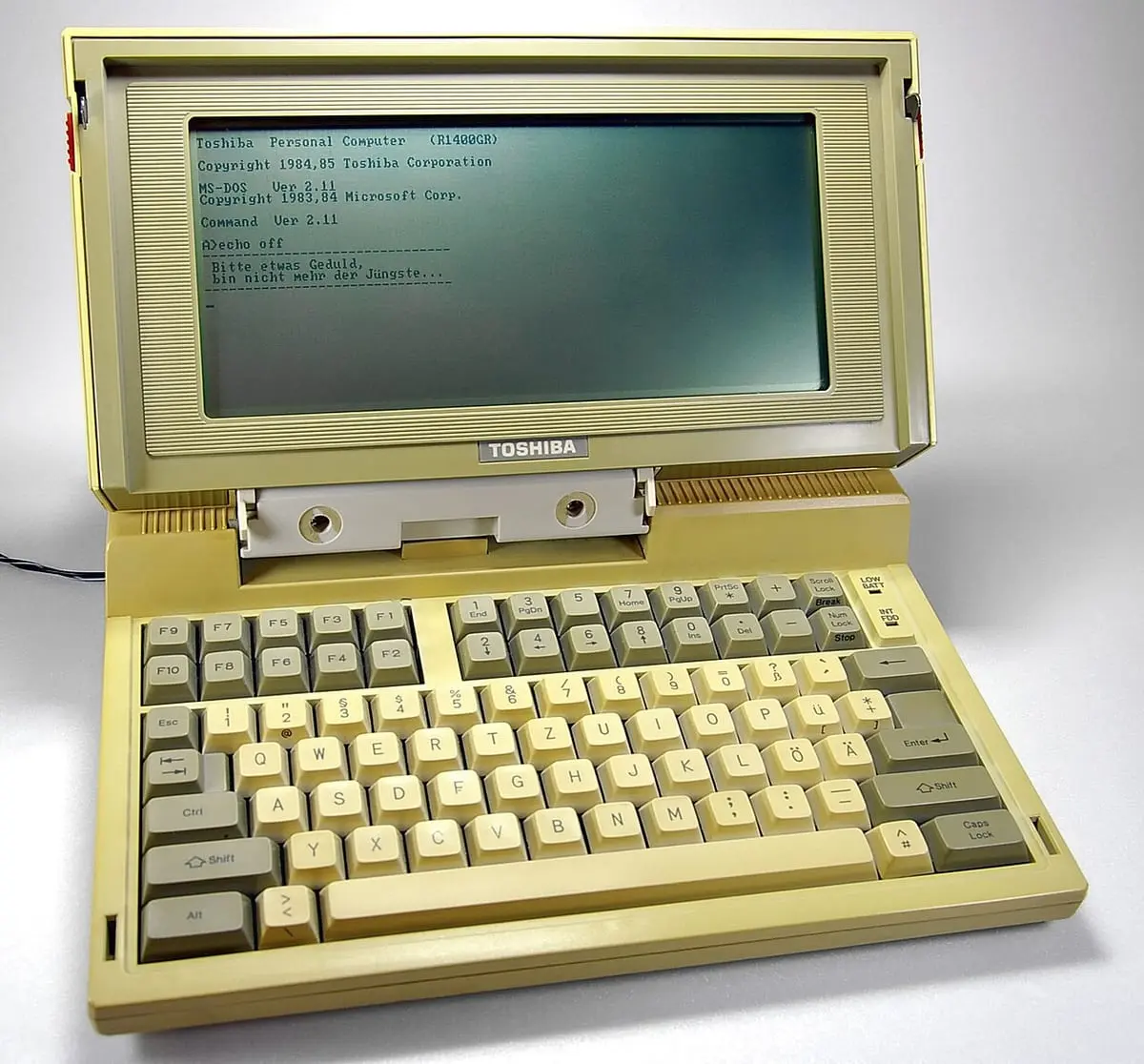
Toshiba traces its roots to a telegraph-equipment factory Hisashige Tanaka opened in Tokyo in 1875 and to Hakunetsu-sha, founded in 1890 by Ichisuke Fujioka and a partner; their successors merged in 1939 to form Tokyo Shibaura Electric, which took the name Toshiba in 1984. Its engineer Fujio Masuoka and colleagues presented flash memory and the NAND cell at a conference, and in 1985 it exhibited the T1100 laptop for Western markets. Inappropriate accounting came to light in 2015 and the Financial Services Agency ordered a ¥7.3735 billion administrative penalty; Westinghouse, bought in 2006, filed for Chapter 11 in 2017. After selling its medical, home-appliance, memory, PC and TV businesses, Toshiba was delisted in December 2023 following a takeover by TBJH, a company indirectly owned by Japan Industrial Partners. Net sales for the year ended March 2026 were ¥3,709.1 billion.
Organization
- Founded
- 1875
- Status
- Active
- Active
- 1875–
- Appearances
- 03
- Name
- ENToshiba CorporationJA東芝
Toshiba Corporation has two roots. According to its corporate history, one is the telegraph-equipment factory Hisashige Tanaka started in Shimbashi, Tokyo, in 1875, which became Tanaka Engineering Works in 1882 and Shibaura Engineering Works in 1893. The other is Hakunetsu-sha, a light-bulb maker founded in 1890 by Ichisuke Fujioka and Shoichi Miyoshi, which was renamed Tokyo Electric in 1899. Both belonged to the Mitsui group, and they merged in 1939 to form Tokyo Shibaura Electric. Its English name became Toshiba Corporation in 1983, and its official Japanese name became Toshiba in 1984.
The "firsts" Toshiba made
Line up the Toshiba technologies and products that overlap with entries on this site and two themes stand out: storage and portable computers.
| Year | Technology or product | What the sources say |
|---|---|---|
| 1984 | Flash memory | Fujio Masuoka and colleagues present a flash E2PROM cell at the International Electron Devices Meeting (IEDM) in December. The Semiconductor History Museum of Japan calls this the first announcement of flash memory |
| 1985 | T1100 laptop | An IBM PC-compatible 16-bit machine, not sold in Japan and exhibited for Western markets at the Hannover Messe (Information Processing Society of Japan). Toshiba's chronology calls it the world's first laptop |
| 1987 | NAND flash | Masuoka, M. Momodomi, Y. Iwata and R. Shirota present a NAND-structure cell at IEDM |
| 1989 | DynaBook J-3100SS notebook | A4 file size, 2.7 kg (Information Processing Society of Japan) |
| 1996 | DVD | Toshiba's chronology lists the development and standardisation of the high-density DVD disc, and the commercialisation of DVD players in Japan |
| 2006 | HD DVD | Toshiba's chronology lists the world's first HD DVD players and recorders; the format contest with Blu-ray is left to that entry |
The memory business was later split off as Toshiba Memory and, as shown below, sold in 2018. Before the sale, Toshiba's interests in the three flash-memory manufacturing joint ventures it had set up with SanDisk were transferred to Toshiba Memory.
2015 to 2023: accounting, nuclear power, going private
Toshiba's own chronology says the exposure of inappropriate accounting in 2015, followed by massive losses in the overseas nuclear business, plunged it into the most serious crisis since its founding.
- Accounting: On 25 December 2015 the Financial Services Agency ordered Toshiba to pay an administrative monetary penalty of ¥7,373.5 million, finding material false statements in, among others, its annual securities reports for the years ended March 2012 and March 2013. The FSA's decision also finds, for example, that Toshiba issued bonds by reference to a report that showed a consolidated net loss of ¥19.7 billion for the year ended March 2010 when the loss was ¥53.9 billion.
- Nuclear power: In February 2006 Toshiba agreed to buy Westinghouse from British Nuclear Fuels (BNFL) for US$5.4 billion (about ¥621 billion), completing the purchase in October that year. On 29 March 2017 Westinghouse and its group filed for Chapter 11 of the US Bankruptcy Code. According to Toshiba, total debt at the end of December 2016 was US$9,811 million, of which US$1,287 million was owed to the Toshiba group.
- Business sales: According to the chronology, Toshiba sold its medical equipment business (Toshiba Medical Systems, now Canon Medical Systems), home appliances (to Midea of China) and TVs (to the Hisense group of China) during this period. It completed the sale of its memory business, Toshiba Memory (now Kioxia), on 1 June 2018, and on 1 October 2018 it transferred 80.1% of its PC business, Toshiba Client Solutions (now Dynabook), to Sharp.
- Going private: TBJH, a company indirectly wholly owned by Japan Industrial Partners (JIP), ran a tender offer from 8 August to 20 September 2023 at ¥4,620 a share and received tenders equal to 78.65% of voting rights. After a share consolidation, Toshiba's shares were delisted from the Prime Market of the Tokyo Stock Exchange and the Premier Market of the Nagoya Stock Exchange on 20 December 2023.
Key events
- 1875: Hisashige Tanaka opens a telegraph-equipment factory in Tokyo.
- 1890: Ichisuke Fujioka and a partner found Hakunetsu-sha.
- 1939: Shibaura Engineering Works and Tokyo Electric merge to form Tokyo Shibaura Electric.
- 1984: The official name becomes Toshiba; a flash memory cell is presented at IEDM.
- 1985: The T1100 laptop is exhibited at the Hannover Messe.
- 1987: A NAND-structure cell is presented at IEDM.
- October 2006: The Westinghouse acquisition is completed.
- December 2015: The FSA orders a ¥7,373.5 million penalty.
- March 2017: Westinghouse files for Chapter 11.
- 2018: The memory business (June) and PC business (October) are sold.
- 20 December 2023: Delisted.
Key figures
Year ended March 2026 (April 2025 to March 2026), US GAAP, unaudited, from the results materials of 15 May 2026.
- Net sales: ¥3,709.1 billion (prior year ¥3,513.9 billion, +5.6%)
- Operating income: ¥300.8 billion (prior year ¥198.5 billion) / return on sales 8.1% (which the company describes as its highest ever)
- Non-operating income: ¥2,412.9 billion (of which ¥2,277.0 billion related to Kioxia)
- Net income: ¥1,967.3 billion (prior year ¥279.0 billion)
According to the results materials, the growth in sales and operating income came from energy, including transmission and distribution; hard disk drives, on demand from data centres; and infrastructure businesses including defence, railways and social systems.
The shape of the numbers reflects the company's last twenty years. Against operating income of ¥300.8 billion, net income was more than six times as large at ¥1,967.3 billion, and most of the difference came from Kioxia shares, the memory business sold in 2018. At that sale Toshiba reinvested in the buyer, Pangea, and held about 40.2% of its voting rights. The company that gave rise to flash memory let go of the business and still profited heavily, as a shareholder, from the rise in its value. Toshiba also says in the materials that the loans taken out at privatisation were refinanced on more favourable terms at the end of March 2026.
Appearances
Questions this page answers
- When was Toshiba founded?
- It has two roots: a telegraph-equipment factory Hisashige Tanaka opened in Tokyo in 1875 (later Shibaura Engineering Works) and Hakunetsu-sha, founded in 1890 by Ichisuke Fujioka and Shoichi Miyoshi (later Tokyo Electric). The two merged in 1939 to form Tokyo Shibaura Electric, whose official name became Toshiba in 1984.
- Did Toshiba invent flash memory?
- Fujio Masuoka and colleagues at Toshiba presented a flash E2PROM cell at the 1984 International Electron Devices Meeting (IEDM) and a NAND-structure cell at the 1987 meeting. The Semiconductor History Museum of Japan credits Masuoka's December 1984 presentation as the first announcement of flash memory.
- Why did Toshiba delist?
- TBJH, a company indirectly wholly owned by Japan Industrial Partners (JIP), ran a tender offer from 8 August to 20 September 2023 at ¥4,620 a share and received tenders equal to 78.65% of voting rights. After a subsequent share consolidation, Toshiba's shares were delisted from the Tokyo and Nagoya stock exchanges on 20 December 2023.
- How large is Toshiba's business today?
- For the year ended March 2026 (April 2025 to March 2026, US GAAP, unaudited), net sales were ¥3,709.1 billion, operating income ¥300.8 billion and net income ¥1,967.3 billion. Net income includes gains from the sale and valuation of Kioxia shares.
Sources
PrimaryHistory / Chronology of History — Toshiba
Hisashige Tanaka's 1875 factory and the 1890 Hakunetsu-sha, the 1939 merger, the English (1983) and Japanese (1984) company names, laptops, DVD, HD DVD, Westinghouse, the 2015 accounting problems and business sales, delisting
Primary株式会社東芝に係る有価証券報告書等の虚偽記載に対する課徴金納付命令の決定について — 金融庁、平成27年12月25日
Order to pay an administrative monetary penalty of ¥7,373.5 million for false statements in the annual securities reports for the years ended March 2012 and March 2013, and for bond offerings that referred to false reports
PrimaryTOSHIBA ACQUIRES WESTINGHOUSE FROM BNFL — Toshiba, February 6, 2006
Acquisition valued at US$5.4 billion (about ¥621 billion)
The Westinghouse group's Chapter 11 filing; total debt of US$9,811 million at 31 December 2016
80.1% of the PC business company transferred to Sharp
TBJH is a 100% indirect subsidiary of Japan Industrial Partners
Tender offer from 8 August to 20 September 2023 at ¥4,620 a share; tenders equal to 78.65% of voting rights
PrimaryFY2025 Consolidated Business Results — Toshiba Corporation, May 15, 2026
Net sales, operating income and net income (US GAAP, unaudited); gains from the sale and valuation of Kioxia shares
SecondaryFlash memory released (Toshiba), 1984 — Semiconductor History Museum of Japan
The first announcement of flash memory was made by Fujio Masuoka at IEDM in December 1984
Secondary【東芝】 T-1100 — 情報処理学会 コンピュータ博物館(Wayback Machine 保存版)
An IBM PC-compatible 16-bit portable; not sold in Japan, exhibited for Western markets at the Hannover Messe in 1985
Secondary【東芝】 DynaBook J-3100SS — 情報処理学会 コンピュータ博物館(Wayback Machine 保存版)
Launched in 1989; A4 file size; 2.7 kg
TertiaryToshiba — Wikipedia
Last updated: