T1#standard#consumer#storage#market
Blu-ray Disc — The Blue-Laser Disc That Won the HD DVD War
Metadata
- Date
- Decade
- 2000s
- Tier
- T1
- Sources
- 13
- Connections
- 00
- Tags
- #standard#consumer#storage#market
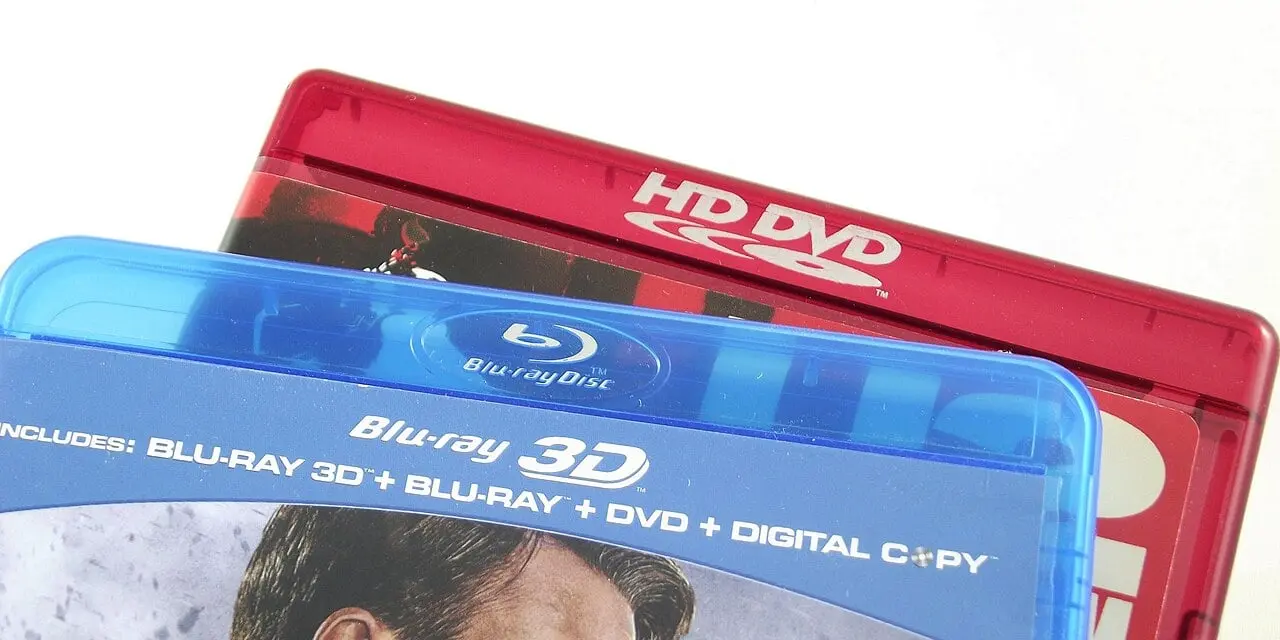
Blu-ray Disc (BD) is an optical disc read and written with a 405 nm blue-violet laser, the same 12 cm size as the CD and the DVD. Nine companies announced its basic specifications in February 2002, and in Japan Sony released the first BD recorder in April 2003. Movies and playback-only players arrived together in June 2006 in the United States. Unlike DVD, Blu-ray had to fight a format war with HD DVD, backed by Toshiba and others, after launch, and the war did not end until February 2008.
| Date | Event |
|---|---|
| 19 February 2002 | Nine companies announce Blu-ray Disc's basic specifications |
| 10 April 2003 | Sony releases the BDZ-S77 BD recorder in Japan |
| March 2006 | Toshiba releases an HD DVD player in Japan |
| June 2006 | Samsung's BD-P1000 and the first movie titles arrive in the US |
| November 2006 | PlayStation 3, which plays Blu-ray, goes on sale |
| 4 January 2008 | Warner Bros. commits to Blu-ray alone |
| 19 February 2008 | Toshiba announces the end of its HD DVD business |
| May 2015 | The Ultra HD Blu-ray (4K) specification is completed |
| February 2025 | Sony stops making recordable BD media |
Nine companies, 2002
According to the joint announcement of 19 February 2002, published by Hitachi, nine companies (Hitachi, LG Electronics, Matsushita Electric Industrial, Pioneer, Philips, Samsung Electronics, Sharp, Sony and Thomson) had jointly established the basic specifications of a next-generation, large-capacity optical disc video recording format called Blu-ray Disc.
| Item | Value in the 2002 announcement |
|---|---|
| Laser wavelength | 405 nm (blue-violet) |
| Numerical aperture (NA) of the lens | 0.85 |
| Light-transmitting cover layer | 0.1 mm |
| Track pitch | 0.32 µm, almost half that of DVD |
| Capacity | Up to 27 GB on a single-sided, single-layer disc |
| Video recording | MPEG-2 Transport Stream |
The design records more densely than DVD by shrinking the laser spot with a shorter wavelength and using a thin cover layer to reduce aberration from disc tilt. The announcement promised more than two hours of digital high-definition broadcasts and set a goal of over 50 GB on a dual-layer disc. According to English Wikipedia, the group renamed itself the Blu-ray Disc Association (BDA) on 4 October 2004.
Japan first, with a recorder, 2003
The first product was a Japanese recorder. Sony's announcement of 3 March 2003 said the BDZ-S77, a BD recorder with a built-in BS digital tuner, would go on sale on 10 April at a suggested retail price of 450,000 yen before tax. Its single-layer 23 GB disc could record about two hours of BS digital high-definition broadcasting. Sony called it the world's first Blu-ray Disc recorder with a built-in BS digital tuner.
A playback format and players for selling movies came three years later.
The war with HD DVD
The DVD format war had ended in a merger in 1995, before launch, but the blue-laser generation went differently. According to IEEE Spectrum, Toshiba pushed a separate format, HD DVD, which won the backing of Microsoft and Intel. There were attempts to unify as late as 2005, but neither side gave way.
HD DVD reached stores first. IEEE Spectrum says Toshiba released an HD DVD player in Japan in March 2006 at a little over $900 and brought two models to the US the following month at $799 and $499. On the Blu-ray side, Samsung's BD-P1000 became the first player on the market in June 2006, after slipping from May, at an initial price of $1,000. According to English Wikipedia, the first Blu-ray movie titles were released on 20 June 2006.
| Blu-ray Disc | HD DVD | |
|---|---|---|
| Main backers | Sony, Matsushita, Philips, Samsung and others | Toshiba (supported by Microsoft and Intel) |
| First player | June 2006, Samsung BD-P1000 in the US | March 2006, Toshiba in Japan |
| Game consoles | PlayStation 3 plays Blu-ray | Microsoft released an HD DVD player for use with its Xbox |
Based on IEEE Spectrum and the PS3 article.
In November 2006 Sony Computer Entertainment's PlayStation 3 went on sale in Japan and North America. It played Blu-ray discs, and in Europe a delay in mass-producing its blue-violet laser diode pushed the launch to March 2007. English Wikipedia says PS3 helped support Blu-ray, alongside a larger Sony marketing campaign. On the HD DVD side, Microsoft released an HD DVD player that worked with its Xbox late in 2006.
2008: Warner and Toshiba
The studios tipped the balance. In an announcement of 4 January 2008, which Engadget published in full, Warner Bros. Entertainment, which had been releasing in both formats, said it would release its high-definition titles only on Blu-ray from later that year, continuing HD DVD releases until May 2008. Chairman and CEO Barry Meyer argued that the opportunity for high-definition discs could be lost if format confusion went on.
According to IEEE Spectrum, the studios came to prefer Blu-ray's copy protection, and rental companies announced they would stop carrying HD DVDs. On 19 February 2008 Toshiba announced that it would no longer develop, manufacture or market HD DVD players and recorders. It aimed to cease the businesses by the end of March 2008 while continuing to support owners of its HD DVD products. President Atsutoshi Nishida said the company had weighed the long-term impact of continuing the next-generation format war and concluded that a swift decision would best help the market develop.
Ultra HD Blu-ray in 4K
The format stretched to 4K. On 12 May 2015 the BDA announced that the Ultra HD Blu-ray specification was complete and unveiled a new logo. According to What Hi-Fi?, it supported 3840×2160 resolution, high dynamic range (HDR) and higher frame rates, manufacturers could license it from July, and players would remain compatible with existing Blu-ray discs.
The first compatible machine appeared in Japan. AV Watch reported that Panasonic would release the DMR-UBZ1 on 13 November 2015 as the world's first BD player and recorder able to play Ultra HD Blu-ray, at an expected price of about 400,000 yen. When it was announced, no release date had been set for any Ultra HD Blu-ray titles.
The end of recordable media
In the 2020s the recording side began to close down. According to PHILE WEB, Panasonic had ended production of recordable BD media in February 2023. On 23 January 2025 Sony announced that it would end production of all its Blu-ray Disc media, recordable MiniDiscs, MD Data discs and MiniDV cassettes in February 2025, with no successor products.
On 9 February 2026 Sony went further, announcing that shipments of all its Blu-ray Disc recorders would end in stages from February 2026. According to AV Watch, Sony cited a sharp fall in demand for recording as streaming services and catch-up viewing spread, and said it would keep making players.
The blue-laser disc won its format war, remains in use for movies and game consoles, and is retreating from recording. For other hardware of the period, see the hardware timeline.
Questions this page answers
- When did Blu-ray come out?
- In Japan, Sony released the BDZ-S77 recorder on 10 April 2003. In the United States, Samsung's BD-P1000 went on sale in June 2006 as the first Blu-ray player, and the first movie titles came out the same month.
- How did the Blu-ray versus HD DVD format war end?
- On 4 January 2008 Warner Bros. said it would release high-definition titles only on Blu-ray, and on 19 February Toshiba announced it would no longer develop, manufacture or market HD DVD players and recorders.
- How much does a Blu-ray disc hold?
- The 2002 announcement gave up to 27 GB on one single-sided layer. The disc used by Sony's BDZ-S77 in 2003 held 23 GB on a single layer.
- Has Sony abandoned Blu-ray?
- Sony ended production of recordable Blu-ray media in February 2025 and announced that shipments of all its Blu-ray recorders would end from February 2026. It says it will keep making players.
Sources
Nine companies establish the basic specifications; 405 nm, 0.85 NA, 0.1 mm cover layer; up to 27 GB single-layer; 0.32 µm track pitch; MPEG-2 TS
Primary世界初BSデジタルチューナー内蔵ブルーレイディスクレコーダー 発売 — ソニー, 2003年3月3日
BDZ-S77 on sale 10 April at a suggested 450,000 yen before tax; 23 GB single layer; up to 36 Mbps
SecondaryThe Consumer Electronics Hall of Fame: Samsung BD-P1000 — Brian Santo, IEEE Spectrum, Jan 3, 2019
Toshiba's HD DVD player in March 2006, Samsung's BD-P1000 in June ($1,000 at first), studios and rental firms choosing Blu-ray, Toshiba's 2008 exit
SecondaryWarner goes Blu-ray exclusive — Darren Murph, Engadget, Jan 4, 2008
Warner to release high-definition titles only on Blu-ray, with both formats until May 2008; includes the full release
PrimaryToshiba Announces Discontinuation of HD DVD Businesses — Toshiba, Feb 19, 2008
End of development, manufacture and marketing of HD DVD players and recorders, aiming to cease the businesses by end of March 2008, with continued support for owners
SecondaryUltra HD Blu-ray disc specification and logo are official — Max Langridge, What Hi-Fi?, May 12, 2015
3840×2160, HDR, higher frame rates, licensing from July, backward compatibility with Blu-ray
Secondary世界初Ultra HD Blu-ray再生対応BDレコーダ「DMR-UBZ1」 — AV Watch, 2015年10月5日
Panasonic's DMR-UBZ1 on sale 13 November at about 400,000 yen expected; no UHD Blu-ray titles scheduled at the time
Secondaryソニー、ブルーレイディスクメディアやMD/ミニDV全モデルの生産を25年2月に終了 — PHILE WEB, 2025年1月23日
Panasonic had ended production of recordable BD media in February 2023
Secondaryソニー、ブルーレイディスクレコーダ出荷終了、2月以降順次。「後継機種はない」 — AV Watch, 2026年2月9日
Sony's stated reason (falling demand for recording as streaming spreads) and continued production of players
TertiaryBlu-ray — Wikipedia
Renaming to the BDA on 4 October 2004, the first titles on 20 June 2006, the role of PS3
Last updated: