ORGANIZATION
Nokia Corporation
Nokia traces its origins to a wood pulp mill the engineer Fredrik Idestam set up in southern Finland in 1865. A 1960s merger with Finnish Cable Works and other businesses made it a conglomerate spanning rubber, cable, forestry, electronics and power generation, and in the early 1990s it made telecommunications and mobile phones its core. Its annual report says that by 1998 Nokia was the world leader in mobile phones, a position it held for more than a decade. It sold its Devices & Services business to Microsoft on 25 April 2014 and on 4 January 2016 acquired Alcatel Lucent, with Bell Labs, becoming a network infrastructure company. Net sales for 2025 were €19,889 million, most of them from Network Infrastructure (optical, IP and fixed networks) and Mobile Networks (mobile network equipment and services).
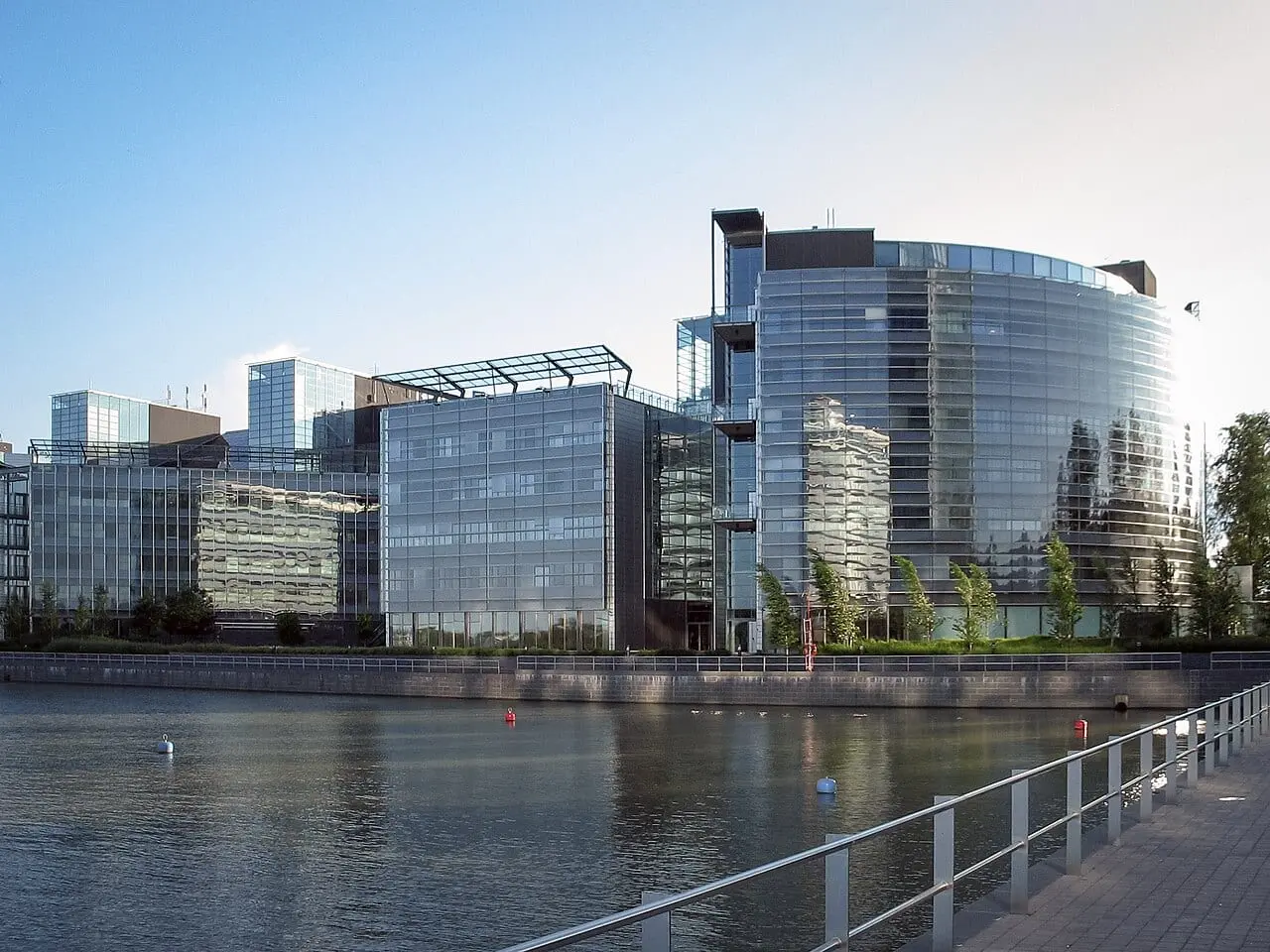
Organization
- Founded
- 1865
- Status
- Active
- Active
- 1865–
- Appearances
- 02
- Name
- ENNokia CorporationJANokia(ノキア)
Nokia is a telecommunications equipment company headquartered in Finland. According to its annual report on Form 20-F, its origins lie in a wood pulp mill that the engineer Fredrik Idestam set up in southern Finland in 1865. Idestam soon opened a second mill on the Nokianvirta River, which inspired him to name the company Nokia AB. The 2025 annual report marks that year as Nokia's 160th anniversary.
Over those 160 years Nokia has changed its core business several times. Its 2016 annual report sums itself up as having found success in cable, paper products, rubber boots and tires, mobile devices and telecommunications infrastructure equipment.
Changing the core business
| Period | Core business | What the sources say |
|---|---|---|
| 1865 onward | Wood pulp and paper | Begins with Idestam's mill |
| 1960s onward | Conglomerate of rubber, cable, forestry, electronics and power generation | Formed by the merger of Nokia AB, Finnish Cable Works (a phone and power cable maker founded in 1912) and other businesses |
| 1980s | Telecommunications equipment | In 1982, the company says, it introduced Europe's first fully digital local telephone exchange and the world's first car phone for the Nordic NMT standard |
| 1990s to 2014 | Mobile phones | In 1991 the first GSM call was made with a Nokia phone over the Nokia-built network of the Finnish operator Radiolinja. Around then Nokia decided to make telecoms and mobile phones its core and divested other businesses. By 1998 it was the world leader in mobile phones, a position it held for more than a decade |
| 2014 onward | Network infrastructure and patent licensing | Sold the handset business to Microsoft; acquired Alcatel Lucent in 2016 |
The move to infrastructure began before the handset sale. In 2007 Nokia combined its telecoms infrastructure operations with those of Siemens to form the NSN joint venture, and in 2013 it bought out Siemens' stake.
Selling the handset business, and after
The story of Nokia's smartphones and the rise and fall of Symbian is left to the Nokia 7650 and Symbian (2002) entry. This section records only how the company itself changed shape.
- 2011: Nokia joins with Microsoft to strengthen its position in the smartphone market.
- 25 April 2014: Substantially all of the Devices & Services business is sold to Microsoft. The announced price was €5.44 billion: €3.79 billion for the business and €1.65 billion for a ten-year mutual patent licence with an option to make it perpetual. The former CTO organisation and the patent portfolio stayed with Nokia.
- 4 December 2015: The sale of the HERE mapping business closes.
- 4 January 2016: Nokia acquires Alcatel Lucent, whose research arm Bell Labs becomes Nokia Bell Labs (see Bell Labs).
- 2016: HMD Global receives an exclusive ten-year licence to make Nokia-branded phones and tablets; Nokia receives royalties for the brand and patents.
A network infrastructure company
In 2025 Nokia reported four operating segments. Figures in € million.
| Segment | What it covers | 2024 | 2025 |
|---|---|---|---|
| Network Infrastructure | Optical, IP and fixed networks | 6,518 | 7,986 |
| Mobile Networks | Products and services for 3GPP mobile networks of every generation | 8,158 | 7,806 |
| Cloud and Network Services | Software that automates network operations, and related services | 2,589 | 2,606 |
| Nokia Technologies | Licensing of patents and other intellectual property | 1,928 | 1,501 |
Growth in 2025 came from optical networking. Nokia completed its acquisition of Infinera, an optical networking supplier based in San Jose, on 28 February 2025, and Optical Networks net sales rose 85%, from €1,636 million to €3,019 million. Infinera contributed €1,273 million of that, and the company says demand grew from AI and cloud customers and from mission-critical enterprise and defence customers. Mobile Networks fell 4%, and Nokia Technologies fell 22% because 2024 had included more than €400 million in one-off catch-up sales.
From 1 January 2026 Nokia reorganised into two primary operating segments, Network Infrastructure and Mobile Infrastructure. In December 2025 it bought China Huaxin's roughly 50% stake in its Chinese joint venture, Nokia Shanghai Bell.
Key events
- 1865: Fredrik Idestam opens a wood pulp mill.
- 1960s: A merger with Finnish Cable Works and others creates a conglomerate.
- 1982: An NMT car phone and Europe's first fully digital local exchange.
- 1991: The first GSM call, on a Nokia phone and a Nokia-built network.
- 1998: World leader in mobile phones (by the company's account).
- 2007: NSN set up with Siemens.
- 25 April 2014: The sale of the handset business to Microsoft closes.
- 4 January 2016: Alcatel Lucent acquired, bringing Bell Labs.
- 28 February 2025: The Infinera acquisition closes.
Financial indicators
Year ended 31 December 2025 (IFRS, continuing operations), from the 2025 Form 20-F.
- Net sales: €19,889 million (2024: €19,220 million; 2023: €21,138 million)
- Operating profit: €885 million (2024: €1,970 million)
- Profit for the year: €660 million
- Research and development expenses: €4,855 million (24.4% of net sales)
- Employees: about 78,000 on average
Today the Nokia name sits not in consumers' hands but inside the equipment rooms of operators and data centres. Even without phone revenue, sales have held at around €20 billion, and Nokia spends almost a quarter of them on research and development. What the company kept after letting go of handsets was network technology dating back to the exchange era, its patents, and Bell Labs.
Appearances
Questions this page answers
- When was Nokia founded?
- In 1865. According to its annual report, the engineer Fredrik Idestam opened a wood pulp mill in southern Finland and later a second mill on the Nokianvirta River, which inspired the name Nokia AB. Nokia marked its 160th anniversary in 2025.
- What happened to Nokia's phone business?
- On 25 April 2014 Nokia sold substantially all of its Devices & Services business to Microsoft. The announced price was €5.44 billion, of which €3.79 billion was for the business and €1.65 billion for a ten-year patent licence. In 2016 Nokia granted HMD Global an exclusive ten-year licence to make Nokia-branded phones and tablets.
- What does Nokia do today?
- It sells network equipment, software and services and licenses patents. Of €19,889 million in 2025 net sales, Network Infrastructure (optical, IP and fixed networks) contributed €7,986 million, Mobile Networks €7,806 million, Cloud and Network Services €2,606 million and Nokia Technologies (patents and other licensing) €1,501 million.
- Why does Nokia own Bell Labs?
- Bell Labs came with Alcatel Lucent, which Nokia acquired on 4 January 2016, and became Nokia Bell Labs. Nokia's annual report marks 2025 as both Nokia's 160th anniversary and the centenary of Nokia Bell Labs.
Sources
PrimaryNokia Corporation, Annual Report on Form 20-F 2016 — SEC, filed March 23, 2017
The "Our history" section (Idestam's mill of 1865, the 1960s merger, the 1982 car phone, the first GSM call in 1991, world leadership in mobile phones by 1998, NSN in 2007), the 2014 sale of Devices & Services and the €5.44 billion breakdown, the Alcatel Lucent acquisition of 4 January 2016 and Bell Labs, and the brand agreement with HMD Global
PrimaryNokia Corporation, Annual Report on Form 20-F 2025 — SEC, filed March 5, 2026
2025 net sales, operating profit and profit for the year, segment net sales, the Infinera acquisition (completed 28 February 2025), the ten-year exclusive licence to HMD, the 160th anniversary and Nokia Bell Labs centenary, about 78,000 average employees, and the reorganisation effective January 2026
TertiaryNokia — Wikipedia
Last updated: