PERSON
John McCarthy
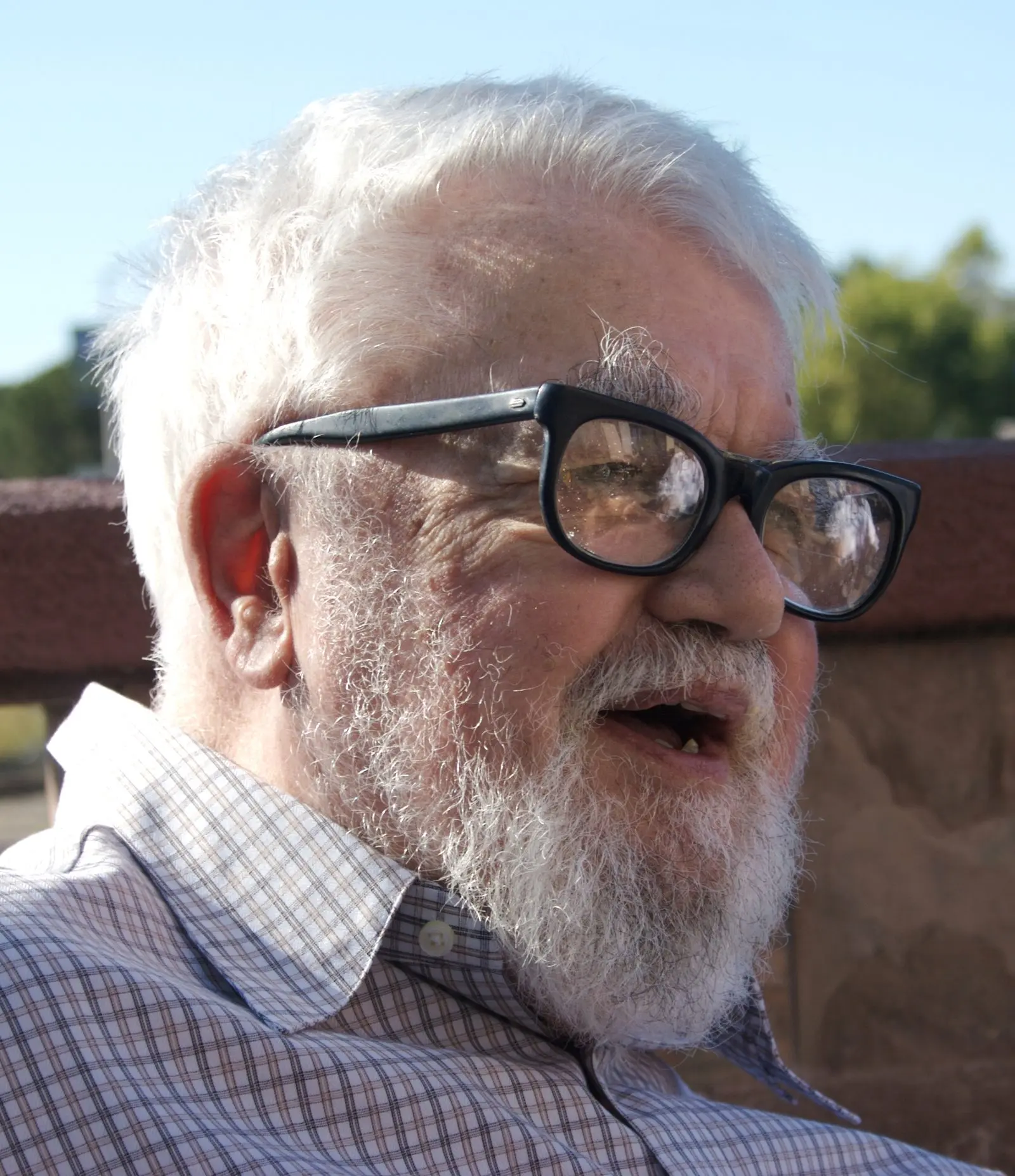
First-named author of the 31 August 1955 Dartmouth proposal that put the phrase 'artificial intelligence' into a research document. Designer of LISP, begun in 1958 and published in CACM in 1960. He argued for timesharing and gave automatic reclamation of free storage the name 'garbage collection'. He directed the Stanford AI Laboratory from 1966 to 1980 and received the ACM Turing Award in 1971.
Profile
- Born
- 1927
- Died
- 2011
- Span
- 84 years
- Appearances
- 03
- Name
- ENJohn McCarthyJAジョン・マッカーシー
John McCarthy (4 September 1927 — 24 October 2011) rewrote the premises of computer science twice. The first occasion was in 1955, when the funding proposal he co-authored for a 1956 summer workshop put the phrase "artificial intelligence" into a research document. The second was in 1958, when he began designing LISP. Both the name and the language survive seventy years later.
Background
McCarthy was born in Boston, Massachusetts. His father, John Patrick, was an Irish immigrant and labour organiser; his mother, Ida Glatt, a Lithuanian Jewish immigrant. Both were active in the Communist Party USA in the 1930s. He spent his adolescence in Los Angeles, where he taught himself college mathematics from the textbooks used at nearby Caltech — so effectively that when he was admitted to Caltech in 1944 he was allowed to skip its first two years of mathematics.
He took his BS in mathematics at Caltech (1948) and his PhD at Princeton (1951) with a dissertation on partial differential equations, "Projection operators and partial differential equations", supervised by Donald C. Spencer. (Some accounts name Solomon Lefschetz; the Princeton library catalogue and the Mathematics Genealogy Project both give Spencer.)
The positions recorded by ACM's Turing Award archive run: instructor at Princeton (1951-53), assistant professor of mathematics at Stanford (1953-55), assistant professor of mathematics at Dartmouth College (1955-58), assistant professor of communication science at MIT (1958-62), professor of mathematics at Stanford (1962-65), and professor of computer science at Stanford (1965-2011). The Stanford Artificial Intelligence Laboratory was established in 1963; McCarthy directed it from 1966 to 1980. He retired from Stanford in 2000.
The Dartmouth workshop and the term "artificial intelligence"
On 31 August 1955, McCarthy (Dartmouth College), Marvin Minsky (then at Harvard University), Nathaniel Rochester (IBM) and Claude Shannon (Bell Telephone Laboratories) submitted a funding proposal to the Rockefeller Foundation, titled "A Proposal for the Dartmouth Summer Research Project on Artificial Intelligence". The famous line — "We propose that a 2 month, 10 man study of artificial intelligence be carried out during the summer of 1956 at Dartmouth College in Hanover, New Hampshire." — is the plan stated near the top of that document, not a description of what happened or a list of who came.
The proposal divides the problem into seven numbered aspects: automatic computers; how a computer can be programmed to use a language; neuron nets; theory of the size of a calculation; self-improvement; abstractions; and randomness and creativity. The workshop that actually ran in the summer of 1956 had fluid attendance and no definitive roster survives. Its weight lies less in technical results than in giving the field a name of its own and a network of researchers.
The design of LISP
LISP (LISt Processor) began at MIT in 1958 as the experimental vehicle for the Advice Taker — a machine that could be told declarative sentences and act on them sensibly — and was published in "Recursive Functions of Symbolic Expressions and Their Computation by Machine, Part I" in Communications of the ACM 3(4), 184–195, April 1960.
Three innovations arrive together: code and data in a single representation, an evaluation model built around recursive functions, and automatic reclamation of the free-storage list.
What Lisp became, however, is not what was designed. McCarthy intended people to write M-expressions, with S-expressions merely their internal representation; Steve Russell hand-compiled the eval from the paper into IBM 704 machine code and made it run, and S-expressions became the surface syntax instead. The 1960 paper's own word for automatic memory management is reclamation. The team already called it "garbage collection", McCarthy later noted, but kept the term out of print — so the coinage is still his group's.
LISP dominated AI research from the 1960s into the 1980s and spawned Maclisp, Common Lisp, Scheme and Clojure. In the same period McCarthy worked on ALGOL 60, proposing in August 1959 the recursion and conditional expressions that went into the language.
Timesharing and "computing as a utility"
McCarthy's third contribution was timesharing — letting many users share one large machine. By his own account he had been arguing for it at MIT since 1957, and on 1 January 1959 he wrote a memo to Philip Morse, director of the MIT Computation Center, proposing that the IBM 7090 which IBM had promised MIT and the New England colleges be turned into a time-shared machine. MIT's CTSS (1961), the BBN system and the Dartmouth Time-Sharing System all descend from that argument; UNIX (1969) sits in the same lineage.
At MIT's centennial in 1961 he went further, suggesting that "computing may someday be organized as a public utility just as the telephone system is a public utility" — the telephone, note, not electricity — with subscribers connected by telephone line to computing service companies and paying only for the capacity they actually used. AWS (2006) arrived forty-five years later, long before "cloud computing" was a phrase.
Awards and honours
- 1971 ACM Turing Award. The citation in ACM's records is a formal sentence pointing at his award lecture, "The Present State of Research on Artificial Intelligence"
- 1985 IJCAI Award for Research Excellence
- 1987 National Academy of Engineering; 1989 National Academy of Sciences
- 1988 Kyoto Prize in Advanced Technology
- 1990 National Medal of Science (United States)
- 1999 Fellow of the Computer History Museum
- 2003 Benjamin Franklin Medal in Computer and Cognitive Science
Legacy
McCarthy died at his Stanford home on 24 October 2011, aged 84. Steve Jobs had died on 5 October and Dennis Ritchie on 12 October, leaving October 2011 as a month of three successive computing losses.
His technical inheritance runs along two tracks. One is the LISP / garbage-collection lineage: nearly every high-level language in use today inherits its abstraction level from the 1958-60 design. The other is artificial intelligence itself. McCarthy's stated goal — human-level general intelligence — became the field's pole star for more than half a century, from the deep-learning revolution of AlexNet (2012) to ChatGPT (2022). He personally preferred logic-based symbolic methods, developing the circumscription form of non-monotonic reasoning between 1978 and 1986, and never joined the statistical side. But his decision to keep the banner of "AI" flying provided the bridge that subsequent waves of researchers walked across.
Appearances
Sources
Last updated: