PERSON
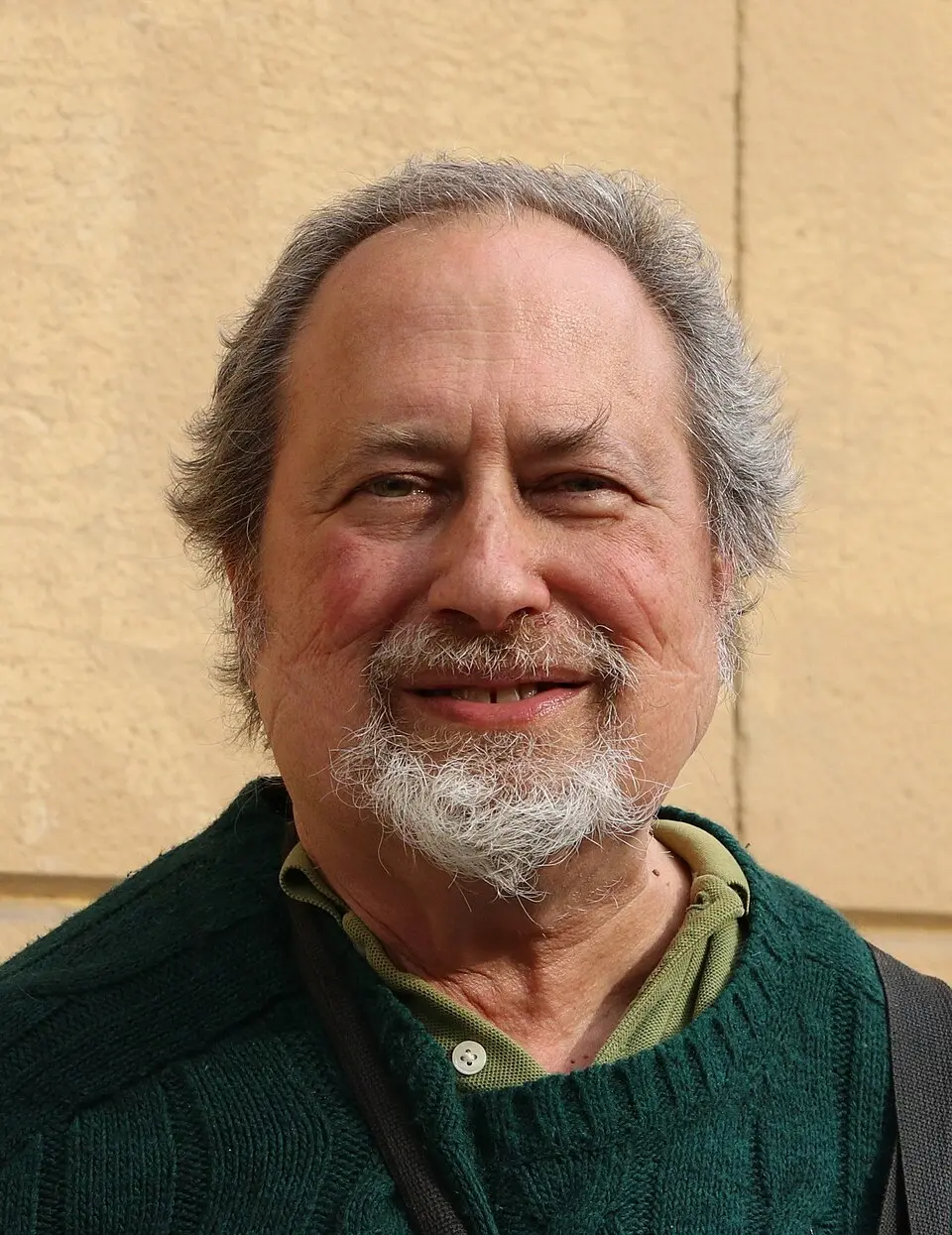
Richard Stallman
Founder of the free software movement: he announced the GNU Project in 1983 and set up the Free Software Foundation (FSF) in October 1985. He devised copyleft and is the main author of the GNU General Public License. At the MIT Artificial Intelligence Lab he wrote Emacs, and he later developed GCC. On 16 September 2019 he resigned as FSF president and from its board, and left his position at MIT CSAIL. He returned to the FSF board in 2021 and is listed on it as of October 2026.
Profile
- Born
- 1953
- Status
- Living
- Span
- 1953–
- Appearances
- 01
- Name
- ENRichard StallmanJAリチャード・ストールマン
Richard M. Stallman (RMS, born 1953) announced the GNU Project in September 1983 and set up the Free Software Foundation (FSF) in October 1985. He founded the free software movement. The announcement itself, the GNU Manifesto and the workings of the GPL are covered on the event page. This page deals with the rest of the record: the programs he wrote, his distance from the term "open source", and what happened in 2019 and 2021.
The programmer
According to the biography on his own website, he graduated from Harvard in physics in 1974 and worked at the MIT Artificial Intelligence Lab from 1971 to 1984. There he wrote Emacs, the extensible text editor. The sources differ by a year on when: his own site says 1976, the FSF's board page says 1975.
He began working on GNU on 5 January 1984, resigning from his MIT employment to do so. Among the GNU components he lists as his own work are the GNU Compiler Collection (GCC), the GNU debugger gdb and GNU Emacs. GCC's official release list dates the first beta, 0.9, to 22 March 1987 and version 1.0 to 23 May 1987.
The ACM has recognised his work twice:
| Year | Award | For |
|---|---|---|
| 1990 | ACM Grace Murray Hopper Award | The extensible editor EMACS |
| 2015 | ACM Software System Award | The development and leadership of GCC |
ACM's 2015 announcement calls GCC "a lynchpin of the free software movement". His own list of honours also includes a MacArthur Foundation Fellowship in 1990. From about 1991 until 2019 he was a Visiting Scientist at MIT.
Why he does not say "open source"
The part of his position that is hardest to grasp from outside is that he does not use the term "open source". His essay on the GNU site, "Open Source Misses the Point of Free Software", explains: in 1998 part of the free software community split off and began campaigning under the name "open source". The term was first proposed to avoid a misunderstanding of "free software", but it soon became associated with philosophical views quite different from the free software movement's.
The same essay says the two terms now describe almost the same software but stand for fundamentally different values. For the free software movement, free software is "an ethical imperative"; open source weighs software only in practical terms. Names matter to him elsewhere too. Of the system that combines GNU with the Linux kernel written by Linus Torvalds, his biography laments that people often call it just "Linux", giving the GNU Project none of the credit, and calls it "GNU/Linux".
2019 — leaving the FSF and MIT
On 16 September 2019 the FSF published a short notice: its founder and president had resigned as president and from its board of directors.
SD Times reported that the resignation followed criticism of comments he had written on an MIT mailing list about the Jeffrey Epstein case and the late Marvin Minsky. He also left his position at MIT CSAIL, and SD Times quoted what he wrote on his website:
I am resigning effective immediately from my position in CSAIL at MIT. I am doing this due to pressure on MIT and me over a series of misunderstandings and mischaracterizations.
2021 — back on the board
In 2021, at the FSF's annual LibrePlanet conference, Stallman announced that he was back on the board. According to the FSF, the announcement came as a complete surprise to its staff. The response split in two directions:
| Date | What happened |
|---|---|
| 23 March 2021 | Two open letters are published: one calling for his removal from all leadership positions, one in his support |
| 25 March 2021 | Red Hat announces it is immediately suspending all its funding of the FSF and of FSF-hosted events |
| 12 April 2021 | The FSF board issues a statement: after several months of discussion, the voting members had appointed him to a board seat |
The FSF statement gives the reason in one line: "We decided to bring RMS back because we missed his wisdom." It also records that he acknowledges having made mistakes, apologises for how the announcement was handled, and states that as a director he is an unpaid volunteer subject to the same policies as other board members, including the prohibitions on conflicts of interest and sexual harassment. As of October 2026 the FSF's website still lists him on its board of directors.
The same 2021 statement calls him "the most articulate philosopher and an unquestionably dedicated advocate of freedom in computing", and also says that "his personal style remains troubling for some". The organisation at the centre of the movement set both judgements of its founder down in a single document.
Appearances
Questions this page answers
- What did Richard Stallman create?
- He announced the GNU Project in 1983 and founded the Free Software Foundation in October 1985. He devised copyleft and is the main author of the GNU GPL; he wrote Emacs at the MIT AI Lab and later developed GCC, the GNU compiler, which earned him the 2015 ACM Software System Award.
- Why did Stallman resign from the FSF in 2019?
- He resigned as FSF president and from its board on 16 September 2019. SD Times reported that this followed criticism of comments he had written on an MIT mailing list about the Jeffrey Epstein case and Marvin Minsky. He also left his position at MIT CSAIL, writing that he did so because of pressure on MIT and himself over a series of misunderstandings and mischaracterizations.
- Is Stallman still on the FSF board?
- Yes. In 2021 the FSF's voting members appointed him to a board seat, and the board issued a statement on 12 April that year. As of October 2026 the FSF's website still lists him on the board of directors.
Sources
TertiaryRichard Stallman — Wikipedia
Date of birth
Last updated: