PERSON
Pat Gelsinger
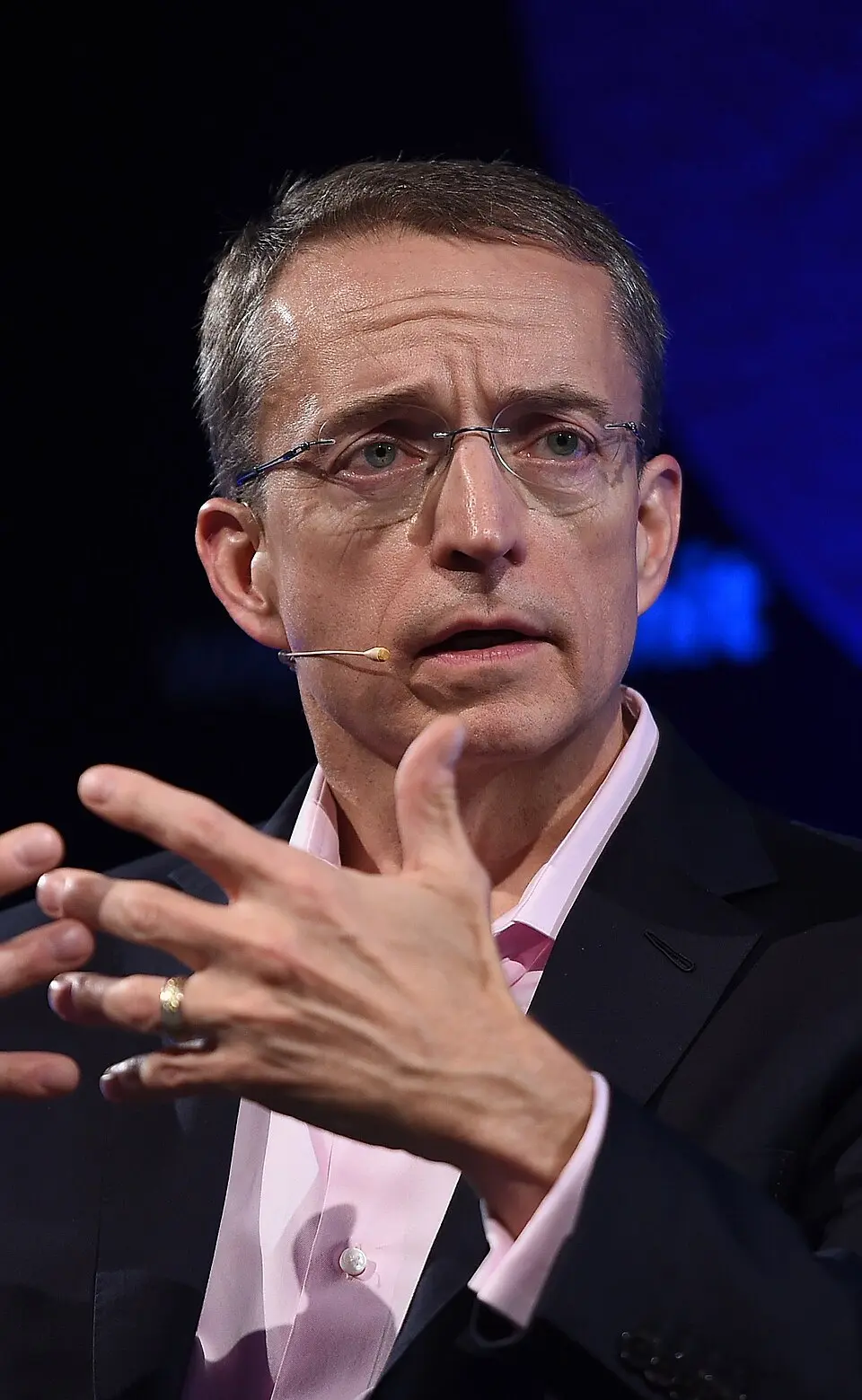
Joined Intel in 1979 at eighteen, was the architect of the original 80486 and the company's first CTO, and left in 2009. After EMC he was CEO of VMware from 2012 to 2021, then returned as Intel's CEO effective 15 February 2021. His 'IDM 2.0' strategy ended with his departure effective 1 December 2024 — Intel's release said he had 'retired'; CNBC reported the board pushed him out. Since March 2025 he has been executive chair and head of technology at Gloo, a general partner at Playground Global, and executive chair of the EUV light-source startup xLight.
Profile
- Born
- 1961
- Status
- Living
- Span
- 1961–
- Appearances
- 01
- Name
- ENPat GelsingerJAパット・ゲルシンガー
Patrick Paul Gelsinger (born 5 March 1961) joined Intel in 1979 at eighteen, became the architect of the original 80486 and the company's first chief technology officer, left in 2009, returned twelve years later as CEO, and departed after less than four years. He is described as the last Intel-raised chief executive because his career and the company's history are very nearly the same length.
Thirty years at Intel
Gelsinger is from Robesonia, Pennsylvania. He began his career at Intel in 1979; his degrees are a BS in electrical engineering from Santa Clara University and an MS in electrical engineering from Stanford, as recorded in the director biography filed by Gloo.
Intel's own account of his record, published when it announced his appointment as CEO in 2021, is precise: "He was the architect of the original 80486 processor, led fourteen different microprocessor programs and played key roles in the Core and Xeon families." The same release notes that he became "the company's first Chief Technology Officer and driving the creation of key industry technologies such as USB and Wi-Fi". Implementer first, then standards-setter — the two-stage record is what later underwrote his reputation as an engineer's chief executive.
After thirty years he left in 2009 for EMC, where he was President and Chief Operating Officer of EMC Information Infrastructure Products.
VMware (2012–2021)
Gelsinger was CEO of VMware from September 2012 to February 2021, and served on its board over the same period. Intel's release credits him with having "significantly transformed the company into a recognized global leader in cloud infrastructure, enterprise mobility and cyber security, almost tripling the company's annual revenues" — an assessment made by Intel, and better read as attributed than as established fact.
The return to Intel (2021)
On 13 January 2021 Intel announced that its board had appointed Gelsinger chief executive, effective 15 February; he joined the board on taking the role. His statement at the time: "I am thrilled to rejoin and lead Intel forward at this important time for the company, our industry and our nation." And: "Having begun my career at Intel and learned at the feet of Grove, Noyce and Moore, it's my privilege and honor to return in this leadership capacity."
What followed over four years — "IDM 2.0", the 18A delay, the loss of the AI-accelerator market, the foundry losses, the US$7.86 billion CHIPS Act award — belongs to the December 2024 entry.
The departure (December 2024)
Intel's release said that "CEO Pat Gelsinger retired from the company after a distinguished 40-plus-year career and has stepped down from the board of directors, effective Dec. 1, 2024", and gave no reason. CNBC reported that the exit followed a contentious board meeting the previous week and a loss of confidence in his turnaround plan — that the board had pushed him out. Intel called it a retirement; the reporting called it a removal, and which word is used determines how the four years read.
Gelsinger's own statement contests nothing. It opens: "Leading Intel has been the honor of my lifetime." It continues: "Today is, of course, bittersweet as this company has been my life for the bulk of my working career." And: "It has been a challenging year for all of us as we have made tough but necessary decisions to position Intel for the current market dynamics." He left the board of Mobileye at the same time, having served there from September 2022.
After Intel — faith, venture capital, and EUV
The three roles he took afterwards make an unusually legible cross-section of the man.
Gloo. He had been a director of the faith-technology company Gloo since August 2016. In March 2025 he became its executive chair and head of technology, with direct oversight of product, engineering and go-to-market strategy for Gloo AI, Gloo Workspace and the rest. The announcement introduces him as a lifelong Christian; the move is strategic and personal at once.
Playground Global. On 26 March 2025 he became a general partner at the deep-tech venture firm Playground Global, investing alongside its other partners, taking board seats and mentoring founders. "Deep tech investments are the fuel of tomorrow's economy and the fuel of US leadership," he said on the appointment.
xLight. In the same announcement he became a board member and executive chair of the Playground portfolio company xLight, which is developing a free-electron-laser extreme-ultraviolet source for semiconductor lithography. On 2 June 2026 the Commerce Department and NIST announced the finalisation of a US$150 million CHIPS Act award to xLight, funding construction and demonstration of a first-of-its-kind FEL prototype at the Albany Nanotech Complex in New York.
That last item makes the career symmetrical. Gelsinger's exit from Intel came six days after the Commerce Department finalised Intel's US$7.86 billion CHIPS award. Eighteen months later he was on the receiving end of a CHIPS finalisation again — one-fiftieth the size, and aimed at exactly the same thing: leading-edge lithography built on American soil.
Legacy
The verdict on Gelsinger remains split, and both halves belong to the same tenure: he did more than anyone to push domestic semiconductor manufacturing onto the political agenda, and he did not rebuild the company that carried the flag. The engineering legacy is not contested. The 80486, the creation of Intel's CTO office, and the push behind USB and Wi-Fi are all still running underneath the machine this page is being read on.
Appearances
Sources
TertiaryPat Gelsinger — Wikipedia
Last updated: