PERSON
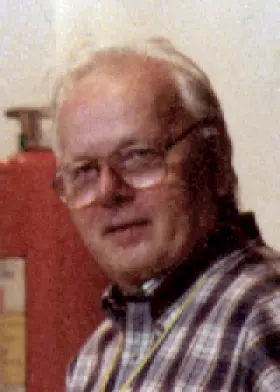
Kristen Nygaard
Co-designer, with Ole-Johan Dahl, of the Simula languages in which object orientation was born — and, in the other half of his life, the man who led Norway's campaigns against EEC and EU membership. Born in Oslo in 1926. He spent 1948-1960 at the Norwegian Defence Research Establishment on Monte Carlo methods and operational research, moved to the Norwegian Computing Center in 1960 and was its director of research from 1962 to 1975. His wish for a notation that could describe queueing systems at a far higher level than the practice of the day produced Simula I (1965) and Simula 67. From 1971 to 1973 he led a joint research project with the Norwegian Iron and Metal Workers' Union that became the starting point of what is now called participatory design. He chaired the information committee on Norway and the EEC set up in 1988, led its successor Nei til EF / Nei til EU until 1995, and won the referendum of 28 November 1994. Professor at Aarhus (1975-1976) and Oslo (adjunct from 1977, full-time 1984-1996). ACM A.M. Turing Award 2001 and IEEE John von Neumann Medal 2002, both shared with Dahl. He died in 2002.
Profile
- Born
- 1926
- Died
- 2002
- Span
- 76 years
- Appearances
- 02
- Name
- ENKristen NygaardJAクリステン・ニゴール
Kristen Nygaard (27 August 1926, Oslo – 10 August 2002, Oslo) designed the Simula languages with Ole-Johan Dahl. He also led the Norwegian campaigns against membership of the European Communities and the European Union, and won the second of them.
Histories of computing keep the first half and drop the second; Norwegian political histories do the reverse. He did not experience them as two subjects. Both were about the same question: who gets to decide what, and how far.
He Came from Operational Research
For a language designer the starting point is unusual: it was not programming. From 1948 to 1960 he worked at the Norwegian Defence Research Establishment, first on computation and programming and then on operational research, heading its operational research groups from 1957. His 1956 Oslo degree was on Monte Carlo methods, and in 1959 he founded the Norwegian Operational Research Society and became its first chairman.
What he wanted from a computer, therefore, was not arithmetic but a vocabulary for describing complicated systems. Stein Krogdahl's history of Simula quotes a letter Nygaard wrote in January 1962 to Charles Saltzmann, a French operations research specialist: his ideas for describing queueing systems had become reasonably clear, and the expert programmer interested in implementing them was meeting him the next day. That programmer was Dahl.
The Compiler Inside the Purchase Order
Turning the concepts of Simula 67 into something a compiler could handle was largely Dahl's work. Nygaard's contribution lies upstream of it, and around it.
After the two presented the early design at the IFIP World Congress in Munich in August 1962, Nygaard was occupied for a long stretch with organisation and money. The result was a UNIVAC 1107 for the Norwegian Computing Center at a discount price and, written into the same contract, funding to implement Simula on it. He got the compiler paid for inside the purchase order for the machine. Without that manoeuvre the Simula I implementation does not begin.
He had joined the NCC in 1960 and was its director of research from 1962 to 1975. How the two of them argued is best left to his own account, in the eulogy he wrote for Dahl weeks before his own death: a new employee once ran down to the switchboard office shouting that two men were fighting in front of a blackboard upstairs, and the operator stepped into the corridor, listened for a few seconds and told him to relax — it was only Ole-Johan and Kristen discussing Simula.
A Trade Union Commissions Its Own Research
Once Simula 67 was frozen, his attention moved from the language to a different question: who designs the systems that get built with it.
In the late 1960s the Norwegian Iron and Metal Workers' Union approached him at the NCC. Management was introducing planning, control and information systems; the union had concluded it needed competence of its own to deal with them. The joint project that began in 1971 was the first at the NCC where the sole contractor was a trade union federation.
Nygaard's own 1975 assessment of it — summarised and translated by Randy Trigg for CPSR — records that the original work plan was abandoned partway through, once they saw they were on course to produce reports that would sit unread on shop stewards' bookshelves. They redefined results to mean not documents but actions, by the union centrally and locally, that would give members greater influence over information handling and control at work. Training material was written in Norwegian and built around problems identified in each workplace rather than around a textbook. In three of the four workplace groups, union members wrote 65 to 70 per cent of it themselves.
The method spread across Scandinavia and became the field now called participatory design. Ole Lehrmann Madsen, writing Nygaard's obituary for the Journal of Object Technology, notes that established researchers and companies long regarded the work as very political, and that firms came round to it on the plain ground that involving users produces better systems and saves money.
Nei til EF, Nei til EU
The politics started early. He chaired the strategy committee of the Liberal party in 1965 and 1967, then joined Labour in 1971. Up to the September 1972 referendum on membership of the European Communities he led the coordinating committee of the youth front against it. The country voted no, 53.5 per cent against.
In the autumn of 1988 an information committee on Norway and the EEC was established with Nygaard as its leader. That committee became Nei til EF — Nei til EU from 1994 — one of the largest voluntary political organisations in Norwegian history, and he led it until June 1995. On 28 November 1994 Norway again voted no, 52.2 per cent against. He then left to set up TEAM, the European anti-Maastricht network.
Oslo, and the Last Project
He was professor of informatics at Aarhus in 1975–1976 and then at the University of Oslo — adjunct from 1977, full-time from 1984 to 1996 — working on systems development and the social effects of information technology in parallel. During a stay in the United States in 1987 he was at once a visiting professor at Stanford, a visiting scientist at Xerox PARC, and a consultant to Apple.
The language work continued: DELTA, a description language rather than a programming one, and BETA, out of the Aarhus collaboration with Madsen, Bent Bruun Kristensen and Birger Møller-Pedersen. His last project, COOL — Comprehensive Object-Oriented Learning — began from his dissatisfaction with the object-orientation textbooks then in print. He had assembled the international team and was ready to start when he died of a heart attack, six weeks after Dahl.
Madsen also records the message Nygaard drew from watching people use Simula: what they often found most valuable was not the simulation results but the act of building the model. To program is to understand.
Honours
- 1990 — Norbert Wiener Award, Computer Professionals for Social Responsibility (the first non-American recipient)
- 1999 — Rosing Honorary Prize, Norwegian Data Association, shared with Dahl at its first award
- 2000 — Commander of the Royal Norwegian Order of St. Olav, with Dahl
- 2001 — ACM A.M. Turing Award, shared with Dahl
- 2002 — IEEE John von Neumann Medal, shared with Dahl
Oslo reproduces the Turing citation as being for ideas fundamental to the emergence of object-oriented programming, through the design of Simula 1 and Simula 67. The von Neumann Medal was announced in November 2001 and presented in 2002, which is why sources disagree about its year; the year here is Oslo's.
Appearances
Sources
SecondaryTribute to Kristen Nygaard — Department of Informatics, University of Oslo
Dates of birth and death, the Simula I / Simula 67 years at the NCC, and his tenure at the University of Oslo
SecondaryAwards and Honors — Tribute to Kristen Nygaard, University of Oslo
The list of award years; it dates the von Neumann Medal to 2002
TertiaryRossen, E. — Kristen Nygaard. Store norske leksikon
Career dates: the FFI, the NCC, the university, and his political activity
The January 1962 letter to Saltzmann, and the procurement of the UNIVAC 1107
SecondaryComputer Pioneers: Kristen Nygaard — IEEE Computer Society History Committee
A career chronology, and the research he did for the trade unions
SecondaryTrigg, R. (1995). Participatory Design: Notes from a classic article by Kristen Nygaard — CPSR
A summary and translation of Nygaard's 1975 paper, and the course of the NJMF project
TertiaryTvedt, K.A. — EU-kampen. Store norske leksikon
National results of the 1972 and 1994 referendums
A revision of S-2, published 1968
TertiaryKristen Nygaard — Wikipedia
Last updated: