PERSON
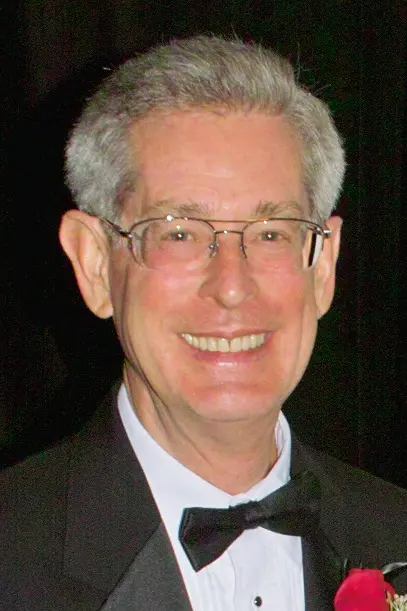
Donald D. Chamberlin
IBM researcher who designed SEQUEL, the precursor of SQL, with Raymond Boyce. Born in San Jose in 1944, he studied engineering at Harvey Mudd College, took a PhD in electrical engineering at Stanford, and joined IBM's Watson Research Center in 1971 to work on a time-sharing operating system. When that project was merged away he moved into databases, went to San Jose in 1973 and became one of the managers of System R. He later worked on the Quill document system, wrote two books on DB2, and was an editor of W3C's XQuery 1.0 (a Recommendation in 2007). IBM Fellow in 2003; he retired from IBM in 2009, and in 2018 wrote a tutorial on SQL++ for querying JSON.
Profile
- Born
- 1944
- Status
- Living
- Span
- 1944–
- Appearances
- 01
- Name
- ENDonald D. ChamberlinJAドナルド・D・チェンバリン
Donald D. Chamberlin (born 1944) is best known as the co-designer, with Raymond Boyce, of the language now called SQL. That work fills a few years of a career at IBM Research that began in 1971, and the rest of it is less often told: an electrical engineer who meant to build operating systems, a detour into document formatting, two books on DB2, an editorship of the W3C's XML query language, and, in his seventies, a tutorial teaching SQL users to query JSON. In 2001 he summed up his standing at IBM with a joke: he had been a research staff member since 1971, "which means I've gone about a little over thirty years without a promotion. And that is pretty much the way I like it."
Sputnik, Campbell High and Harvey Mudd
Chamberlin was born in San Jose, California, and grew up in what was then still the separate small town of Campbell, where he went to Campbell High School. His father taught English in high school and later became a principal; his mother was a homemaker. Neither was an engineer.
He traces the choice of a technical career to 1957. He was in the eighth grade when the Soviet Union launched Sputnik, and, as he told the Charles Babbage Institute's Philip Frana, it became clear to his generation that technology was a national priority and that there was a shortage of technical talent. He liked to tinker, and in 1962 he went to Harvey Mudd College in Claremont, a science and engineering college founded in 1955 that was small enough to award a single general engineering degree rather than specialised ones. He graduated in 1966, in what he guessed was about the sixth graduating class.
Stanford: Electrical Engineering, With a Minor in Computing
A National Science Foundation fellowship took him to Stanford. Its computer science department was just getting started, and he was not sure "this computer business was going to pan out," so he chose the safer course: graduate study in the well-established electrical engineering department, with computer science as a minor. He took an MS in 1967 and a PhD in 1971. His adviser was Edward McCluskey, known for logic minimisation and reliable hardware design, and his thesis was the design of a parallel machine of the kind that would now be called a dataflow computer. He also credited the influence of Bill McKeeman, then a young Stanford professor.
Summers were spent in industry, at Hewlett-Packard, General Electric and Lockheed's research laboratory in Palo Alto. One summer he took an internship at IBM's research laboratory in Yorktown Heights, New York. He had just married, and he and his wife drove their 1962 Chevrolet across the country and made a honeymoon of it. He liked the place enough to go back.
Yorktown Heights and System A
He joined IBM Research at the Thomas J. Watson Research Center in 1971. He came to work not on databases but on System A, an experimental time-sharing operating system exploring virtual memory, which he had already worked on as an intern. When IBM merged that project with product development in Poughkeepsie, he chose to stay in Yorktown, and a manager named Leonard Liu started database research for the people left behind. Liu set them to read and report on papers, including both Edgar Codd's relational model and the CODASYL work then regarded as the industry mainstream. Chamberlin learned to write queries in the CODASYL language; it was, he said later, by accident that databases became his field.
SQUARE, SEQUEL and System R, in Brief
The turning point was a symposium Codd held at Yorktown in 1972, where Chamberlin and Boyce first met him. With Boyce he designed a query notation called SQUARE, then, after IBM consolidated its database research in San Jose in 1973, the English-keyword language SEQUEL, published in May 1974 and implemented in the System R prototype; the trademark challenge of 1977 turned it into SQL. That story, including Boyce's death in 1974, is told on the SEQUEL and System R page. The language became an ANSI standard in 1986, covered on the SQL standard page; Chamberlin's name is not on the committee roster printed with that standard.
Chamberlin moved west in 1973 with Liu, Frank King, Boyce and Vera Watson; Mike Blasgen and Franco Putzolu followed. He recalled a team of about twelve at the start and fewer than twenty at its peak, which he thought the right size for systems research. He also recalled how it got its name: told by King that a project needed one, the group chose System R, for relational, though Putzolu claimed the R stood for Rufus, his dog.
A Manager in System R
He became one of System R's managers. Patricia Selinger, who built its cost-based query optimiser, joined with a Harvard PhD in applied mathematics, and Chamberlin was her first manager, "in 1974 or thereabouts." He was lead author of the project's retrospective, A History and Evaluation of System R, published in Communications of the ACM in October 1981. In 1988 the ACM gave its Software System Award to System R; Chamberlin is one of the six people it lists for the system, alongside Jim Gray, Raymond Lorie, Gianfranco Putzolu, Patricia Selinger and Irving Traiger.
Asked in 2001 about the image of IBM as an army in blue suits, he answered: "I've worked for IBM for thirty-one years and I've never worn a blue suit once."
Quill: A Detour Into Documents
For several years he left databases for document processing and formatting, which he called "the other half of my background." The project was Quill, an experimental system that showed an SGML document in two views a user could switch between: a logical view with all the markup tags visible and editable, and a physical, WYSIWYG view of how the page would look. It never became a product. Chamberlin, who has said that not all research projects are as successful as System R, later saw its idea of mapping tags to appearance surviving in tools such as Adobe FrameMaker.
Two Books on DB2
By the 1990s he was working with IBM's DB2 development team at Almaden. In 1998 he published A Complete Guide to DB2 Universal Database, an extensive revision of his earlier Using the New DB2: IBM's Object-Relational Database System. The publisher's author note of the time also lists him as an adjunct professor of computer engineering at Santa Clara University. Michael Carey, who worked with him on object-relational extensions to SQL for the SQL:1999 and SQL:2003 standards and to DB2, later called the 1998 book one of the best ever written for anyone learning SQL and how DB2 realises it.
XML, Quilt and XQuery
His last major research subject joined his two halves. XML, he explained in 2001, came from the publishing world: unlike a bank's uniform records, every document is shaped differently and carries its metadata inside it as tags, so querying it needed a new kind of language. He represented IBM on the W3C's XML Query working group from its formation in late 1999. In 2000, with Jonathan Robie and Daniela Florescu, he proposed a language called Quilt. The W3C's specification says XQuery is derived from Quilt, and when XQuery 1.0 became a W3C Recommendation on 23 January 2007, Chamberlin was one of its six editors.
IBM named him an IBM Fellow in 2003. He retired from IBM in 2009 and the same year was appointed a Regents' Professor at the University of California, Santa Cruz.
SQL++ and JSON
Retirement did not end the query-language work. An early Couchbase seminar on N1QL, an SQL-inspired language for JSON data, caught his interest, according to Carey's foreword, and in September 2018 Couchbase published Chamberlin's SQL++ For SQL Users: A Tutorial. SQL++, initially designed by Yannis Papakonstantinou and his students at UC San Diego, extends SQL with a few features for querying JSON, and the tutorial teaches it to readers who already know SQL. The original co-designer of SQL was, at seventy-three, writing the guide to its extension for semi-structured data.
Honours
Chamberlin was named an ACM Fellow in 1994 and an IEEE Fellow in 2007, and was elected to the US National Academy of Engineering in 1997. He received the ACM SIGMOD Edgar F. Codd Innovations Award in 2003, an honorary doctorate from the University of Zurich in 2005, and in 2009 was made a Fellow of the Computer History Museum "for his fundamental work on structured query language (SQL) and database architectures." The IEEE named him the recipient of its 2026 John von Neumann Medal as co-inventor of SQL, with the medals to be presented at its honors ceremony in New York on 24 April 2026.
Appearances
Questions this page answers
- Who invented SQL?
- Donald D. Chamberlin and Raymond Boyce of IBM. They designed SEQUEL, a language for querying Codd's relational model with English keywords, and published it in May 1974. Boyce died later that year aged 26, and SEQUEL was renamed SQL in 1977.
- When was SQL invented?
- Its precursor, SEQUEL, was published in May 1974. After attending Codd's symposium in 1972, Chamberlin and Boyce spent a year experimenting with relational language designs; the name became SQL in 1977.
- What did Donald Chamberlin do after SQL?
- He worked on the Quill document system and wrote books on DB2, then represented IBM on the W3C XML Query working group from late 1999 and became one of the editors of XQuery 1.0, a Recommendation in 2007. In 2018 he wrote a tutorial on SQL++ for querying JSON.
Sources
Family and upbringing, Sputnik, Harvey Mudd, Stanford and McCluskey, summer jobs and internship, System A, Leonard Liu, the 1973 move, System R's name and size, Selinger, Quill, the XML Query working group
SecondaryDonald Chamberlin — Computer History Museum Fellow, 2009
Degree years, joining IBM in 1971, IBM Fellow (2003), UCSC Regents' Professor (2009), ACM and IEEE Fellow, NAE, Zurich honorary doctorate
PrimaryXQuery 1.0: An XML Query Language — W3C Recommendation, 23 January 2007
The list of editors, derivation from Quilt, and the Quilt paper's citation (Chamberlin, Robie and Florescu, 2000)
PrimaryA Complete Guide to DB2 Universal Database — Don Chamberlin, 1998 (Elsevier)
Publication date, revision of Using the New DB2, and the author note of the time
PrimarySIGMOD Edgar F. Codd Innovations Award — recipients
Awarded 2003 (the CHM profile says 1997; this follows the awarding body's own list)
The X3H2 committee roster (Chamberlin is not listed)
TertiaryDonald Chamberlin — Wikipedia
Last updated: