PERSON
Charles H. Bennett
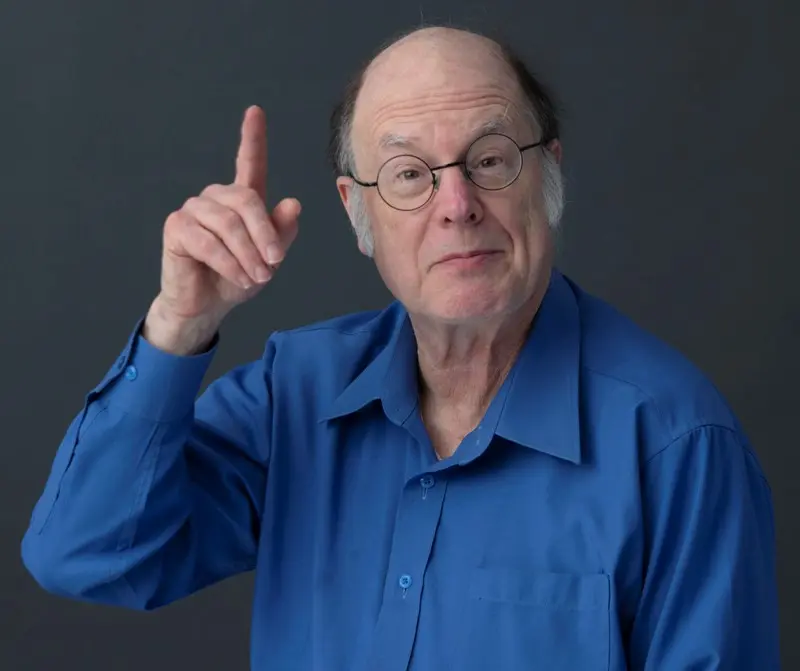
American physicist, born in New York City in 1943. He took his bachelor's degree at Brandeis and his PhD at Harvard, joined IBM Research in the early 1970s and has spent more than five decades there. His 1973 result on the logical reversibility of computation extended Rolf Landauer's line of argument that information is a physical quantity. With Gilles Brassard he published the BB84 quantum key distribution protocol in 1984, co-authored the 1993 quantum teleportation paper, and introduced entanglement distillation in 1996. Holder of the Wolf Prize in Physics, the Breakthrough Prize and the Micius Quantum Prize, he shared the 2025 ACM A.M. Turing Award with Brassard, announced on 18 March 2026.
Profile
- Born
- 1943
- Status
- Living
- Span
- 1943–
- Appearances
- 01
- Name
- ENCharles H. BennettJAチャールズ・H・ベネット
Charles H. Bennett (b. 1943) is a physicist at IBM Research and, with Gilles Brassard, a recipient of the 2025 ACM A.M. Turing Award. A single claim runs through his career: information is a physical quantity, not an abstraction. Quantum cryptography and quantum teleportation are both what happens when you take that claim seriously enough.
Chemistry, Gödel, and Two Meetings
Bennett was born in New York City in 1943 to two music teachers. He studied biochemistry at Brandeis and took his PhD at Harvard. By IBM's account, an undergraduate fascination with Gödel's incompleteness theorems led him to map the question onto matter: whether there might be physical processes that are fundamentally uncomputable.
Two encounters at Harvard shaped what followed. The first was with Stephen Wiesner, who in 1968 had devised a scheme for quantum money that could not be counterfeited and could not get the idea accepted academically. Bennett helped him push the concept forward; in handwritten notes from a 1970 conversation he wrote and underlined the phrase "quantum information theory" across the top of a page. The second was a lecture by Rolf Landauer, the IBM Fellow whose work on the thermodynamics of computation held that information is governed by the laws of nature rather than floating free of them.
IBM Research
Landauer recruited him. Sources differ by a year on when — ACM says 1973, while the caption IBM Research attached to his own portrait, and Wikipedia, say 1972 — but he has worked out of the Thomas J. Watson Research Center in Yorktown Heights ever since, more than five decades.
His 1973 paper on the logical reversibility of computation showed that computation need not be tied to energy dissipation in the way most people had assumed. It is the result that turned "information is physical" from a slogan into a technical position.
On why IBM was the right place for it, Bennett told his employer's newsroom:
IBM was an ideal place to do this kind of research because you had people working on the fundamental physics of computing and hardware, and in the same building people focused on the mathematics of computing. I could wander down the hall and talk to many people about fundamental ideas and in fields that, at that time, scarcely overlapped.
BB84 and After
Bennett met Brassard at a computer science conference in Puerto Rico in 1979. In 1982 the two co-authored a first-of-its-kind quantum cryptography paper with Wiesner, and in 1984 they published BB84, the first practical protocol for quantum key distribution. Its security does not rest on any computational assumption; it rests on the fact that quantum information cannot be measured or copied without leaving a disturbance an eavesdropper cannot hide.
In 1989 Bennett and a summer student, John Smolin, built the first quantum cryptography apparatus in Bennett's office — mirrors, polarisers, photon detectors, about two metres end to end — and, joined by Brassard, ran the first demonstration of BB84 on software written by Brassard and his students.
Quantum teleportation followed in 1993 and entanglement distillation in 1996. Both did the same kind of work: they converted entanglement from a philosophical puzzle into an engineering resource, which is the premise every quantum-network proposal now takes for granted.
Recognition
Bennett holds the Wolf Prize in Physics, the Micius Quantum Prize, the BBVA Foundation Frontiers of Knowledge Award in Basic Sciences and the Breakthrough Prize in Fundamental Physics. He is a member of the US National Academy of Sciences and a foreign member of the Royal Society. The Turing Award, announced on 18 March 2026 for the 2025 award year, makes him the seventh IBM laureate — after John Backus, Kenneth Iverson, Edgar Codd, John Cocke, Frederick Brooks and Frances Allen. IBM says he plans to donate part of his share of the US$1 million prize.
Jay Gambetta, Director of IBM Research, put the assessment plainly: at a time when most researchers treated quantum mechanics as a nuisance to be managed while shrinking electronic components, Bennett saw that the same physics could be a new way to process and transmit information. Four decades on, that reading is the industry's default.
Appearances
Sources
Last updated: