ORGANIZATION
Compaq Computer Corporation
Founded in February 1982 in Houston, Texas by three Texas Instruments alumni — Rod Canion, Jim Harris and Bill Murto. Compaq reimplemented the IBM PC's BIOS by clean-room method and shipped the fully compatible Compaq Portable in March 1983, selling 53,000 machines for more than US$111 million in its first full year and entering the Fortune 500 in 1986 as the youngest firm ever to do so. The Deskpro 386 of that year carried Intel's 80386 before IBM did, proving that a compatible-machine maker could lead the standard rather than follow it. Compaq acquired Digital Equipment Corporation for about US$9.6 billion in 1998; its merger with Hewlett-Packard, announced in September 2001, closed on 3 May 2002 and ended the company. The brand was retired in North America and Europe in 2013.
Organization
- Founded
- 1982
- Dissolved
- 2002
- Active for
- 20 years
- Appearances
- 01
- Name
- ENCompaq Computer CorporationJACompaq
Compaq Computer Corporation was a computer manufacturer founded in Houston, Texas in February 1982 by three Texas Instruments alumni: Rod Canion, Jim Harris and Bill Murto. The company staked everything on one proposition — that a machine fully compatible with the IBM Personal Computer could be built without copying any of IBM's copyrighted work — and by proving it, opened the PC-compatible industry. Compaq ceased to exist as a corporation on 3 May 2002, when its merger with Hewlett-Packard closed.
Clean room, Deskpro 386, and the HP merger
Proving compatibility (1982-83). IBM had published the PC's circuit designs and the BIOS source listing in a technical reference, but publication is not permission to copy: the listing was copyrighted, and reproducing it was infringement. The procedure Compaq used has since become known as clean-room design — engineers who had studied IBM's listing wrote specifications of what each call and interrupt did, lawyers reviewed those specifications, and a separate team that had never seen IBM's code wrote the implementation from the specifications alone.
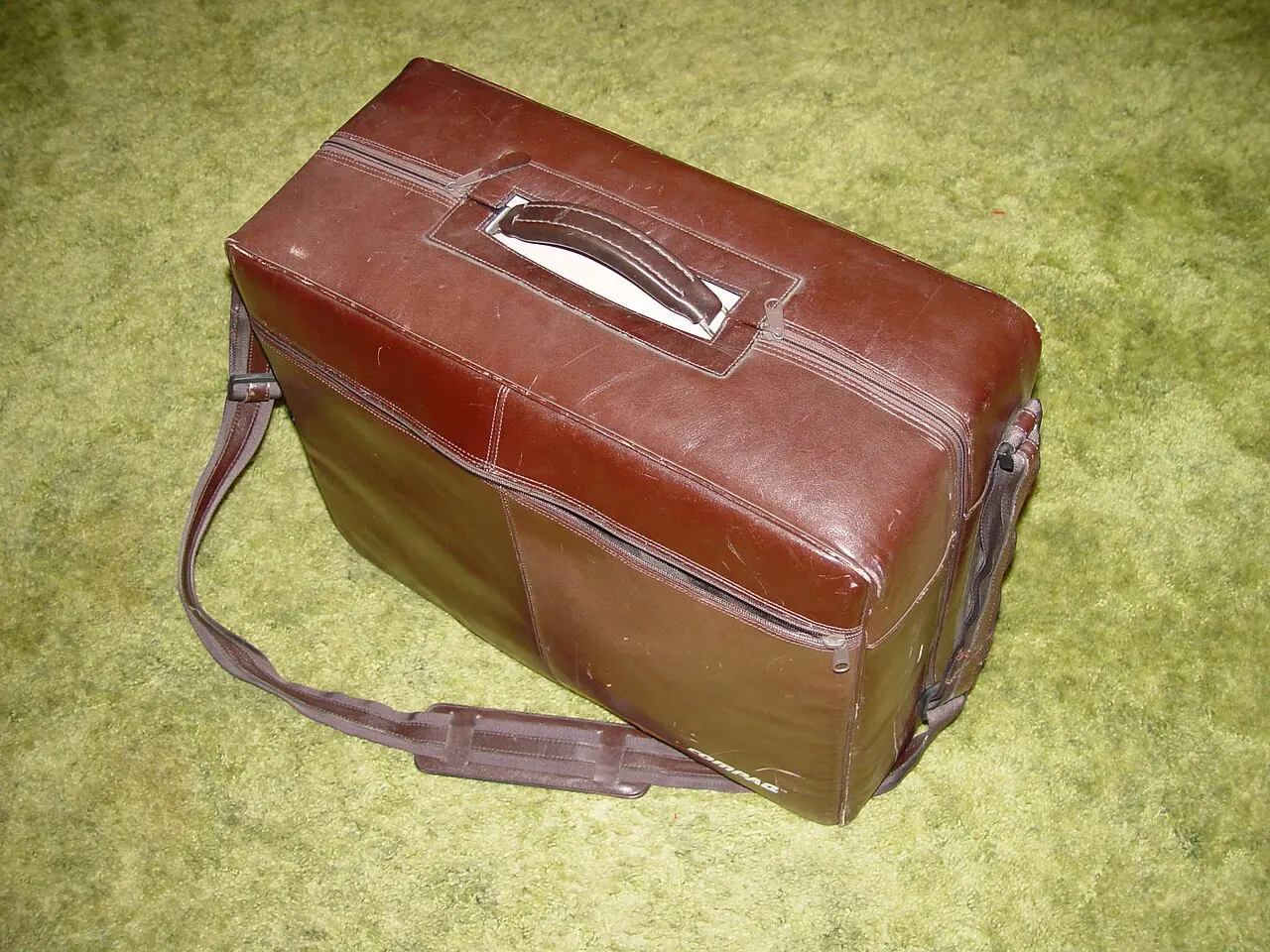
The result, the Compaq Portable, was announced in November 1982 and shipped from March 1983 at US$2,995: a CRT and a detachable keyboard packed into a case with a handle, heavy enough that "portable" was generous. The selling point was not portability but compatibility — software written for the IBM PC simply ran. In 1983, its first full year, Compaq shipped 53,000 machines for more than US$111 million, at the time the largest first-year revenue of any company in US history.
From following the standard to setting it (1986-89). In 1986 Compaq entered the Fortune 500 on record sales of US$329 million, the youngest company ever to do so. In the same year the Deskpro 386 became the first PC built around Intel's 80386 — ahead of IBM. A compatible-machine maker had demonstrated it could lead the architecture rather than trail it. When IBM tried to reclaim control in 1987 with its proprietary Micro Channel Architecture, Compaq assembled the "Gang of Nine" and drove the rival EISA bus instead. An industry born from IBM's open design had declined IBM's closed one.
Scale, then the end (1998-2002). Compaq acquired Digital Equipment Corporation for about US$9.6 billion in 1998, becoming the world's second-largest computer maker after IBM. But the PC had become a thin-margin commodity, and Dell's direct model kept cutting underneath it. The Hewlett-Packard merger was announced in September 2001, cleared by the European Commission in January 2002 and put to HP's shareholders that March. HP's Form 10-K for fiscal 2002 records the outcome flatly: "On May 3, 2002, we acquired all of the outstanding stock of Compaq" — at a total purchase price of approximately US$24.2 billion. The Compaq name survived as HP's value brand until it was retired in North America and Europe in 2013.
Compatibility became a component you could buy
What Compaq invented was not a product but a route. Once one company had shown that a compatible machine could be built, and built lawfully, compatibility stopped being an engineering feat and became a component you could buy: independent vendors such as Phoenix Technologies began licensing compatible BIOS code to anyone, and the barrier to entry collapsed to capital and distribution. Two things followed. PC prices fell, continuously and for decades. And IBM lost the market it had created.
Compaq was not exempt from its own logic. Once compatibility was purchasable, compatible-machine makers were interchangeable too. The pressure that took twenty years to unseat IBM's PC business reached Compaq in about ten.
Related
- The IBM Personal Computer 5150 (1981) — the published technical reference, and the BIOS that was not
- MS-DOS 1.0 (1981) — the non-exclusive licence that supplied the clones with an operating system
Appearances
Sources
Last updated: