T1#regulation
Thaler v. Perlmutter — A US Appeals Court Rules an AI Cannot Be an Author
Metadata
- Date
- Decade
- 2020s
- Tier
- T1
- Sources
- 09
- Connections
- 00
- Tags
- #regulation
Can an AI be an author under copyright law? In the United States, the case that carried that question as far as the Supreme Court is Thaler v. Perlmutter. On 18 March 2025 the US Court of Appeals for the D.C. Circuit held that the Copyright Act of 1976 requires all eligible work to be authored in the first instance by a human being, and a unanimous three-judge panel upheld the Copyright Office's refusal to register a work whose sole listed author was an AI. Rehearing was denied on 12 May 2025, and on 2 March 2026 the Supreme Court denied certiorari, leaving the ruling in place.
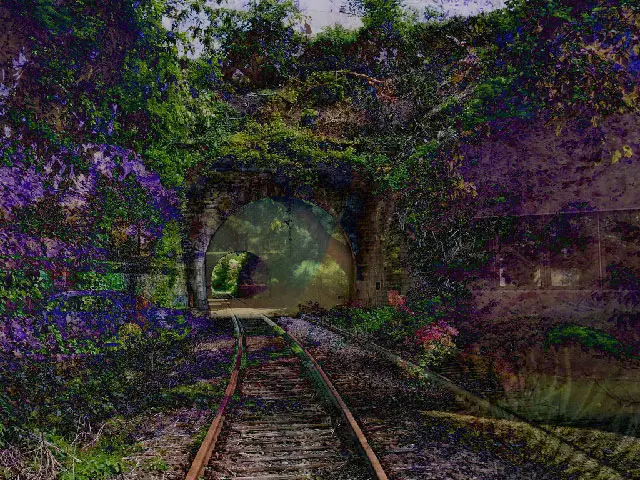
The plaintiff, Stephen Thaler, is a computer scientist who calls a generative AI system he built the "Creativity Machine". The work he sought to register was an image it is said to have made, "A Recent Entrance to Paradise". The defendant, Shira Perlmutter, was then Register of Copyrights and was sued in her official capacity.
How the case unfolded
| Date | Event |
|---|---|
| 3 November 2018 (Review Board record) / 19 May 2019 (appeals court opinion) | Thaler applies, naming the "Creativity Machine" as author and himself as claimant |
| 12 August 2019 | The Copyright Office refuses for lack of human authorship |
| 30 March 2020 | First request for reconsideration refused |
| 14 February 2022 | The Office's Review Board upholds the refusal |
| 18 August 2023 | The District Court for the District of Columbia (Judge Beryl A. Howell) sides with the Office |
| 19 September 2024 | Oral argument on appeal |
| 18 March 2025 | The D.C. Circuit affirms |
| 12 May 2025 | Rehearing denied |
| 9 October 2025 | Petition for certiorari filed |
| 2 March 2026 | Supreme Court denies the petition |
The sources disagree on the filing date: the Review Board's 2022 decision gives 3 November 2018, the appeals court 19 May 2019. Both describe the same application, in which Thaler listed the "Creativity Machine" as author and described the work as created autonomously by a machine.
The Supreme Court docket shows that the government first waived its right to respond, the Court requested a response, and the government filed a brief in opposition on 23 January 2026. The petition was denied.
What the appeals court relied on
Judge Patricia Millett's opinion framed the question as whether a non-human machine can be an author under the Copyright Act of 1976. The Act does not define "author". The court pointed out that many of its provisions make sense only if the author is a human being.
| Provision of the Copyright Act | The court's point |
|---|---|
| Copyright vests initially in the author (§ 201(a)) | An entity that cannot own property cannot be an author |
| The term is the author's life plus 70 years (§ 302(a)) | Machines do not have "lives" |
| After an author's death, termination rights pass to a widow, widower, children or grandchildren (§ 203) | Machines have no surviving spouses or heirs |
| Transfers require an instrument signed by the owner (§ 204(a)) | Machines lack signatures and the legal capacity to sign |
| Unpublished works are protected regardless of the author's nationality or domicile (§ 104(a)) | Machines have neither |
| A joint work requires authors' intention to merge their contributions (§ 101) | Machines lack minds and do not intend anything |
The court added that the Copyright Office had consistently read "author" to mean a human before the 1976 Act was passed, and inferred that Congress adopted that reading. Having decided the case on the statute, it did not reach the Office's argument that the Constitution itself requires human authorship.
Thaler argued for the first time in district court that he was the author, because he made and directed the AI. But throughout the agency process he had said the work was autonomously generated, so both the district court and the appeals court treated that argument as waived. What the case decided, then, is that a work submitted with an AI as its sole author cannot be registered.
What the court did not say
The appeals court spelled out the limits of its holding: "the human authorship requirement does not prohibit copyrighting work that was made by or with the assistance of artificial intelligence." The rule requires only that the author be a human — the person who created, operated or used the AI — and not the machine itself.
How far protection reaches when a human uses AI as a tool is a question the Copyright Office had addressed about seven weeks before the ruling. Part 2 of its report on copyright and AI, released on 29 January 2025 after review of more than 10,000 comments, concluded that generative-AI outputs can be protected only where a human author has determined sufficient expressive elements, and that the mere provision of prompts is not enough. Protection can extend to a human-authored work perceptible in the output, or to creative arrangement or modification of the output by a human. The Office also found no case for changing the law to give AI-generated outputs additional protection. Perlmutter said: "Extending protection to material whose expressive elements are determined by a machine, however, would undermine rather than further the constitutional goals of copyright."
A contested registration of a work made by a human repeatedly prompting an AI is the image that won a prize at the Colorado State Fair; that story is told on its own page.
The same answer for patents
Alongside the copyright case, Thaler has pursued patent applications in many countries naming another of his AI systems, DABUS, as inventor. The answer has been much the same everywhere.
On 20 December 2023 the UK Supreme Court unanimously dismissed his appeal, holding that an inventor under the Patents Act 1977 must be a natural person and that DABUS was not the inventor. In Japan, the Tokyo District Court on 16 May 2024 and the Intellectual Property High Court on 30 January 2025 likewise rejected his claims, holding that an inventor must be a natural person.
What it changed
The ruling settles that AI output with no human involvement belongs to no one. Since nobody can claim copyright in it, anyone may copy it.
The losers could be businesses that want to sell automatically generated content itself as an exclusive product. Thaler argued that the human-authorship requirement would discourage the creators and operators of AI from being creative. The court answered that the requirement still gives humans like Thaler an incentive to create, and to seek exclusive rights in, works they make with the assistance of AI.
Thaler also argued that refusing protection to machine-generated works would encourage people to "act dishonestly" and falsely claim authorship of machine work. The Review Board rejected this, noting that knowingly making a false representation in a registration application is a crime and that the Register can cancel registrations.
From the standpoint of protecting human creators, the ruling restates for the AI era the principle that the rewards of authorship go to people. The court itself acknowledged that humans might one day produce creative non-humans capable of responding to economic incentives, and said there will be time enough for Congress and the Copyright Office to tackle those issues when they arise.
Japan's General Understanding on AI and Copyright reaches a similar position: material an AI generates autonomously is not a work, while output can be a work where a person makes a creative contribution and uses the AI as a tool. How Japan treats training data is covered on the page for Article 30-4 of the Copyright Act.
Questions this page answers
- Can an AI be an author under US copyright law?
- No. On 18 March 2025 the D.C. Circuit held that the Copyright Act of 1976 requires all eligible work to be authored in the first instance by a human being. The Supreme Court denied certiorari on 2 March 2026, leaving that ruling in place.
- Does this mean work made with AI cannot be protected?
- No. The court said the human-authorship requirement does not prohibit copyrighting work made by or with the assistance of AI; it requires only that the author be a human being. The Copyright Office likewise says output is protectable where a human has determined sufficient expressive elements.
- Does writing a prompt make you the author?
- In Part 2 of its AI report, released on 29 January 2025, the Copyright Office said the mere provision of prompts is not enough. Protection can extend to cases where a human-authored work is perceptible in the output or a human creatively arranges or modifies it.
- Why didn't Thaler list himself as the author?
- His application named the Creativity Machine as sole author and himself as owner, stating the work was created autonomously by machine. He first argued that he was the author in district court, so both courts treated the argument as waived before the agency and did not decide it.
Sources
PrimaryThaler v. Perlmutter, No. 23-5233 — U.S. Court of Appeals for the D.C. Circuit, decided Mar 18, 2025
Judge Millett's opinion for a unanimous panel with Wilkins and Rogers, the statutory grounds for human authorship, the statement that work made with AI is not barred, the waiver of Thaler's own-authorship claim, and the application date given as 19 May 2019
Gives the application date as 3 November 2018; the refusal of 12 August 2019; the refusal on reconsideration of 30 March 2020; and the response on criminal penalties for false statements
PrimaryDocket No. 25-449, Thaler v. Perlmutter — Supreme Court of the United States
Rehearing denied on 12 May 2025, petition filed 9 October 2025, government's brief in opposition 23 January 2026, petition denied 2 March 2026
Part 2's conclusions (prompts alone are not enough; no case for new legislation), more than 10,000 comments, and Perlmutter's statement
Summary of Judge Beryl A. Howell's district-court ruling of 18 August 2023
The DABUS rulings of the Tokyo District Court (16 May 2024) and the IP High Court (30 January 2025, 2024 (Gyo-Ko) No. 10006)
Last updated: