T1#research#consumer
Tennis for Two — One of the Earliest Video Games
Metadata
- Date
- Decade
- 1950s
- Tier
- T1
- Sources
- 06
- Connections
- 00
- Tags
- #research#consumer
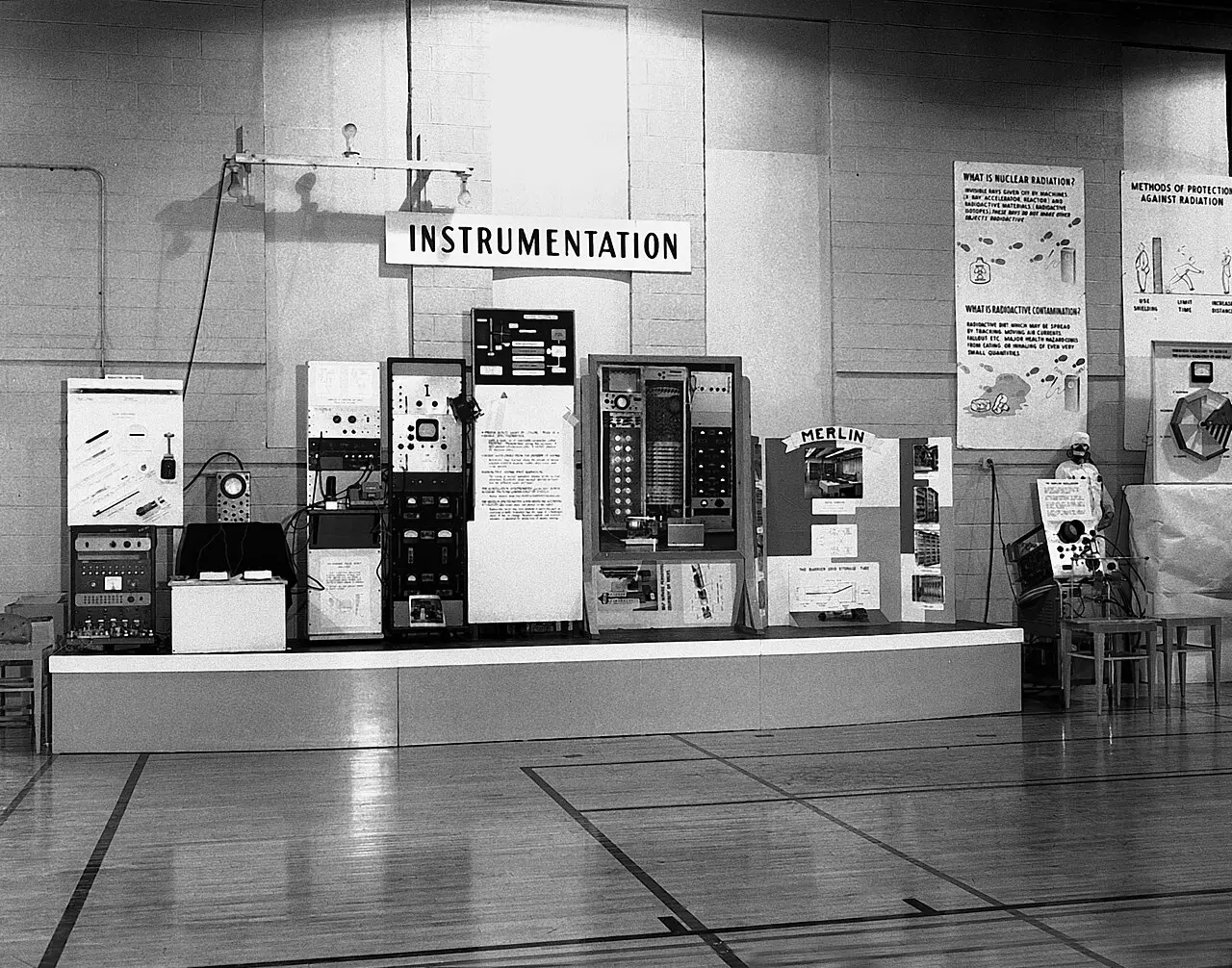
Tennis for Two was first shown on 18 October 1958, at a visitors' day at Brookhaven National Laboratory in Upton, New York. Its creator was William Higinbotham, a physicist who headed the lab's Instrumentation Division. Whether it was the first video game depends on the definition — Brookhaven itself declines to give it the title outright — but it is the game most often named when people ask what the first video game was, and with good reason: two players, a moving ball on a screen, and no purpose except to be played.
A Game for an Open House
Brookhaven held annual visitors' days, and Higinbotham, according to the lab's history page, had noticed how static and non-interactive most science exhibits of the time were. His own explanation, which the lab quotes, was that "it might liven up the place to have a game that people could play, and which would convey the message that our scientific endeavors have relevance for society."
The idea came from a manual. The lab had a small analog computer — a Donner Model 30, according to Wikipedia — whose instruction book showed how to generate curves on an oscilloscope: the trajectories of a bullet, a missile and a bouncing ball, all subject to gravity and wind resistance. The bouncing ball reminded Higinbotham of tennis.
Higinbotham recalled that it took about two hours to lay out the design and a couple of days to fill it in with components on hand. A Brookhaven technician, Bob Dvorak, built it in about three weeks, and the two of them spent a day or two debugging it. The lab still holds blueprints dated 1958.
How It Worked
Players saw a side view of a tennis court on an oscilloscope screen just five inches across: a horizontal line for the court, a short vertical line for the net, and the ball, a bright moving dot that left trails as it bounced from side to side. Each player had a controller with a button and a rotating dial. The dial set the angle of an invisible racquet; the button hit the ball.
Inside, four of the computer's operational amplifiers generated the ball's motion, while the remaining six sensed when it hit the ground or the net and handed control to the player on whose side the ball had landed. Court, net and ball had to share the one display. Peter Takacs of the Instrumentation Division, who later worked on rebuilding the game, explained in the lab's account that Higinbotham used the newly available germanium transistors to build a fast switching circuit that alternated the three outputs on the screen at 36 hertz — fast enough for the eye to see a single picture.
The game drew hundreds of visitors, who lined up to play. For 1959 it was improved: a larger screen of 10 to 17 inches, and options to play tennis under the low gravity of the Moon or the high gravity of Jupiter. After that exhibition, according to Wikipedia, it was dismantled so its parts could be reused.
"First Video Game" Needs a Definition
Brookhaven's own page is unusually frank about priority. Tennis for Two, it says, was preceded by several other inventions, and it would not be fair or correct to award the title of "the first video game" to any single one of them.
- Cathode-ray tube amusement device. Thomas T. Goldsmith Jr. and Estle R. Mann filed for a patent in January 1947; it was granted in December 1948. Brookhaven calls it the earliest-documented predecessor of the video game, but players overlaid printed targets on the screen instead of seeing a fully drawn game.
- Bertie the Brain (1950). Built in Toronto by Josef Kates for the Canadian National Exhibition, it played tic-tac-toe against visitors on a grid of lights rather than a screen.
- Nimrod (1951). Built by Ferranti for the Festival of Britain to play Nim, it was meant to demonstrate computing power, and used fixed lights, not a cathode-ray tube with moving elements.
- OXO (1952). A.S. Douglas's noughts and crosses on Cambridge's EDSAC was, in Brookhaven's account, written for academic research into human-computer interaction rather than for fun.
There is a further technical objection. Strictly, "video" implies a raster picture made of scan lines, as on a television; an oscilloscope draws by deflecting a beam directly, so Tennis for Two produced no video signal at all. What it did have, Brookhaven argues, is what a modern player would recognise: an image of a court and a ball that players controlled on a screen.
The fair summary is that Tennis for Two was one of the earliest electronic games with moving on-screen graphics, and possibly the first created purely to entertain.
No Patent, and a Courtroom Afterlife
Higinbotham did not patent it. Brookhaven reports that at the time it did not seem more novel to him than the bouncing-ball circuit in the instruction book, and that any patent would have belonged to the federal government anyway. In the mid-1970s the game was rediscovered and brought into litigation over the first video game patent, held by Magnavox; the lab has published Higinbotham's 1976 deposition. In 1982 Creative Computing ran a story presenting it as possibly the first video game.
Higinbotham died in 1994. Brookhaven says he wished to be remembered for his radar-display work and his efforts to slow the nuclear arms race — he was the first chair of the Federation of American Scientists.
Fourteen years after Tennis for Two, Al Alcorn at Atari built the 1972 prototype of PONG, now in the Computer History Museum's collection; see the game consoles timeline.
Questions this page answers
- Was Tennis for Two the first video game?
- That title is contested. Brookhaven National Laboratory itself says it would be neither fair nor correct to award it to any single invention. The cathode-ray tube amusement device (filed 1947, patented 1948), Bertie the Brain (1950), Nimrod (1951) and OXO (1952) came first; Tennis for Two stands out as a computer game with moving on-screen visuals built to entertain.
- When was the first video game made?
- It depends on the definition. Tennis for Two, the usual answer for an entertainment game with on-screen visuals, was first shown on 18 October 1958; the earliest documented precursor, the cathode-ray tube amusement device, was filed for a patent in January 1947 and granted in December 1948.
- How did Tennis for Two work?
- A small analog computer calculated the path of a ball under gravity and air resistance, and a five-inch oscilloscope drew the court, net and ball. A transistor switching circuit alternated the three outputs at 36 Hz so they appeared as one picture.
- Did Higinbotham patent Tennis for Two?
- No. According to Brookhaven, it did not seem more novel at the time than the bouncing-ball circuit in the computer's instruction book, and he later noted that any patent would have belonged to the federal government anyway.
Sources
PrimaryThe First Video Game? Before 'Pong,' There Was 'Tennis for Two' — Brookhaven National Laboratory
First shown 18 October 1958; five-inch oscilloscope; 36 Hz switching; 1959 upgrade; precursors (1948 patent, Nimrod, OXO); why no patent
Secondary50 Years of Fun With PONG — Computer History Museum blog
Al Alcorn's 1972 PONG prototype
TertiaryTennis for Two — Wikipedia
Donner Model 30 analog computer; technician Robert V. Dvorak; testimony in the Magnavox patent cases
TertiaryBertie the Brain — Wikipedia
Last updated: