T1
Ruby 0.95 Released — Yukihiro Matsumoto
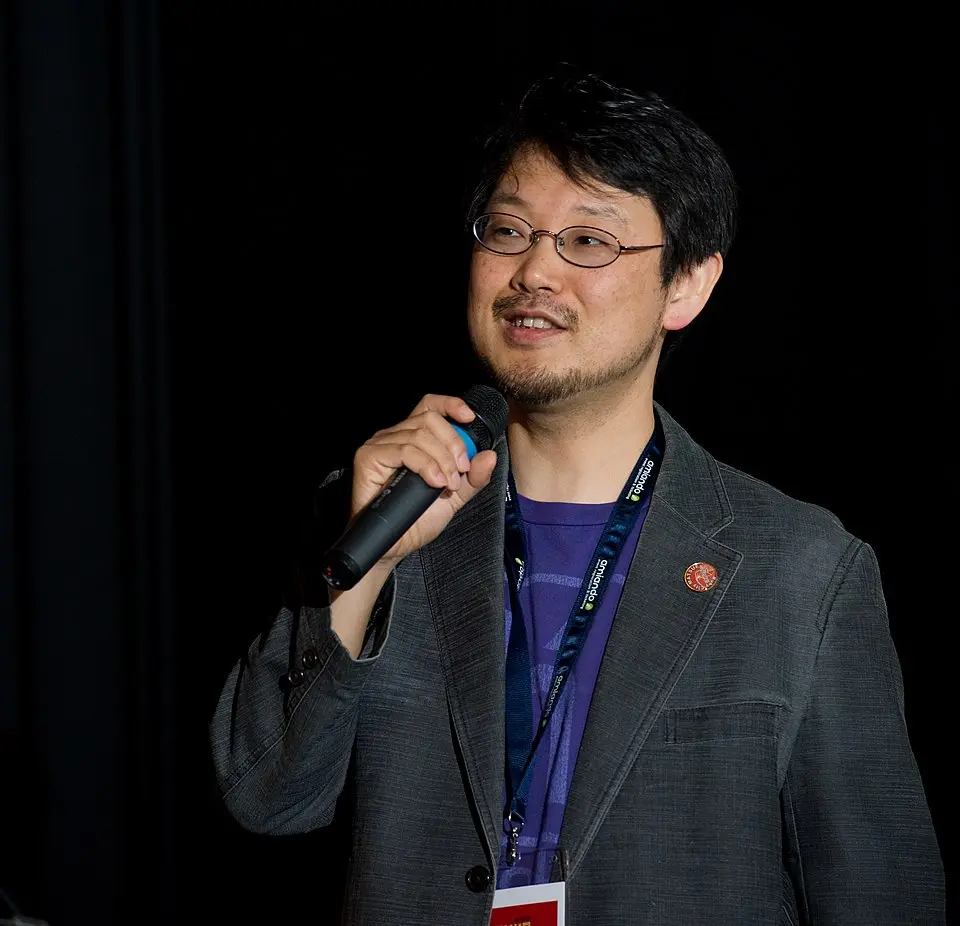
Metadata
- Date
- Decade
- 1990s
- Tier
- T1
- Timelines
- A History of Programming Languages
- Sources
- 13
- Connections
- 02
Ruby is an object-oriented scripting language designed in Japan by Yukihiro Matsumoto, known as Matz. By his own account in the official FAQ, the language was "born on February 24, 1993", in a conversation with a colleague; its first public release came almost three years later, when, in his words, "I posted Ruby 0.95 to the Japanese domestic newsgroups in Dec. 1995." The earliest surviving message on the ruby-list mailing list — a user reporting a failed make test on HP-UX — is dated 21 December 1995 and refers to ruby-0.95, which is why that day is given as Ruby's public debut. Version 1.0 followed a year later.
| Date | Milestone |
|---|---|
| 24 February 1993 | Ruby "born", by Matz's account in the FAQ |
| December 1995 | 0.95 posted to Japanese domestic newsgroups; first ruby-list message dated 21 December |
| 25 December 1996 | Ruby 1.0 |
| May 2000 | English-language newsgroup comp.lang.ruby established |
| 2004 | Ruby on Rails released as open source |
| 13 December 2005 | Rails 1.0 |
| 22 March 2011 | Japanese Industrial Standard JIS X 3017 established |
| 2012 | International standard ISO/IEC 30170 |
| 24 February 2013 | Ruby 2.0, on the language's twentieth birthday |
| 25 December 2020 | Ruby 3.0 |
| 25 December 2025 | Ruby 4.0 |
1993: a language before the code
The FAQ preserves Matz's own description of the beginning. He was talking with a colleague about the possibility of an object-oriented scripting language; he knew Perl but did not like it, and he knew Python but did not think it truly object-oriented. What he wanted was a genuinely object-oriented scripting language that was easy to use, with iterators, exception handling and garbage collection, so he decided to build it himself. The name came before most of the code. Matz wanted a jewel name, in the manner of Perl, and chose ruby after a colleague's birthstone. Getting the interpreter to run, he notes, took several months.
The official About Ruby page sums up the result as "a language of careful balance": Matz blended parts of his favourite languages — Perl, Smalltalk, Eiffel, Ada and Lisp. The same page quotes his aim as a scripting language "more powerful than Perl, and more object-oriented than Python". From Smalltalk came the rule that defines Ruby most: everything is an object, and every piece of information and code can be given its own properties and actions.
December 1995: 0.95 goes public
The first public version went out through Japan's Usenet-style domestic newsgroups, and a mailing list, ruby-list, started around the same time. Its first archived message, sent at 14:44 Japan time on 21 December 1995 by a user at Mitsui Engineering & Shipbuilding, reports that ruby-0.95 compiled cleanly on HP-UX 9.05 but failed one of its self-tests, and asks Matz what further information he needs. Ruby's community, in other words, began with a bug report from a Unix workstation. In a 2025 interview marking thirty years, ITmedia's @IT recorded that the first mailing list's subscribers numbered around 200 at the start.
Version 1.0 arrived on 25 December 1996 — Christmas Day, a date later major releases would return to. Matz joined Network Applied Communication Laboratory in Matsue, Shimane, in 1997, and has developed the language from there since; the details of that career are on his own page.
Designed for programmers' happiness
What Matz optimised for was not machine efficiency. In a 2003 Artima interview, Bill Venners read back to him a line from Matz's own introduction to Ruby: "For me the purpose of life is partly to have joy. Programmers often feel joy when they can concentrate on the creative side of programming, So Ruby is designed to make programmers happy." In the same conversation Matz argued that languages should focus on how humans care about doing programming, rather than on the machine.
Rails and the world outside Japan
For its first decade Ruby was mostly a Japanese language. The English newsgroup comp.lang.ruby was not established until May 2000. What changed that was a web framework. David Heinemeier Hansson, building the Basecamp project-management application at 37signals, extracted the reusable core and released it as open source in 2004 as Ruby on Rails; Rails 1.0 followed on 13 December 2005. The About Ruby page dates Ruby's "mass acceptance" to 2006, with user groups in the world's major cities and conferences filled to capacity, and attributes much of the growth to the popularity of software written in Ruby, "particularly the Ruby on Rails web framework".
Standards, speed and thirty years
Ruby became a Japanese Industrial Standard, JIS X 3017, on 22 March 2011, and an identical international standard, ISO/IEC 30170, in 2012. The main line kept moving. Ruby 2.0 was released on 24 February 2013, twenty years to the day after the 1993 conversation. Ruby 3.0, on 25 December 2020, met the "Ruby 3x3" goal on one measure: the release notes report that on the Optcarrot benchmark, which emulates NES game workloads, it ran three times faster than Ruby 2.0. Ruby 4.0 was released on 25 December 2025, thirty years after 0.95; its announcement describes Ruby as first developed by Matz in 1993 and now developed as open source.
Ruby's place among other languages of the 1990s — Python, Java, JavaScript — is on the programming-languages timeline. Its central idea of uniform objects is explained under object-oriented programming.
Questions this page answers
- Who created Ruby, and when?
- Yukihiro Matsumoto, known as Matz. By the official FAQ, Ruby was born on 24 February 1993; the first public release was 0.95, posted to Japanese domestic newsgroups in December 1995. The first ruby-list message is dated 21 December, and 1.0 followed on 25 December 1996.
- Where does the name Ruby come from?
- It is a jewel name chosen in the manner of Perl. By the official FAQ's account, Matz took it from a colleague's birthstone.
- What made Ruby popular outside Japan?
- The Ruby on Rails web framework, which David Heinemeier Hansson extracted from work on Basecamp and released in 2004, with 1.0 on 13 December 2005. The official site dates Ruby's mass acceptance to 2006 and attributes much of the growth to Rails.
- Is Ruby a formal standard?
- Yes. It became Japanese Industrial Standard JIS X 3017 on 22 March 2011 and the identical international standard ISO/IEC 30170 in 2012.
Sources
PrimaryOfficial Ruby FAQ, Part 1 — ruby-lang.org
The 24 February 1993 birthday, Matz's view of Perl and Python, the name, the December 1995 posting of 0.95, and comp.lang.ruby in May 2000
Primary[ruby-list:1] ruby-0.95 test failed — ruby-list archive, 21 December 1995
A 21 December 1995 report of 0.95 failing a test on HP-UX
PrimaryAbout Ruby — ruby-lang.org
The five influences, everything as an object, and 2006 mass acceptance with Rails
The passage on designing Ruby to make programmers happy
PrimaryJIS X 3017:2013 プログラム言語Ruby — 日本規格協会
Established 22 March 2011; identical (IDT) to ISO/IEC 30170:2012
PrimaryRuby 3.0.0 Released — ruby-lang.org, 25 Dec 2020
Three times Ruby 2.0 on Optcarrot
SecondaryRubyは「みんなのプロジェクト」 まつもとゆきひろ氏が振り返るRubyとコミュニティーの30年 — @IT, 2025年12月4日
0.95 released on 21 December 1995, and about 200 initial mailing-list subscribers
TertiaryHistory of Ruby — Wikipedia
1.0 on 25 December 1996
TertiaryRuby on Rails — Wikipedia
Last updated: