T1#consumer#launch#education#market
Raspberry Pi — The $35 Single-Board Computer for Learning
Metadata
- Date
- Decade
- 2010s
- Tier
- T1
- Sources
- 11
- Connections
- 01
- Tags
- #consumer#launch#education#market
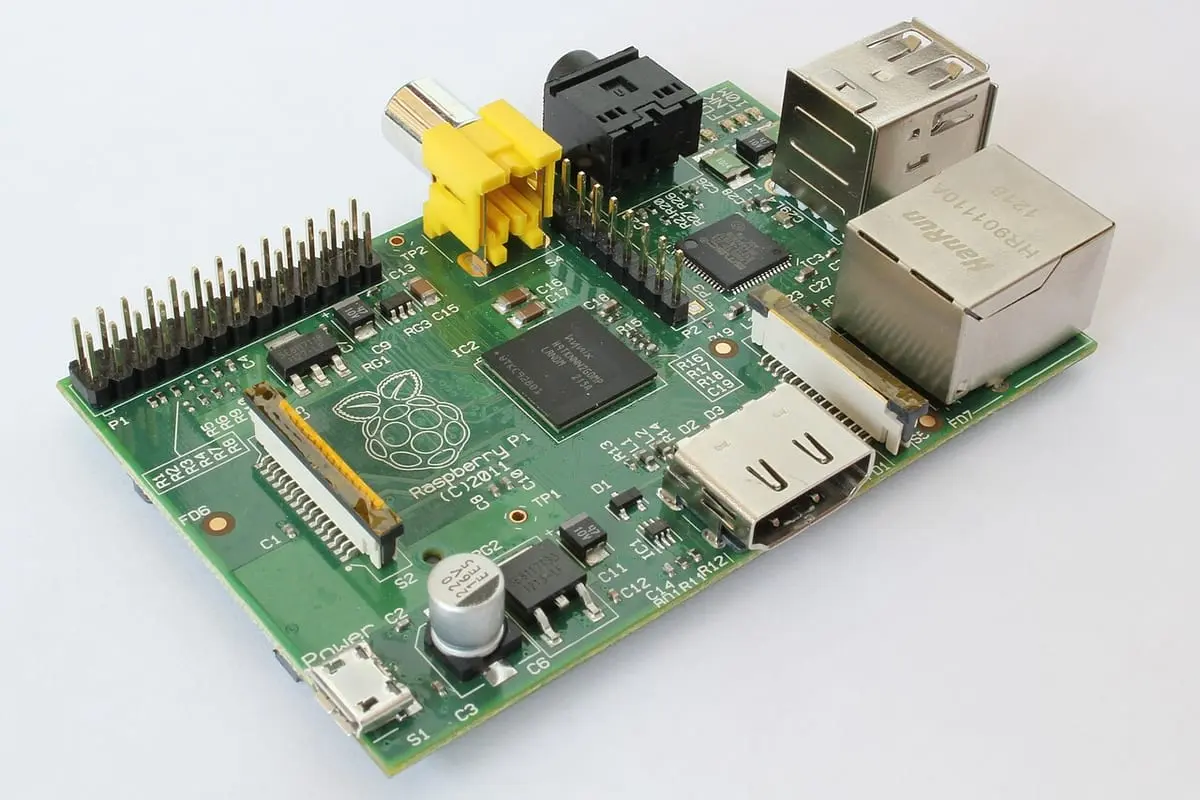
The Raspberry Pi is a cheap single-board computer: processor, memory and connectors on one card-sized board. It comes from the Raspberry Pi Foundation, a UK charity, and went on sale on 29 February 2012 through two British firms, Premier Farnell (element14) and RS Components. Every unit in the first run was the $35 Model B.
The team's most optimistic hopes had stopped at lifetime sales of 10,000. On the first day alone it took more than 100,000 orders.
Launch day
| Item | Details |
|---|---|
| Sales opened | 29 February 2012 |
| Manufacture and sale | Licensed manufacture partnerships with two British companies, Premier Farnell (element14) and RS Components, which built and sold the boards |
| First model | Model B ($35); all of the first units produced |
| Second model | Model A ($25), without the Ethernet port and two USB ports, reworked to 256MB of RAM, double the original plan |
| Terms | Initially one per customer |
The Foundation's announcement framed this as an early sale for enthusiasts, makers and teachers, with a proper educational launch to follow later in 2012. A small profit on each unit went back into the charity.
Who made it, and why
The Raspberry Pi Foundation is a charity registered in England and Wales (number 1129409). Its stated mission today is to enable all young people to realise their full potential through the power of computing and AI.
According to Wikipedia, the Foundation was founded in autumn 2008 and registered as a charity in May 2009. Four of its founders, Eben Upton among them, were involved with the University of Cambridge Computer Laboratory and were worried about falling applications to its computer science course. The goal was a computer cheap enough to cost about as much as a textbook, for learning programming and electronics hands-on.
Generations and sales
| When | What |
|---|---|
| 29 February 2012 | Model B ($35) on sale; more than 100,000 orders on day one |
| 29 February 2016 | Raspberry Pi 3: still $35, a 64-bit 1.2GHz quad-core processor, built-in wireless LAN and Bluetooth 4.1. Over eight million units shipped by then (three million of them Pi 2s) |
| January 2021 | Raspberry Pi Pico ($4), built on RP2040, a chip developed in-house, and the company's first microcontroller-class product |
| September 2023 | Raspberry Pi 5: $60 for 4GB, $80 for 8GB. Broadcom's BCM2712 (quad-core Cortex-A76 at 2.4GHz) and RP1, an in-house I/O controller |
| 11 June 2024 | Raspberry Pi Holdings plc lists on the London Stock Exchange |
| 31 March 2026 | FY2025 results report over 75 million units sold to date |
Raspberry Pi said the Pi 3 had roughly ten times the original's performance, and the Pi 5 two to three times the CPU and GPU performance of the Pi 4. Both are the company's own claims. The Pi 3 and Pi 5 both use Arm Cortex processors, a line that goes back to the ARM architecture (see ARM vs x86).
With the Pico's RP2040, Raspberry Pi went from a board maker using other firms' chips to a company that also designs its own. The Pi 5's RP1 was designed by the team that built the RP2040.
The 2024 listing
The trading business began dealings on the London Stock Exchange's Main Market on 11 June 2024 as Raspberry Pi Holdings plc, under the ticker RPI.
| Item | Details (per the company) |
|---|---|
| Offer price | 280 pence a share |
| Market capitalisation | About £541.6 million at the start of conditional dealings |
| Raised by the company | About £31.4 million from new shares |
| Seller | The principal shareholder, Raspberry Pi Mid Co Limited, a wholly owned subsidiary of the Raspberry Pi Foundation |
In his post on listing day Eben Upton wrote that the money raised by the Foundation in the IPO would support its ambitions for global impact. A business started by a charity had split into a listed company and a charity holding its shares.
The business in 2025
The FY2025 results, published on 31 March 2026, reported revenue of $323.2 million, 7.6 million boards and modules shipped and 8.4 million microcontroller units, the first year microcontrollers outnumbered boards. The company said global DRAM markets had tightened significantly through 2025 and into 2026 because of AI-driven demand. In April 2026 it raised prices on higher-memory models, citing a seven-fold rise in a year in the cost of the LPDDR4 memory used in the Pi 4 and Pi 5.
Where it sits
The Raspberry Pi came out of a charity, made to put a $35 computer into learners' hands. Against hopes of 10,000 units, it passed 75 million in fourteen years and became a listed company that designs its own chips. For devices more broadly see the hardware timeline.
Questions this page answers
- When was the Raspberry Pi released?
- Sales opened on 29 February 2012 through two British firms, Premier Farnell (element14) and RS Components. Every unit in the first run was the $35 Model B, initially limited to one per customer.
- What is the Raspberry Pi Foundation?
- A charity registered in England and Wales (number 1129409) whose stated mission is to enable all young people to realise their full potential through the power of computing and AI. A small profit from each Raspberry Pi sold went back into the charity.
- How many Raspberry Pis have been sold?
- It took more than 100,000 orders on the first day and had shipped over eight million units by the Pi 3 launch in February 2016. Raspberry Pi Holdings said in its results on 31 March 2026 that over 75 million units had been sold to date.
- Is Raspberry Pi a listed company?
- Yes. Raspberry Pi Holdings plc began trading on the London Stock Exchange on 11 June 2024 under the ticker RPI, at an offer price of 280 pence and a market capitalisation of about £541.6 million. The selling principal shareholder is a wholly owned subsidiary of the Foundation.
Sources
PrimaryThe Raspberry Pi Launch — Raspberry Pi, Liz Upton
Licensed manufacture with two British companies, first units all $35 Model B, the $25 Model A reworked to 256MB RAM, one per customer, profit to the charity
PrimaryHappy birthday to us! — Raspberry Pi, Eben Upton, Feb 28, 2018
On sale 29 February 2012 via element14 and RS Components; hopes of 10,000 lifetime units; over 100,000 orders on day one
PrimaryRaspberry Pi 3 on sale now at $35 — Raspberry Pi, Feb 29, 2016
Pi 3 ($35, 64-bit 1.2GHz quad-core, wireless LAN, Bluetooth 4.1); over eight million units shipped; three million Pi 2s
PrimaryIntroducing: Raspberry Pi 5! — Raspberry Pi, Sep 2023
4GB $60, 8GB $80; BCM2712 (quad-core Cortex-A76 at 2.4GHz); in-house RP1 I/O controller; two to three times the CPU and GPU performance of Pi 4 (company claim)
PrimaryAnnouncement of Offer Price of 280 pence per share — Raspberry Pi Holdings plc (RNS), June 11, 2024
Offer price 280p, market capitalisation about £541.6m, ticker RPI, about £31.4m raised by the company, the seller a wholly owned subsidiary of the Foundation
PrimaryFY 2025 Results — Raspberry Pi Holdings plc (RNS via Investegate), Mar 31, 2026
Revenue $323.2m, 7.6m boards and modules, 8.4m microcontroller units, over 75m units sold to date, DRAM tightening driven by AI demand
PrimaryA new 3GB Raspberry Pi 4 for $83.75, and more memory-driven price increases — Raspberry Pi, Apr 2026
LPDDR4 used in Pi 4 and 5 up seven-fold in a year; price increases
PrimaryAbout us — Raspberry Pi Foundation
Mission statement; registered charity number 1129409
TertiaryRaspberry Pi Foundation — Wikipedia
Founded autumn 2008, registered as a charity May 2009; concern over falling applications to Cambridge computer science; founders
Last updated: