T1#regulation#research
IDx-DR — The FDA Authorizes an AI That Screens Without a Doctor Reading the Image
Metadata
- Date
- Decade
- 2010s
- Tier
- T1
- Sources
- 04
- Connections
- 02
- Tags
- #regulation#research
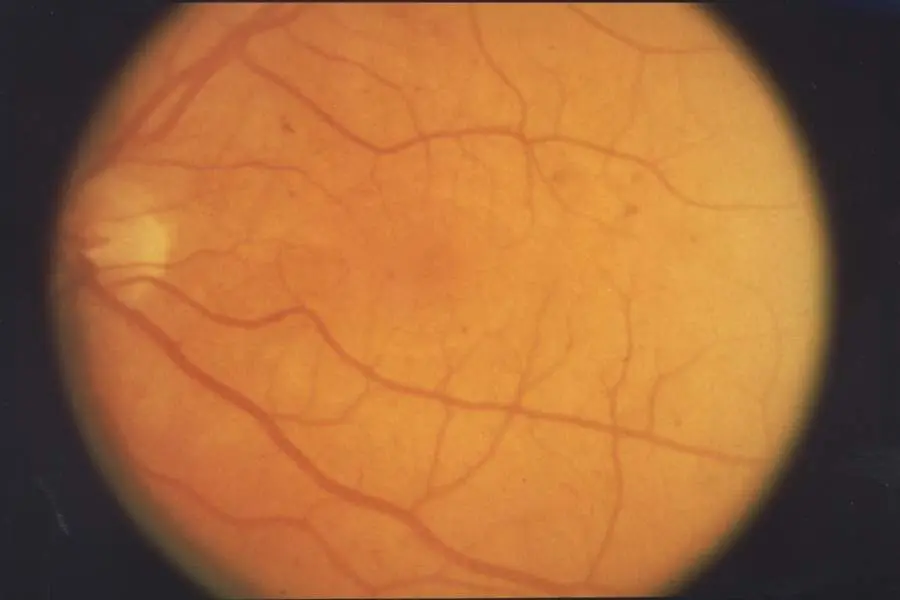
IDx-DR is software that analyses retinal photographs of people with diabetes and decides whether more than mild diabetic retinopathy is present. On 11 April 2018 the US Food and Drug Administration permitted it to be marketed. The FDA described IDx-DR as the first medical device to use artificial intelligence to detect greater than a mild level of diabetic retinopathy, and as the first device authorized for marketing that provides a screening decision without the need for a clinician to also interpret the image or results. The event is often summed up as the first time AI was allowed to diagnose in place of a doctor, but the FDA's own claim carries the limits just quoted. The broader phrase, the first FDA-authorized autonomous AI diagnostic system in any field of medicine, comes from the developers' paper published that August.
The authorization covered the US market; it says nothing about approval in Japan. In December of the same year Japan approved its own AI-based medical software, EndoBRAIN, which analyses colonoscopy images.
What the software decides
As the FDA described it, a primary-care office photographs the patient's retinas with a Topcon NW400 retinal camera and uploads the images to a cloud server running IDx-DR. If the images are of sufficient quality, the software returns one of two results.
| Result | What follows (FDA's description) |
|---|---|
| More than mild diabetic retinopathy detected: refer to an eye care professional | See an eye-care provider as soon as possible for diagnosis and possible treatment |
| Negative for more than mild diabetic retinopathy; rescreen in 12 months | Screen again in a year |
The FDA's emphasis was that no doctor needs to read the image, which makes the device usable by health-care providers who are not normally involved in eye care. It was reviewed through the De Novo pathway, used for novel low- to moderate-risk devices with no legally marketed predecessor, and had received Breakthrough Device designation, under which the FDA gives a company intensive guidance during development. The authorization went to IDx LLC.
Malvina Eydelman, who directed the FDA's ophthalmic devices division, said in the announcement: "Early detection of retinopathy is an important part of managing care for the millions of people with diabetes, yet many patients with diabetes are not adequately screened for diabetic retinopathy since about 50 percent of them do not see their eye doctor on a yearly basis."
The trial
On 28 August 2018 Michael Abràmoff of the University of Iowa and colleagues published the pivotal trial in npj Digital Medicine. It enrolled adults with diabetes and no history of diabetic retinopathy at 10 US primary-care sites, and compared the AI against widefield stereoscopic photography and macular optical coherence tomography (OCT) taken by certified photographers and graded by the Wisconsin Fundus Photograph Reading Center.
| Measure | Value | Source |
|---|---|---|
| Enrolled | 900 (10 sites) | Paper, FDA |
| Fully analysable | 819 (92%) | Paper |
| Prevalence of more than mild retinopathy | 23.8% | Paper |
| Sensitivity | 87.2% (pre-specified target >85%) | Paper |
| Specificity | 90.7% (target >82.5%) | Paper |
| Imageability | 96.1% | Paper |
| Correctly identified disease | 87.4% | FDA announcement |
| Correctly identified absence of disease | 89.5% | FDA announcement |
The paper's and the FDA's figures differ slightly, probably because of different analyses, but neither document explains why, so both are shown here with their sources. According to the editorial published alongside, the software was locked before the trial and did not keep learning while it was tested.
The authors disclosed their interests: Abràmoff was a shareholder, director and employee of IDx, and a co-author was also a shareholder.
Limits: what the FDA and the editorial said
The FDA spelled out who should not be screened with IDx-DR: people with a history of laser treatment, surgery or injections in the eye; people with symptoms such as persistent vision loss, blurred vision or floaters; people already diagnosed with macular oedema or severe retinopathy; and pregnant patients, since retinopathy can progress very rapidly in pregnancy and the device is not designed to evaluate that. It detects only diabetic retinopathy, including macular oedema, and should not be used for any other condition.
The same issue carried an editorial by Pearse Keane and Eric Topol. Its main points:
- Accuracy studies do not show whether patients benefit. Mammography CAD (computer-aided detection) was approved by the FDA in 1998 and widely used, yet a large study later concluded that it does not improve diagnostic accuracy.
- The trial was small for an accuracy study, and the confidence interval for sensitivity (81.8–91.2%) spanned the 85% target.
- The system sees only diabetic retinopathy, so conditions such as glaucoma or macular degeneration may be missed, and it requires a specific camera that the editorial put at about $18,000.
- "This is not really an 'autonomous system' since someone needs to acquire the image—who will perform that?"
The paper itself noted that findings other than retinopathy, such as enlarged optic-disc cups that may indicate glaucoma, were outside what the trial was designed to assess.
Who gained, and what changed
The authorization raised a question about where diagnosis happens and who does it. The FDA pictured images being taken at a family doctor's office with no eye specialist, with the AI deciding on the spot whether to refer. The aim was to reach the patients with diabetes who skip the annual eye exam, in the clinic they already visit. In the trial, images were taken by each site's existing staff after standardised training, not by specialist photographers.
The other side of that is that the first-pass sorting once done by ophthalmologists or reading centres moves into software. The developers framed their result as bringing specialty-level diagnostics into primary care. Keane and Topol countered that cost, implementation and whether clinics would actually take it up were all open questions, and predicted that the bar for approving later diabetic-retinopathy AI systems was likely to be higher.
On the regulatory side, the case gave a concrete example of reviewing locked software as a medical device. Many predictive models built into hospital record systems, by contrast, spread without such review; one of them, and what happened when it was externally validated, is covered on the Epic Sepsis Model page.
Afterwards
The product is now handled by Digital Diagnostics of Coralville, Iowa, which announced on 28 March 2023 that it had renamed IDx-DR LumineticsCore. The company said the product itself had not changed, and that the old name's letters were easily interchanged and it conveyed a clinical, robotic feel.
For the period after large language models began answering licensing-exam questions, see Med-PaLM; for a randomised trial of AI in screening, see the MASAI trial. Regulation that treats medical AI as high-risk is covered on the EU AI Act page, and the wider context is on the AI timeline and the AI and society timeline. The arrival of deep learning in image recognition starts with ImageNet and AlexNet.
Questions this page answers
- What is IDx-DR?
- It is software that analyses retinal photographs of adults with diabetes and decides whether more than mild diabetic retinopathy is present. The US FDA permitted its marketing on 11 April 2018. It gives one of two results, refer to an eye-care professional or rescreen in 12 months, so that it can be used in clinics without an eye specialist.
- What exactly was the first?
- The FDA said it was the first medical device to use AI to detect more than mild diabetic retinopathy, and the first authorized device that gives a screening decision without a clinician also interpreting the image or results. The phrase 'first autonomous AI diagnostic system in any field of medicine' comes from the developers' own paper.
- How accurate was it?
- In a trial that enrolled 900 people at 10 primary-care sites, the paper reported sensitivity of 87.2%, specificity of 90.7% and an imageability rate of 96.1%. The FDA's announcement gave 87.4% for correctly identifying disease and 89.5% for correctly identifying its absence.
- What limitations were pointed out?
- The FDA said it should not be used in pregnant patients or those previously treated for retinopathy, and it detects only diabetic retinopathy. An accompanying editorial noted that accuracy studies do not show whether patient outcomes improve, and that someone still has to take the images.
Sources
The marketing authorization: De Novo pathway, Breakthrough Device designation, the two outputs, 900 patients at 10 sites, 87.4% and 89.5%, exclusions, and Eydelman's comment. The original FDA URL returned 404 in October 2026, so the archived copy is cited
900 enrolled and 819 fully analysable; sensitivity 87.2%, specificity 90.7%, imageability 96.1%; the pre-specified endpoints; the authors' competing-interest disclosures
The accompanying editorial: the need for outcome trials, the narrow scope, and the limits of 'autonomy' when someone must still take the image
The rename from IDx-DR to LumineticsCore
Last updated: