T1#consumer
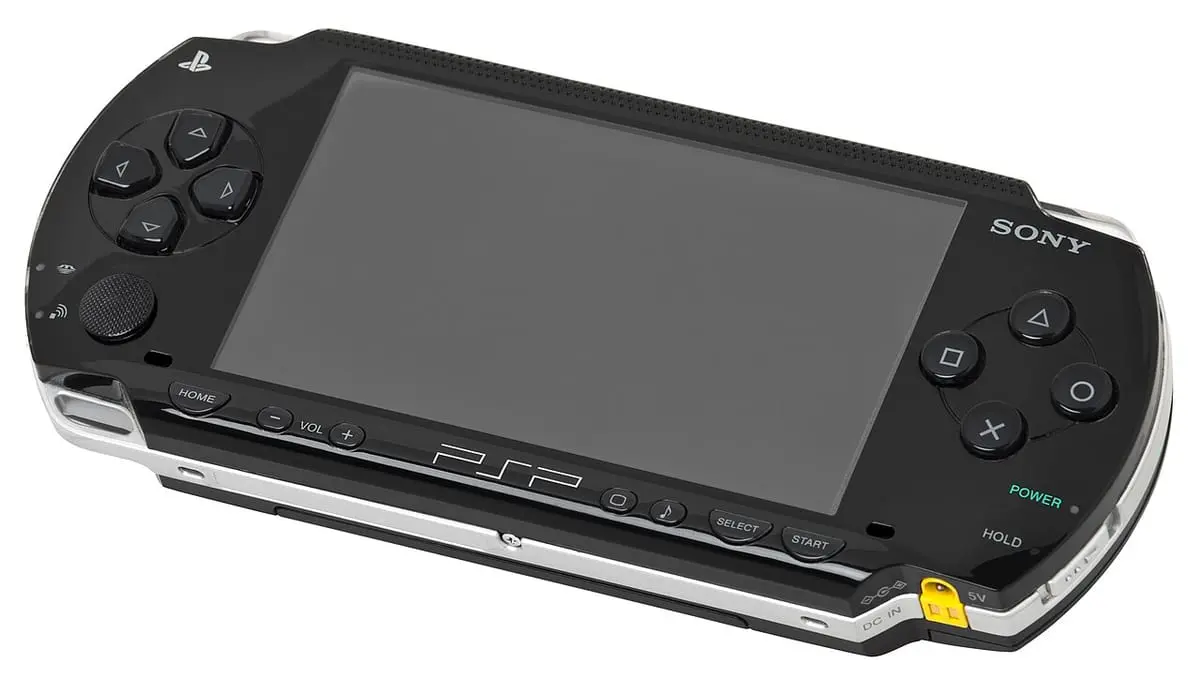
PSP — PlayStation Portable and the UMD Disc
Metadata
- Date
- Decade
- 2000s
- Tier
- T1
- Sources
- 07
- Connections
- 00
- Tags
- #consumer
The PSP (PlayStation Portable) launched in North America on 24 March 2005, sold only as a $249.99 Value Pack. Japan had it first, on 12 December 2004, at ¥19,800 before tax (¥20,790 with tax), and Europe waited until 1 September 2005. North America came more than three months after Japan, Europe nearly nine.
| Region | Release date | Launch price | Source |
|---|---|---|---|
| Japan | 12 December 2004 | ¥19,800 (¥20,790 incl. tax) | SCEI press release |
| North America | 24 March 2005 | $249.99 (Value Pack) | SIE company timeline (month); Game Developer |
| Europe | 1 September 2005 | £179 / €249 (Value Pack) | SIE company timeline (month); The Register |
In Japan, Nintendo's DS had arrived ten days earlier, on 2 December. In North America the order was reversed by a wider margin: the DS launched on 21 November 2004, the PSP four months later.
27 October 2004: PS2-class graphics in the hand
On 27 October 2004 Sony Computer Entertainment (SCEI) announced that the PSP, model PSP-1000, would go on sale in Japan on 12 December. The press release claimed graphics processing equivalent to the PlayStation 2, with stereo sound, so that full 3D games and high-resolution video could be enjoyed anywhere. It listed this specification:
| Item | Detail |
|---|---|
| CPU | PSP CPU (1–333 MHz) |
| Memory | 32 MB main memory, 4 MB embedded DRAM |
| Screen | 4.3-inch 16:9 widescreen TFT LCD, 480 × 272 pixels |
| Disc | UMD drive (read only) |
| Wireless | IEEE 802.11b wireless LAN; ad hoc mode for up to 16 units |
| Other I/O | USB 2.0, Memory Stick PRO Duo, infrared |
| Media | H.264/AVC video; ATRAC3plus and MP3 audio |
| Battery | Built-in lithium-ion; 4–6 hours of games, 4–5 hours of continuous video (SCEI's measurements) |
| Weight | About 280 g with battery |
The release called the 4.3-inch screen the largest on any handheld game device. UMD was an optical disc made for the PSP, and the release said a new category of software mixing games, music and video on a single UMD was expected in spring 2005. Twenty-one games from Sony and other publishers were promised by the end of the year.
North America: the Value Pack only
The North American terms came on 3 February 2005. According to Game Developer, the PSP would launch on 24 March at $249.99 and, unlike in Japan, only as a single bundle, with a 32 MB Memory Stick and an AC adaptor; the first million also came with Spider-Man 2 on UMD.
According to the Associated Press the same day, Sony had by then shipped 800,000 PSPs in Japan and planned to have one million ready for the first week in North America.
According to a Reuters report of 8 April 2005, Sony said it had sold 500,000 PSPs in North America in the first two days—about half the number it had aimed to supply to retailers—and that first-week sales at North American retailers came to $150 million. The same report put sales in Japan at more than one million.
Europe: more than five months late
Europe came last. According to The Register on 26 April 2005, Sony announced a launch in the UK and the rest of Europe on 1 September, with a Value Pack—Memory Stick, case, earphones and more—at £179 in the UK and €249 in the euro zone. The article said this was more than five months after Sony had first intended: Europe had been held back so that more units could go to American buyers, and the date had slipped to April, then early summer, then late summer.
From 10 million to 76.4 million
According to SIE's company timeline, the PSP reached South Korea, Hong Kong, Singapore and Taiwan in May 2005, and worldwide sales passed 10 million in October 2005. Later milestones:
| Date | Event |
|---|---|
| September 2007 | A redesigned PSP launches in North America, Japan, Hong Kong, Taiwan, South Korea and Europe |
| February 2009 | Worldwide sell-in reaches 50 million |
| October 2009 | PSP go launches in North America, Europe and elsewhere (Japan in November) |
| December 2011 | The successor, PlayStation Vita, launches in Japan, Hong Kong and Taiwan |
SIE's business data gives cumulative sell-in of more than 76.4 million PSPs worldwide as of 31 March 2012, and more than 331 million games. The Nintendo DS, from the same year, sold 154.02 million according to Nintendo IR, so the PSP reached about half that—though the two companies' totals are counted at different dates.
Sony's home console PlayStation 3 followed two years later, in November 2006. For the wider story, see the game consoles timeline.
Questions this page answers
- When was the PSP released?
- In North America it launched on 24 March 2005 as a $249.99 Value Pack, after Japan (12 December 2004). Europe followed on 1 September 2005.
- How much did the PSP cost at launch?
- In Japan the PSP-1000 was ¥19,800 before tax (¥20,790 with tax). North America got only a Value Pack, with a Memory Stick and other extras, at $249.99; in Europe the Value Pack cost £179 in the UK and €249 in the euro zone.
- How many PSPs were sold?
- SIE gives cumulative worldwide sell-in of more than 76.4 million consoles and more than 331 million games as of 31 March 2012.
- Why was the PSP so late in Europe?
- According to The Register, Sony held Europe back so that more units could go to the US launch, and after several delays set 1 September 2005—more than five months after it had first intended.
Sources
Japanese date and price; specification (4.3-inch screen, UMD, wireless LAN, ad hoc play for up to 16)
PrimaryExpanded Company Timeline — Sony Interactive Entertainment
Launch months by region, 10 million (October 2005) and 50 million (February 2009), the redesign, PSP go and PS Vita
SecondarySony Announces PSP U.S. Launch Date And Price — Game Developer, February 3, 2005
The 24 March North American date and the $249.99 bundle
SecondaryU.S. release date set for PlayStation Portable — NBC News (AP), February 3, 2005
800,000 shipped in Japan; one million ready for the first week in North America
SecondarySony to ship PSP on 1 September - official — The Register, April 26, 2005
European date and price; the delays
Last updated: