T1#market#consumer
Xbox Series X/S Released
Metadata
- Date
- Decade
- 2020s
- Tier
- T1
- Sources
- 15
- Connections
- 03
- Tags
- #market#consumer
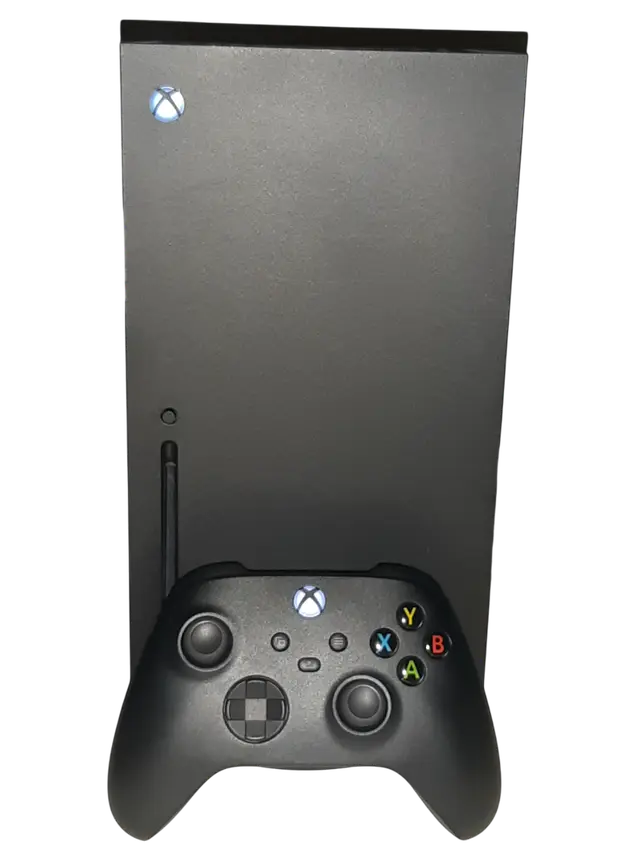
On 10 November 2020, Microsoft launched the Xbox Series X (US$499) and Xbox Series S (US$299) simultaneously in 40 markets. Shipping one generation at two prices was not new—the Xbox 360 launched in 2005 as a US$299 Core and a US$399 Premium, the PS3 in 2006 as a US$499 20 GB and a US$599 60 GB. What was new here is that the two boxes differed not in storage or bundled accessories but in GPU class and target resolution. It also arrived two days before PS5 (12 November in the US and Japan, 19 November in Europe).
The story of this Xbox generation, however, is one of losing on unit sales and then redefining what "Xbox" even means.
Two SKUs and Game Pass
Xbox Series X used AMD Zen 2 / RDNA 2 silicon, a 12 TFLOPS GPU, a 1 TB internal NVMe SSD, and targeted native 4K at up to 120 fps. On raw GPU throughput it was ahead of PS5 (10.28 TFLOPS)—though PS5's SSD had the higher bandwidth, so "ahead" was never across the board. The Series S was a 4 TFLOPS, 512 GB, all-digital, 1440p-target budget model. Two entry points for two budgets.
The connective tissue was Game Pass—a monthly subscription unlocking hundreds of titles. The console was the doorway; the recurring revenue was the prize. Subscription itself was not first: PlayStation Now launched in 2014. What Game Pass (2017) did first was put every first-party release into the subscription on day one and build the whole strategy on it. Quick Resume (several titles held suspended and resumed where you left off), Smart Delivery (the optimised build of a game you own delivered automatically), backward compatibility across four generations, and xCloud streaming all aimed at a gaming experience untethered from any single box.
The Activision Blizzard Acquisition — A US$68.7 Billion Bet
On 18 January 2022, Microsoft announced a US$68.7 billion all-cash acquisition of Activision Blizzard at US$95 per share. The deal—one of the largest in tech history—endured twenty-one months of scrutiny from the US FTC, the UK CMA, and the EU before closing on 13 October 2023, by which point the total cost was put at US$75.4 billion. Call of Duty, World of Warcraft, Diablo, Overwatch, Candy Crush—Microsoft acquired an IP empire.
For Phil Spencer, CEO of Microsoft Gaming, it was the decisive instrument in a strategy of covering an install-base deficit with IP and subscription. And immediately after closing, the second part of the bet became visible: Microsoft had no intention of keeping these IPs exclusive to Xbox.
The 2024 Multi-Platform Pivot
In February 2024, Microsoft confirmed that four first-party titles would leave the platform—but not all to the same places. Pentiment (22 February) and Grounded (16 April) went to PlayStation 4, PlayStation 5, and Nintendo Switch; Hi-Fi Rush (19 March) and Sea of Thieves (30 April) went to PS5 only. It was an official exit from first-party exclusivity, and Spencer put it plainly:
"I don't think we should as an industry ever rule out a game going to any other platform."
The reasoning was clear. Sony had shipped 54.8 million PS5s as of 31 December 2023, a figure it publishes. Microsoft had stopped disclosing Xbox Series units after mid-2023; third-party estimates put the installed base around 27 million. With a gap approaching 2×, Sony's hardware base could no longer be ignored if the point was to maximise revenue from the IP.
Outcomes diverged. Sea of Thieves cleared one million copies on PS5 and entered a second life as a major live-service title. Hi-Fi Rush, critically acclaimed, sold an estimated 137,000 on PS5; its developer Tango Gameworks was closed in May 2024, and in August that year Krafton took over the studio and the Hi-Fi Rush IP. Indiana Jones and the Great Circle, Forza Horizon 5, and Doom: The Dark Ages followed onto PS5 as a matter of policy, not exception.
"Xbox Is Not the Box" — The 2025 Shift
On 16 October 2025, Microsoft took a decisive step. The ROG Xbox Ally and ROG Xbox Ally X were ASUS-made portable PCs carrying the Xbox brand: US$599.99 and US$999.99 respectively. The hardware was not Microsoft first-party; it was ASUS hardware wearing an Xbox software layer.
That same month, in a Famitsu interview around Tokyo Game Show, Spencer said the hardware Microsoft announces as a first-party company would be the next console, while describing the Xbox software platform as something that would grow to connect console, PC, and cloud into one ecosystem. Xbox was no longer the name of a box but the umbrella for a subscription, cloud, and OS layer.
2026 — The Founding Generation Leaves
On 20 February 2026, Satya Nadella told employees in a memo that Phil Spencer was retiring—after 38 years at Microsoft, twelve of them running its games business.
"Over 38 years at Microsoft, including 12 years leading Gaming, Phil helped transform what we do and how we do it." — Satya Nadella, internal memo, 20 February 2026
The new CEO of Microsoft Gaming is Asha Sharma, previously president of Microsoft's CoreAI product, and before joining Microsoft in 2024, COO of Instacart and a product VP at Meta—an appointment from AI, not from games. Sarah Bond, long assumed to be Spencer's successor as Xbox President, left the company; Matt Booty was promoted to Chief Content Officer. The numbers were part of the context: gaming revenue fell about 10 per cent year over year in the December 2025 quarter, a steeper drop than Microsoft had projected, and in January 2026 the company disclosed an impairment charge in the gaming business.
Halo went to PlayStation too. Halo: Campaign Evolved—a ground-up Unreal Engine 5 remake of the original campaign—was announced for PS5 on 24 October 2025 and released on 28 July 2026 across PS5, Xbox Series X|S, and PC. For the first time in a quarter century, Halo ran on a PlayStation.
Looking Back at the Ninth Generation
Microsoft has never published a Series X|S unit figure. Every "just over 30 million" number in circulation is a third-party estimate. Sony, which does publish, reported 93.7 million PS5s shipped as of 31 March 2026. On the simple metric of console wars, Microsoft lost.
The service side did not escape either. The last Game Pass subscriber count Microsoft itself gave was 34 million, in February 2024 (Sarah Bond, on the Official Xbox Podcast); there has been no update since. After Ultimate was raised 50 per cent to US$29.99 on 1 October 2025, cancellations followed, and in 2026 the Wall Street Journal reported the figure down to about 30 million monthly paying customers. On 21 April 2026 Sharma cut Ultimate to US$22.99 and PC Game Pass to US$13.99, and simultaneously ended day-one Call of Duty on Game Pass, pushing new entries to the following holiday season instead.
Even so, the Activision Blizzard IP and the policy of shipping Microsoft's own games on competitors' machines keep the revenue line up. A lopsided scorecard is forming—lose the hardware, hold on through software and services.
What Xbox demonstrated is an attempt to transform the home-console business from "sell a box" to "sell a service". The transformation is not complete and not unambiguously successful, but every other player in the industry, Sony included, is being pulled in the same direction. In the ninth generation, Xbox lost install base. What it may have gained is the right to rewrite the rules of the home-console business.
Sources
Last updated: