T1#social-media#data-privacy#election-interference#ftc
The Facebook–Cambridge Analytica Scandal — An Irreversible Point for Social Media and Democracy
Metadata
- Date
- Decade
- 2010s
- Tier
- T1
- Timelines
- A History of Social Media
- Sources
- 12
- Connections
- 02
- Tags
- #social-media#data-privacy#election-interference#ftc#whistleblower
On Saturday 17 March 2018, the British paper The Observer (a Guardian sister title) and The New York Times jointly ran a story under the headline "Revealed: 50 million Facebook profiles harvested for Cambridge Analytica in major data breach". Facebook had pre-empted it by one day, announcing on 16 March that it was suspending Cambridge Analytica and SCL Group from the platform. On 4 April, Facebook's own CTO Mike Schroepfer revised the scale upward: "In total, we believe the Facebook information of up to 87 million people — mostly in the US — may have been improperly shared with Cambridge Analytica."
This is the day the optimistic narrative inherited from the 1990s—social media as a tool of democracy—decisively flipped. Facebook lost roughly US$80 billion in market capitalisation in the ten days from 16 March, by CNN's tally on 27 March. Mark Zuckerberg was compelled to testify before the US Senate and House for more than ten hours combined. The Federal Trade Commission would later impose a US$5 billion fine, and the EU's General Data Protection Regulation (GDPR) became applicable on 25 May 2018 in the same wave of regulatory momentum.
The Story's Structure — Whistleblower Christopher Wylie
The central figure in the reporting was Christopher Wylie, a 28-year-old Canadian data scientist with pink hair, formerly of Cambridge Analytica. He leaked the details to Carole Cadwalladr and Emma Graham-Harrison (The Observer) and Matthew Rosenberg (The New York Times), and contributed on-camera testimony. His line in the Observer piece set the tone of the whole affair: "We exploited Facebook to harvest millions of people's profiles. And built models to exploit what we knew about them and target their inner demons. That was the basis the entire company was built on."
The mechanism, as exposed:
- In 2014, the Cambridge University researcher Aleksandr Kogan registered a personality-quiz app, "This Is Your Digital Life", on Facebook.
- Approximately 270,000 people downloaded the app, in Facebook's own count.
- Facebook's Graph API at the time also exposed the friends of each installer—so the app reached, by Facebook's later estimate, up to 87 million people.
- Kogan claimed academic purposes but passed the data on to SCL/Cambridge Analytica in breach of Facebook's platform policies.
- Cambridge Analytica turned this into "psychographic profiles" (psychological profiles based on the Big Five personality model).
- The profiles were used to target individual voters for the 2016 Trump campaign.
Wylie also told The Observer that the data had been used to influence the Brexit referendum. That strand did not survive investigation. Concluding the ICO's inquiry on 2 October 2020, Information Commissioner Elizabeth Denham wrote that she had "found no further evidence to change my earlier view that SCL/CA were not involved in the EU referendum campaign in the UK - beyond some initial enquiries made by SCL/CA in relation to UKIP data in the early stages of the referendum process." The US half of the allegation stands; the Brexit half does not.
Cambridge Analytica was an arm of the British election-consultancy SCL Group. Steve Bannon—later Trump's campaign chief executive and then White House chief strategist—was a board member and vice-president; the US conservative donor Robert Mercer funded it. The political alignment intensified the scandal.
10–11 April — Zuckerberg's Congressional Testimony
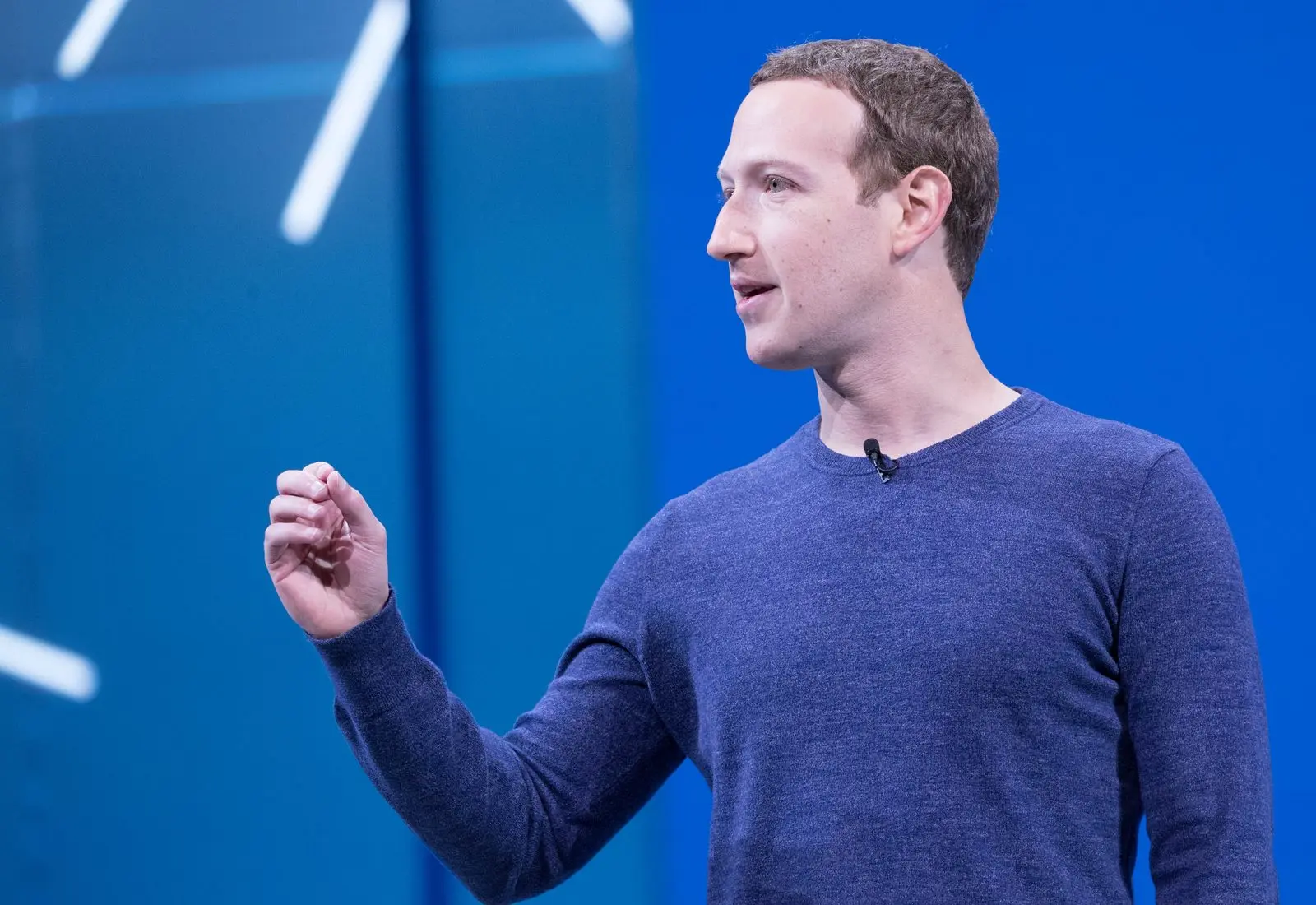
Three weeks after the story broke, on 10–11 April 2018, Mark Zuckerberg testified before the US Senate (a joint hearing of the Commerce and Judiciary committees, about five hours) and the House Energy and Commerce Committee (about five hours). Roughly a hundred legislators questioned him across the two days.
The signature exchange, from the official Senate transcript (S. Hrg. 115-683):
Senator Orrin Hatch (84 years old): "Well, if so, how do you sustain a business model in which users do not pay for your service?" Zuckerberg (after a brief pause): "Senator, we run ads."
The clip went viral as proof of congressional ignorance of technology—and reinforced the impression that regulators didn't actually understand what they were trying to regulate. On the other side, Zuckerberg deferred constantly: in about thirty of his answers across the two hearings he closed with some form of "I will have my team follow up with you on what information we have", a strategy for postponing specifics into written questions for the record.
After the testimony, Facebook's stock actually rose—the market read it as Zuckerberg surviving intact. But from this moment on, Facebook had a permanent new status: standing counterparty to politics and regulation.
Three Regulators, Three Penalties
The enforcement did not come from one body, and the three figures are routinely blurred together.
UK — £500,000, October 2018. The Information Commissioner's Office announced the fine on 25 October 2018: the maximum available under the Data Protection Act 1998, the law in force when the conduct occurred. The ICO found that at least one million UK users were among the harvested data. Elizabeth Denham: "Facebook failed to sufficiently protect the privacy of its users before, during and after the unlawful processing of this data. A company of its size and expertise should have known better and it should have done better." She added that the fine "would inevitably have been significantly higher under the GDPR". Facebook appealed, then agreed to pay in October 2019 without admitting liability.
US FTC — US$5 billion, 24 July 2019. By a 3–2 vote the Commission referred a complaint and stipulated order to the Department of Justice. The FTC called it "the largest ever imposed on any company for violating consumers' privacy and almost 20 times greater than the largest privacy or data security penalty ever imposed worldwide". The case was formally about violating the FTC's 2012 order with Facebook, not about Cambridge Analytica as such.
The non-monetary terms mattered at least as much:
- An independent privacy committee of the board of directors, whose members can be removed only by a supermajority of the board—explicitly designed to remove Zuckerberg's unfettered control over privacy decisions
- Quarterly and annual compliance certifications submitted to the FTC by Zuckerberg personally and by designated compliance officers, with individual civil and criminal liability for a false certification
- Termination of third-party app developers that fail to certify compliance or justify their need for specific user data
- Clear and conspicuous notice of facial-recognition use and affirmative express consent before any use materially exceeding prior disclosures
- A twenty-year order term
Commissioners Rohit Chopra and Rebecca Kelly Slaughter dissented. Slaughter's objection was not the amount but the release: the evidence, she wrote, more than justified litigating against Facebook and Zuckerberg personally, and the order's release of the company and its officers from liability was far too broad. Those dissents became starting points for the social-media regulation debates from 2020 onward.
US SEC — US$100 million, the same day. A separate action, on a separate theory: that for more than two years Facebook told investors that user data "may be improperly accessed, used or disclosed" when it already knew, from December 2015, that a developer had in fact misused it. Facebook settled without admitting or denying the allegations.
Cambridge Analytica's Bankruptcy
About six weeks after the initial reporting, on 2 May 2018, Cambridge Analytica and the affiliated UK entity SCL Elections began insolvency proceedings in the UK and US. The company's statement denied wrongdoing and blamed coverage: "Despite Cambridge Analytica's unwavering confidence that its employees have acted ethically and lawfully, the siege of media coverage has driven away virtually all of the Company's customers and suppliers." The same operators had already registered a new vehicle, Emerdata, with Alexander Nix and Robert Mercer's daughters among the directors—but the Cambridge Analytica brand was finished.
The "psychographic profile" data they had built up was never confirmed to have been fully destroyed. Former staff founded new companies, and the broader practice of psychographic political ad targeting survived in the industry.
When the Democratic Narrative Reversed
The structural shifts go far beyond the fines and the bankruptcy:
1. The reversal of social media's democratic narrative. Praised around the 2010–11 Arab Spring as an instrument of democratisation, social media—through the 2016 US election, Brexit, and this 2018 scandal—was reframed as a structural vulnerability of democracy. Denham's closing letter used exactly that language: the investigation, she wrote, "confirms my earlier conclusion that there are systemic vulnerabilities in our democratic systems." From here on, social-media regulation became a bipartisan concern across Western politics.
2. The global era of data-protection regulation began in earnest. Two months after the reporting, the EU's General Data Protection Regulation (GDPR) became applicable on 25 May 2018. (The two events were independent in origin but the scandal gave GDPR enormous worldwide tailwind.) California's CCPA (passed 2018, in force 2020), Brazil's LGPD, Japan's revised personal information protection law—all crowd into the same window.
3. The platform-responsibility debate became unavoidable. Facebook could no longer credibly present itself as a neutral pipe. Content moderation, algorithmic accountability, political-ad transparency—every later debate (the Twitter Files, the EU Digital Services Act, applicable to all platforms from February 2024, the UK Online Safety Act of 2023) traces its political grammar back to this point.
4. The reframing of data as a political resource. Where data had been seen as a marketing resource, it was now widely understood as a strategic resource capable of changing election outcomes. The TikTok ban debates (2020–2026) over Chinese access to US user data are a direct extension of the same problem framing.
Mark Zuckerberg's path after this: called back to Congress in 2019 over the Libra cryptocurrency plan; an internal employee walkout in 2020 over his stance on a Trump post during the Black Lives Matter protests; the Frances Haugen "Facebook Files" leak in 2021; the corporate rename to Meta in October 2021; the Orion AR-glasses prototype in 2024. He remains, continuously, a CEO who is also on a political docket.
17 March 2018 is the watershed: the day social media moved from an instrument of optimism to an object of vigilance.
Questions this page answers
- How many Facebook users were affected?
- The first reports on 17 March 2018 said 50 million profiles; Facebook itself revised the figure to up to 87 million people on 4 April.
- Was Cambridge Analytica involved in Brexit?
- The UK Information Commissioner's Office concluded in October 2020 that SCL and Cambridge Analytica were not involved in the EU referendum campaign. The allegation came from whistleblower Christopher Wylie.
- What penalties did Facebook pay?
- Three of them. The UK ICO fined Facebook £500,000 in October 2018, the maximum then available; the FTC imposed US$5 billion on 24 July 2019; and the SEC charged US$100 million the same day over its disclosures to investors.
Sources
Last updated: